By Hannah Corcoran, Features Subeditor
'Does the rain stop your work?' I ask.
'No, not unless it's chucking down' says Nick Fitzgerald, doctoral researcher in Archaeology at Bristol.
The University of Bristol’s Anthropology and Archaeology team are no strangers to high vis jackets and waterproof coats and trousers. Last year students completed field work at Hartygrove in South Gloucestershire. This year the dig is on home turf at Royal Fort Gardens.
They are here to find out more about Royal Fort Garden's past. Royal Fort was built by royalists (hence the name) during the English Civil War to fortify against parliamentarians. Ultimately it was captured and demolished by Oliver Cromwell in 1655. But not completely destroyed, as a 2009 dig showed evidence of the old defence structures.
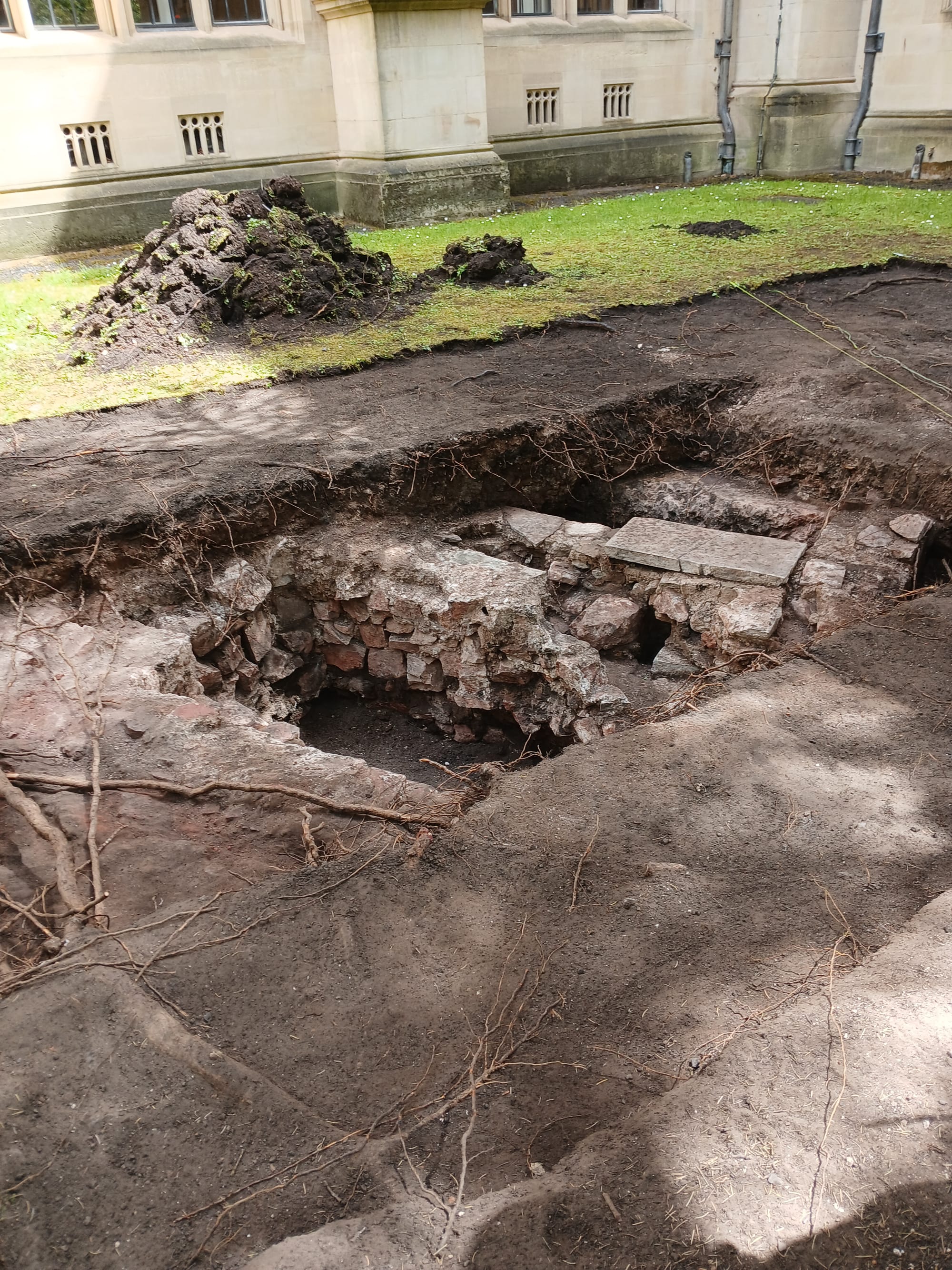
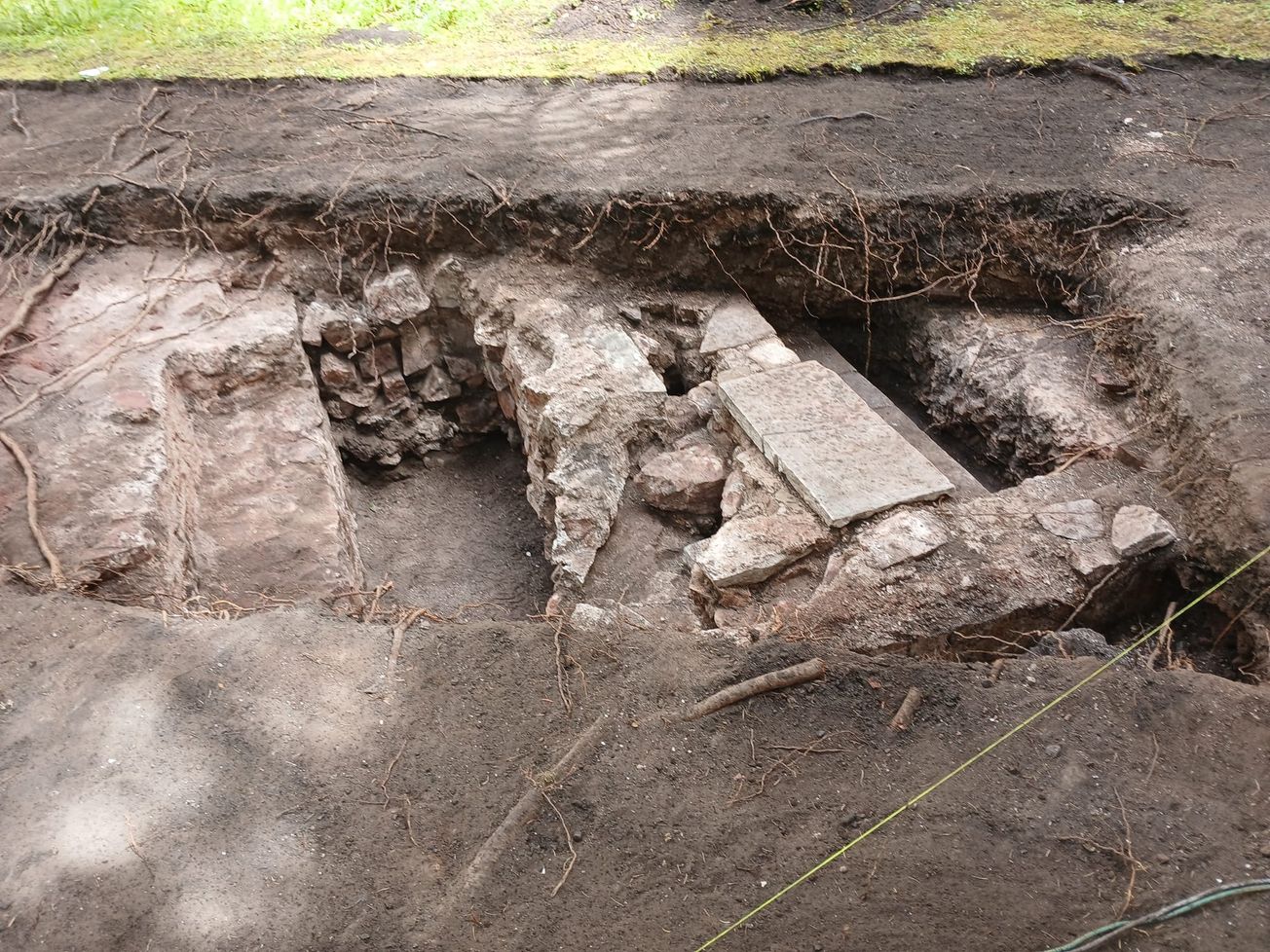
So far the team are revisiting the site of poorly documented work from 2001. Dr Alex Birkett, Specialist Teaching Technician at Bristol, points out what we’re looking at- a section of rough stone wall that runs diagonal to the Physics Building, and some neater, newer looking slabs on top. Alex speculates that the old wall was part of the 1660s/70s Manor House that was built on top of the fortification foundations, while the newer slabs likely date from when Royal Fort was landscaped by Humphrey Repton in 1799.
The team is comprised of lecturers and mostly year one and year two students. Attendance is mandatory but away from the exam hall students swap calculators for steel toe cap boots and excavation tools. Any tormented students sat in the Physics Building can watch the Arch students plunge their spades into the ground with one hand, and tuck into a Mr Kipling with the other hand. But don’t be fooled: students work hard here. Nick shows me their handiwork. In the space of a few days several trenches are dotted around the garden.
Meanwhile, Alex is using a drone to take pictures of the trench next to the Physics Building. How do they know where to dig? There are many different ways, Alex says, including using geophysics and scanning. Another way is photogrammetry which is the process of using 2D pictures to make 3D models.
When students begin to return to the site from their lunch break, Alex introduces me to Holly, a second year Archaeology student, who talks me through the finds so far which mostly confirm the year 2001: coins, nails, sharpies, and, intriguingly, a pair of Ray-Bans. Nearly pre-Gen Z, but not exactly prehistoric. Holly explains that the dig works in ‘contexts’, i.e. one layer represents one period of history. At this stage in the dig they’ve quite literally just scraped the surface.
Holly introduces me to her course mate Rai who explains that alongside organised digs like these, interesting finds are also discovered by accident such as on building sites, at which point commercial archaeology teams are called in to investigate. Rai explains Bristol’s BA in Archaeology and Anthropology is fully accredited by CIfA (the Chartered Institute for Archaeologists) so commercial archaeology is a dream within reach for many students here.
 Jemima Choi
 Maddy Wootton
When the rain pauses I leave the students to their detective work.
Featured image: Archeological trench outside Physics Building at Royal Fort Gardens | Epigram / Hannah Corcoran
Watch this space, what do you think lurks under the ground at Royal Fort?
To keep up with the developments go to the University of Bristol Archaeology Department’s Instagram @bristoluniantharch