By Rebecca Le Jeune, Third Year, Politics and International Relations
Salmon is on Nectar points. The house group chat is buzzing. Love some cheap salmon, feeling extra Nordic; perhaps we may just splurge. But pull on that thread a little, and lo and behold, beneath the purple label lies a trail of falsified records, intense lobbying, and a regulatory system so captured by industry that Norwegian police had to invent a new crime category for it. Welcome to the Salmafia.

Salmon represents 31 per cent of the total value of all fish sold in the UK, making it the most popular fish in the country- a billion-pound industry built, in part, on consumer confusion. The word ‘farmed’ was quietly dropped from packaging in April 2024, after industry trade body Salmon Scotland successfully lobbied the Department for Environment, Food and Rural Affairs (DEFRA) to rebrand the product simply as ‘Scottish salmon.’ The justification was that consumers already knew Atlantic salmon in UK supermarkets tended not to be wild-caught. This is demonstrably false. According to a 2024 animal rights poll, 41 per cent of UK adults believe wild-caught Scottish salmon is available in supermarkets, while actually, every fillet on those shelves is farmed in open-net cages in the sea lochs of the Scottish Highlands. The truth is that since the 1970s, wild Atlantic salmon catches have fallen by 75 per cent. Today, farmed Atlantic salmon production outnumbers the wild catch by almost 8,000 to one.
Some may remember Seaspiracy as a Lockdown watch- it held a successful viewership, reaching the top 10 in over 30 countries within a couple of days of the release. The Netflix documentary blew open industrial fishing's environmental record for a generation of viewers, arguing that ‘sustainable fishing’ is essentially a myth at industrial scale, that the ocean simply cannot absorb the rate at which we're extracting from it. It was imperfect, broad-brush in places, and scientists quibbled with some of its statistics. But its main charge that eco-labels are more about marketing than genuine accountability has only been reinforced since.
It is safe to say the Brits aren't known for a strong regulatory body. The picture is pretty bleak for our fishy friends. Take RSPCA Assured, perhaps the best example. Despite claiming to set ‘higher farm animal welfare standards’, it specifies no limit on the maximum number or percentage of fish dying on its certified farms. This means salmon from farms reporting premature mortality rates as high as 74 per cent can be sold with an RSPCA Assured ‘high welfare’ label in UK supermarkets. The mortality rate here refers to premature death with fish dying before they ever reach harvest, from disease, parasites, injury, stress, or simply the brutal conditions of intensive farming. For context, the average mortality rate on a UK finishing pig farm, an industry hardly celebrated for its ethics, runs at around 3 to 4 per cent. The double standards are pretty apparent. Finally, salmon aren't living as long as they used to. The number of these fish dying on Scottish farms between January and October 2024 was approximately 2.6 times higher than the same period in 2018. Around 12 million farmed salmon died in Scottish facilities last year alone. And the industry's response again is unsatisfying. Certification bodies like ASC quietly introduced a five-fold increase in permitted sea lice levels on certified farms in 2023.
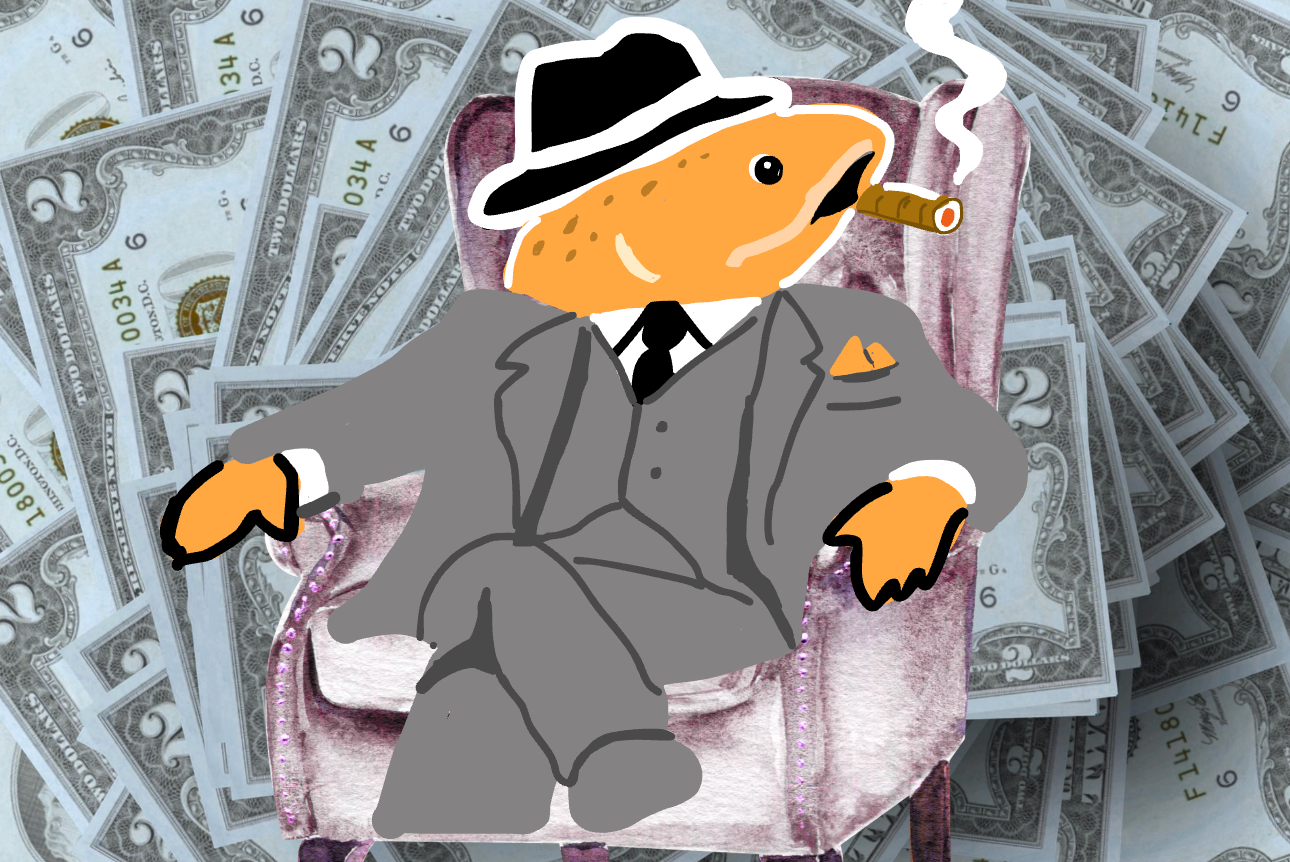
The rot goes deeper than just bad labels. Norwegian police eco-crime units have introduced a formal category called ‘aquaculture crime,’ listing it as high-risk after seeing repeat violations. In Norway (the world's largest salmon producer, responsible for over half of global supply), inspection records show that hardly any salmon farms comply with regulations. Indeed, every major farm audited by Norway's Food Safety Authority in 2024 was found in breach of regulations. Falsification of monitoring data and the concealment of problems from authorities are not uncommon. The revolving door between government and industry is remarkably brazen. Norway's former Minister of Fisheries, Lisbeth Berg-Hansen, owned a stake in a Norwegian salmon farm while serving as the minister responsible for regulating the industry. An environmental group filed formal charges against her in 2009, alleging that her personal financial interests had led her to violate the very regulations she was appointed to enforce- including her farm's own sites, which were under police investigation at the time for parasite levels above the legal limit. A 2013 documentary later accused her of corruption in relaxing legal toxin levels while chairing the health advisory committees supposed to scrutinise them. A Norwegian newspaper called it the Oppdretternes Maktgarn: the Salmon Farmers' Mafia.
 Jacques Picton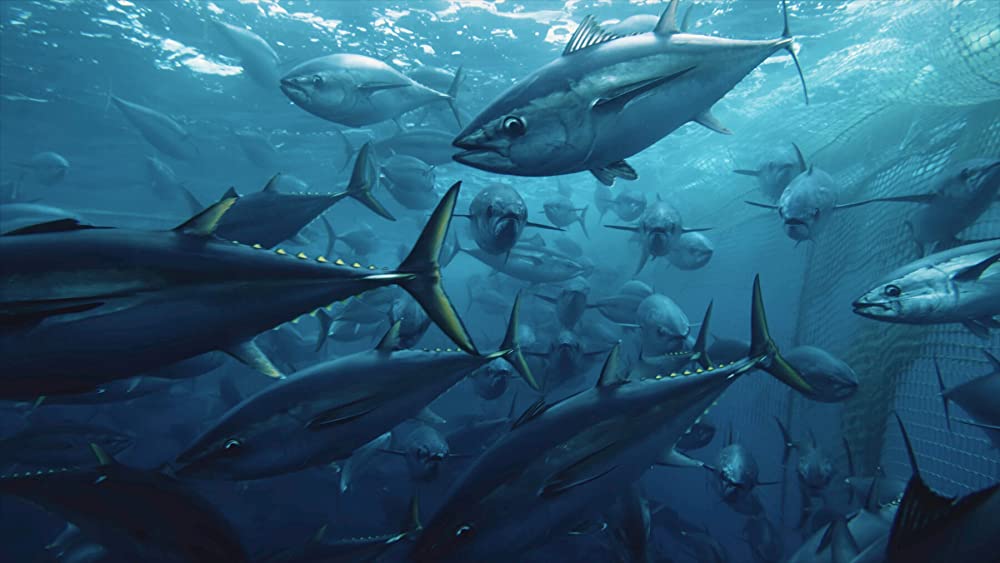
The same few Norwegian monopolies operate the farms supplying Tesco, Sainsbury's and Waitrose. A 2025 WildFish report found that none of Scotland's salmon farming companies are currently operating in a way that adequately protects fish welfare or the wider environment. Most recently, Mowi, the world's biggest salmon farmer and a key supermarket supplier, lost its Royal Warrant after fish at one of its farms were filmed being beaten to death.
The ecological damage extends far beyond the farm boundaries. Sea lice are parasites that thrive in the dense, warm conditions of net pens and spread through open cage walls, infecting wild salmon migrating past. Then there are Acoustic Deterrent Devices (ADD), underwater speakers used to scare seals away from cages. The unintended victims are harbour porpoises, the smallest cetacean in UK waters and one of the most acoustically sensitive marine mammals on earth. Nine years of data from the west coast of Scotland found that the loudest ADD noise coincided with 34 per cent fewer harbour porpoise detections, meaning more than a third of the local population was being driven from its habitat by noise it couldn't escape. One study estimated that if all Scottish fish farms ran ADDs simultaneously, the area of acoustic disturbance audible to harbour porpoises would reach 12,600 km². That is an area larger than Yorkshire and London combined.
This is not just an environmental scandal. It is a legal one. Harbour porpoises are protected under the Wildlife and Countryside Act 1981, and deliberately disturbing them is a criminal offence. It didn't seem to matter. By 2019, ADDs were being deployed at approximately 90 per cent of Scottish fish farms, yet not a single farm had ever obtained the licence legally required to do so.
Far from UK waters, political momentum may be starting to shift. British Columbia has voted to remove salmon farms from parts of its coastline to protect wild fish. Denmark has halted new salmon farm licences. Swedish courts have created significant legal barriers to new open-water farms. Alaska banned salmon farming outright in 1990.
Britain, meanwhile, is still conducting an inquiry (its second in seven years). The Scottish Parliament's Rural Affairs Committee warned in January 2025 that many of the Scottish Government's proposed reforms remain dependent on further internal reviews, with implementation timelines stretching to 2027. On the other hand, a fresh Survation poll published recently found that a third of Scots want an immediate halt on salmon farm expansion, fewer than one in ten think the industry should continue unchanged, and more than a quarter support a complete phase-out of open-net cage farming. Official data show nearly a quarter of Scotland's active salmon farms are currently in breach of the industry's own lice Code of Good Practice.
What can you do?
The simplest switch: frozen wild Pacific salmon over fresh farmed Atlantic. Canned MSC-certified Alaskan sockeye or pink salmon is the most affordable and lowest-footprint option as nutritionally comparable or superior, and caught from one of the world's best-managed fisheries. If omega-3 is the goal: sardines and herring are cheaper, more sustainable, and carry none of the ecological baggage. For those wanting to go further, Bristol has its own connections to this fight. Blue Ventures, a Bristol-based marine conservation charity, works on community-led ocean protection globally. WildFish (wildfish.org) leads the UK campaign against open-net salmon farming and publishes detailed investigative reports. The Marine Conservation Society's Good Fish Guide is the most practical consumer tool available.
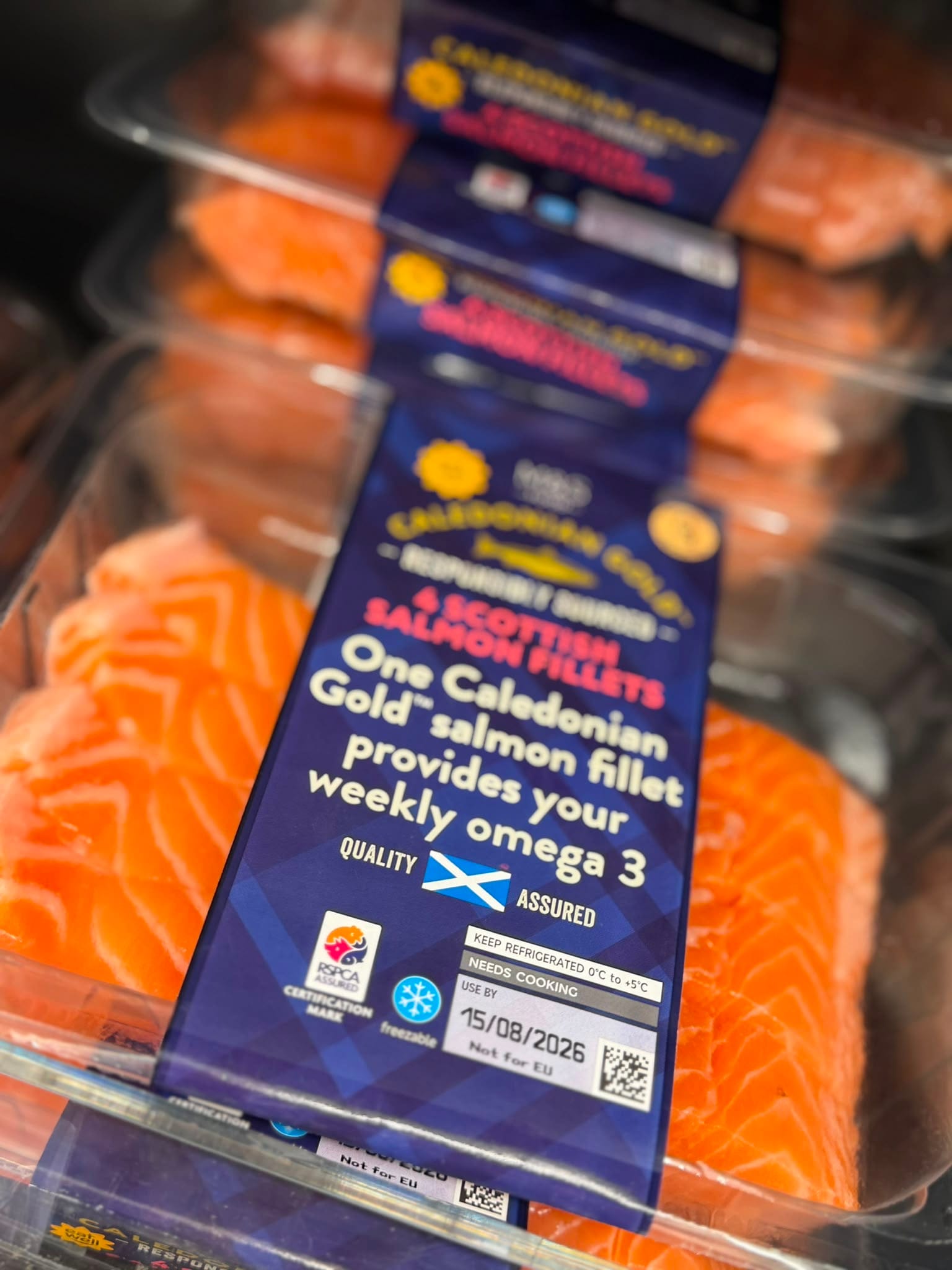
The salmon on the supermarket shelf is the UK's most valuable food export, worth hundreds of millions of pounds, and dressed up in welfare labels that mean almost nothing. Calling it "Scottish salmon" instead of "Scottish farmed salmon" is exactly the point. The less consumers know, the more the full story gets pushed off the shelf.
The author apologizes for the passive aggressiveness throughout this piece. Researching this made her really angry, truth be told.
Featured Image: Epigram / Jemima Choi
Can't we eat sushi without worrying about the salmon anymore?