
By Sonal Korlipara, Literature Columnist
Some of you might be quick to defend the honour of the ‘kinda chic’ trend circulating Tiktok, which I’m giving a bad rep from the title alone. You might be inclined to roll your eyes and say that I just missed the point. The trend is actually doing more than ascribing coolness to things and urging viewers to follow; in fact, it’s doing quite the opposite. ‘Kinda chic’ is suggesting that anything can be cool if you make it, which is why you will find the phrase on any account, no matter the subject, activity, or previous levels of coolness.
But am I really wrong for questioning it? A few days ago, I came across a post that said, ‘Nothing is chic. Everyone just wants to be an adjective instead of a person’, which struck home so harshly that I had no option but to repost. To the people ready to hound me, I ask this: why must things be normalised for you to indulge? Why must you be reminded that you are cool and sexy and loveable and that everyone can see the beauty and effortlessness exuding from your aura? Promoting individuality by culminating every interest, action, look, or thought into one adjective – chic – results in the trend stripping our personalities down to the same thing that we all somewhat wish to achieve.
And why is chic the way to go? Why didn't we veer towards a measure of morality, or levels of interest? Is it just a coincidence that our marker of acceptance is represented through an aesthetic word? I went further back to discover that ‘chic’ is a military term, used because there was a time when European society viewed officers as the model of discipline.
Moreso, we have to address the glaring elephant in the room: not everything is chic. Just as the trend might be used to encourage self-confidence, it may be used to promote vicious societal expectations. One search of ‘kinda chic tradwife’ and I’m reading things like ‘kinda chic to relax into your feminine energy’ and ‘let him take the lead’. Really? Social media, being the echo-chamber that it is, will just regurgitate whatever you already think, making a trend that seeks to break free of boxes absolutely futile.
I find that the trend is especially poignant for students around Bristol. If you stepped out of your accommodation during the semester, I’d bet you could find a few dozen with coloured eyeliner, face piercings, tattoos, something in plaid, everything thrifted, and a funky haircut. At least, that’s what you find in my English lectures. (And I am a contributor). I love this university’s collective desire to be unique and creative, but I can’t help thinking that we are all different in the exact same way. Alternative, in Bristol, is just the norm. Maybe that is because like-minded individuals flock to certain spaces, or maybe it just makes it harder to weed out the performative ones. What’s real anymore? When all the men in my classes are clutching Toni Morrison and a matcha, I find it particularly difficult to know which ones actually care about the Black female experience (granted, they don’t talk like it).
All this to say, it’s almost impossible for us not to ascribe levels of coolness and feel the desire to be a part of them. It’s human nature. Existentialist philosophy discusses how meaning is the one thing that we cannot pass down, but is what we want and inevitably attain. This became clear to me when my father recently said that it used to be uncool to listen to American artists like Guns N’ Roses or Michael Jackson. I had a moment of dissociative existential thought. It occurred to me how stupid and absurd this was. I couldn’t imagine anyone at school being bullied for listening to Bruce Springsteen; if anything, you might be considered cool for being privy to '80s stuff. It’s the same now as it has always been: we are embarrassed of ourselves and desperately want to be liked.

Maybe we need to break free. Maybe we should all abandon the adjectives, the coolness, the flocking, the trend-following, the aesthetics, and turn towards the absurd. Albert Camus, founder of absurdism, argues that our current lives are a clash between our deep desire for meaning and a cold, silent, indifferent universe. Sometimes I find myself looking at an Instagram post and feeling the unprompted rage of I don’t care, while simultaneously spending hours over the composition of my own. Maybe Camus is right. As I discovered through my father’s offhanded comment, nothing really actually matters when it comes to taste. Camus comes to the same conclusion when criticising the shallowness of dandyism in comparison to the noble pursuits of real revolution.
This week I read Hesse’s Steppenwolf, which is especially poignant as the French word chic appears to take its shape from the German ‘schick’, meaning skill and elegant presentation. The protagonist, Harry Haller, is a high-brow man who values classical art like Mozart and Goethe above all else. When he meets a woman called Maria, she relays to him the wonders of an ‘American song’ and suddenly her ‘look of longing’ moves him vastly more than the ‘pleasurable aesthetic experiences of an exquisitely cultivated kind’. This plays directly into the main theme of the novel, the two souls of wolf and man that exist in Haller. While the duality feels initially familiar to the reader as the conflict between our animal instincts and our human socialisation, it becomes increasingly obvious that Haller has actually simplified his soul into two binaries. The author suggests that we have a thousand.
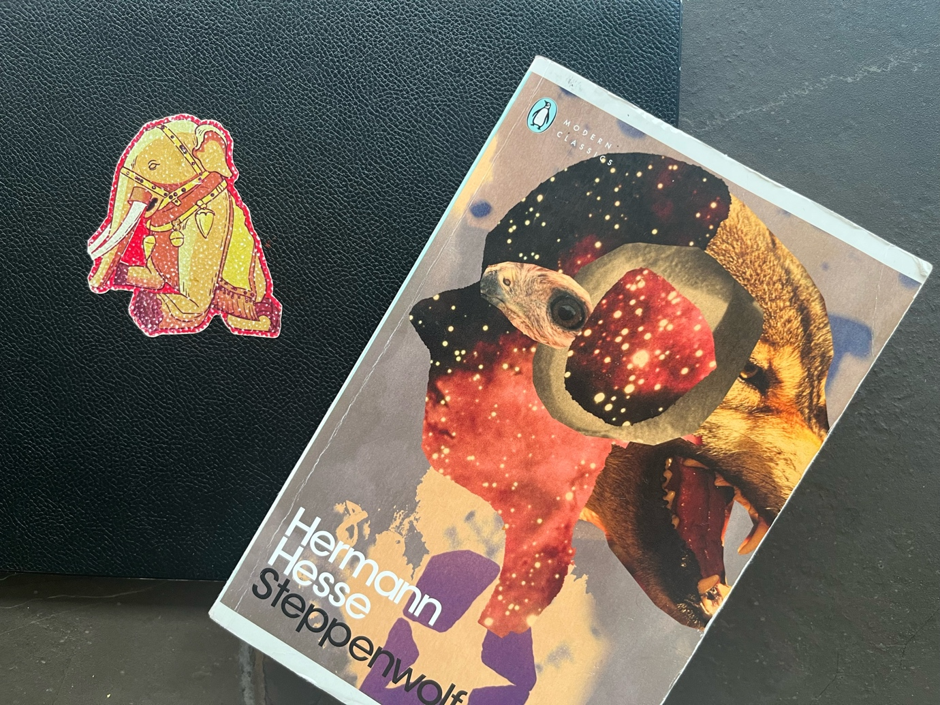
Much like a novel that was written one hundred years ago, we must stop catering to current coolness or hierarchies of taste. Absurdity as a movement demands that you find meaning within yourself, rather than trying to search for it within the world. You won’t find it.
 Scarlett Smith
 Laura Cooper
Social media is increasingly becoming a place where authenticity is a terrifying prospect. If you dare call yourself another adjective you may be laughed at for trying to be ‘different’, but I insist that there’s no harm in trying. You might shake your head again here and argue that’s what the trend has been saying, and I would be inclined to support you if we could just take away the incessant need to cool-ify our personalities. From an individual standpoint, I have noticed a direct correlation between being perceived as cooler to feeling more insecure and alienated.
All this to say, let’s look inwards next time. Acceptance should not come from being viewed as chic, cool, or beautiful – it should just be an appreciation of you.
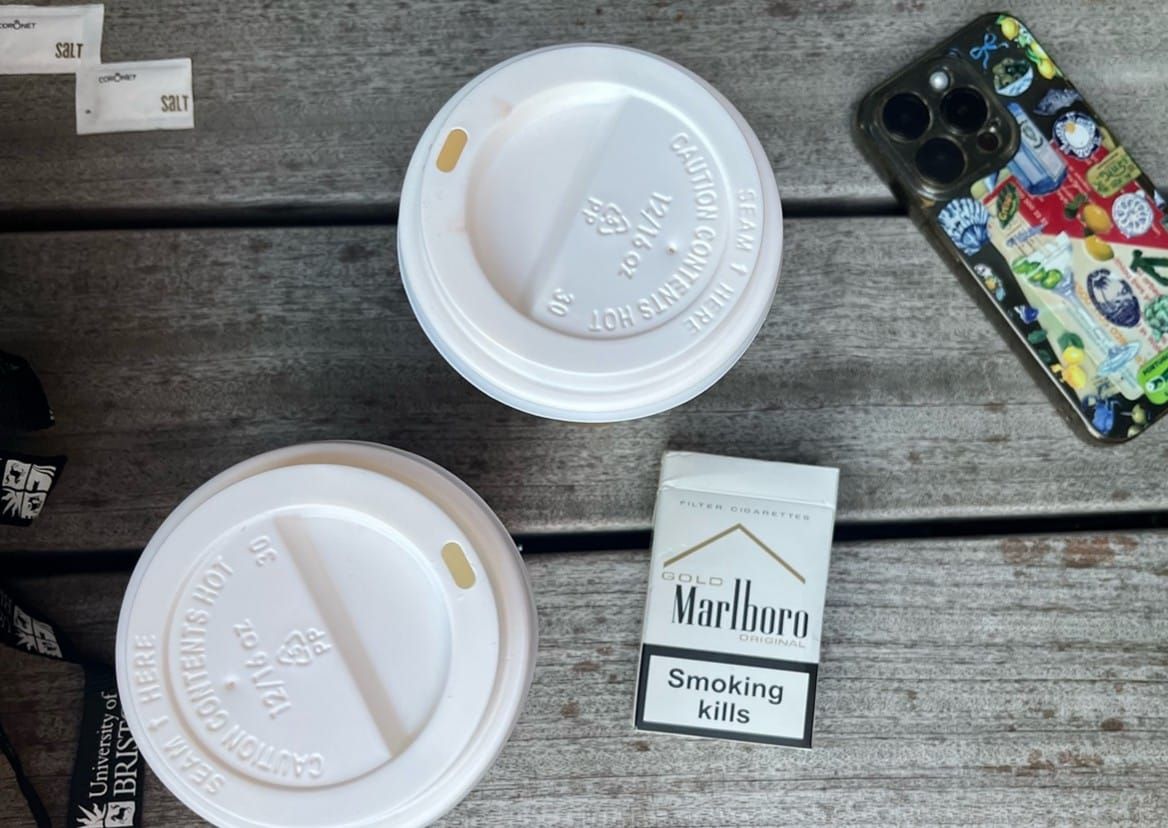
Featured image: Epigram / Sonal Korlipara
Do you ever catch yourself chasing an empty ideal of 'coolness'?