By Charles Hubbard, Second Year Theatre and Performance Studies
Mim Clements’ tender, surefooted and supremely powerful debut as a writer-director is a perfect capper to the DramSoc calendar, complete with a deep bench of extraordinary performances and an ending that will leave you wiping tears away.
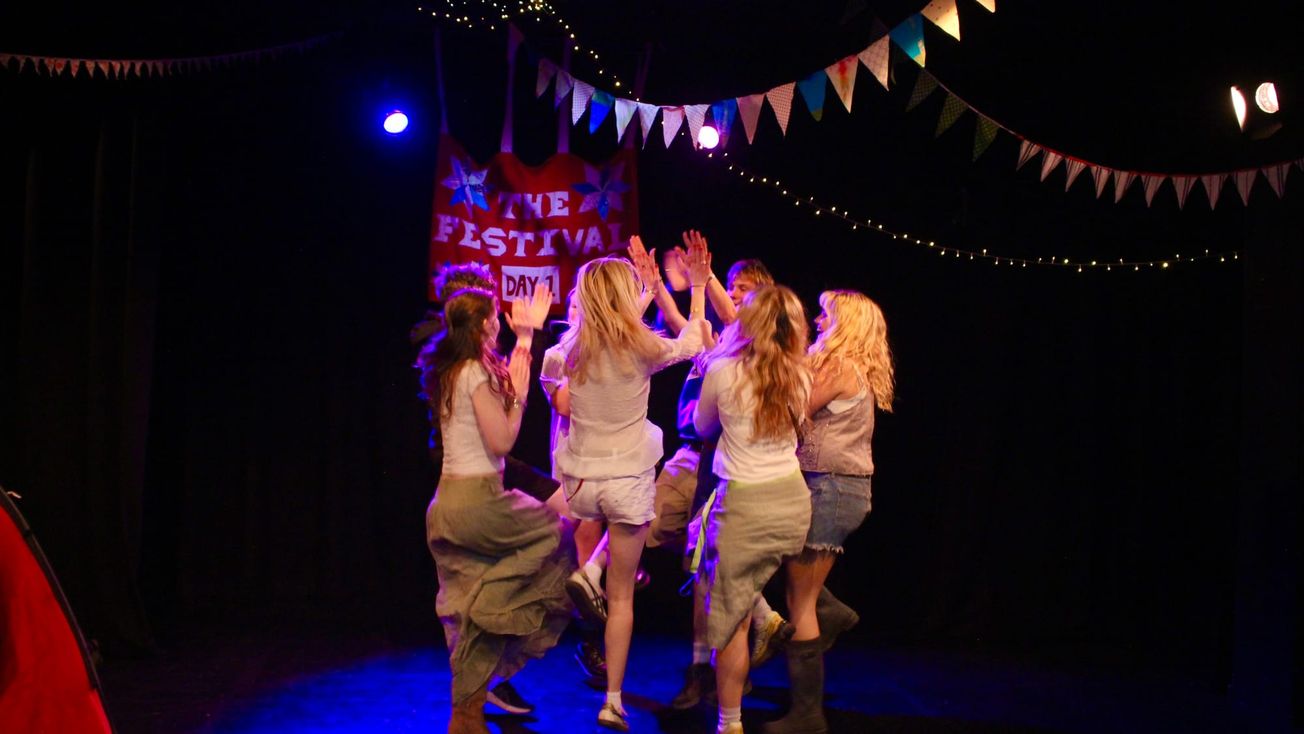
To say that The Festival has greatly been anticipated would be an understatement. Maybe it was the fact that the cast was announced months ago, bucking Dramlights' frustrating trend of only releasing cast lists less than 48 hours before opening night. Maybe it was the fact that it’s the first piece of Bristol student writing to be performed at the Tobacco Factory for more than a little while. Or maybe it’s that Mim Clements, the writer, director and marketer of this gem, has been working on the script for months. Either way, The Festival, a deeply heartfelt and cleverly offbeat mishmash of touching naturalism and bracing stylisation, was certainly worth the wait. To watch it is to be reminded of three things above all others: the incredible wealth of acting talent to be found in Bristol’s performing arts societies, the everlasting power of a perfectly deployed direct audience address and the special kind of buzz that is created when a cast of ten are all operating on the exact same wavelength. A tall order, to be sure, and one that too often goes unappreciated if done right, but Clements make it look easy. Whether intentionally or not, The Festival feels like what the current Spotlights season has been building towards, combining the vignette-based, ensemble-driven storytelling of Ollie Binnie’s Immersion Therapy, the exploration of folklore and storytelling of Sam Wolffe’s The Black Dog and the river of sincere, complicated emotions of Lucy Marshall’s Lotus Lady.
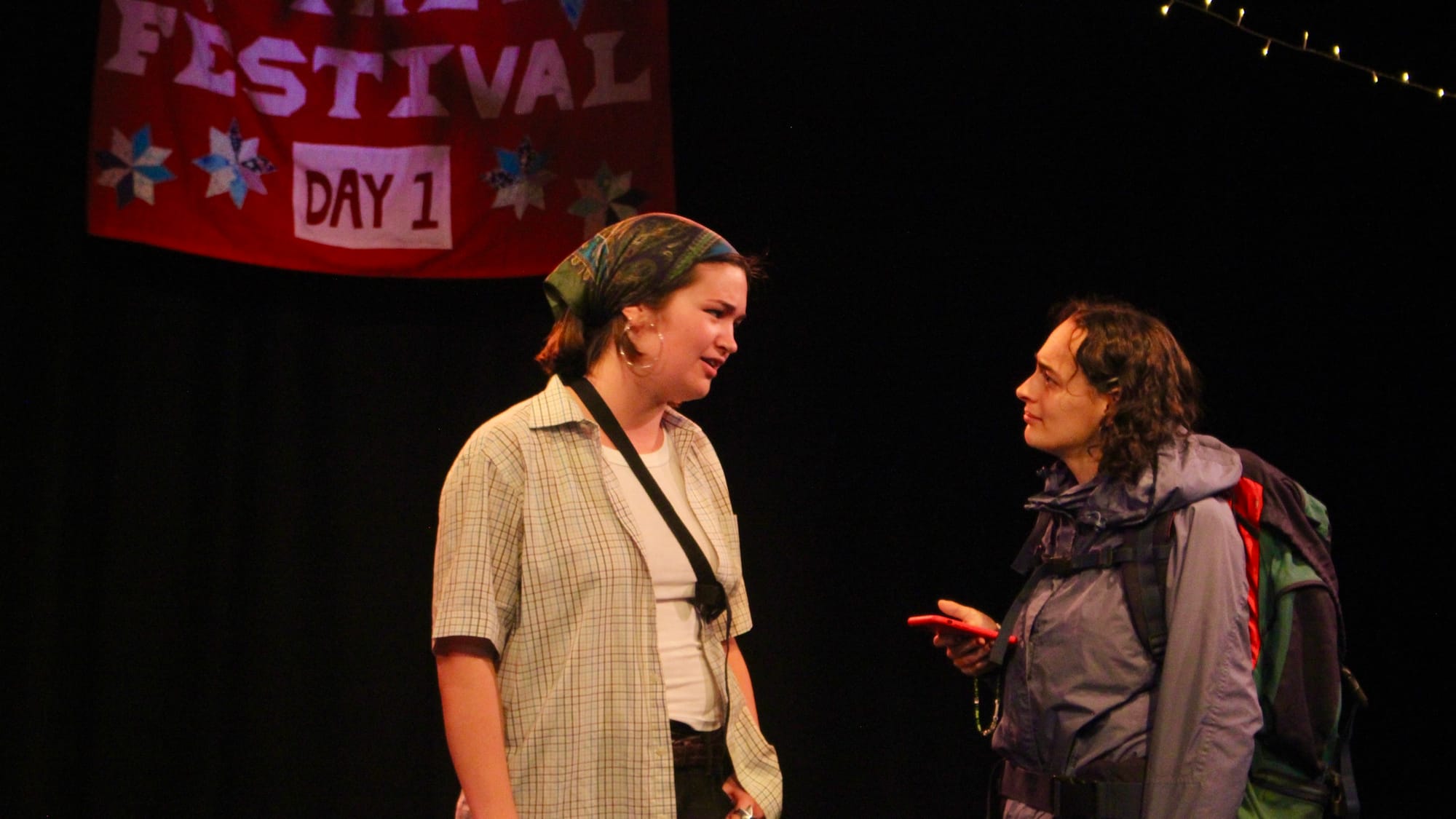
I could just spend the remainder of this review going down the list of actors and talking about how amazing everyone is. So that’s what I’m going to do. Tilly Wade’s immensely charming open tear duct of a performance as Pip, a hippie flower child with a crush on someone she just met, is the centre pole that ties the entire production together, being first onstage and becoming the de facto audience surrogate at points. No one’s better than Wade at playing a pot slowly bubbling over with feeling (she’s done so previously in The House of Bernarda and The Welkin to fantastic effect) and watching her reach a boiling point of sadness and turmoil here is nothing short of transfixing. Isla Jones, who plays Ella, faultlessly merges an effervescent cool-girl attitude with a swirling well of vulnerability - while having terrific chemistry with the rest of the cast the entire time. Katie Mercer applies an impressive degree of empathy to Tiff, a character who could so easily be played for cheap laughs with the wrong actor filling the role. Yet Mercer finds startling compassion in Tiff’s hairpin-turn mood shifts that will turn those laughs right to sniffles - if DramSoc ever does Streetcar, she’d make a cracking Blanche. Isabella Michaelson is admittedly being handed the smallest part of the bunch, lines-wise, but provides an excellent foil to both Mercer and Jones, leading potentially the most emotionally powerful scene in the entire show, which played to rather deafening sobs from the front row.
Veia Zanelli, playing Verity, the overworked, perfectionist older sister to Cooper Brown’s Jacob, is handed a complicated tangle of word salad by Clements and is resultantly able to motormouth with the best of them, handling the patter with a jaw-dropping level of technical skill whilst somehow never sacrificing the sentiments of the script. Brown certainly gets the most laughs out of the cast - him nonchalantly walking onstage, focaccia-in-hand, absolutely brings the house down. But Clements also knows that Brown’s superpower onstage is his open-hearted sincerity (best showcased in his work with MTB on Alice by Heart and Moulin Rouge) and her choice to conceal it for the first half of the show, only to unleash it like a coiled viper when the audience least expects it, is one of her smartest moves. Eloise Nicol, a tremendous actress hitherto criminally underutilised by DramSoc, is bewitchingly restrained as Lauren, the long-suffering girlfriend of Jack Harrison’s Jamie. Her subplot with Harrison entirely revolves around information being tactfully withheld from the audience and Nicol knows exactly just how much of her hand to show them at any given point. Harrison, in his long-overdue Dramlights debut, is excellent at carefully revealing his character’s quiet malaise and disillusionment in a way that never feels melodramatic or overly manufactured. This isn’t the first time he and Nicol have shared the stage together to fantastic results and you can absolutely tell this by the wonderfully natural way they play off one another right from the second they first enter the stage.
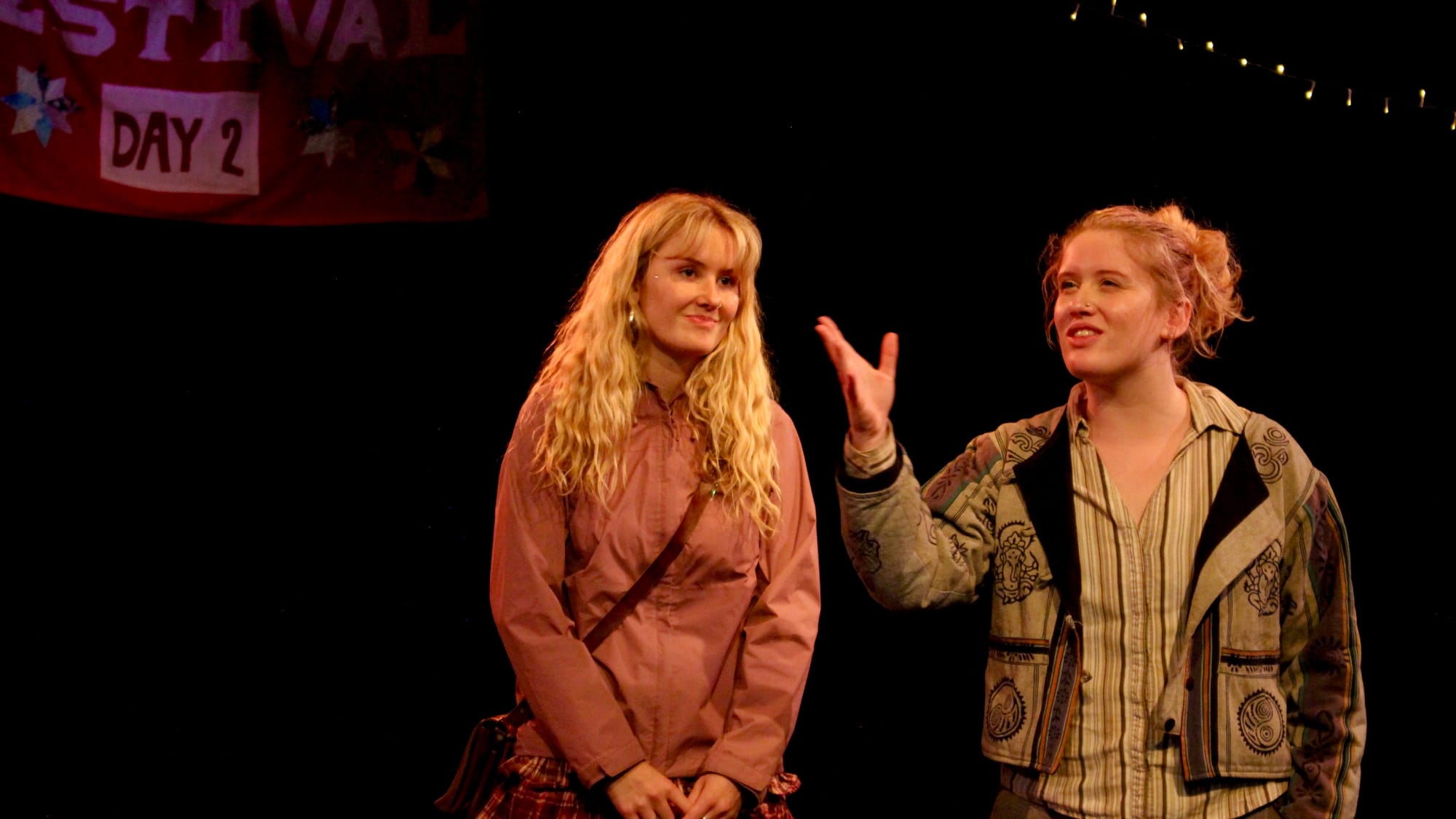
The performance of Dylan Lawler, who plays Reuben, a loner struggling with anxiety, is such a perfectly calibrated blank stare that just watching him slowly look from person to person while silently standing still is more interesting and funnier than watching most actors blast away at a wordy monologue. It feels wrong to choose a highlight among a cast with so many talented performers, especially ones that work so well with each other, but I’m afraid the clear MVP is Li Friess as the enigmatic, puck-like Mr Leroy. Having an actor play a 70-year-old man, especially one who spends the first half of the play speaking entirely to the audience, is a big ask and one that would crush most actors. Fortunately, Friess is not most actors. Nobody, I repeat nobody, is better at playing off a live audience than Friess, who previously flexed such rippling crowd-word muscles in their scene-stealing turn in Edie Doherty’s In Hysterics. The play ends with an unbroken, almost symphonic monologue from Friess where the character tells their final story and Friess is so transcendentally magnetic that you can hear a feather drop, let alone a pin, every time they take a pause.
Above all, it is Clements’ skill for dialogue that sizzles most here. The play contains more than two dozen beautifully crafted monologues for the actors to sink their teeth into - I wouldn’t even be harping on the talent of the cast to such an extent if Clements hadn’t set such an extravagant textual table for them to sit at. In the hands of a lesser writer, the monologues, in which the characters often reveal their deepest hopes and insecurities to people they just met, would feel tin-eared, didactic and utterly inexplicable. However, Clements so wonderfully constructs an ensemble of characters who can’t help but wear their hearts on their sleeves that their page-long emotional mantras feel as natural as everyday greetings. The Festival is a rare production where everyone in the cast and production team is operating at the highest possible level, while also so clearly being the unique and idiosyncratic product of one mind.
Featured image: DramSoc / Mim Clements
Will you watch DramSoc’s next production?