

By Ruby Wright, Literature Column editor
In these trying times where deadlines loom, every seat in the ASS is full by 8am, and the sunshine-filled Royal Fort Garden pulls you out of the library, you might be just about ready to try anything to get you to lock in.
The good news is you’re not the first. There’s a long line of writers before you who, in their desperation to meet their deadline, developed sometimes structured, sometimes eccentric, and other times literally insane routines in order to push them into reaching their word count.
If you’re at the end of your tether, why not turn towards these tried-and-true tactics to maximise your productivity.
1. Make a delusional routine plan that you won’t follow
Susan Sontag, famous literary theorist who first defined ‘camp’, and was otherwise obsessed with European literature, had no strict writing routine per se – but in 1977 she did write this list in her diary in a moment of desperation following a week of writer’s block.
- Starting tomorrow — if not today:
- I will get up every morning no later than eight. (Can break this rule once a week.)
- I will have lunch only with Roger [Straus]. (‘No, I don’t go out for lunch.’ Can break this rule once every two weeks.)
- I will write in the Notebook every day. (Model: Lichtenberg’s Waste Books.)
- I will tell people not to call in the morning, or not answer the phone.
- I will try to confine my reading to the evening. (I read too much — as an escape from writing.)
- I will answer letters once a week. (Friday? — I have to go to the hospital anyway.)
Swearing to wake up early, limit her phone time, and stop going out with friends? Sounds familiar. Aspire to be as optimistic (or delusional) as Sontag, and make a list that you will absolutely stick to.
2. Have a drink and rewrite everything
Despite working strictly on a typewriter, and never a blank Word doc, Joan Didion, one of America’s greatest essayists, was no stranger to writer’s block. In her 2005 interview with the guardian, she describes how she spends:
“Most of the day working on a piece not actually putting anything on paper, just sitting there, trying to form a coherent idea and then maybe something will come to me about five in the afternoon and then I’ll work for a couple of hours and get three or four sentences, maybe a paragraph.”
Her strategy for overcoming this was inspired; the ‘Evening-Drink’ technique. If you’ve cancelled all plans to go to the pub, uncancel them, and subscribe to Didion’s writing philosophies that she outlines in a 1968 interview with the Paris Review:
- Spend an hour alone before dinner with a drink, editing
- Do absolutely no work in the late afternoon
- Start the next day redoing everything that was done the day before
- Sleep in the same room as a book when close to finishing it
3. Stay in bed all day
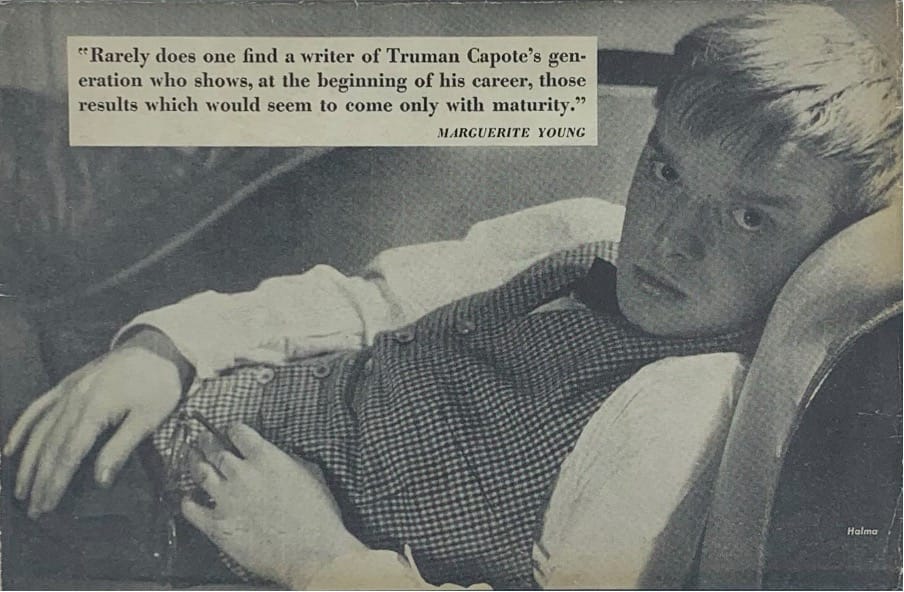
Acclaimed author of novels such as In Cold Blood and Breakfast at Tiffany’s, Capote is no stranger to bed rotting. In a 1957 Paris Review interview, he admits:
'I am a completely horizontal author. I can’t think unless I’m lying down, either in bed or stretched on a couch with a cigarette and coffee handy.” Puffing and sipping, as he put it, from coffee and mint tea to sherry and martinis; with everything written by hand and in pencil.
In other words, don’t bother getting dressed or out of bed. Lie down with your laptop and spend a relaxed day in a reclined position, and let the words flow.
4. Download Strava
Murakami, perhaps the most famous Japanese author in the English-speaking world, exquated productive writing with running. In 2004, in the Wind-Up Bird Chronicle, he explains his “writing mode” when working on Norwegian Wood;
I get up at four a.m. and work for five to six hours. In the afternoon, I run for ten kilometers or swim for fifteen hundred meters (or do both), then I read a bit and listen to some music. I go to bed at nine p.m. I keep to this routine every day without variation. The repetition itself becomes the important thing; it’s a form of mesmerism. I mesmerize myself to reach a deeper state of mind.
There you have it; get up at the crack of dawn, start your Strava journey right now and the essay will write itself.
Note: EPIGRAM does not endorse dangerous levels of drug consumption
5. Develop an uncontrollable cocaine habit
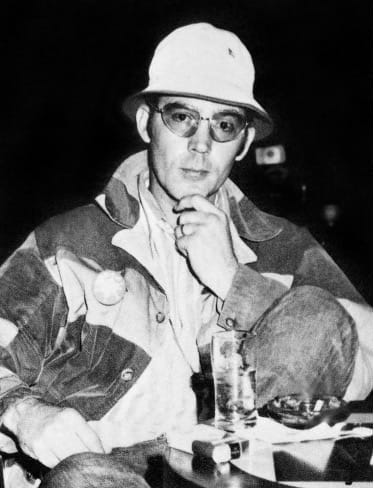
In E. Jean Carroll’s decidedly unconventional 1993 biography of Thompson, writer of the undeniable modern classic, Fear and Loathing in Las Vegas, his daily routine is listed roughly as follows:

Carroll’s novel has been largely understood to be a melding of fiction and non-fiction; that is to say who knows how true to reality this description actually is. So, perhaps following it would be an incredibly bad idea. However, if the daytime hasn’t been working for you, maybe becoming largely nocturnal and making use of the full 24 hour service the ASS provides is the way forward?
6. Go for a mental health walk
If you’ve ever felt yourself getting antsy in the library, maybe the answer is to spend some time reconnecting with nature. Follow in the footsteps of literary legend, Charles Dickens, who wrote in his diary that, while writing books some of the most classic books in the English language, he would:
Rise at 7 a.m., breakfast around 8 a.m., then begin to write at 9 a.m. completely alone in the study. Work without intermission until 2 p.m., break for lunch, and then set off for a three-hour walk around London
Repeat every single day. Just don’t forget the essential step of leaving a singular water bottle on your desk during your three hours walk to stop anyone else from taking your seat.
7. Give up after dinner
Trying to do work after dinner has always been a losing battle, and it’s one that theorist and fiction author Ursula (K) Le Guinn surrendered to. In a 1998 interview, she details her writing routine as such:
5:30 – wake up lie there and think
6:15 – get up and eat breakfast (lots)
7:15 – get to work writing, writing, writing
Noon– lunch
1-3pm – reading, music
3-5pm – house cleaning
5-8pm – make and eat dinner
After 8pm – I tend to be very stupid and we won’t talk about this
Evidently one hour lying in bed in the morning thinking is key to the creative process, so implement a bit of lazing about as soon as possible. More importantly, absolutely do not forget to become useless at doing any work at all after dinner; clearly it’s integral to the four hour block of writing you need to attack in the morning.
Good luck!
Which routine will you follow?
Featured image: Unsplash