
By Charles Hubbard, Second Year, Theatre and Performance
It’s obviously old hat to point out that most music biopics of thinly veiled attempts at necro-fillatio for the figures they’re about. What else can you expect when the rights for some of the most famous music of the 20th century is currently gripped by the cold, unfortunately-not-dead-yet hands of the artists’ estates, who barely allow the acknowledgement that their claim-to-fame is even human, let alone morally complicated? But even by these standards, this new biopic of King of Pop is so washed out with sanitiser and safety proofing it makes Bohemian Rhapsody (2018) look like Velvet Goldmine (1998) by comparison.
Starring Jackson’s own nephew and directed by a man so clearly handcuffed to his desk by decades worth of watertight legal contracts, Michael (2026) is almost religious in its devotion to depicting its protagonist as angelic as possible. And this would be a major concern if the film was based on the life of a regular schmo, let alone a man whose legacy has been mired in controversy to rival most of the guests on Epstein’s island. The bombast of the battle between how the film wants to present Jackson and who he actually was, which plays out in full view amid the scenes of Jackson poring over children' s books, would almost be enough to be wildly entertaining if the endeavour itself wasn’t so bleak.
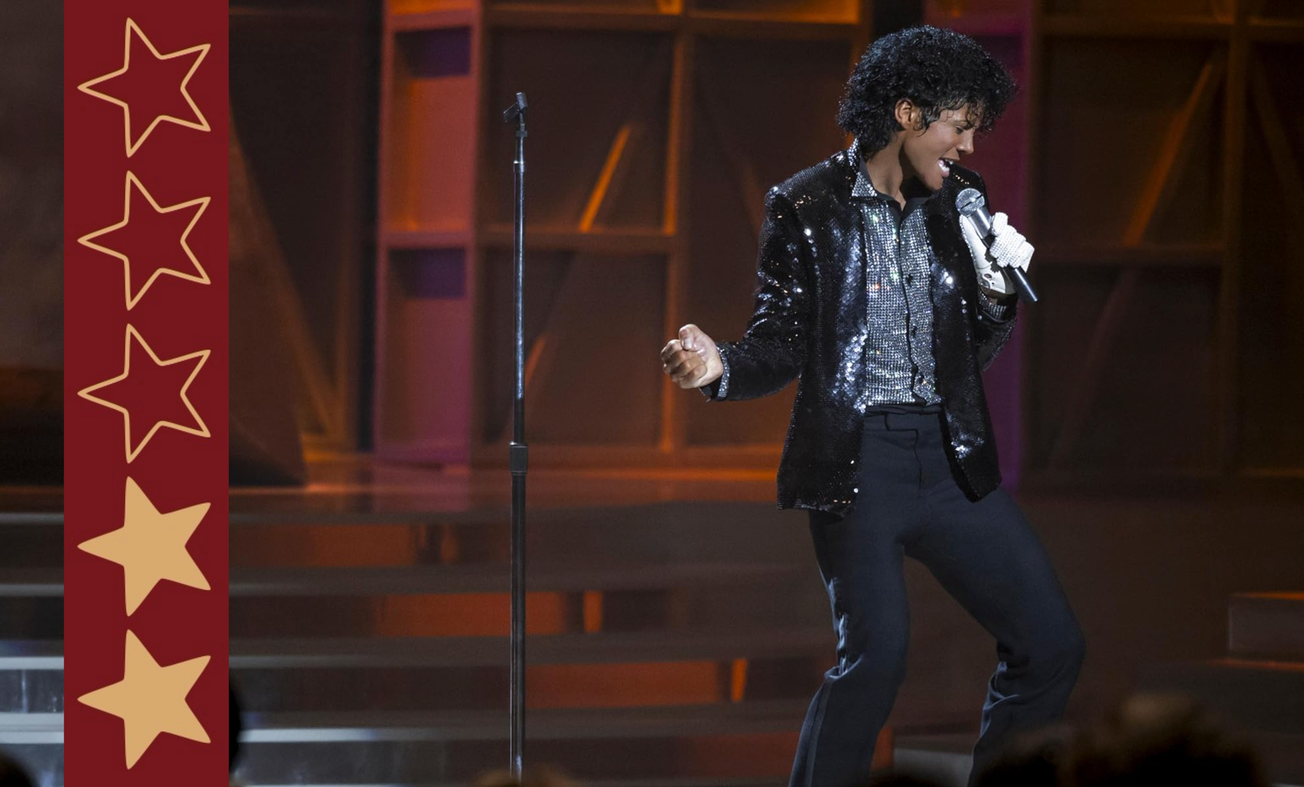
Opening in 1962 Indiana with Jackson (a superhumanly lithe Jafar Jackson) just a little tike with half of his childhood behind him and the rest being wrestled into a manhole by his cartoonish demonic father (Colman Domingo visibly regretting all his life choices), the film farts along haplessly, barely buoyed by the knowledge that its depicting the most infamous pop rise to fame since the Beatles. Even truncating itself in 1988 with the release of Bad (hmmmm, I wonder why they chose that specific date …) leaves the film biting off far more than it can chew as it forces every track on several of the most famous albums ever made to play over the top of the revolving door of hopelessly cliched scenes of family turmoil, hopelessly cliched scenes of charming music producers and hopelessly cliched scenes of onstage actualisation (that Jafar admittedly handles with fantastic zip).
And even that makes this particular palette of beige mulch sound more varied than it actually is. The script by John Logan (though I’m going to need photographic evidence of the writer behind The Aviator (2004) and Skyfall (2012) physically typing out clangers like “Michael, you need to relate to kids your own age” before I’m disillusioned enough to believe it) twists Michael not only into a modern day saint but an intensely eloquent one.
For a man famously never able to verbalise his inner struggle, he sure is able to perfectly outline exactly what Logan and Fuqua feel about the material with scene after scene of him spouting righteous platitudes about taking control of his narrative.
The catastrophic black hole at the centre of this shitfest (you know, where the heart should be) is the fact that, unlike other controversial figures sanitised in major biopics, everything that makes Jackson interesting and fascinating as a cultural and artistic figure is inextricable from the gargantuan hurricane of controversy that has dogged his legacy even more relentlessly than his own music.
The film desperately wants to point out his charming(?) obsession with Peter Pan and his ostensibly admirable philanthropic work in children’s hospitals, not seeming to realise that depicting those onscreen forces the film to squish up against a celebrity scandal eighty feet high and wider still. At times, the film almost feels like an SNL parody of a hagiographical, estate-mandated, no-controversies-to-address celebrity biopic, yet the track of boos and uncomfortable laughter that accompanies Michael telling his pet chimp what a wonderful place Neverland is has been cut out.
If nothing else, Jafar Jackson sure can dance. Unfortunately unable to bring any humanity or empathy whatsoever to the plastic cellophane person of Logan’s script (though neither did Rami Malek, Austin Butler and Timothee Chalamet and yet the trophies rolled in), Jafar would be a complete place-holder if it weren’t for the film’s mercifully frequent dance scenes. I’m generally violently opposed to the “if they look enough like them, it’s automatically a good portrayal” style of insufferably literal performance theory but there is undeniable magic to see Jafar deliver the choreography with just as much panache and precision as his uncle did.
Equally charismatic is Juliano Valdi as baby Michael, though I don’t quite understand Fuqua’s penchant for exclusively shooting him with the camera barely two inches from poor Valdi’s face. Bill Corso’s makeup is also exemplary, subtly transforming Jafar’s face piece by piece to leave him the prosthetically disfigured corpse Jackson had become by the time he entered the 1990s.
If you just want a complication-free reminder of Jackson’s music, you’ll certainly get what to pay for. I mean the first thing the audience hears is a piercing “hee-hee” played over a Universal logo that looks a little embarrassed that it’s accompanying such a flagrantly cynical act of nostalgia manipulation. Can a logo look embarrassed? That one sure did.
 Skye Cox
I’m afraid I can’t really say anything constructive about this film but that feels fitting for a biopic so unwilling (or maybe just downright unable due to legal restrictions) to even construct itself in the most superficial sense. It is a parody of a Hollywood musical biopic and unfortunately not one that dares to have a sense of humour about itself.
Featured Image: IMDb / Wasteman | Illustration by Epigram / Sophia Izwan
Will you be watching this controversial flick to one of pop's biggest stars?



%20Review%3A%20at%20least%20the%20lawyers%20are%20happy)