The Resident Evil series (1996-) holds an indelible and sacred place in gaming culture, having thrilled players for thirty years. However, it has failed to take a firm hold as a movie franchise with a slew of critically derided flops released between 2002 and 2021. Until now.
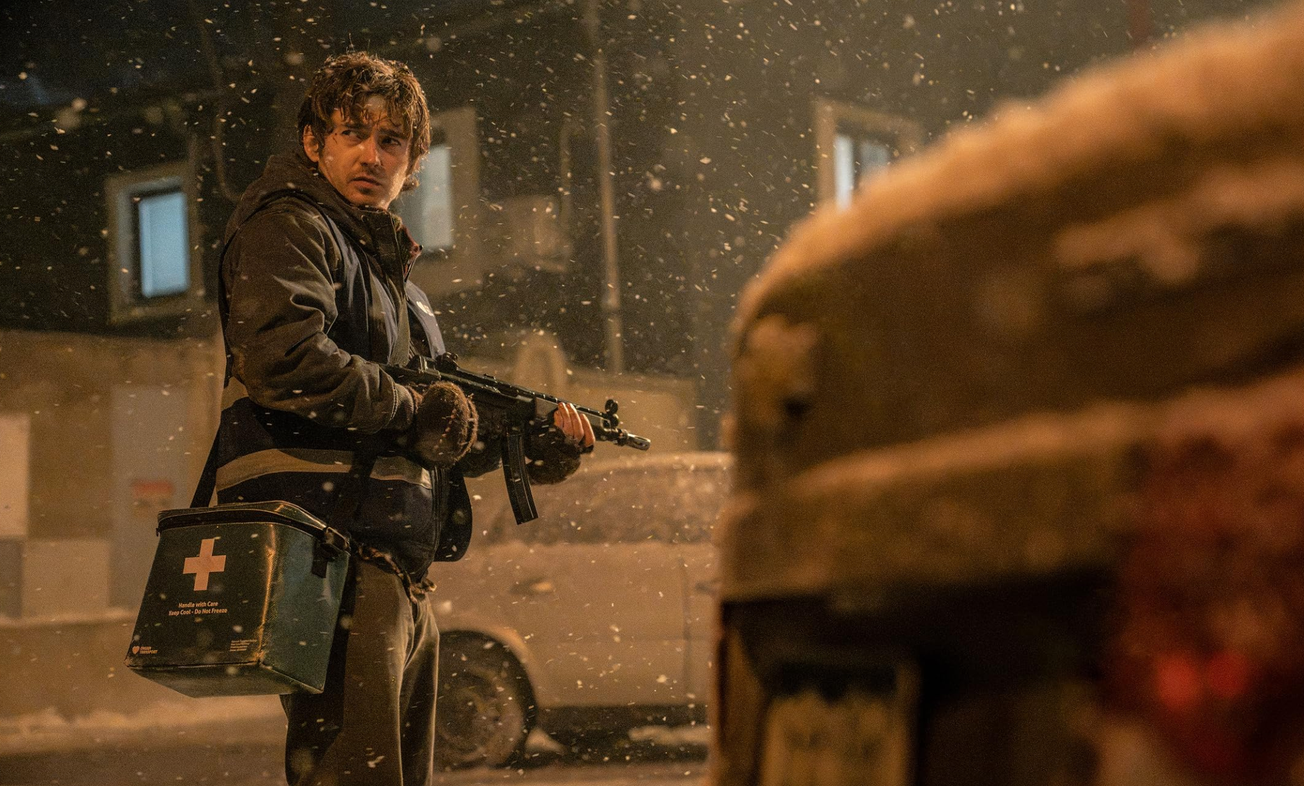
Resident Evil (2026) - Zach Cregger’s visceral and deeply thrilling adaptation - jumps to the big screen with a bang and a shriek. The film follows Austin Abrams’ Bryan as he transports a mysterious package to Raccoon City General Hospital, narrowly evading a series of mutated aggressors, which, under Cregger’s direction, oscillate adeptly between genuinely chilling and absurdly funny.
Narratively, the film is sharp and enjoyable both on the surface level and on deeper examination. The plot is tightly woven and doesn’t begin to drag at any point. Cregger lingers just long enough in each scene to evoke genuine terror as well as humour before moving on to the next, making perfect use of the marvellously constructed Raccoon City. This location feels real and tangible while simultaneously seeming like a video game environment, designed for blind spots that keep the audience on edge. The character writing is excellent too. Bryan’s everyman charm is consistently engaging and the secondary cast is memorable and hilarious with Paul Walter Hauser’s Carl being a real highlight.
Throughout the film, the visuals pop. The monster designs are wonderfully unique and were, to my understanding, relatively non-reliant on CGI. While there were certain parts of the film, such as the final sequence, which felt more digitally crafted, these were the sections that felt more like they’d come straight from the video game so the fluid, digital appearance of these scenes was probably intentional. The rural and city environments of the film felt both suitably dark and forbidding with the choice to set the film during a snowy winter proving particularly effective in conveying a desolate ambience as we follow our lone protagonist on his perilous journey.
Austin Abrams is perfectly cast. His reactions to the rapidly decaying and horror-filled world he inhabits range from side-splittingly funny to genuinely emotionally affecting. On the former side of the spectrum, highlights include a running gag involving locks that leaves Bryan increasingly exasperated and his reactions when his ill-thought-out schemes fail, such as when he tries to drive through a metal gate and gets stuck instantly. On the other side, Abrams plays Bryan as a genuinely tragic hero, full of desperation and tortured by things left unsaid.
The score, composed by frequent Cregger collaborators the Holladay Brothers, is fantastic. It perfectly captures the tension and adrenaline rush of action-horror video games and leaves you on the edge of your seat. The track 'Alley' is a highlight, building from a low, understated rhythm, which punctuates Bryan’s fearful descent into the unknown, to a thumping, visceral gut-punch of a track which wouldn’t feel out of place at the club. Its modern electronic orchestration complements Cregger’s world-building, putting us firmly in a world not far removed from our own.
To address the elephant in the room, a certain vocal minority of the video game series’ fans has decried this adaptation since its announcement to the point that Cregger has questioned whether he will return to the franchise for further instalments. Now that the film has received widespread critical acclaim and an unexpectedly strong opening weekend, we will have to wait to see whether Cregger will change his mind. I for one hope he does.
 Laura Cooper
The criticism levelled at this film has largely revolved around its strength as an adaptation as it does not include classic characters nor directly follow any storyline from the games. However, I see it differently. In fact, I think this is the perfect way to go about a video game adaptation. This film is the game, from the gameplay mechanics mirrored in its creative cinematography to the genuine hyperreal thrill of its narrative and setting. I would not have enjoyed this film nearly as much if I already knew where the story was going from a game I was already familiar with. Resident Evil is a film that’ll sink its teeth into you and not let go. Just make sure you clean up that wound.
Featured image: IMDb / Resident Evil
How do you think Resident Evil measures up to its source material?