By Charles Hubbard, Film & TV Deputy Editor
Some actors are so reliable, so familiar and so consistently outstanding, we tend to take them for granted. Like an armchair that’s been in your living room for so long that you forget it didn’t initially come with the house, we unfortunately don’t stop and truly appreciate their presence until they are gone.
Never has this been truer than in the case of Sir Patrick Stewart, the legendary British actor who has passed away aged 86 in Los Angeles, following what the family describes as a 'brief and poignant journey' with Alzheimer’s. Stewart’s permanently shaved head and commanding baritone voice are such a part of stage and screen history at this point, it’s difficult to imagine that it wasn’t always this way.
However, as a brief glimpse into the man’s private life and personal history will show you, Stewart’s rise to international fame was far from inevitable. Growing up in a poor household in Mirfield, Stewart’s childhood was marred by alcoholism, domestic violence and the PTSD of his father Alfred (who took part in the Dunkirk evacuation shortly after Stewart was born). He was not nearly as to the manor born as his reputation as a polished Shakespearean would have you believe. Stewart and fellow actor Brian Blessed were able to attend the Bristol Old Vic Theatre School not through inherited wealth but rather subsidised grants from West Riding School. Stewart was the person to receive such a grant not to have already graduated from Oxbridge.
While Stewart’s journey from an unhappy childhood to treading the boards is often disingenuously repurposed as a bootstrap narrative to perpetuate the myth of theatrical meritocracy and the idea that anyone can easily become a professional actor no matter where they come from, it should instead be a lesson the importance of governmental investment in the arts. After decades of self-serving Tory austerity, such grants from West Riding School no longer exist. Right now, we are potentially missing out on a whole generation of Patrick Stewarts just because virtually all post-Thatcher UK governments have conveyed open contempt for funding the arts. This is an insult to Stewart’s memory as the man himself was a bold advocate of equality, a staunch socialist and a life-long member of the Labour Party.
However, make it to the stage Stewart did, and, along with Ian McKellen, became the most important British stage actor since Laurence Olivier. Making his professional debut at Bristol’s Theatre Royal in John Hale’s 1959 production of Cyrano de Bergerac, in 1966, he became a member of the Royal Shakespeare Company - where he would stay until 1982. There, he gave some of the most lauded renditions of Shakespeare of his time, including his performances as the Duke of Cornwall in King Lear, Oberon in A Midsummer Night’s Dream and Shylock in The Merchant of Venice. He then went from strength to strength on Broadway, playing all the roles in a one-man version of A Christmas Carol, Prospero in The Tempest and the titular role in Macbeth, for which he was nominated for a Tony.
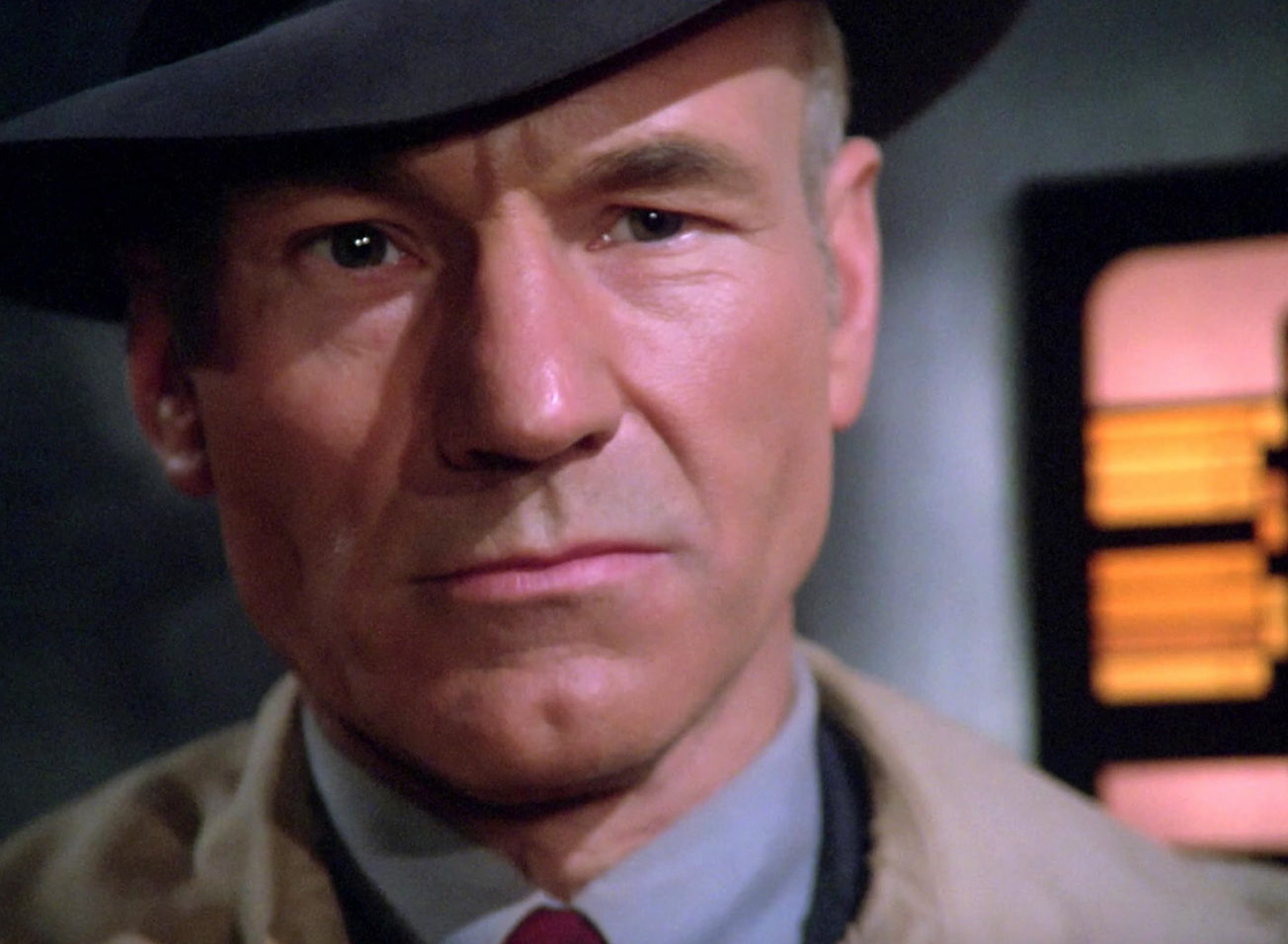
It’s these Shakespearean bona fides that made his turn as Jean-Luc Picard, the stern but sensitive captain of the Enterprise, in Star Trek: The Next Generation (1987-1994) entirely transformative for both the show itself and Stewart’s career at large. Elevating the show from its previous reputation as a campy sci-fi serial to a show worthy of legitimate critical admiration, Stewart’s tremendous dramatic command (and eminently meme-able expressions) provided the perfect counterpoint to William Shatner’s campy histrionics. Considering how difficult it is to imagine anyone else playing the role, I was shocked to learn that Gene Rodenberry, Star Trek’s long-time showrunner, didn’t initially want to cast Stewart due to his lack of hair. Stewart brought similar gravitas to his role as Charles Xavier (a.k.a Professor X) in X-Men (2000) and its subsequent sequels.
 Willow Wood
And yet, Stewart remained inexplicably undervalued even as everyone acknowledged him as one of the best working actors. Like Gillian Anderson - another stage and TV icon - after him, Stewart was never given the lead role in a major studio film (outside Star Trek’s cinematic spin-offs, that is), meaning that his status as a legend was always strangely reserved for the stage or the small screen. Compare that to his X-Men co-star (and clearest contemporary) Ian McKellen, who continues to get major movie star vehicles and Oscar-hopefuls well into his 80s, such as Steven Soderbergh’s The Christophers (2026). In fact, Stewart remains perhaps the greatest ever actor to never receive an Academy Award nomination - not even for his heartbreaking turn in Logan (2017), which was nominated for Best Adapted Screenplay.
The fact that Stewart’s final credit will turn out to be the upcoming Avengers: Doomsday (2026), where he is billed 17th, below Hayley Atwell and James Marsden, is sadly indicative of this. However, to bemoan Stewart’s lack of plum big-screen roles now that he has left us would be missing the forest for the trees. As anyone who has seen a recorded version of one of his stage performances will know, Stewart is certainly not lacking when it comes to his once-in-a-generation talent being captured on camera. If Stewart’s life and work can teach us anything, it’s that seismic talent is equally likely to come from any socio-economic background and that the best actors will have just as much impact in any medium.
Featured image: IMDb / Patrick Stewart
What's your favourite Patrick Stewart performance?