By Rosie Napthine, Third Year, English
Hauntingly beautiful, and symbolically complex, this InterAct production of Tennessee Williams’ famed ‘A Streetcar Named Desire’ is a production that leaves its audience with a chilling guilt.
Its gutting use of an ensemble creates a lingering feeling of a broader societal degeneration that is deeper than just the characters we are shown. A pain not only witnessed but personally experienced.
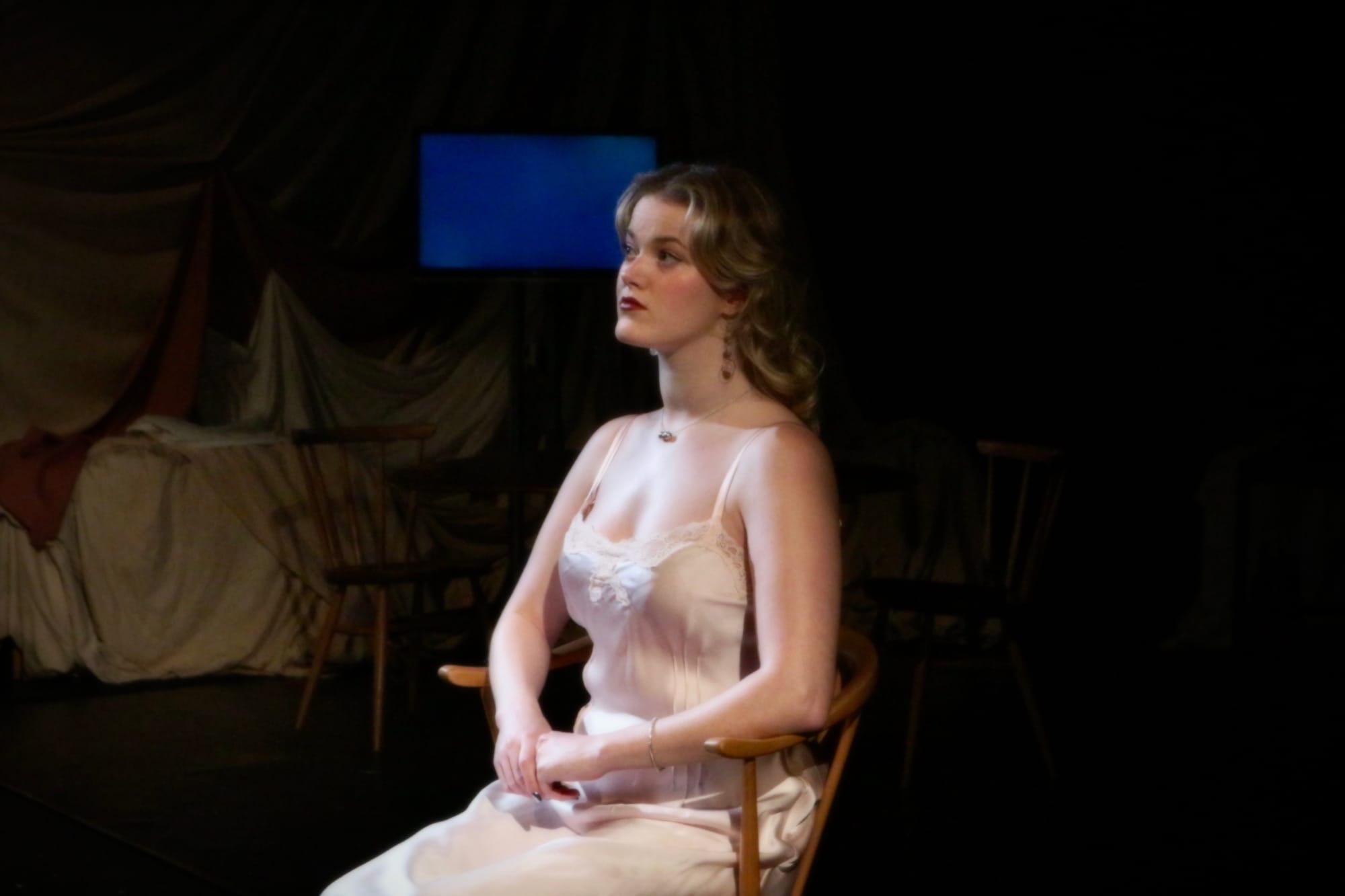
We step into the Wickham theatre and are flung headfirst into the troubled mind of Blanche, as CRT Blanche (Isolde Ryder-Airey) sits centre stage, heartbroken and abused, watching us take our seats as a complacent audience. A chilling image of a Blanche turned camera woman, and ghostly figure. Her physical being (Eloise Nicol) is haunted by her spirit (the CRT Blanche), her deepest intimacies filmed and projected; an exposure so hated by the Blanche we come to know. Followed across stage, we see her unable to find any of her so desired privacy, even when hidden from all other characters. And when the climax sends this ghostly Blanche into the audience, we see an even more blatant and expressive exposure, with us as bystanders becoming accountable for this forced projection of her inner humanity. Through filming not only her close facial expressions, intentionally hidden by her preferred darkened rooms, but her hands also- such a telling form of expression yet normally unnoticed- this Blanche has no place to hide. We understand so truly how she feels, and witness society's violation of her. At times it even felt as though we were watching a true crime documentary, a fitting foreshadowing.
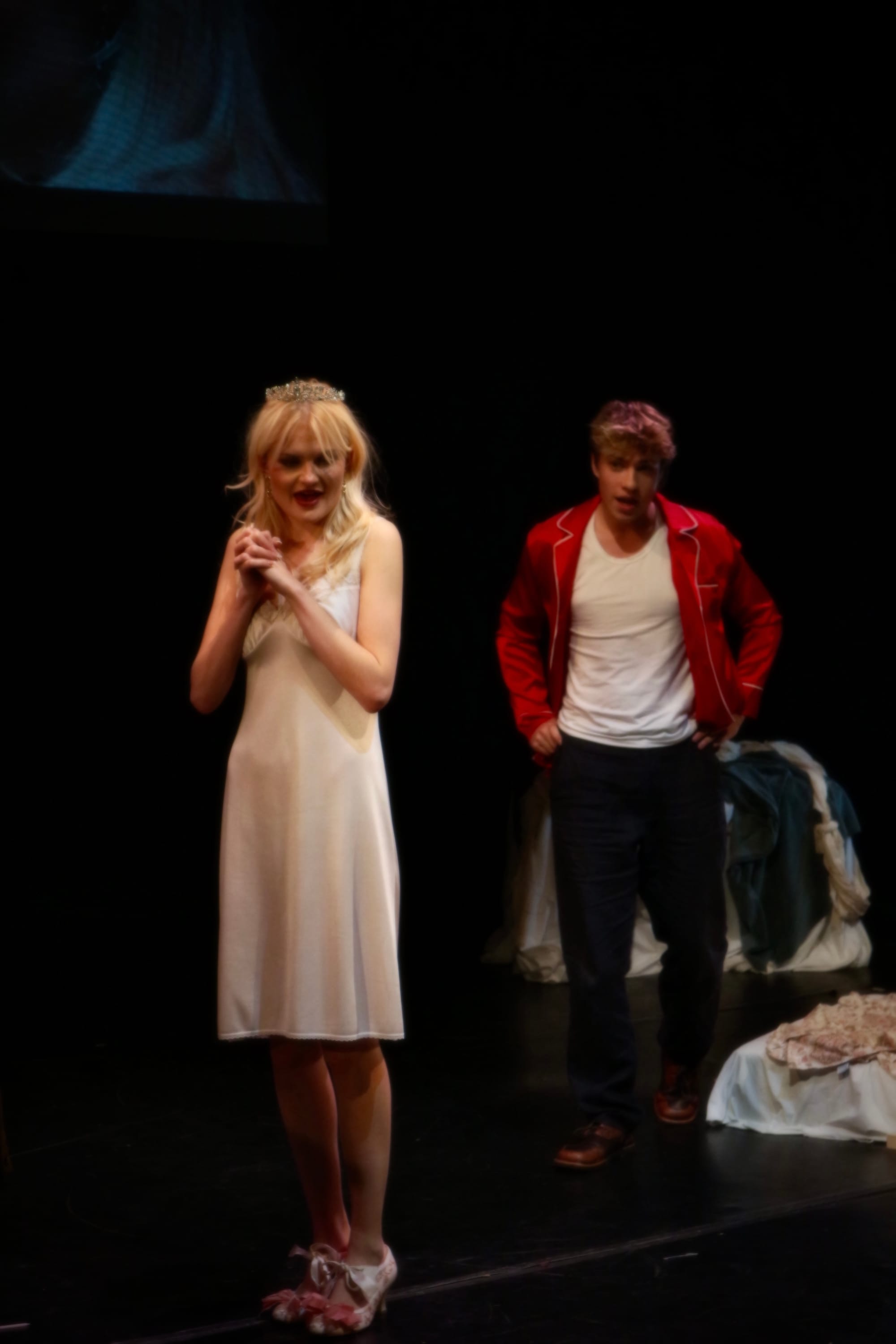
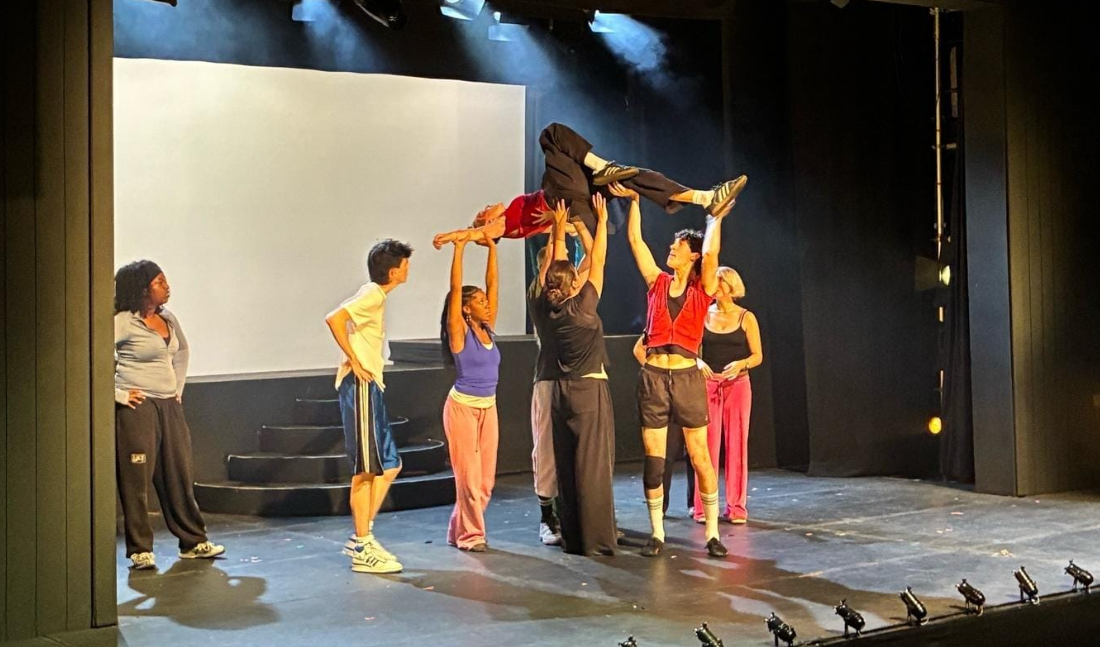
The portrayal of such exposure is so powerful not only through the camera work but through the play’s own choreography. In the climatic rape scene, with so many hands assaulting her, we see the abuse from not only Stanley, but many others. There is such power in the way this artistic choice makes us unable to ignore the events that have led to the Blanche that stands before us. It shows not only a true knowledge of the character but a real sympathetic and understanding view. The opening dance scene works also to highlight the importance of the table, and the game of poker as symbolic of its inhabitant- a patriarchal space. Following Williams’ own vision, we see the men returning to business later, as if the ordeal never occurred. Though an inherently integral element of this play, this interpretation represented it especially powerfully through dance.
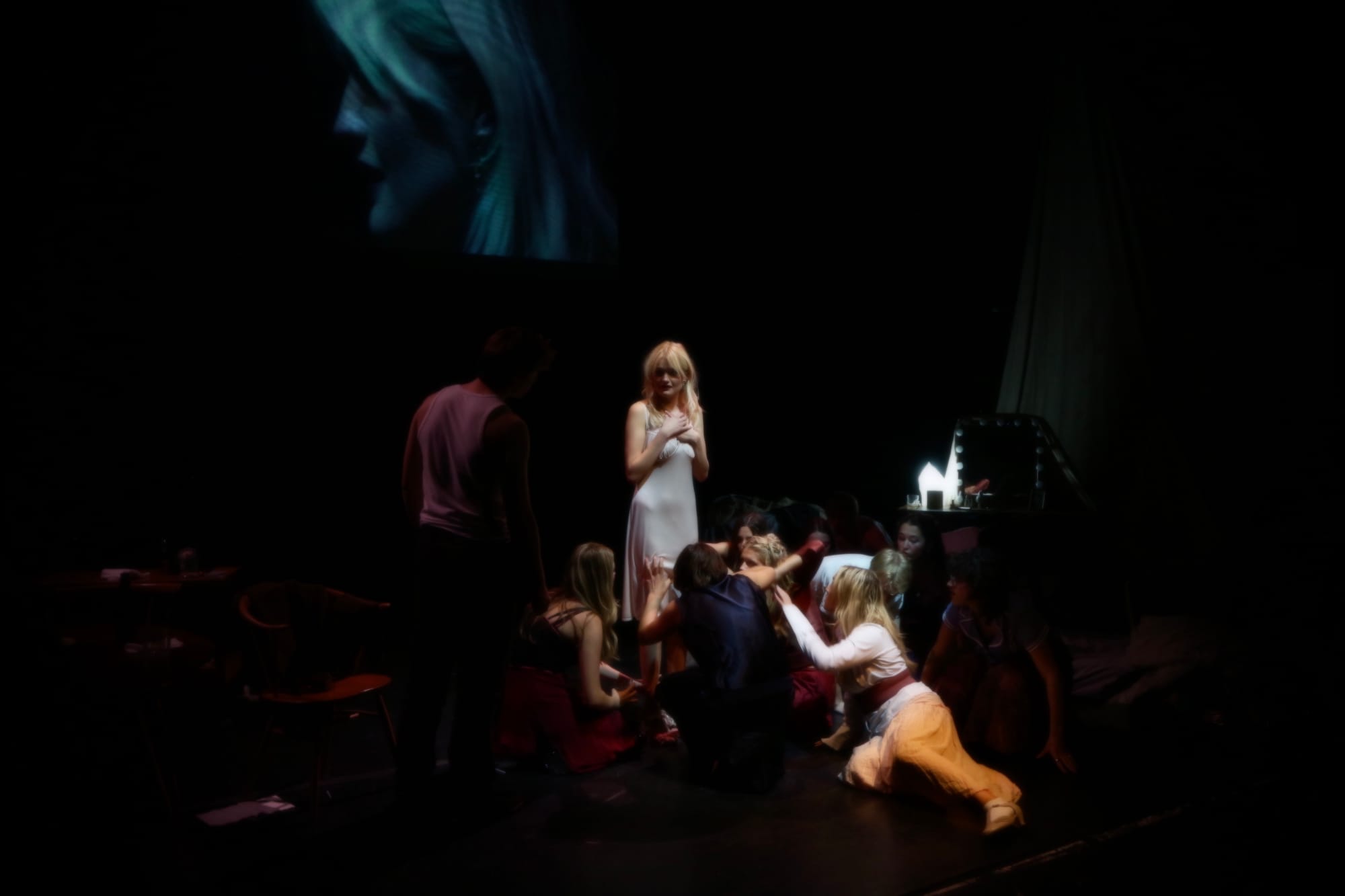
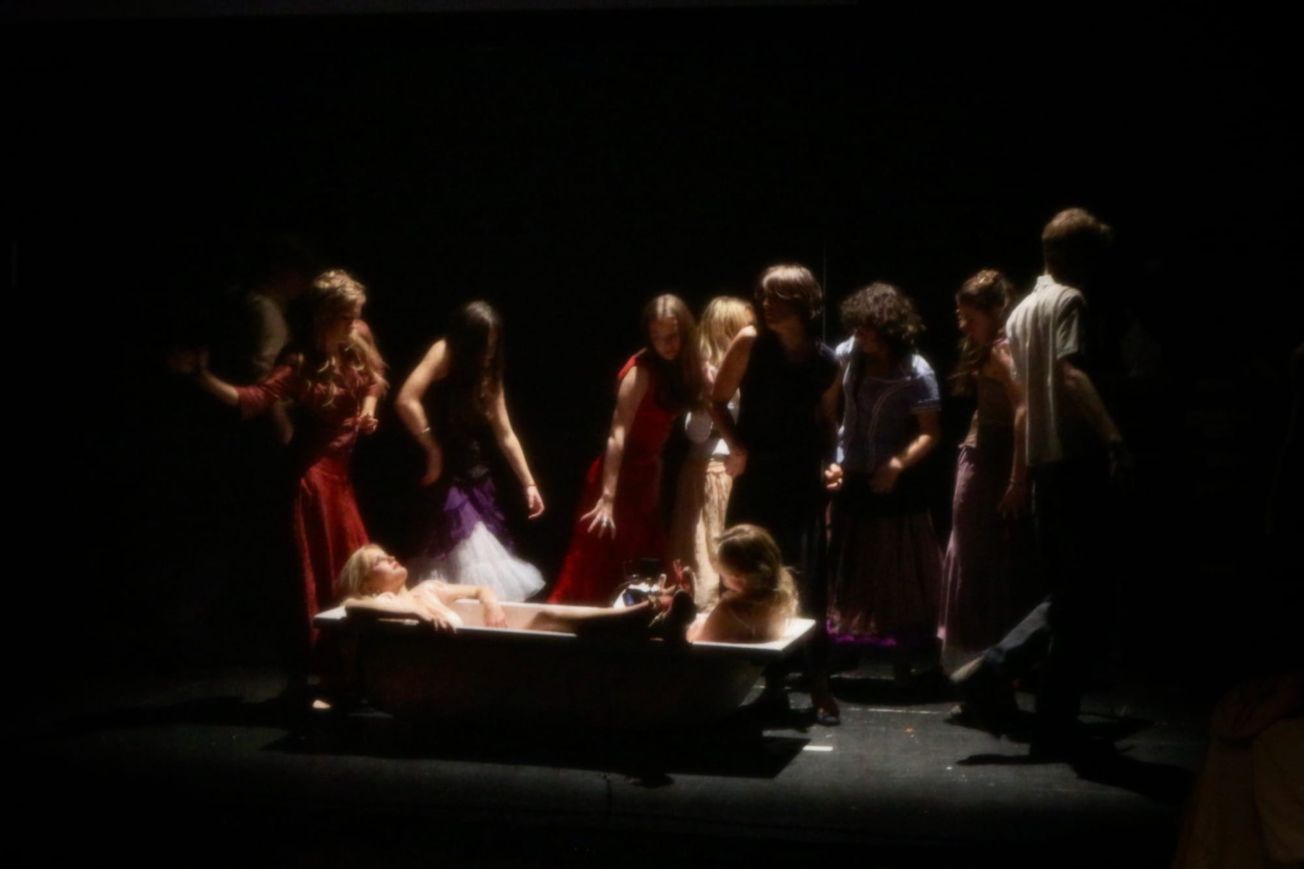
It feels appropriate here to discuss Blanche herself – a truly remarkable performance. We felt every emotion with her, even the ones she believed to be hidden; so raw and convincing a portrayal. As an audience we were so forcefully pulled into her mind, even without the cameras it was deeply intimate and exposing. Her accent was flawless, and the stylistic choices felt so truly Blanche DuBois, chic yet innocent. Even sat in the bathtub with her counterpart she held herself with the adequate pain and self-defensive vanity that plagues the character, surrounds her in mist, like expensive perfume. Having both figures in the tub, bodies intertwined, we visualise the coincidence of physical vanity with a pained soul and broken character. The real Blanche as this marionette figure, acting the part for the camera. Her spiritual self seems to pull the strings, trying to maintain her sanity through clinging tight to a perception of her appearance, a twisted sort of teamwork.
Stella (Lila Hallows) too gave a truly transportive performance, both aesthetically matching Williams’ intent, but also believably becoming the suffering wife and guilt-ridden, broken sister. We felt this guilt alongside her, as if we too were complacent in her sister’s emotional demise. Our love interest Mitch (Joe Matthews) had all the kindness we could have expected. This exceedingly wholesome take on the character forced a genuine attachment, and subsequent heartbreak ourselves as Blanche’s sole chance of happiness is so brutally stripped.
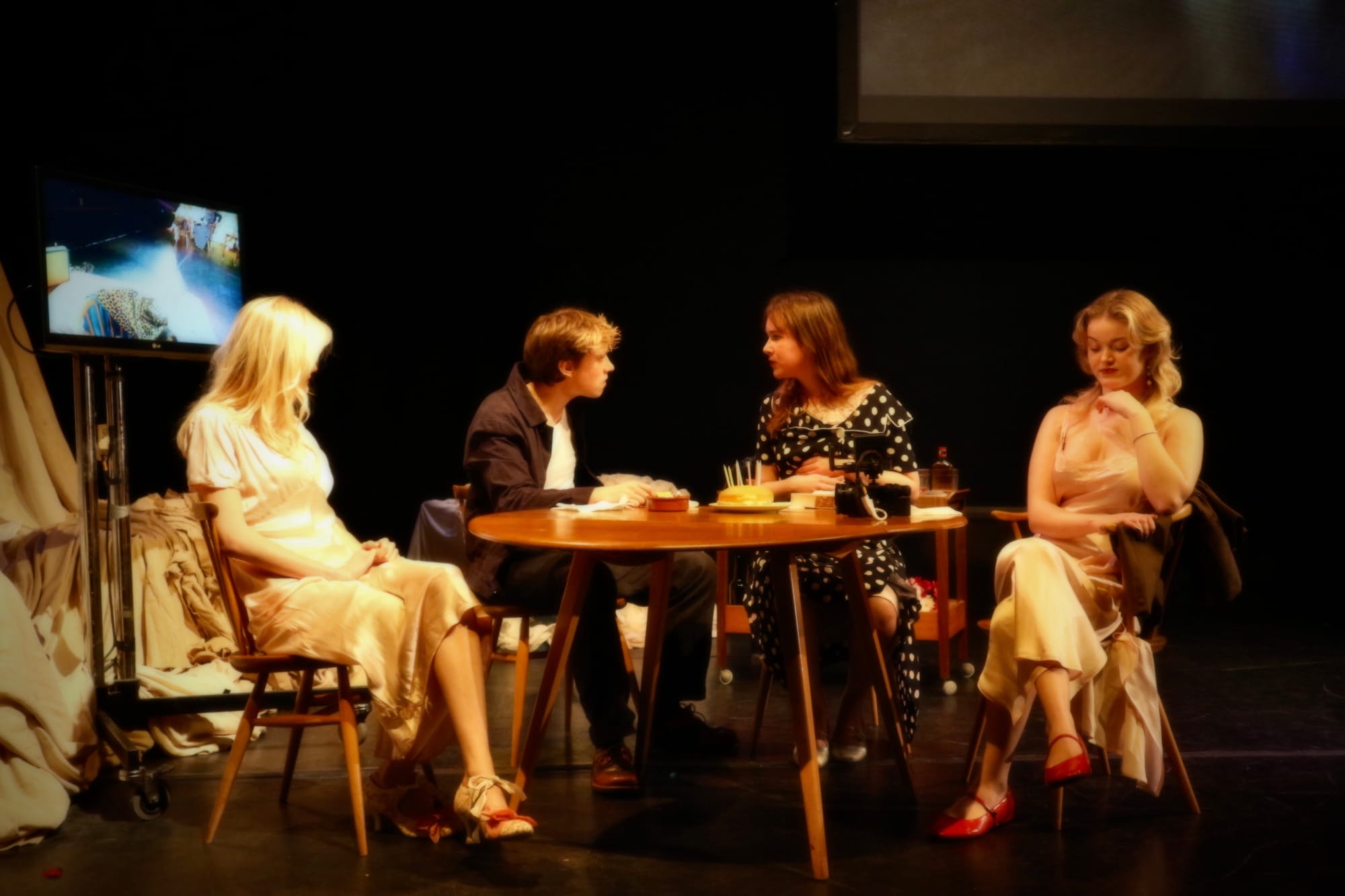
The most power from Stanley (Seth Winkley) came in the famed eavesdropping scene, where his shadow dominated the scene, an oppressive and unwelcome darkness. This use of lighting and shadow feels so important as we understand his desire to infiltrate the lives and sanities of those he has no right to, asserting his omnipresence. We see him able to occupy space in a brooding spiritual way, with his shadow taking the space inside the room, allowing his feigned innocence to reign as he smugly re-enters physically.
Such a beautifully heartbreaking production deserves an equally gutting end. And so it was. The cyclicality of both opening and closing on the CRT Blanche was not lost. Having us sit amongst her tears, suffocated by her pain, an oppressive cloud of discomfort, was hauntingly fitting. Her cries devastated like a child wailing for their mother for comfort. Knowing no help was to arrive we left her, feeling subsequently implicit in her pain. Helpless.
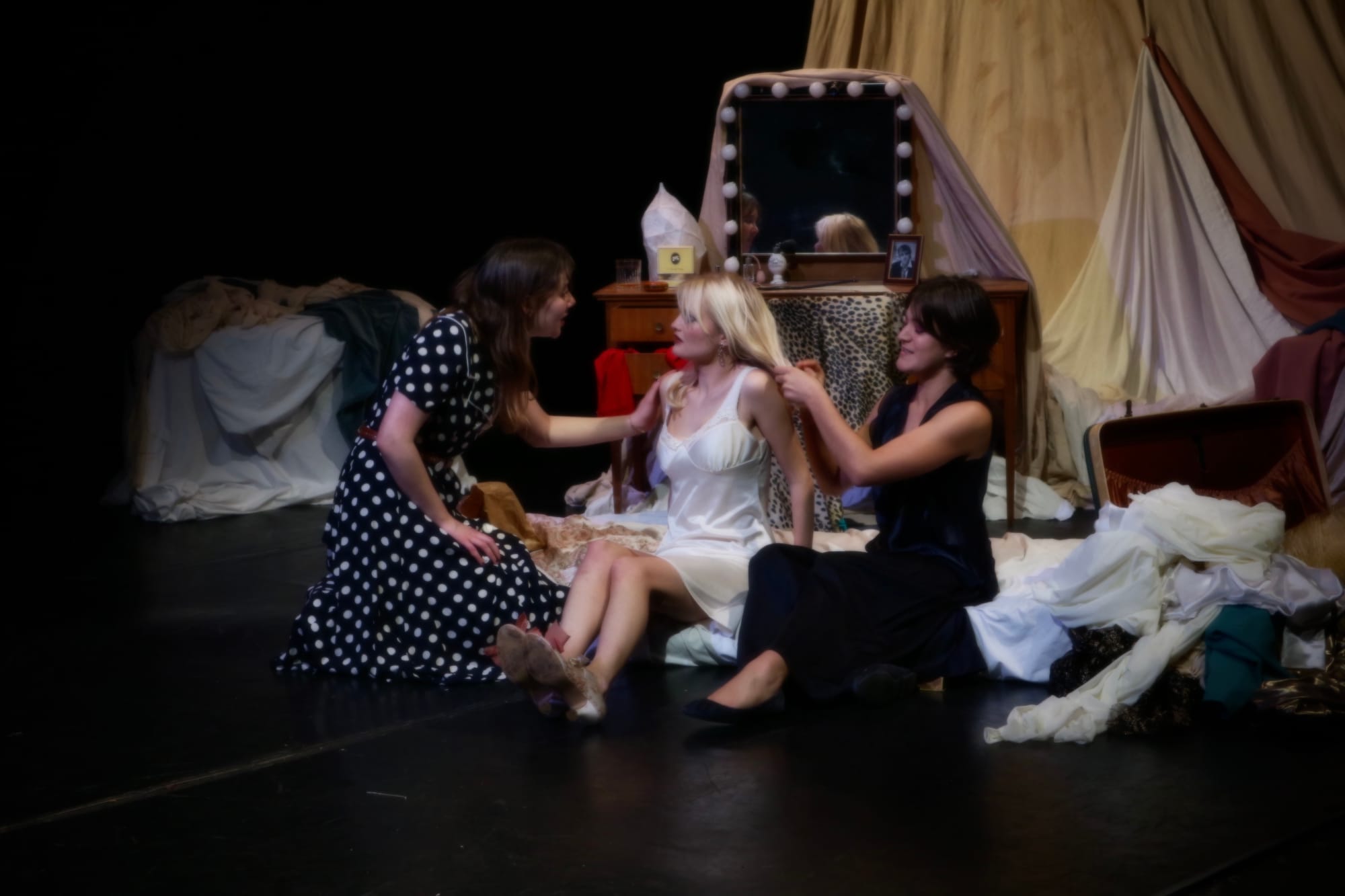
Though we may have seen the odd slip of accent throughout the show, I would consider this fairly unproblematic, as the evocative power far trumps this impact. This is a production that has not just taken William’s play and duplicated it, but has morphed it into something individual, and deeply personal.
 Rosie Napthine

What's your favourite adaptation of Streetcar?