By Ines Wotton, Third Year, English & Classics
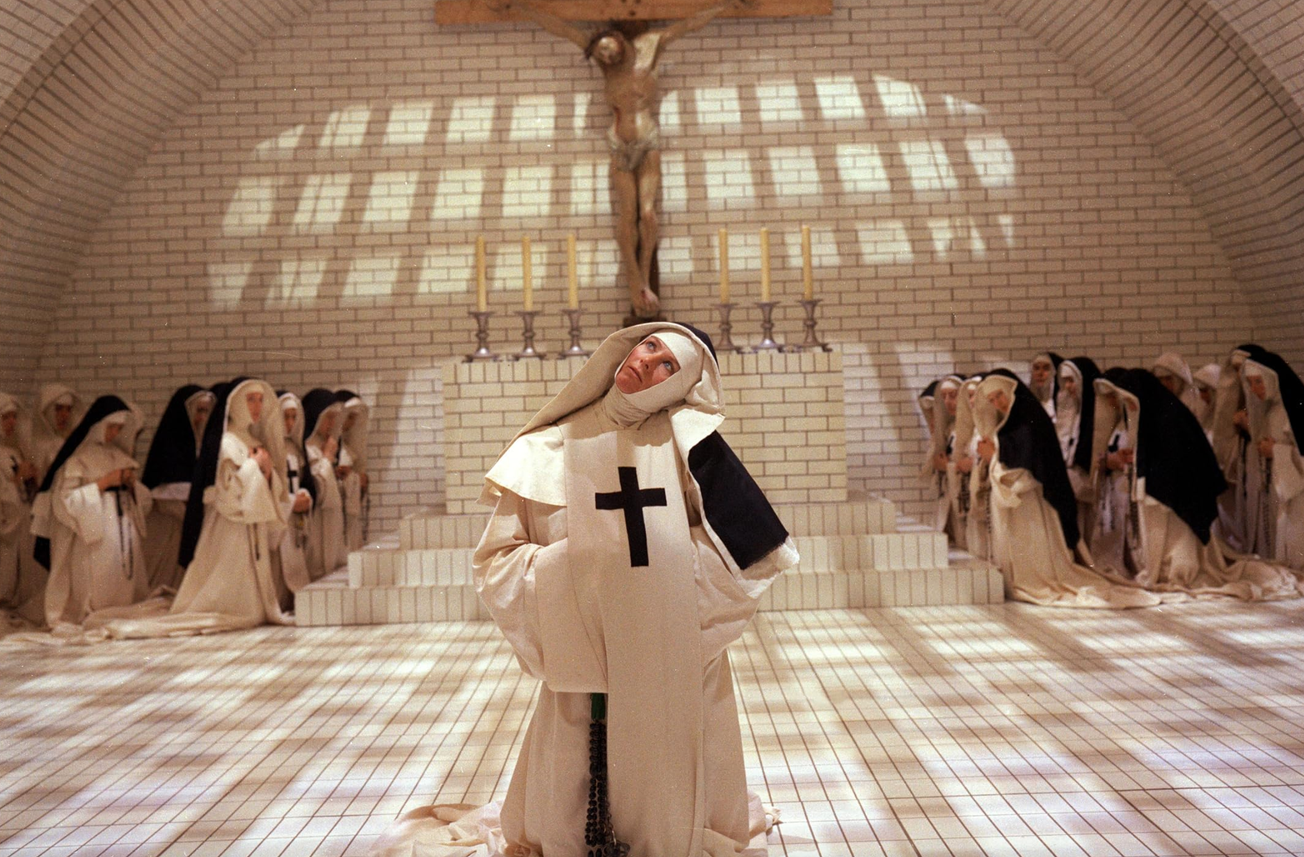
Having seen The Devils (1971) before, albeit in bad quality on my laptop screen, I was instantly shocked from the very first scene by what a good restoration can do for a film as visually dazzling as this one. Thanks to Shirley Russell’s costume design and Derek Jarman’s unmatched visual art and set design, we are taken to 1634 through the eyes of 1971.
Within the white brick walls of the city of Loudun, Oliver Reed’s Father Urban Grandier wrestles with his piety whilst dressed in robes that you could almost imagine on the red carpet of the 2018 Met Gala. Vanessa Redgrave’s Mother Jeanne is overcome by her obsession turned possession as she writhes on the floor of the clinical, asylum-esque nunnery of St Ursula. The endless piles of plague-ridden bodies and a convent full of sex-crazed nuns, all stuck inside the city walls during a suffocatingly hot French summer, make for a disgusting but undeniably memorable viewing experience.
Despite the beauty of the costumes, many of the characters in this tour-de-force spend their time entirely naked. This is one of the many reasons certain scenes from the original cut of The Devils were censored and subsequently thought entirely lost. The discovery of the original roll of 35mm film from Russell’s official director’s cut has given both cult followers and new viewers some thrilling additional content. The addition of the ‘bone scene’ and the extended version of a scene I can only refer to as an exorcism/orgy, amongst other iconic moments, have already prompted fan-made merchandise.
The parts of The Devils that scandalised audiences in 1971 are exactly what current audiences are loving. Perhaps the messages around sexual repression, the fear of female sexuality and the potential dangers of organised religion are feeling particularly relevant in our current age.
Women are both the object of fear and the object of desire in The Devils. Sister Jeanne, Madeline de Brou (Gemma Jones), Philippe Trincant (Georgina Hale) and the sisters of St Ursula are all subject to strict rules about sex and self-expression. In 17th century France, under the Catholic revival, there is seemingly no correct way for a woman to express her sexuality. Either she is too willing to sleep with men or she is too repressed. She grants the wishes of her priest by sleeping with him or marrying him and she is punished for it. She devotes her life to serving the Church, only to be violated and corrupted by those who control it. The violence done unto women in this film is often visceral and hard to stomach but I can’t help but think this is another excellent reason for it to be released in its uncensored state. The viewer has no choice but to confront the violence that is based on real-life events.
Oliver Reed’s performance in this film is one of pure power. As much of a womaniser and hell-raiser onscreen as off, Reed’s legacy as one of the most captivating actors in British cinema is certainly solidified in his performance here. Reed’s range means we get to watch Grandier go from swanning about Loudun in his garb to watching him burn to death an unrepentant sinner. A brief word must also be spared for his moustache, which has to be one of the best in cinematic history.
 Ella Saxton
Despite being originally assigned a one-week run, The Devils has been extended in cinemas indefinitely. I recommend everyone let themselves be seduced by the sensual delights of Russell’s remastered masterpiece.
Featured image: IMDb / The Devils
Are you brave enough to catch a revival screening of The Devils?