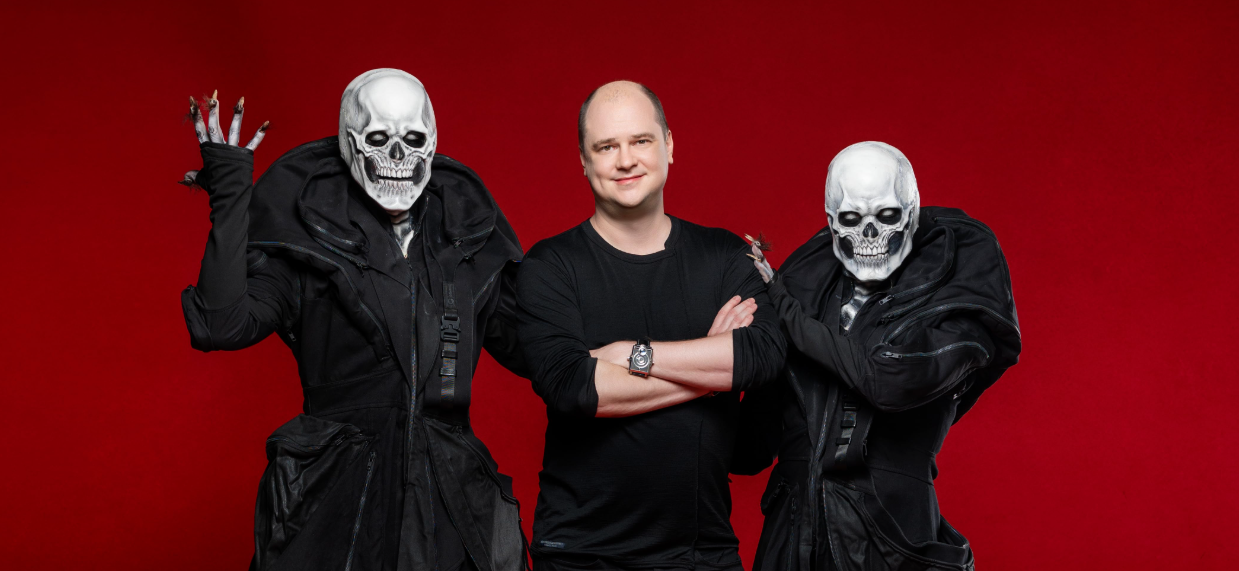
By Ella Saxton, Third Year, French
There has never been a better time to be a horror nerd than the 2020s. With directors like Jordan Peele, Zach Cregger and Kane Parsons leading the genre into a new age, horror is constantly finding inventive and original directions.
However, years earlier, horror writer-director Mike Flanagan was already innovating with such works as Before I Wake (2016), Hush (2016) and Gerald’s Game (2017). While some find horror in ripping out people’s literal insides, Flanagan prefers to unspool the coiled matter inside our heads and place it under the microscope.
In works like Midnight Mass (2021) and The Fall of the House of Usher (2023), Flanagan spotlights the horrifying acts that people are capable of committing, whether for greed, power, lust or even love. To add an extra dimension of complexity, nobody is ever free from blame. In House of Usher, corrupt billionaire Madeleine Usher (Mary McDonnell) says “Fucking people out there” to her corrupt billionaire brother. “These fucking monsters, these fucking consumers, these fucking mouths.
There are always victims in Flanagan’s work but rarely are there innocents. And while it could seem a trite reflection that humans are themselves the ‘real monsters’, Flanagan evades banality by lovingly sketching out his characters and filling them with all the good and bad, the ugly and the beautiful, that make us people.
However, in other instances, Flanagan achieves true terror by adding his own flair to tried and tested horror tropes, such as jump-scares, mysterious figures and basements that really should have a ‘keep out’ sign. For example, while The Midnight Club (2022) may have been inconsistent, it certainly made good on its ‘horror’ label, achieves new heights, almost literally: the first episode of the series alone broke the record for the most jump-scares in TV history (21 in total).
Meanwhile, his shows The Haunting of Hill House (2018) and The Haunting of Bly Manor (2020) are both adaptations of gothic fiction and, despite their modern settings, they retain an old-fashioned quality that makes them seem as though they are meant to told around a fire late into the night. Yet the ghostly figures behind these ‘hauntings’ are far from mindless spectres, rather as fleshed-out as any of their living counterparts.
While it is true that Flanagan prefers the spooky to the squidgy, his rare uses of more explicit gore are well earned. For example, House of Usher features some delightfully gruesome sequences, such as as the corrupt Roderick Usher’s (Bruce Greenwood) children meet their grisly (and well-deserved) ends. In the episode ‘The Masque of the Red Death’, the self-centred, hedonistic Perry (Sauriyan Sapkota) is melted to death by a shower of acid rain along with hundreds of guests at his mass orgy. Meanwhile, in ‘The Pit and the Pendulum’, Frederick Usher (Henry Thomas) is paralysed whilst visiting a construction site and agonisingly bisected by a swinging ‘pendulum’ of fallen debris.
More recently, Flanagan wrote the screenplay for the DC supervillain film Clayface (2026), which leans heavily into the body horror sub genre. The film’s extraordinary yet sickening use of visual effects demonstrates the writer-director’s flair for the provocative, choosing the perfect moments to turn the audience’s stomachs. As proved by Eli Roth’s recent, unsavoury box-office flop Ice Cream Man (2026), the horror genre’s days of senseless slaughter are seemingly numbered. While there is a place for the Terrifier and Saw fans of the world who enjoy the creativity of so-called ‘torture porn’ films, directors like Flanagan are steering the genre in a much more artistic direction and, in many ways, a more terrifying one. Senseless murder is one thing but considered, selective murder is something far more monstrous.
Yet, it is reductionist to label his works as ‘horror’ alone. While he may be an expert in ghosts, ghouls and the things that lurk under our beds, Flanagan is consistently intrigued by questions that have plagued mankind since we were first capable of asking ‘why?’ Raised a Catholic and now a committed atheist, Flanagan weaves his personal philosophies into every story.
Midnight Mass, his most overtly existential pondering, offers a profound and balanced reflection on the nature of religion. Rather than deride faith as a mere product of fear and hunger for power, he acknowledges that, while there are always those who abuse religion (Bev Keane, played by Samantha Sloyan, remains one of the most underrated villains in TV history), what true faith offers – forgiveness, compassion, and love – far exceeds such ridiculous questions as whether God is ‘real’ or not.
It is a testament to Flanagan’s humbleness that he never suggests he has all the answers: are ghosts real or simply wishful thinking? What are souls? What is the meaning of life? He may not know the answer but he seems delighted to have the chance to talk with us about it.
 Rebecka Melvin
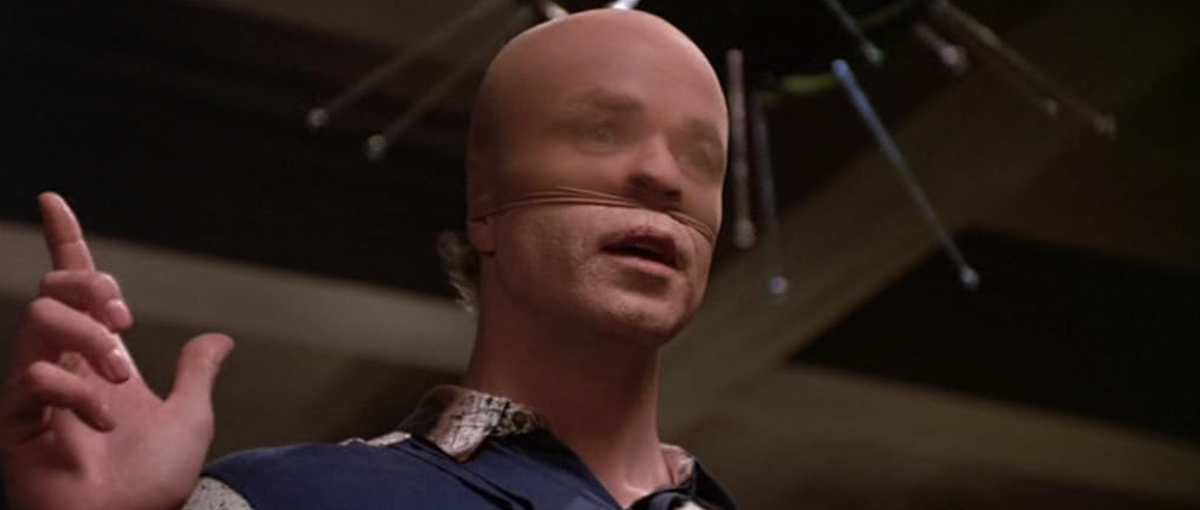
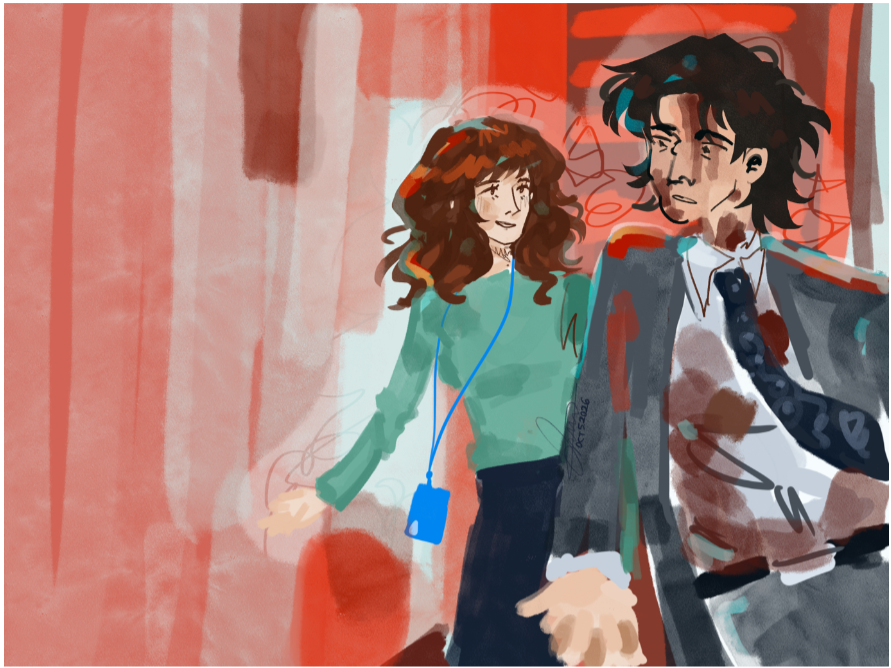
Horror films are also often synonymous with nihilism, revelling in the bleakest, darkest sides of humanity. Flanagan sets himself apart by threading a golden strand of hope through every project and choosing to search for tiny grains of joy in the darkness. Despite the mixed reception to Flanagan’s 2025 adaptation of Stephen King’s novella The Life of Chuck, surely nobody could resist a smile at its fantastic midpoint dance sequence. In this scene, Charles ‘Chuck’ Krantz (Tom Hiddleston), who will soon die from a brain tumour, is walking past a street musician (real-life drummer The Pocket Queen) when he and a young woman (Annalise Basso) become overwhelmed by the urge to dance before a gathered crowd.
The music, combined with the superbly imperfect choreography, creates a frenzied portrait of real-life and the small but joyous insignificancies that we take for granted. It is as much a defiance of death as it is a celebration of its existence for, without death, we would never know how precious these moments are in time’s relentless stretch onward into oblivion.
Featured image: IMDb / Mike Flanagan
Who’s your favourite horror director?