By Freddie Harrison, News Reporter
In September, the Bristol Business Improvement District (BID) launched the Bristol Safe Space at Night initiative, a City Centre-based zone providing welfare, first aid and mental health support for those out and about at night.
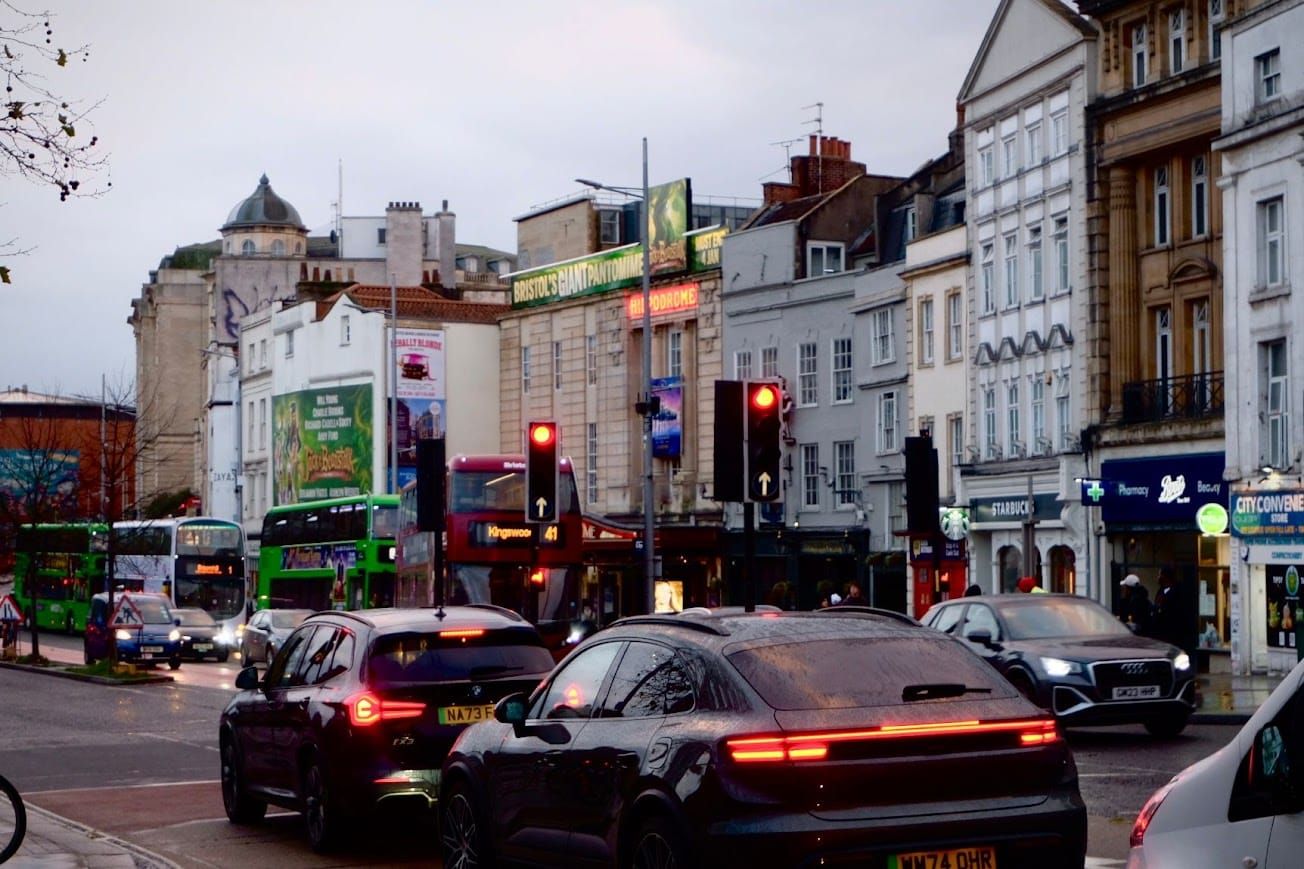
The Safe Space runs on Fridays and Saturdays, 10 PM to 4 AM, on the City Centre Promenade opposite Bristol Hippodrome.
Epigram spoke to BID Project Manager, Louisa Briggs, about the scheme and what she hopes it will do for Bristol nightlife - and the student population by extension.
Louisa summarised the Safe Space as essentially a ‘welfare service’ where ‘anyone is welcome’, aiming to be ‘that friendly face’ one might need during - but not necessarily limited to - a night out.
‘The point is anyone can feel like they can go there if they need somewhere safe to be. Even if it’s someone feeling a bit overwhelmed, or that drunk a bit too much.’
The service includes first responder medics - who dealt with ‘quite a serious head injury’ on the first night of the initiative’s operation.
Mental health support, if people need ‘a chat’, and general provisions including phone charging and blister plasters are also available at the Safe Space.
‘The idea initially came from a police officer. Her niece came to Bristol for a night out seven or eight years ago’, Louisa explained.
‘She missed her transport home; she couldn’t get a bus or a train and couldn’t afford a taxi. So, she ended up going to a bus station and sat there all night. She didn’t feel safe; she didn’t enjoy it at all.’
Louisa was ‘sure this happens many times’ after and during nights out in the city.
Indeed, OpenCrime reported Bristol has the highest rate of recorded crimes per resident out of any county in the UK. With the City Centre being a particularly troublesome area, the Safe Space certainly fills a gap in Bristol nightlife’s welfare provisions.
After persistence from the police officer, Louisa’s predecessor, and Louisa herself, Bristol BID were able to operate two pilots in December 2024 and January 2025, staffed by police volunteers.
‘[The pilots] went really well. We had really busy nights’, Louisa explained. This success ultimately led to funding for the scheme as a permanent fixture of the city’s nighttime support.
The Safe Space will partner with various late-night organisations and initiatives including Avon and Somerset Police, Night Rangers, Street Pastors, Hope Against Suicide, and are looking to expand to cooperate with the Night Angels.
‘It’s a way for partners to come together and work together as they all have the same end goal, they just do it in different ways’, said Louisa.
The Safe Space also collaborates with local nighttime businesses, which Louisa said are ‘part of a radio network, so they can communicate with each other, with the police, and with the Safe Space.’
‘It’s all interconnected, everyone speaks to each other.’
The Safe Space is not a uniquely Bristolian initiative. Cities such as Worcester, Cardiff, Bath, and Exeter operate similar schemes, with many predating Bristol’s. When asked about the future of the Safe Space, Louisa was optimistic:
‘The gold standard [would be to] have a team of volunteers that can add that extra bit of safety [and] outreach as well.’
Among Louisa’s goals was organising nighttime volunteer patrols across the City Centre and Harbourside. She described Bristol’s uniquely decentralised nightlife as a challenge to overcome, especially when considering funding barriers.
But she noted that ‘once you get to the point of having a model, it is much easier to prove there is a need for [Safe Spaces].’
Featured image: Epigram / Sophie Maclaren