By Oscar Degirolamo, Arts Subeditor
Outside it seems that Bristol has been ripped of its colour. The winter sweeps in giving us grey skies and wet clothes. We dream of getting back to our warm homes where the colour returns; but what if that homely return is not enough to subsidise the ‘English’ weather?
From 24th October through to 13th January, you can add some more colour to your life by attending the Bristol Museum and Art Gallery’s latest exhibition: The Secret Life of Colour. Curated by Bristol Museums Head of Public Engagement, Karen MacDonald. The exhibition gathers ‘art, natural history and science’ to explore colour and its various origins, uses and meanings, all within a visually vibrant space.
The exhibition is split into four distinct categories: What is Colour? How is Colour Made? How is Colour Useful? What does Colour Mean? You may feel drawn to the exhibition because of Andy Warhol and Bridget Riley, but it is the categorical build ups that, by the time you get to see the famous pieces, the exhibition has grown an identity of its own.
The first category- What is Colour? – gives you a rundown on how our eyes receive colour on a biological level. I will not go into how, as the exhibition will tell you, but as the opening section, it creates a foundation level for you to build upon as you travel through. The foundation being that of how, I think, we may all feel that we appreciate colour in a meaningful sense, but it is colour’s other facets, as with anything, that allow us to be more aware and perhaps even critical.
The following section- How is Colour Made? – stacks itself neatly atop the first as, ‘where does this colour come from?’ seems to be an absent thought in everyday life. From the natural forming colours of Cochineal insects to Hokusai’s use of artificial Prussian blue, this section takes you on a short history of how we and nature have come to produce colour. One moment from this section I highly recommend is the display on carmine and how it produces red dye; hint, it’s linked to the insects!
Penultimately, you find yourself now asking, How is Colour Useful? Camouflage and gender changing fish are the answer. We all know the trivia of, ‘the male peacocks have colourful feathers’, but it is the thoughts that never enter our heads that are now welcomed; colour is such a prevalent aspect of life for most people, and it is that prevalence that causes us to, effectively, ignore it.
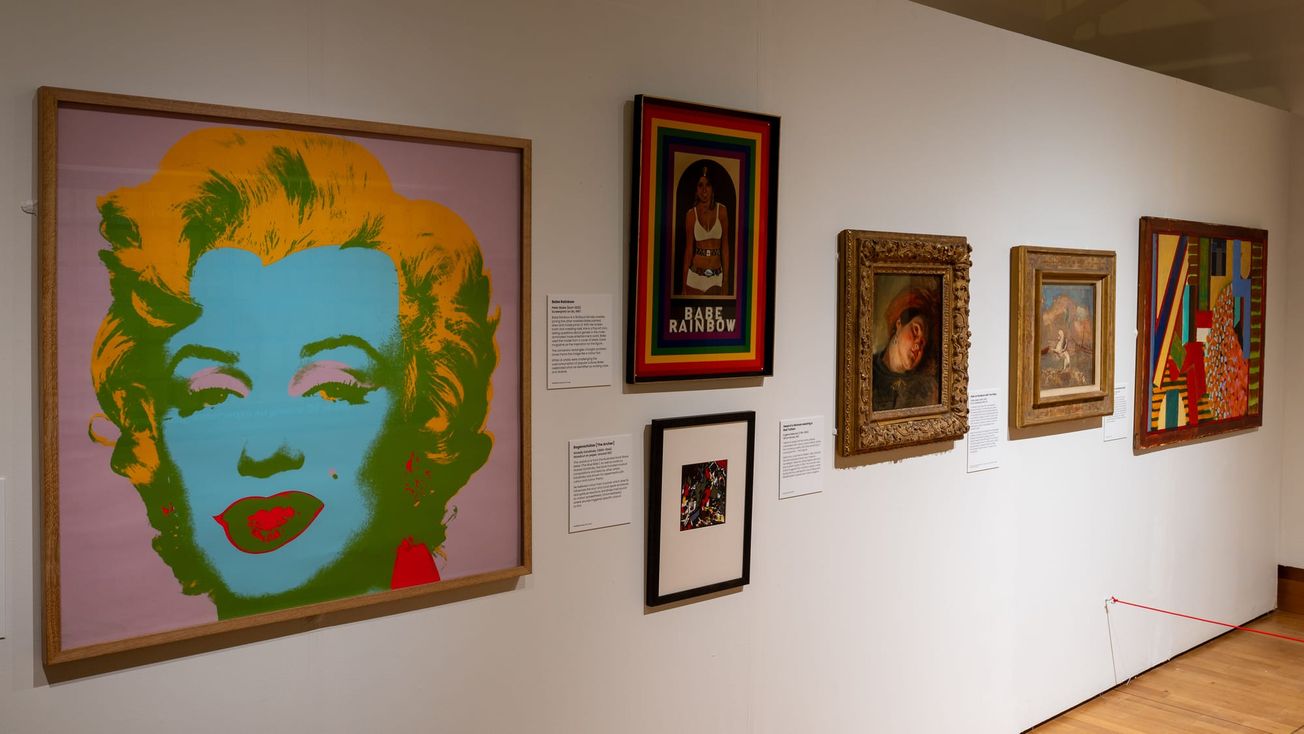
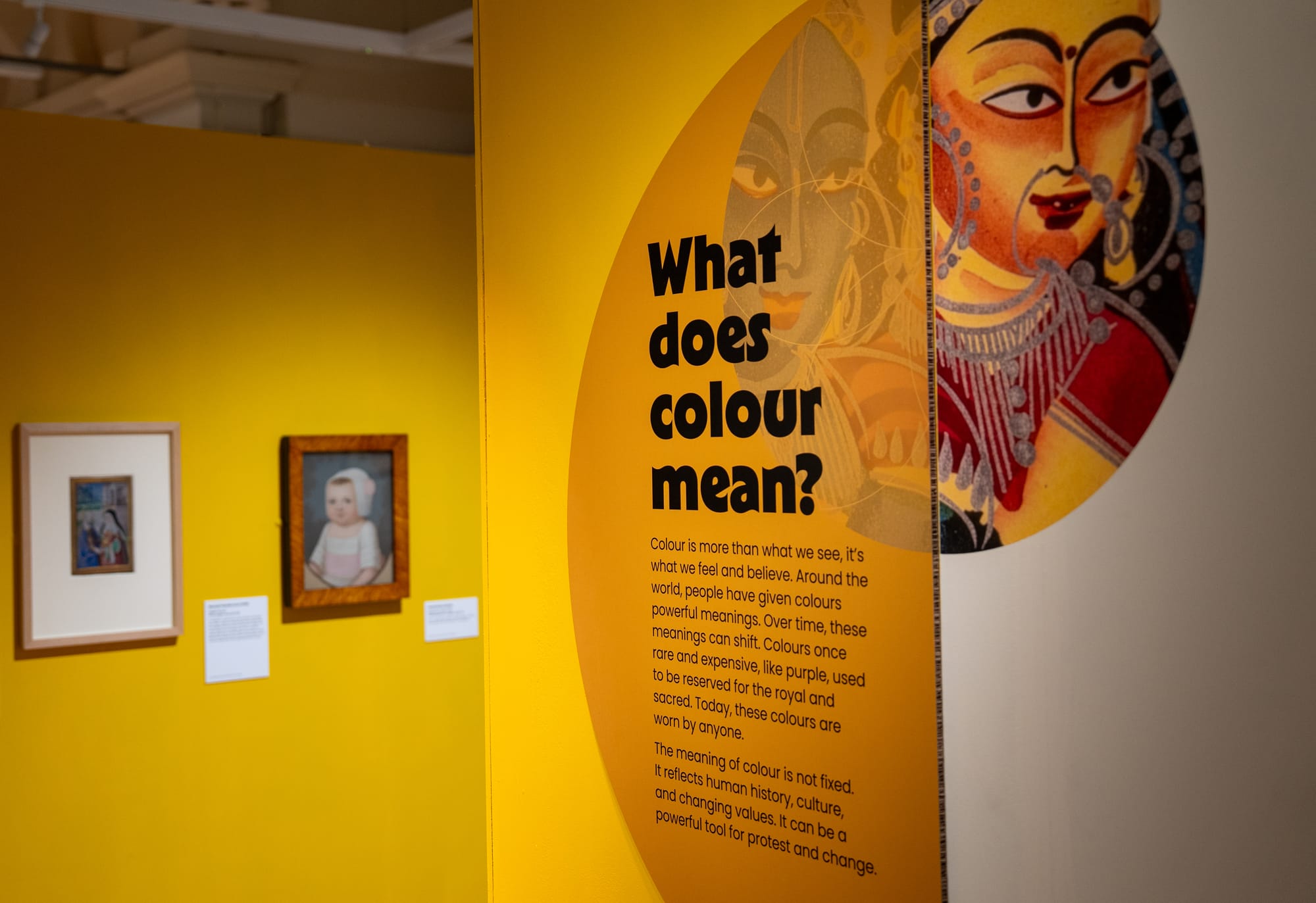
And now we make our way to, what you saw in bold on the posters… the Kandinsky, the Riley, and of course, the Warhol. What does Colour Mean? Seeing the work of master artists in the flesh is a very particular situation, with the artists reputation and skill both battling in your head for awe. Yet, this is not a wholly art focused exhibition. You can look to how Hodgkin uses colour, and with the same weight, look to what colours mean to different cultures. That is what this exhibition is about. Looking at colour through all its windows.
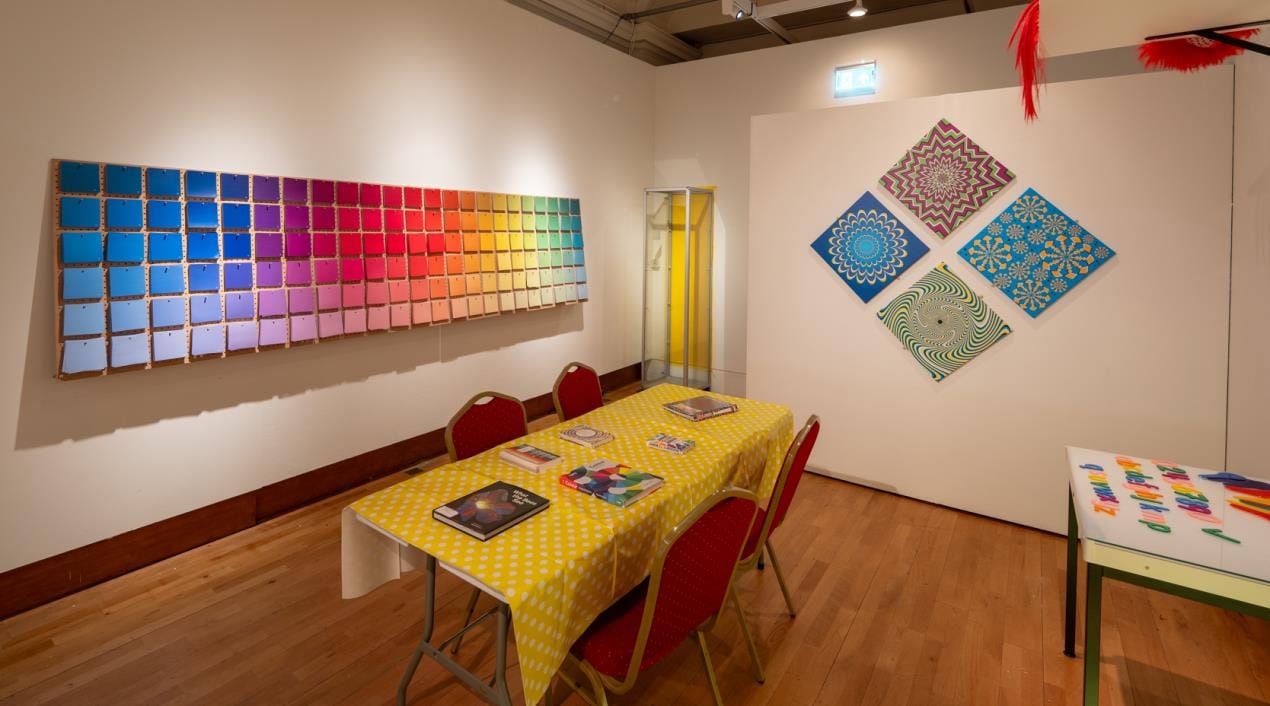
Once you come to the end of your experience, there is an area for your own creative exploration with colour. On one wall hangs a myriad of colours, where you find a colour that evokes that ‘something’ in you (a memory for example), and you can take a colour, write down what you feel on the colour card and place it back; collecting together the marks colour has left on us, but also the marks we may have left on colour.
Coming to the end of the exhibition tour, I was able to ask the curator, Karen MacDonald, who, just as what she curated, offered some interesting insight.
I asked Karen: for people who may not necessarily be interested in art, what would you say they can find at this exhibition that they can’t find elsewhere? Karen emphasised the importance that this exhibition is not just about art, it is ‘fun and playful’ and offers so much to art and everything outside of it. You don’t have to understand art to ‘enjoy the aesthetic experience of art’, and that this exhibition in particular, ‘takes away that anxiety’ which can come with entering the art world.
The exhibition is now open to the public, but instead of the usual ramble of recommendation, I shall leave you with the words of Karen MacDonald chose to describe the exhibition: ‘fun, surprising, intergenerational.’
Featured Image: The Secret Life of Art / Bristol Museums
 Eden Chambers
Do you take the 'everyday' for granted?