

By Hannah Roberts, News Reporter and Moses Badri, News Reporter
Bristol is full of opportunity, but is it dictated by postcode?
In a city where educational disparities are stark, progression to higher education varies sharply, dropping to just 8.6 per cent in Hartcliffe compared to Bristol’s 25 per cent average.
State schools in England must have a governing body to function, but these are almost entirely made up of unpaid volunteers.
‘I find this strange,’ says Michelle Graffagnino, Senior Lecturer in Education and Micro-qualifications Lead at the University of Bristol.
‘Without a governing body, a school cannot run, but a governing body relies on volunteers… which I just find a bit ludicrous.’
 Epigram
 Cara Hene
This reliance on goodwill forms a significant pressure point in Bristol’s education system.
According to a 2025 survey, 66 per cent of schools in England report difficulties recruiting governors, a gap the University of Bristol is uniquely positioned to bridge.
University of Bristol staff have in the past been involved in school governance, holding leadership to account.
Staff are granted up to an extra 18 days of paid leave annually to carry out public duties, including school governance. This removes the primary barriers to entry: time and money.
However, this was never joined up.
Enter the School Governance Network. Launched by the University in February 2024, it aims to ‘facilitate a meaningful connection between the University and the wider local education community.’

Graffagnino is a governor at St Peter’s Church of England Primary School in Bishopsworth, a high-deprivation area. She joined the School Governance Network in 2024, having been in the role since 2016.
She told Epigram the network has made a big difference, offering more support, events, and points of contact. She’s also been able to talk to those unsure about becoming a governor.
‘ I wanted to understand how I could contribute more meaningfully’
Being a school governor is about questioning decisions, something that staff at the University are well positioned to do. ‘We are quite used to dealing with policies and procedures… It doesn’t feel unusual being on a governing body’, Graffagnino said.
‘I wish it was available sooner’, she told Epigram.
For Matthew Shard, Director of IT Business Partnering at the University, his role at Ashton Park School, South Bristol, was a ‘natural next step’ after years on the PTA.
Disparities in higher education motivated Shard to join the network, who told Epigram that he ‘wanted to understand how I could contribute more meaningfully.’
The scheme’s influence is often found in ‘joining things up,’ according to Shard.
Using professional networks, he is able to connect school students with otherwise-inaccessible work experience, with his university expertise directly supporting this.
For Graffagnino, the impact is immediate and tangible.
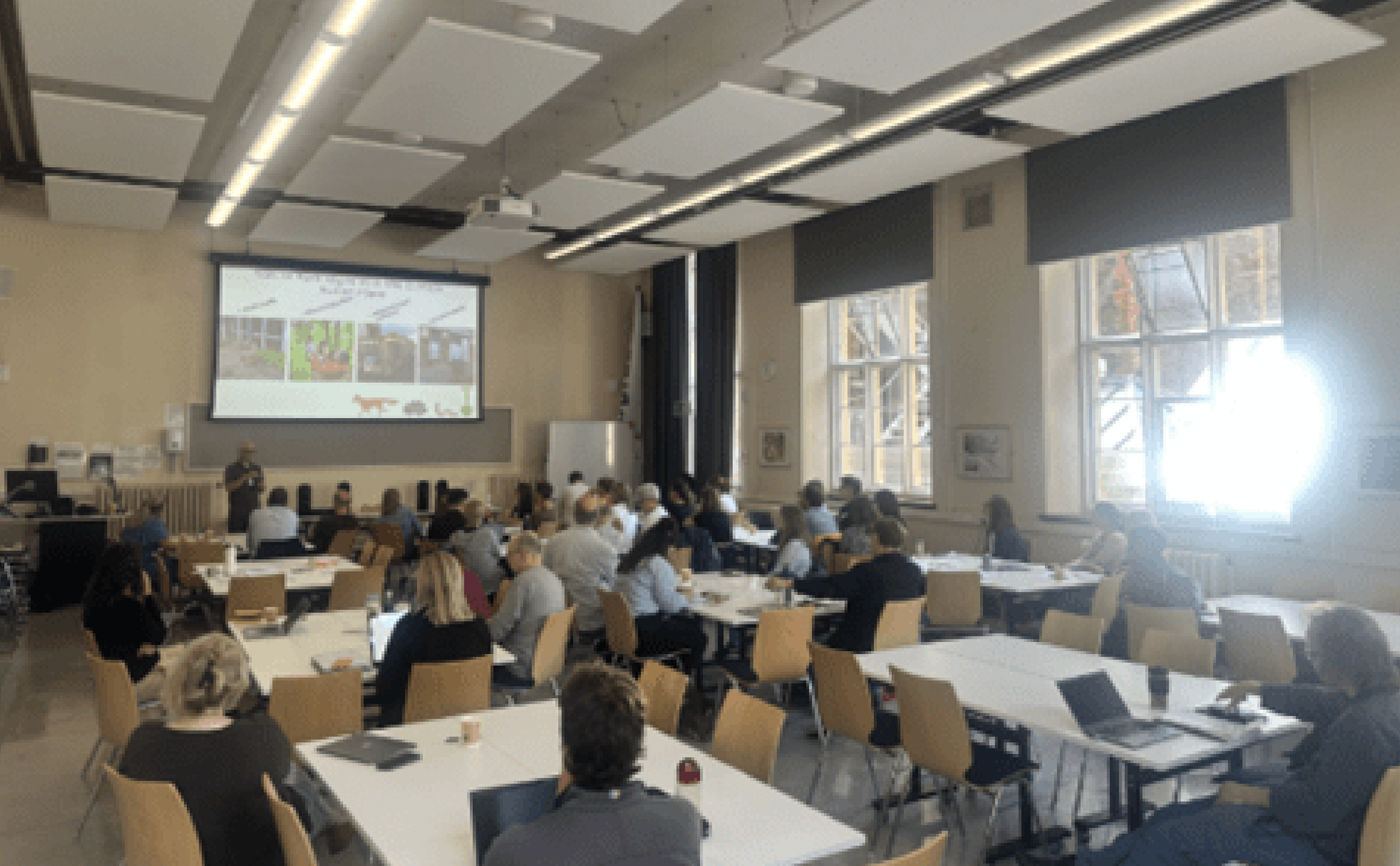
As a governor, Graffagnino helped secure a fully funded year-group trip to the Slimbridge Wetland Centre, covering over £3,000 in transport that the school could not afford.
She also organised a climate action conference across over 50 Bristol schools settings, with support from the University's Cabot Institute for the Environment and the Met Office.
However, the role is not without its challenges.
‘Children are coming to school hungry’
Bristol schools are facing three major hurdles according to Shard: attendance, funding, and staff retention.
Shard said that there’s now a clear link between attendance and attainment, alongside a ‘perennial struggle’ of funding, where basic resources often rely on supplementary funding.
Graffagnino also echoed these worries, telling Epigram that some basic needs are not being met. ‘Children are coming to school hungry’, she said.
Despite the responsibility, Shard is keen to dispel the myth that governance is an onerous job.
 Cara Hene
 Stella Phipps
With a baseline of six meetings and 20 hours per year, he describes the role as ‘genuinely fulfilling’ and manageable.
‘You’re not just sitting on a board,’ Shard said, adding, ‘You’re in the school, understanding its challenges and making a tangible difference.’
Shard and Graffagnino both encouraged more staff at the University to get involved, highlighting both the community impact and the skills the role can develop.
‘You can always start at a level that feels comfortable… it’s a really good skill set to make a difference on the ground,’ Graffagnino said.
Featured image: Epigram / Sophie Maclaren