
By Sofia Lambis, Deputy Editor and Cara Hene News Editor
Medicine is the latest School to be hit with a voluntary severance scheme, after academics in the School of Modern Languages and the School of Humanities were offered an identical deal in February.
The scheme is open to Pathway 1 and Pathway 3 staff in the Medical School, the vast majority of which are involved in teaching.
During a meeting on April 22, Medical staff were told they will receive nine months' salary if they opt to sever their working contracts early.
The University wants to make 25 salaries’ worth of savings, or reduce the workforce in these categories by roughly one out of ten jobs.
Bristol’s Medical School was ranked highest across the University of Bristol for teaching in 2025, and placed ninth in the country in the Times Higher Education Ranking 2026.
The Bristol branch of the Universities and Colleges Union's (UCU) has said repeatedly that voluntary means are preferable to compulsory redundancies.
 Cara Hene
Nonetheless, staff are ‘completely despondent’ in wake of the news, a Bristol UCU Medical Representative told Epigram.
In February, Epigram spoke to Oscar Berglund, President of Bristol UCU to help us get our heads around the voluntary severance scheme for all Humanities and Modern Language academics.
He argued this scheme marked the continued impact of a new policy requiring all Schools to make a 50 per cent operating surplus.
Berglund claimed the ‘50 per cent surplus’ policy disproportionately impacts certain Schools, because while it does not take into consideration buildings or equipment (such as lab machinery), it does consider employees and student fees.

Certain Schools, many of them non-STEM, spend proportionally more on staff, and crucially for the Medical School, have a comparatively lower percentages of international students.
Both Berglund and the Bristol UCU Medical Rep stressed that the Medical School faces additional pressures as the Government dictates the domestic to international student ratio at British Medical schools, alongside capping overall intake.
Paying three times more than their domestic counterparts, the percentage of overseas students makes a great difference to making or breaking the ‘50 per cent surplus.’
Expecting different Schools to generate income in the same way and at the same level is akin to ‘comparing apples and oranges,’ Berglund said.
The scheme is ‘extremely likely to impact the student experience’
In 2025, international students made up 6.7 per cent of the intake for the University of Bristol’s primary Medicine qualification (MB ChB), according to a Freedom of Information request made by Epigram.
Compare this percentage to other large courses from Schools that have not had to put in place voluntary severance - such as Honours Law LLB at 41.2 per cent or Business and Management BSc at 56.9 per cent - and this latest voluntary severance scheme becomes part of this broader pattern.
For the Bristol UCU Medical Representative, the scheme also highlights that the policy does not allow the University or faculties to cross-subsidise.
Instead, they claimed, Schools have to make a case for themselves.
Cara Hene Cara Hene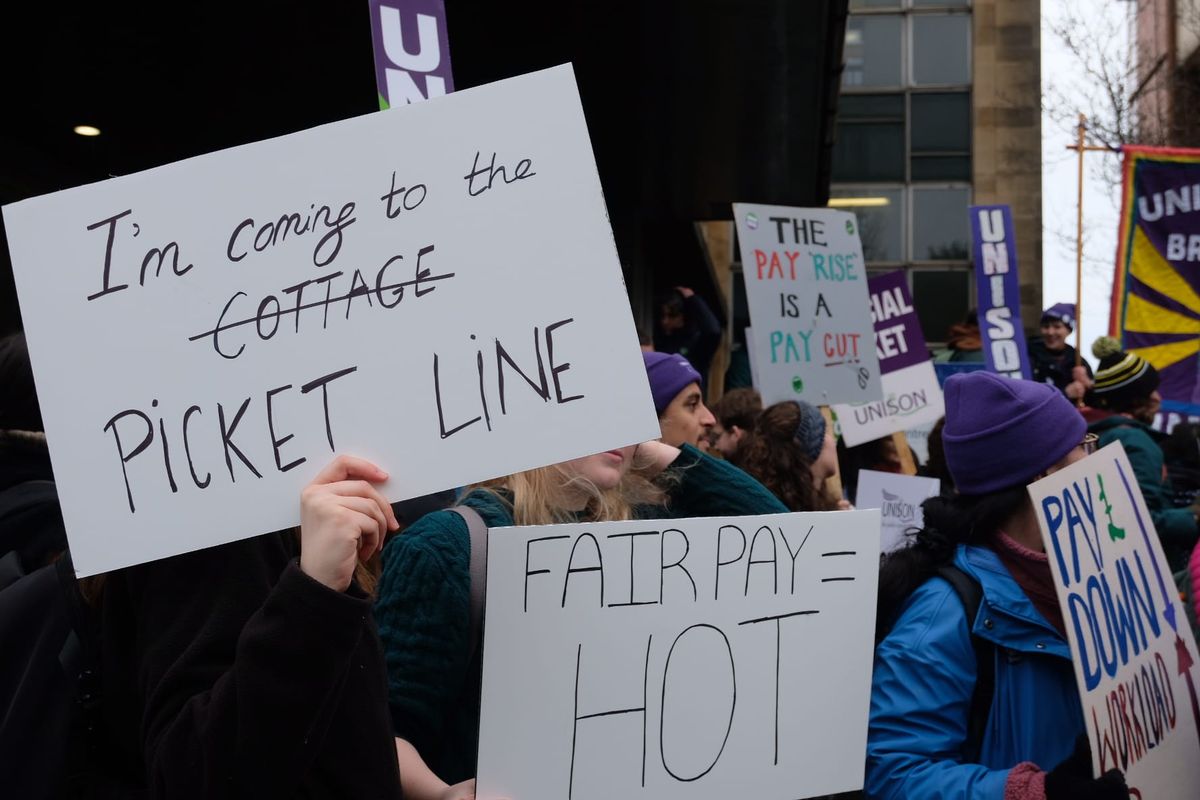
Bristol UCU has lobbied the University since February 2025 to benchmark its Schools against other universities, so as to mitigate these uneven impacts across disciplines, but this request was refused, according to Berglund.
The union says that any moves toward compulsory measures will result in industrial action.
‘It's frustrating knowing colleagues will lose their jobs in service of a surplus model that’s yet to be reasonably justified’, the Bristol UCU Medical Rep told Epigram.
The University of Bristol is by no means the only university in the country facing hard choices, nor is it alone in leaning on overseas fees.
The sector is in deep financial difficulties - four in ten universities are in a financial deficit, according to the Office for Students.
Beth Robinson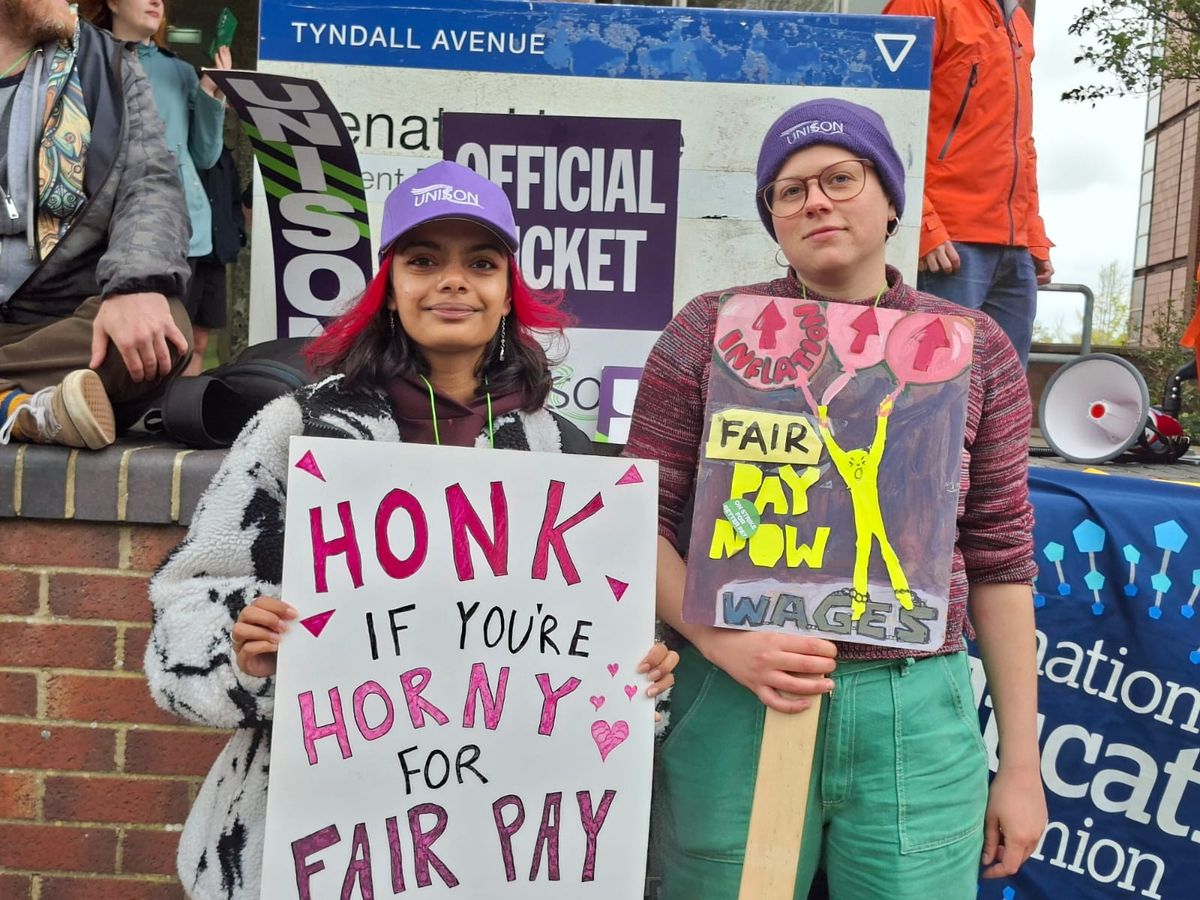
However, the impact of cuts may well affect students in addition to staff.
According to the Bristol UCU Medical Representative, the scheme is ‘extremely likely to impact the student experience’ within the Medical School.
A University of Bristol spokesperson said: ‘We have launched a voluntary severance process which is open to a small number of staff within our Medical School.
‘As part of a prudent, measured approach to managing our finances, we routinely take planned and focussed actions where necessary due to changing student demand and reducing research income streams, while routinely seeking opportunities to deliver our services more effectively and efficiently. This includes identifying ways to reduce our non-pay spending.
‘The University is in constant dialogue with our Trade Unions about any proposal that may affect staff. We are committed to working with them to find ways of delivering any necessary staffing changes through voluntary means where possible, and to supporting our staff.’
Featured image: Epigram / Sophie Maclaren
Corrections:
The original copy read ‘The University wants to cut the equivalent of 1 in 10 Medical School staff involved in teaching.’ This was misleading, as a small minority of Medical School staff offered the scheme do not teach, and other Medical School staff ineligible for the scheme do have limited teaching responsibilities. This has now been amended to ‘The University wants to cut the equivalent of 1 in 10 Medical School staff on ‘Pathway 1’ and ‘Pathway 3’ contracts, covering most staff with teaching responsibilities.’