By Charles Hubbard, Second Year, Theatre and Performance
Everything about the existence of The Devil Wears Prada 2 (2026) feels a little bleak. Not just the fact that the first film is now 20 years old - a fact enough to make any millennial start sweating blood. Not even its status as the film that finally broke Meryl Streep’s 50-year-long no-sequel streak (though I’m sure her top-of-the-heap paycheck helped cushion some of this embarrassment). But, most of all, that the film’s existence as an ostensible cash-grab (though aren’t all films, when made in a for-profit industry?) so closely mirrors the fortunes and desperations of its main characters, whose own business has gone from the centre of relevance to a niche curio faster than Kevin Costner in the mid-90s.
In this way, it’s almost appropriate that the film feels like a pale shadow of its predecessor - a metaphor made literal by the film’s horrifically flat colour grading (are we sure this wasn’t supposed to end up on Netflix?) and this is coming from someone who’s not even a major fan of the first film - its reputation as a classic has always baffled me a little. Aline Brosh McKenna’s lethargic and prickly script feels much more interested in depressing its audience than getting them to have fun. An incredibly strange choice, for sure, but undoubtedly one I respect for its bravery, considering the fact that everyone and their Stanley Tucci-obsessed mother is going to line up to see this.
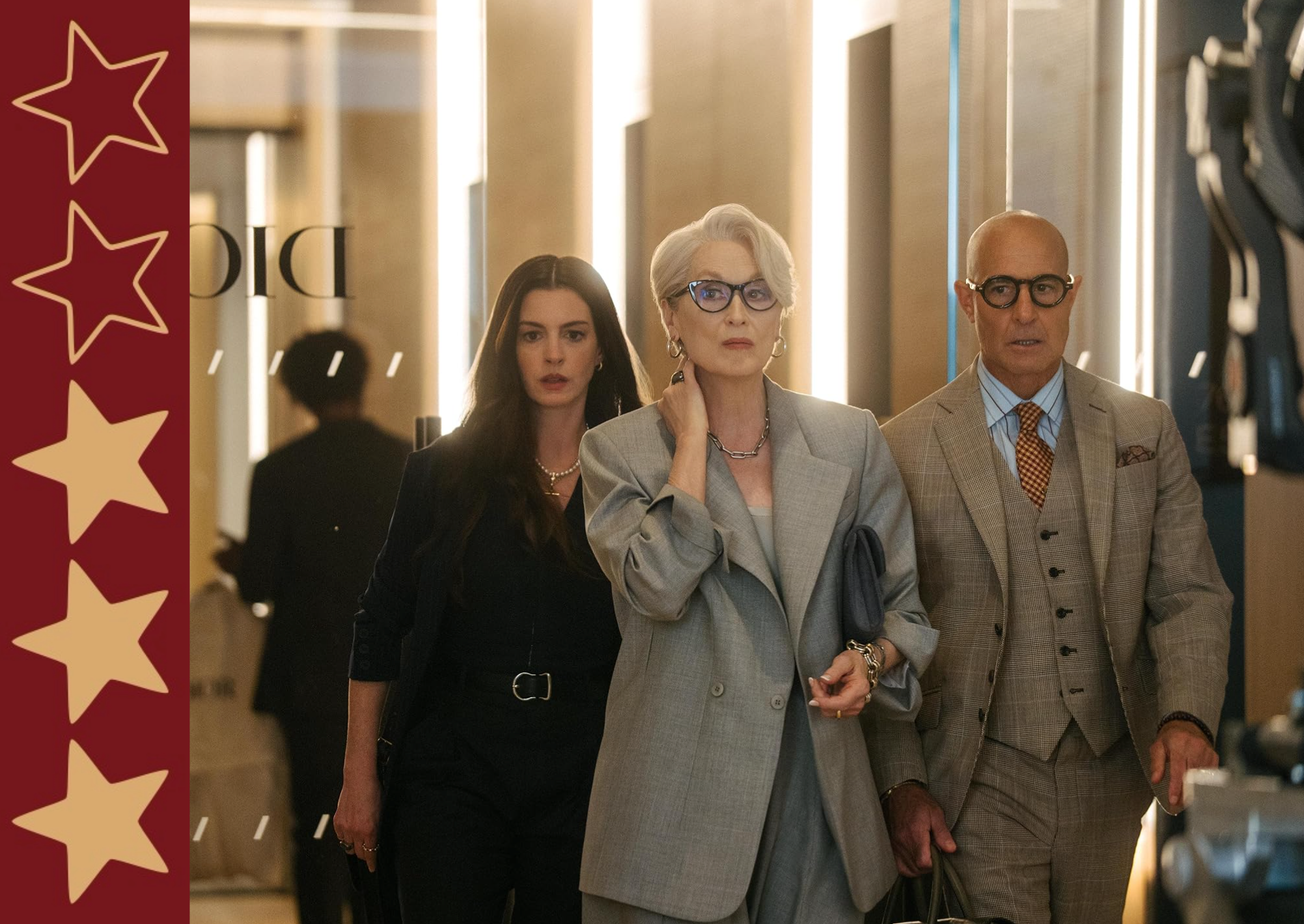
Andy Sachs is back and, this time, the filmmakers have fortunately given up trying to convince the audience that Anne Hathaway is in any way fat or ugly. Unfortunately, she’s just been fired via text from her job at a prestigious newspaper. Newly on the skids, she finds Miranda Priestley (a disarmingly down-to-earth Meryl Streep), who is trying to steer Runway (the fictional magazine loosely based on Vogue) through their latest major scandal - a partnership with an ethically dubious manufacturing sweatshop overseas. Deciding that, in their current state, they both need the other to weather the storm, Andie returns to Runway, though this time considerably further up the chain.
Much of the old crew is also back, including the sly, wickedly sarcastic Nigel (Stanley Tucci, proving once and for all that he can accomplish more phoning it in than most actors can with months of preparation) and, fresh from a major promotion at Vogue, the vulturously snide Emily (Emily Blunt, fresh from her gradual rise to superstardom that’s happened since the first film).
There are plenty of new actors here, including Simone Ashley (who might honestly be the highlight here), Lucy Liu, Justin Theroux and Kenneth Branagh, but director David Frankel is clearly so much more enamoured with the original cast, the new additions barely get a look-in. In particular, it’s very funny to watch a performer as notoriously vain and egomaniacal as Branagh be penned into a thankless husband role.
The film functions as a critique of our current broken media landscape first and foremost, often at the expense of providing the easy fan service many audience members will expect (jokey callbacks are thankfully kept to a minimum and those few that are present are insufferably tin-eared). And the success of this is certainly up for question. There is lots of righteous anger directed at greedy businesses who seek to gut major publications, strip them for parts and fire everyone involved with them without so much as an apology.
In fact, the teeth-grinding wardrobe and attitude of J. Rivitz (The Office’s B.J. Novak), the nepo baby who attempts to buy runway, makes him a far better fit for the titular devil than any of Miranda’s supposed demagoguery in the first film ever is.
However, a lot of the hand-wringing over how hard the budget cuts are hitting our characters stink strongly of champagne problems. In particular, the scene where Miranda is forced to endure the humiliation of flying economy alongside the unwashed masses is particularly painful, mainly because the target of the joke appears to be on the hoi palloi’s lack of sophistication, rather than Miranda’s entitlement.
Furthermore, we are constantly being told how much funding is being slashed regarding Runway’s more extravagant expenses and yet the outfits our leads wear are as intricate and expensive-looking as ever. I fully understand that criticising this film for having gorgeous outfits is like criticising a Jurassic Park film for having dinosaurs. But it would have been nice to see Frankel at least try and tie the film’s satire to its aesthetics.
Washed out, haphazardly cut together and containing performances that often feel more like blooper reels than the final product (Hathaway’s especially), this one’s certainly a weird relic and one that will probably seem even stranger with a few years’ hindsight.
 Emma Coleman
But it’s honestly just nice to finally see a Hollywood legacy sequel that actually provides itself with a legitimate reason to exist - beyond allowing the producers to imitate Scrooge McDuck, that is.
For the entire film, Frankel and McKenna seem to be reminding you that, while 20 years ago, the media industry may have been a soul sucking void that caused burnout faster than a week of all-nighters in the ASS, it’s become far, far bleaker in the decades since. Oh sorry, were you expecting feel-good nostalgia?
Featured Image: IMDb | Illustration by Epigram / Sophia Izwan
What did you think of this remake of one of Hollywood's classics?