By Katie Asha, First Year, English
If the names Carrie, Miranda, Samantha, and Charlotte don’t ring a bell to you, you’re a rare find – one of the few people who has never dabbled in watching a few episodes of HBO’s Sex and the City.
The iconic show surrounds a group of four female friends approaching the ups and downs of life in their 30s and 40s; frankly exploring sex, romance, city life, and friendship. The series is narrated by Carrie Bradshaw – a charismatic (and slightly annoying) column writer for the New York Observer. Her weekly columns provide the topic for each episode, while the different personalities within the friend group offer us contrasting views on the episode's respective topic. Sex and the City aired its pilot episode on June 6th 1998 and has since rocketed to unprecedented levels of fame within both the film and fashion spheres. Since conception, it has catalysed multiple books, six high-grossing TV seasons, a prequel and sequel series, two feature films, countless thinkpieces, and many sparkly midi skirts. After all this, I couldn’t help but wonder – what exactly is it that makes the show so timeless?
Before we get into the influence of the show, a brief history of it is needed. Sex and the City was born of a weekly column written by Candace Bushnell for the New York Observer. Bushnell's column centered topics of dating and sexuality in New York City, written through the lens of her and her friends' own lives as a group of single women in their 30s and 40s. The author wrote under the pseudonym ‘Carrie Bradshaw’ in order to avoid her parents from realising they were reading about their daughter's own sex life – however, this privacy could not altogether endure due to the unexpected success of the column. Following the massive popularity of her writings, Bushnell's articles were compiled into an anthology by the name of Sex and the City in 1996. The book was subsequently picked up by television producer Darren Star, who cast Sarah Jessica Parker as the charismatic role of Carrie. The first episode aired in the early summer of 1998, and the rest is history.
Sex and the City was and continues to be revolutionary due to its unapologetic centering of four adult women: it is not a coming-of-age cautionary tale with a lens focused on adolescent growing pains, but instead provides a peek into the inner life of a group of mature and independent women who are well into their 30s. The show rejects the continually prevalent idea that a woman’s life ends with middle-age: instead, the four female protagonists are each granted vibrant personalities, styles, sexual expression, and adventures of their own. The show is not – and is not attempting to be – a teenage musing about the mysteries of romantic relationships and sexuality, but is instead an honest, hilarious, and nuanced look at the day-to-day lives of adult women who have experienced heterosexual romantic relationships and found them wanting.
While the show drolly explores the reality of modern dating for a group of women in their thirties and forties, its honesty does not make it cynical. In fact, Sex and the City offers an optimistic outlook on the joys of independence and ambition in adulthood, the misadventures of single life, and the intimacy of consistent female friendship. This has sparked multiple trends and different new ways of thinking online: in a world that socialises young girls to maintain a relentless focus on their own youth, the show offers a refreshing pragmatism towards ageing. ‘Sex and the City reminds me that life doesn’t end at 30,’ one TikTok user posts; ‘If I ever feel like I’ve run out of time, I remember that I’m not even the age of Carrie Bradshaw in Season 1 of Sex and the City,’ says another. Sex, romance, and adventures are not concepts that expire in the female psyche at thirty years old, or ever.
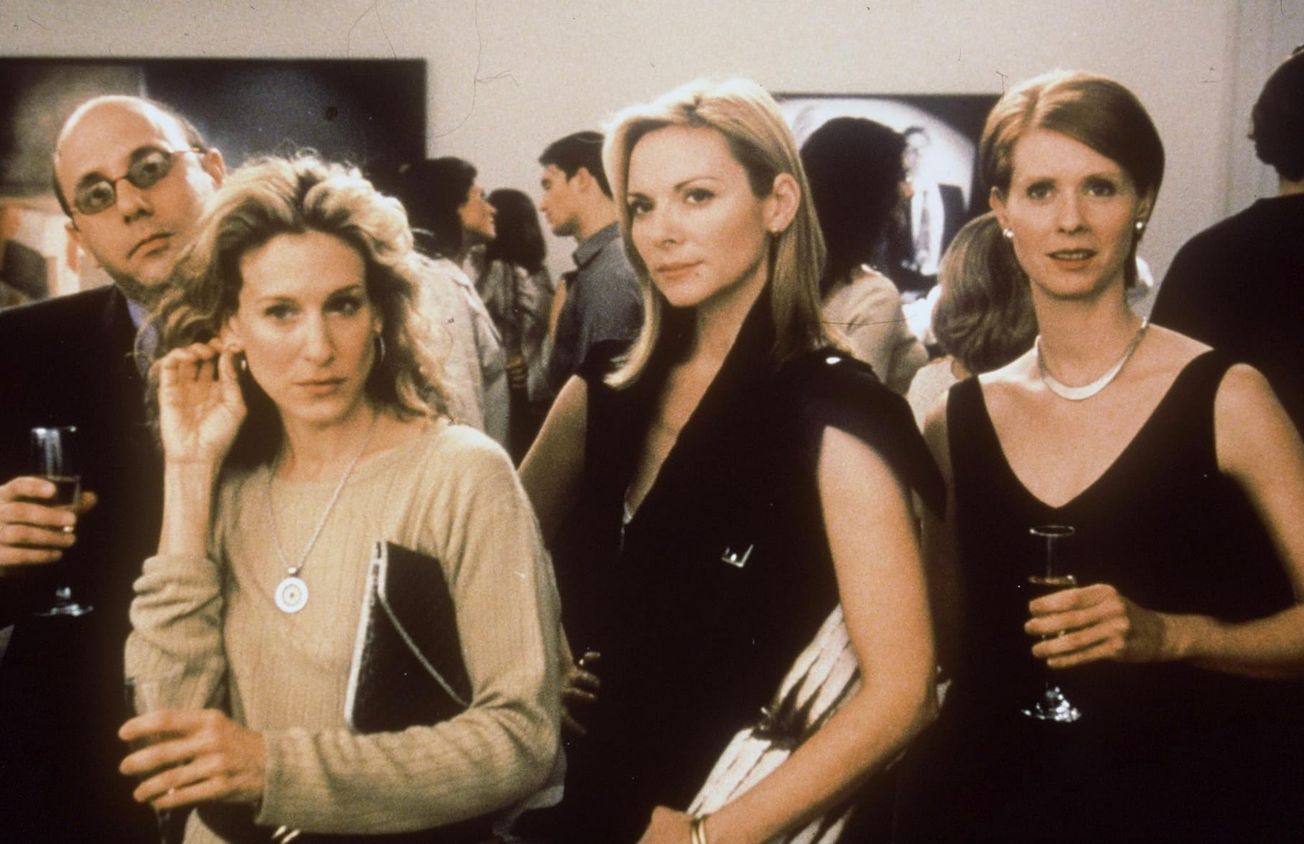
Indeed, Samantha Jones (Kim Cattrall), who is the most sexually liberal of the four protagonists, is forty years old in Episode 1 of the show; she is unapologetically ambitious when it comes to relationships, approaching them with humour, confidence, and an unshakeable sense that she deserves the things that she desires. The four protagonists do not fit into cookie-cutter tropes of Madonna-Whore (a complex in which female characters in media are generally depicted either as a figure of virginity and purity, or oversexualised and a ‘slut’), but instead are granted individual sexuality, ambitions, beauty, flaws and nuances of their own. While the show does undoubtedly impose certain archetypes onto each character to maintain a sense of predictability and comedy through the contrasts in their different personalities, it refuses to shame women for whichever archetype they happen to fit into. The female characters in Sex and the City do not have to be either perfect and untouchable or imperfect and rejected, but instead have the capacity to be something in between: human.
Another aspect of the show which cemented it as an influential piece of media was its fashion. Sex and the City's story is told just as much through its fashion choices as through its screenplay, with Harper's Bazaar nicknaming it 'one of the most fashionable television programmes of all time'. Carrie’s iconic combination of a midi skirt and kitten heels remains a trend even now; her outfit in the show's opening credits – a baby pink tank top paired with a Dior white tutu skirt – catalysed the popularity of tutu and tulle skirts on the runway for years to come. Her extensive footwear collection put Manolo Blahniks on the fashion map.
Carrie is not the only character from whom people model their wardrobe – the pastels and elegance of Charlotte’s (Kristin Davis) ‘Park-avenue princess’ looks, the feminine and bold low-cut blazers often sported by Samantha, and the fiercely professional outfits of Miranda (Cynthia Nixon) are all continually reflected in trends today. Just as a person evolves rather than expires with age, a truly good outfit will never go out of style.
 Charles Hubbard
The continued relevance of Sex and the City today shows just how revolutionary Bushnell’s writings were – and how the joys and ambitions of women beyond 25 are something always worth appreciating. The show has cemented itself as a television classic for women of all ages due to its frank honesty, unafraid humour, and effervescent characterisations; although the show's title centres sexuality and romance, its true heartbeat lies in the long-term friendship between four women.
And just like that, the show turns 28 – but it is only really just getting started.
Featured Image: IMDb / Sex and the City
Why do you think Sex and the City is so timeless?