By Stas Forte, Music Subeditor
When I moved to Bristol, the first station my radio picked up was SWU.FM. Having grown up quite the indie kid, my knowledge of electronic music was mostly limited to big names like The Prodigy and Massive Attack. Suddenly, through my speakers, came explosive breakbeats and wobbling bass. I had never heard anything like it — and I was hooked.
A few nights out around the city, and the names I'd been hearing in my room were soon playing in front of me, producing sounds I hadn't even known were possible. It's a story we've all heard before: Bristol student discovers dance music, becomes DJ. But the cliché speaks to something bigger: the power of Bristol's sound, and just how deeply electronic music is embedded in the city's culture.
To mark this milestone, SWU.FM brought together over forty names from across dance music to celebrate the station that has helped soundtrack the south-west. In a landscape increasingly dominated by streaming platforms, it's no surprise that independent radio stations face mounting challenges. SWU.FM ceased broadcasting in September 2022 due to rising costs, but was acquired by Rinse FM in April 2023, making the anniversary all the more triumphant after their return.

The Prospect Building was a fitting choice: an immense venue with a 5,000-person capacity and three stages, practically a small festival in its own right. Following its £500,000 revamp in 2024, the venue has retained its warehouse roots, with industrial features like repurposed crane pillars sitting alongside a modern sound system (Void Acoustics, K2 and KARA II) and an indoor lightroom.
The result was a space that balanced underground atmosphere with the practicalities of a large-scale event. Despite the stacked line-up, the night never felt overcrowded. Instead, the three stages offered distinct experiences, with attendees flowing naturally between them as the evening unfolded.
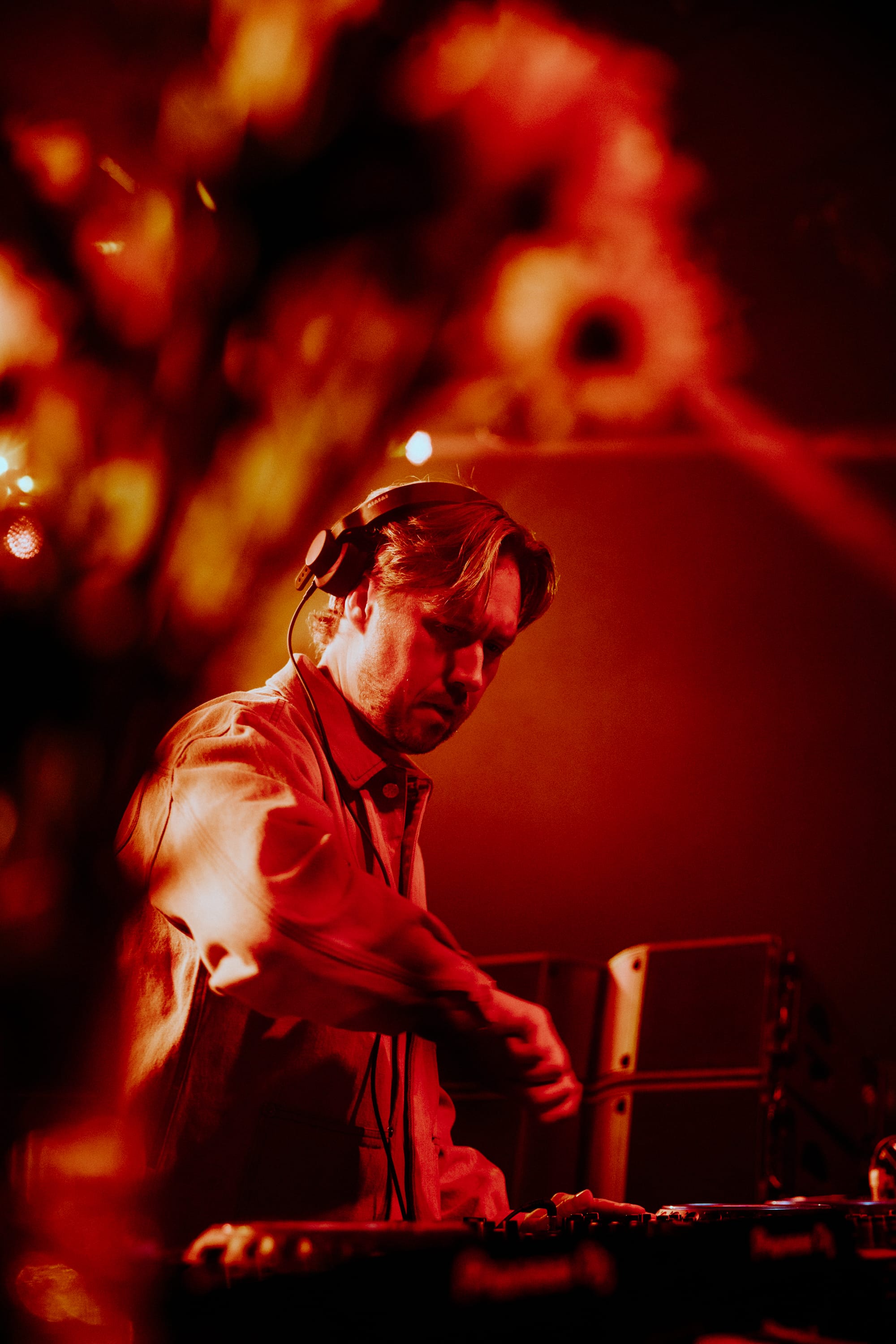
Joy Orbison's headline set was already underway as the crowd gathered at the main stage, entranced by the deep garage grooves he blended with flavours of hypnotic techno reverberating around the room. A master of crowd control, Orbison's nonchalant mixing contrasted with everyone's eruption of excitement as he dropped ‘flight fm’, a track that still sounds as raw as it did at its first release, testament to the timelessness of his production.
For an event celebrating the past ten years of dance music, it only made sense for him to play modern classics like ‘Hackney Parrot’, a track you never hear mixed the same way twice. As dusk set in, his set marked the transition into the start of the night — the basslines got dirtier, the crowd danced harder.

Away from the main stage, a surprisingly quirky outdoor setup in the form of a Jubel van meant you didn't miss out on the music while taking a breather. Felix Joy and D.A.D. were spinning some soulful house and disco, perfect for a light boogie. Their infectious energy had everyone smiling, bringing a welcome change of pace from the intensity inside.
However, the breakbeats called from the Crane stage back inside, where Harmonia founder Phia500 was playing a bouncy back-to-back set alongside Medis. If there's anything the past few years of clubbing have made clear, it's that electronic music is at its best when it's sexy. Jungle and booty bass are the latest pretty best friends of dance, and Phia and Medis were clearly well aware, with their dynamic, sassy mixes getting everyone's feet skanking to the drums.
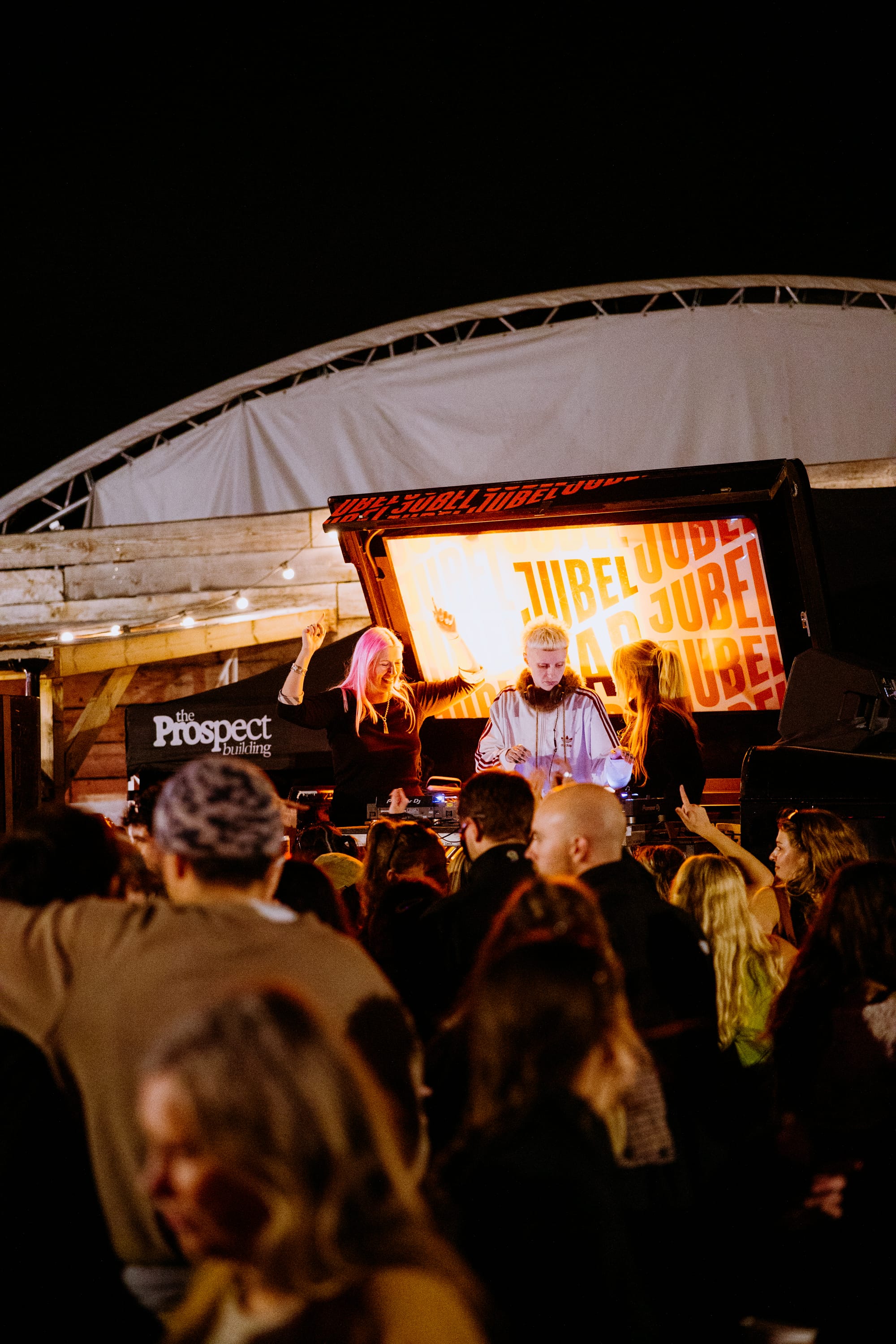
Some of Bristol's best nights out have always had a couple of names in common, so it was no surprise to see SWU residents Minnim, Izzit, and JPEG doing their thing on the Yard stage. These three never fail to impress with their cheeky, experimental mixes, ranging from darker garage sounds, footwork, and electro to elements of habibi funk, naughty R&B and rap samples like Notorious B.I.G.'s ‘Baby Got Back’ and Tinashe's ‘Nasty’. Their sets have always had a playful yet refined energy that feels consistently fresh, and this was no exception.
The final few sets of the night were a real celebration of dance, capturing the diversity of Bristol's sound — bass driven and relentless, with a perfect balance of darkness and euphoria. Remixes of tracks like ‘Baiana’ had taken on a newfound depth that marked the evolution of the soundscape over the past couple of years. DJ EZ paid homage to the roots of dance with timeless classics like Inner City's ‘Good Life’, and getting the crowd singing GALA's ‘Freed from Desire’ so passionately it might as well have been the national anthem. It was all unmistakably British, with EZ, DJ Die, and Clipz dropping everything from Skepta's ‘I Spy’ to recent stars of the UK scene like Esdeekid's ‘LV Sandals’.
 Tom Foley
As the night drew to a close, Dread MC highlighted the journey of the evening, reflecting the evolution of SWU's sound over the past ten years. ‘Sound is medicine,’ he chanted over the dub echoing through the room — a fitting sentiment for a night celebrating the music and community that have kept the station going. The night ended with an explosion of energy in the form of thundering drum and bass, a euphoric close that brought the celebration full circle.
SWU's anniversary illustrated that radio continues to play an integral role in building community. By giving emerging sounds a platform and bringing artists and audiences together, stations like SWU help shape the scenes they support. Ten years on, its return is a reminder of what independent radio can offer that streaming alone cannot: a shared identity, shaped by musicians and audiences alike.
Feature image: KoLAB Studios / Alastair Brookes
Will you be tuning in to SWU.FM?