By Phoebe Belle, Third Year, Law and French
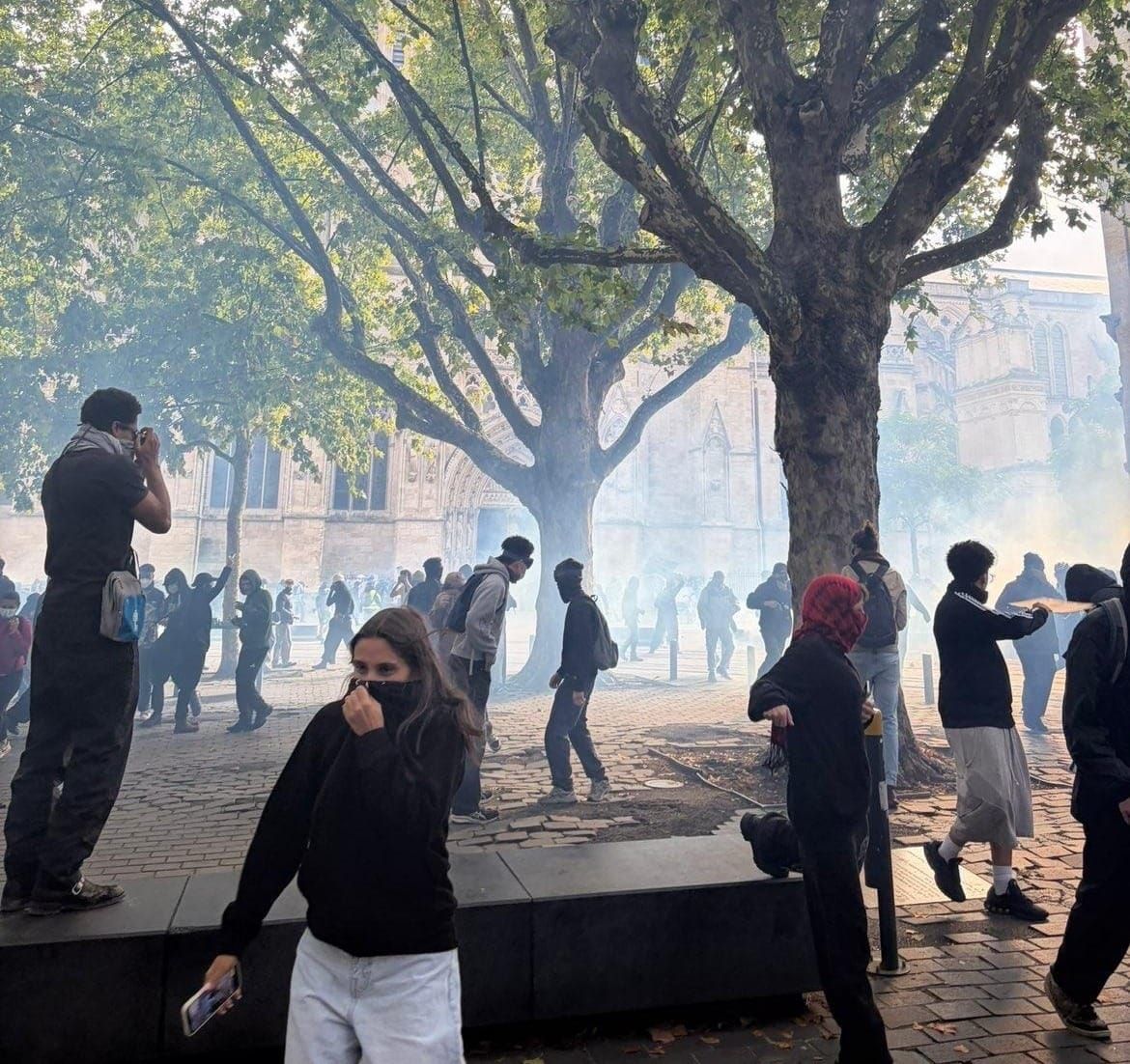
Living in the centre of Bordeaux, a city in the South West of France, over the last few weeks of my year abroad, I have found it increasingly hard to regard the protests sweeping France as a distant political event. The smell of tear gas and burning bins has become a recurring feature of the central square, and on Friday 16th October, it even reached the Sonora festival, where I was among the crowd. Such experiences are far from unusual among students here; many have been tear-gassed themselves during the protests.
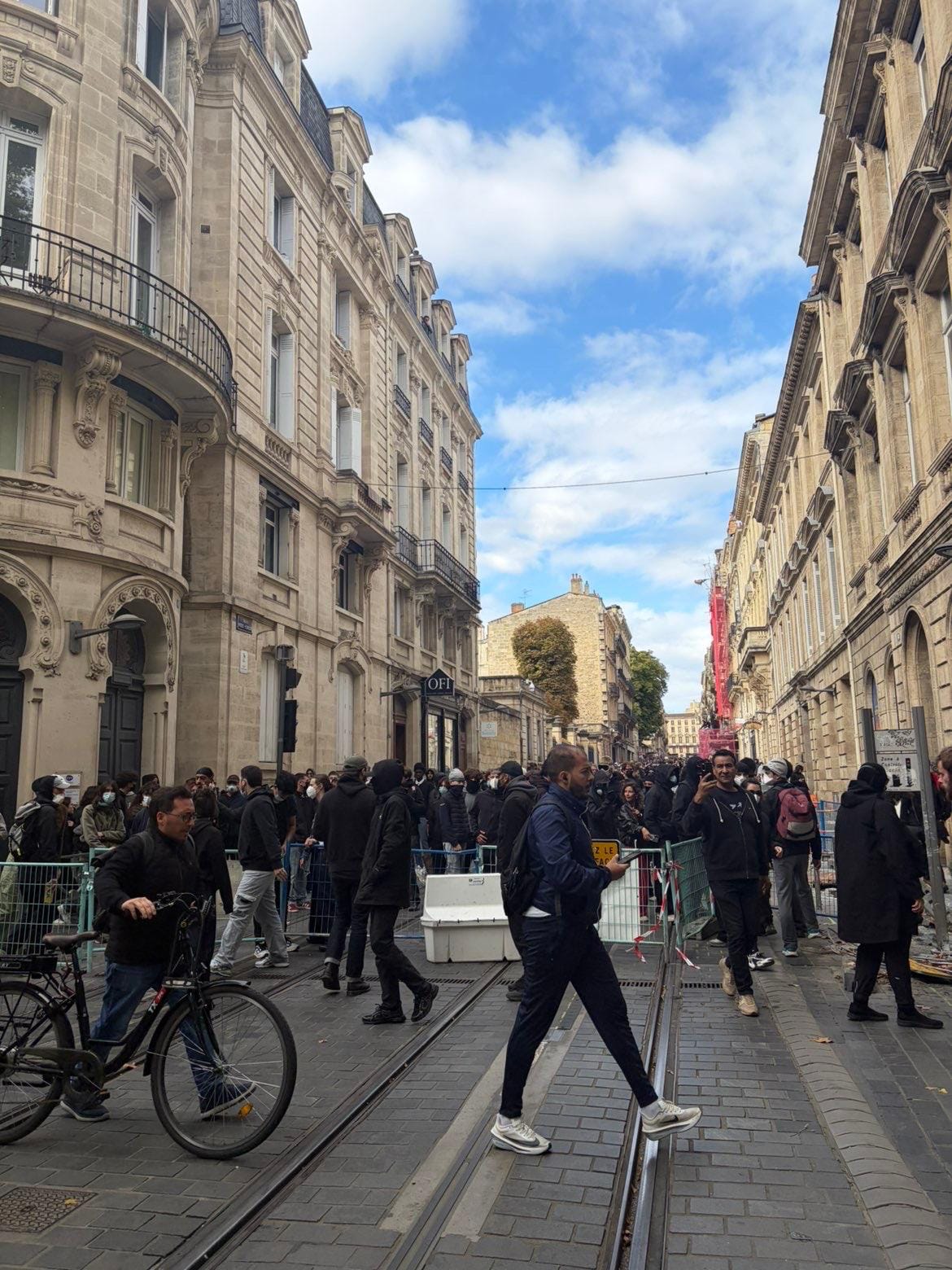
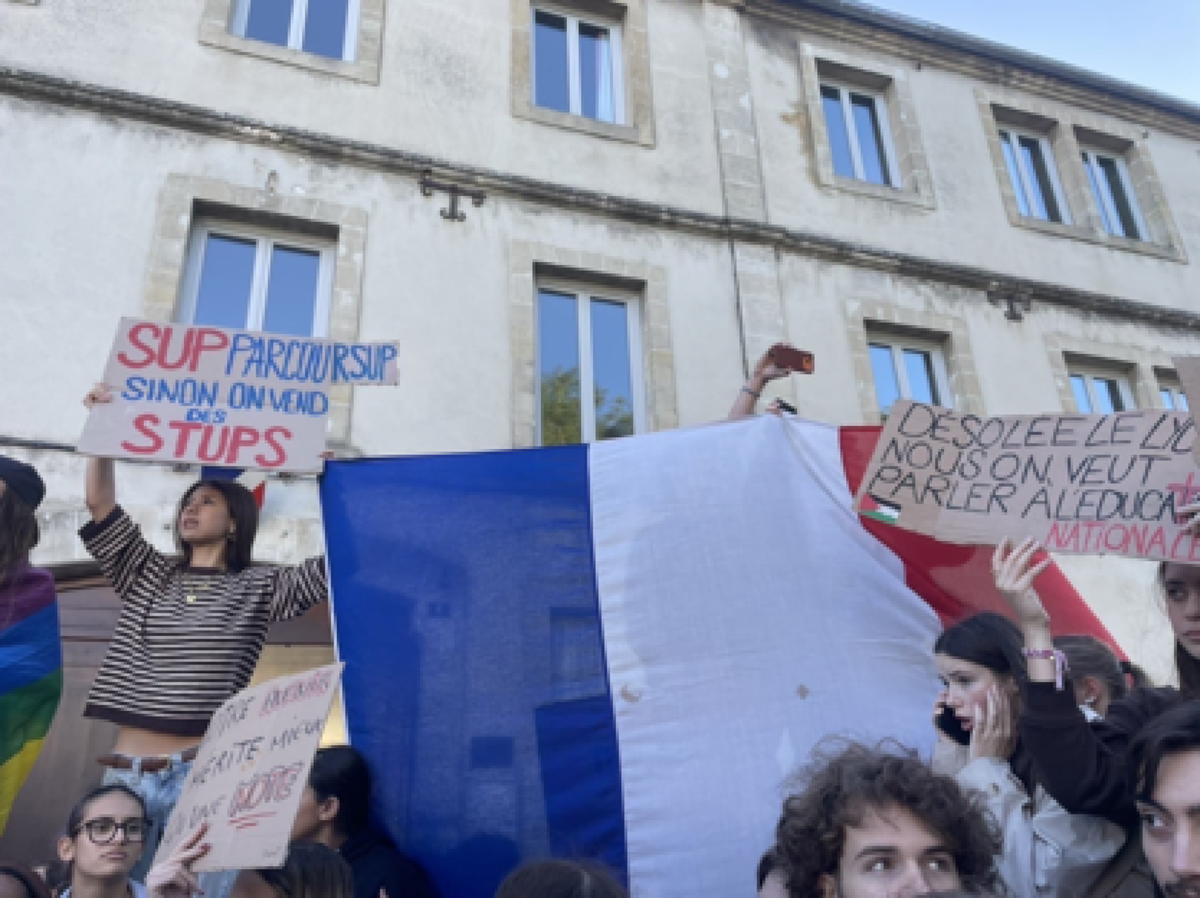
The protests of Saturday 17th October against the cost of living and the decline of public services brought between 550,000 and 800,000 people onto the streets nationwide. In Bordeaux, as in many other cities, the day descended into clashes, vandalism and looting; the RAID (the police’s elite intervention unit) was deployed to support local officers after the local police prefect’s residence was ransacked. National attention has since focused on the disorder. The young people I have spoken to, however, are more concerned with the grievances that have driven the country to this point. As Epigram has previously reported, what began over a month ago as blockades by lycéens (school students), angry about overcrowded classrooms and the Parcoursup admissions system, has since turned into a broader revolt against the cost of living.
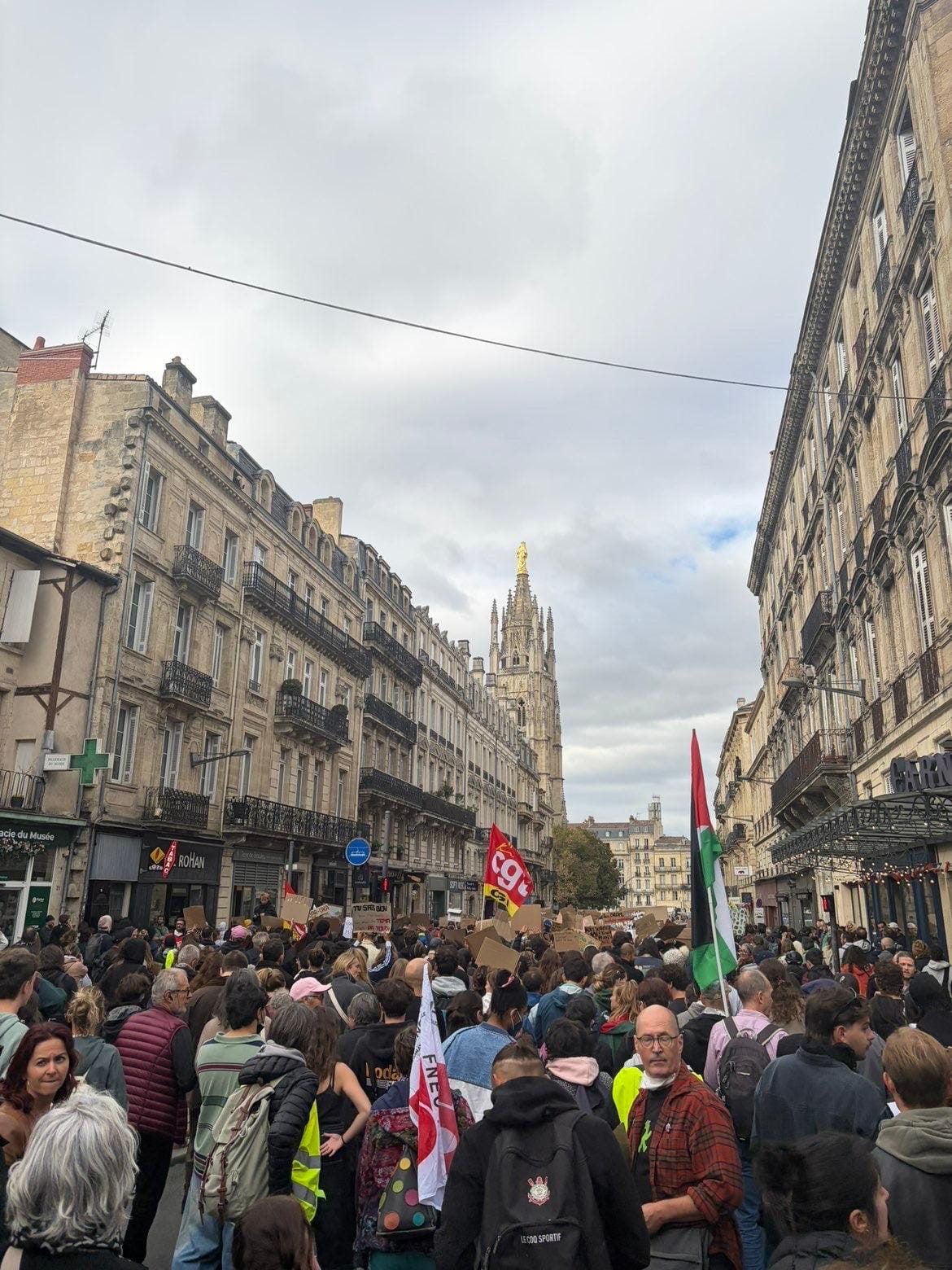
Among my French friends, support for the movement is close to unanimous. What is striking is how they frame it: not primarily as a defence of personal interests, but as a collective struggle over rights and hope for a future that extends well beyond students. Encouraging me to join the marches, one friend put it simply:
‘We are protesting for everyone.’
This support does not always translate into attendance, however. Several friends have chosen not to march, for fear of police violence and the dangers of such vast crowds. None of them described their absence as being rooted in ambivalence. Rather, their support through meetings and union activity acts as a reminder that participation in a social movement cannot be measured by turnout alone. The conditions surrounding protest, including the policing of it, shape who feels able to take part.
The movement has not stayed within the boundaries of organised protest. It has followed the city’s youth into music and nightlife, spaces more often associated with escape from politics than engagement with it. At the Sonora festival, the protest slogan « c’est les ténèbres » (‘it’s the darkness’), mixed into Vladimir Cauchemar’s set, was interrupted by an explosion of tear gas in the crowd. Nor are the protests confined to large venues. At a bar in the city centre, I went to see a DJ who had mixed similar chants, popular on the marches, into his set, and the crowd, mostly young people, joined in.
These may seem small gestures, but they offer valuable insight into the attitudes of the young people I know here. When protest chants become material for music, a movement begins to function not only as a political campaign, but as a shared cultural reference point for a generation. This is not new in France, where protest has long had its own soundtrack, but it does demonstrate how firmly demands for, as a friend put it, ‘everyone to have a vision of the future’ have taken hold.
A more contested issue, however, is the looting. Epigram interviewed one young person, who will remain anonymous, who acknowledges having taken part. He made no attempt to justify it, but nor does he view it as harmful to the protest’s ultimate message. Most of my other peers reject this outright, arguing that looting harms shop workers and small business owners, the very people the movement claims to represent, and hands opponents a convenient narrative. Around a hundred shops in the city centre of Bordeaux were wrecked on 17th October. Ludovic Roger, co-president of the traders’ association Bordeaux Mon commerce, told franceinfo that what hurt most was ‘the sense of abandonment’, with businesses looted from 2pm until 5am. Perhaps this disagreement reflects a broader strategic dilemma.
Should a movement prioritise condemning harm committed in its name, or unity in the face of a government that may benefit from its division?
The President’s address on 18th October gave this dilemma its sharpest form. He drew a clear distinction between the hundreds of thousands of protesters whose demands he called legitimate, and those responsible for the previous day’s violence: anyone who damaged property ‘must pay’, and those who looted must reimburse. At the same time, he presented the situation as a binary choice, declaring that one is either on the side of the Republic and the police, or on the side of the ‘casseurs’ (rioters), and singling out a ‘nebula of extremes’ in which he said the left wing party leader Jean-Luc Mélenchon’s party, La France Insoumise (LFI), played a major role.
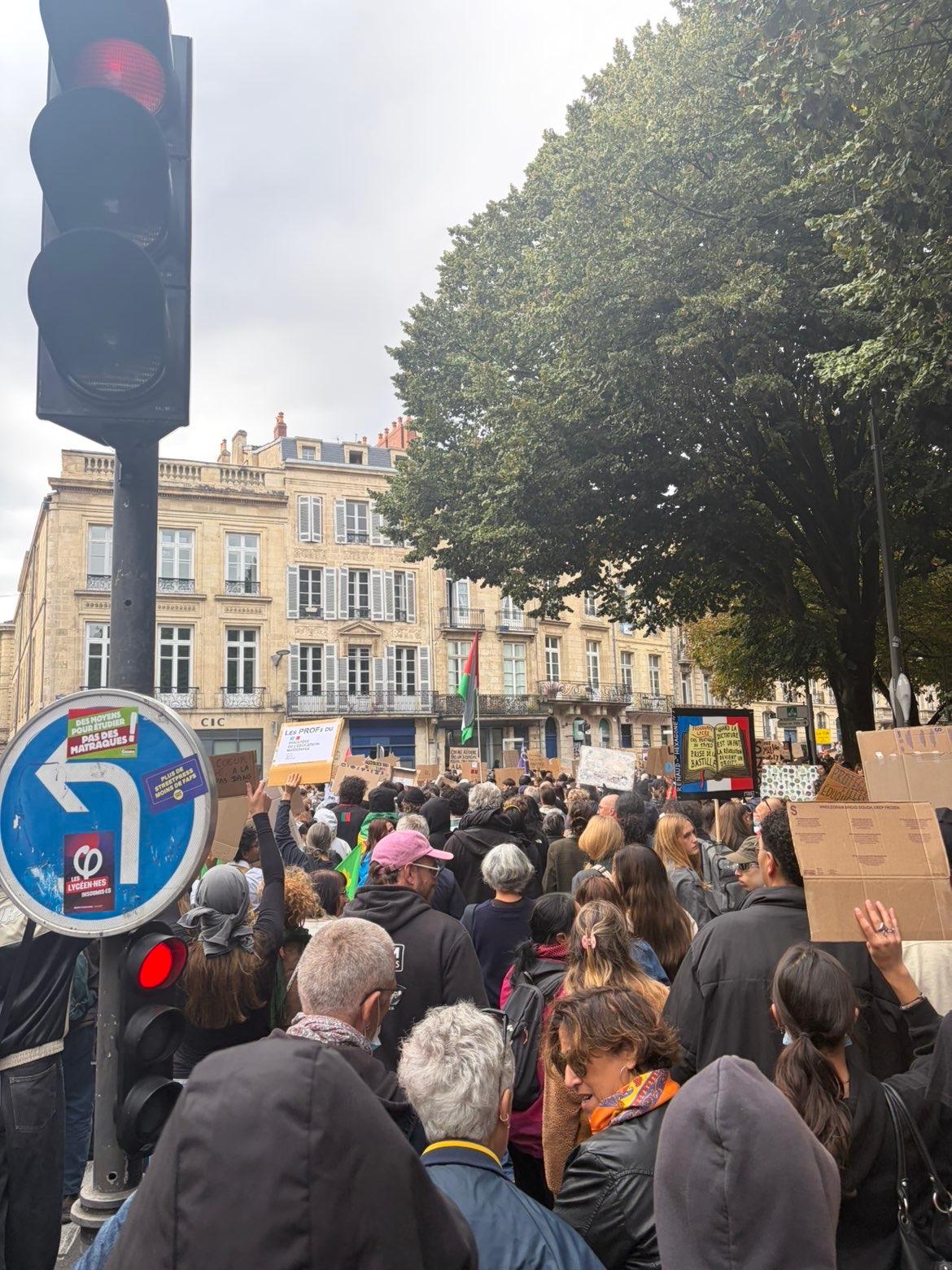
Among the young people around me, this statement has largely been read in two ways. For a few, it is viewed as a necessary affirmation of the rule of law that explicitly protects peaceful protesters. For the majority, it shifts public attention from the substantive demands of protesters to mere public order, a criticism reinforced by the reaction of France’s unions, such as the CGT and Snes-FSU, which complained the speech contained no concrete announcements on the cost of living, young people or education.
Eight days later, the government’s response began to take shape. On 26th October, ministers announced the overhaul and eventual replacement of Parcoursup. This is France’s national online platform for university admissions, roughly equivalent to UCAS, but widely criticised for its opaque selection criteria and for the stress that it puts on applicants. The cancellation of 836 planned teaching job cuts and new funding to renovate schools have also been announced. For the students who began the movement, these are significant concessions, though youth organisations say they do not go far enough and have already called for protests to continue.
Beyond schools, however, the wider cost of living remains largely unaddressed.
What has ultimately emerged over recent weeks is a movement whose demands now echo as readily in music and culture as on the street, but whose methods remain contested, even among its supporters. With further protests set for 31st October and a national day of strikes called by France’s major unions for the 5th November, its future may depend on whether the government’s concessions reach beyond the classroom to the cost of living that drives it.
 Mark McGarrick
 Jake Wintour
Featured Image:'Protests in the centre of Bordeaux'| Epigram / Pippa Caillard