By Mark McGarrick, First Year, French and Italian
France's lycée protests: calls for better education descend into violent clashes between young people and the police.
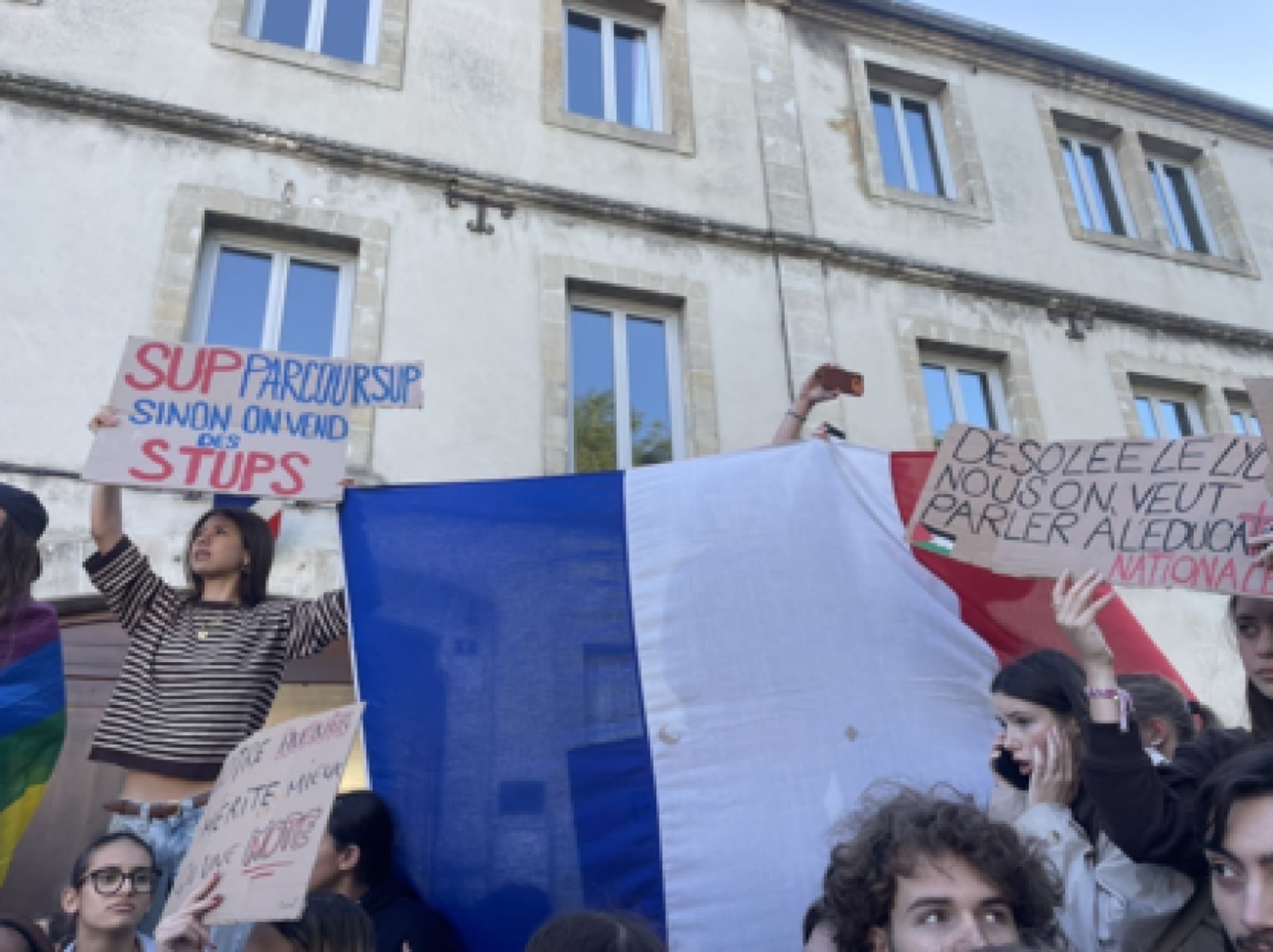
The French are known for their passion for protesting, and in recent weeks the country's youth have proven to be no exception. Since mid-September, thousands of French students - mostly lycéens aged between 15 and 18 - have taken to the streets in protest against poor conditions in schools and the injustices of the country's education system.
Beginning in Creteil, a south-eastern suburb of Paris, on the 21st of September, these manifestations have spread across the entire country, with thousands of students blockading their schools and colleges in largely peaceful protest, often joined in solidarity by their parents, teachers and, more recently, undergraduate students. By the 6th of October, 1,800 schools and many universities were closed and 250,000 people were estimated to be protesting in the largest student mobilisation the country has seen in decades.
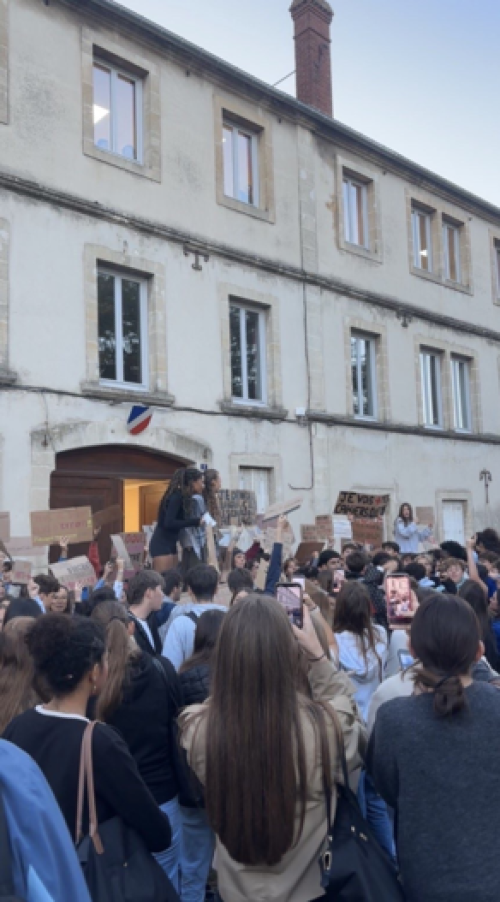
For some, these students are just troublemaking truants. But when you consider that their school system demands they be present as early as 7:30am and as late as 6pm, often taught by unqualified substitute teachers in crumbling buildings, lacking both heating and air conditioning, you can begin to understand why they are angry. In recent weeks, the government has cut thousands of teaching posts for the 2027 budget, which will only worsen the quality of education provided to them. Epigram spoke to a teacher at a lycée in Normandy who gave her opinion:
‘I support the protests because the state is increasingly withdrawing funds from public services: the number of students in each class is often too high, we lack teachers, and our schools often exacerbate existing social inequalities.’
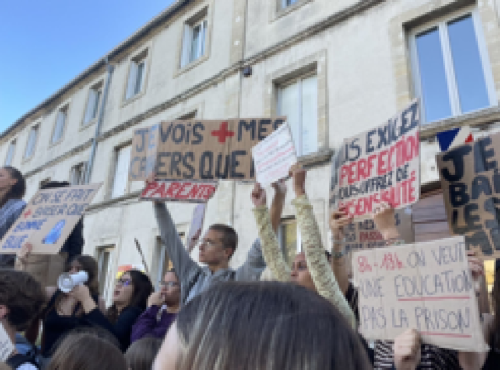
The result of this dire situation is that French students are extremely worried about their futures, as the baccalauréat - sat at age 18 after three years of learning in these school conditions - determines their career prospects for life. As one student's placard read at a protest in central Paris last week:
‘We're sorry to disturb you, we are just trying to save our futures.’
However, arguably more than simply highlighting the problems of France's education system, this month's protests have raised significant questions about the violent excesses of the French riot police, the CRS. When it's a question of children demanding better conditions for studying, it's hard not to be shocked at the violent response of the authorities: in Lens, on the 5th of October, a boy aged just 15 lost his hand to a police grenade, and in Alençon a 14-year-old girl was reportedly strangled by an officer.
Epigram spoke to one lycée student who described the horrible experience of trying to walk home and being caught in tear gas launched by the police.
Meanwhile, horrified parents and teachers have pleaded for the CRS to go easy on their children, often forming human chains to separate them from the students.
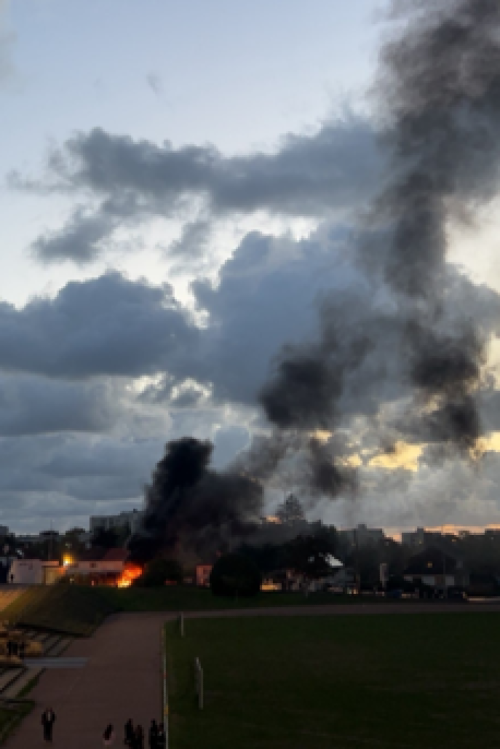
Admittedly, there have been some shocking scenes of violence committed by the students themselves. One student described attacks by students on their own teachers, and scenes are constantly circulating of arson attacks on schools. However, these people have usually been arrested and punished accordingly: in fact, 85 per cent of those arrested in relation to the protests have been under 18. Meanwhile, the CRS - who have long been criticised for their brutality - have retaliated against the students with a response that many view as completely disproportionate and unnecessary.
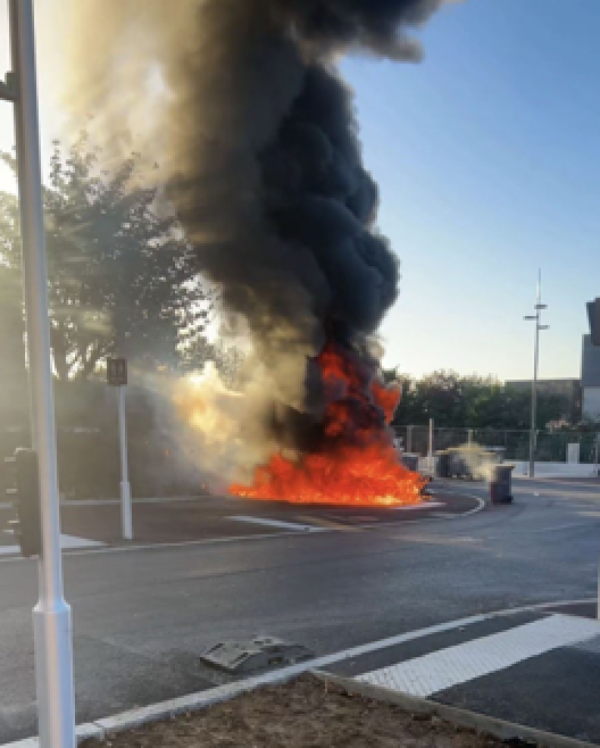
In a country which prides itself on its commitment to ‘liberté’ and freedom of expression, the images and stories that have emerged these past few weeks call into question the very existence of this value: police charges at peaceful protesters blocking streets; tear gas fired into crowds of youths; and the manhandling of students as young as 14 are all quite shocking signs of government repression.
‘I see my schoolbooks more than my family’
‘8 o’clock to 6 o’clock, we want education not prison’
Many believe it has come to this because the French government is extremely wary of student protests, like those of May 1968 which brought the nation to a standstill. Young people often have the public on their side, like back then when 10 million workers came out on strike in solidarity with the students, who had themselves begun by protesting the poor conditions in their universities. Given the general discontentment felt by the French population towards the Macron government and its management of the country's finance, coupled with growing outrage at the actions of the police, there is potential for these protests to widen into a larger movement, the last thing the current centrist government wants ahead of the presidential elections in less than 6 months’ time.
Perhaps the most evocative of the placards seen so far was one strapped to the gates of a school in Paris, which read:
‘They teach us about freedom of expression, but they don't like it when we exercise it’ - echoing the famous slogans seen in 1968
It does indeed appear that, rather than listen to and act upon the lycéens' genuine concerns, the French state prefers to crack down on those who voice them, turning what began as peaceful calls for better school conditions into an extremely volatile situation.
The protests continue to disrupt France as of the 9th of October, with many curious to see what action the government will put in place to mediate the situation and return to a more permanent state of calm.
 Daisy Nash
 Lenny Osler
Featured Image: Epigram /Mark McGarrick
Can you imagine an equivalent for UK sixth form students?