By Jake Wintour, Second Year, Politics and Philosophy
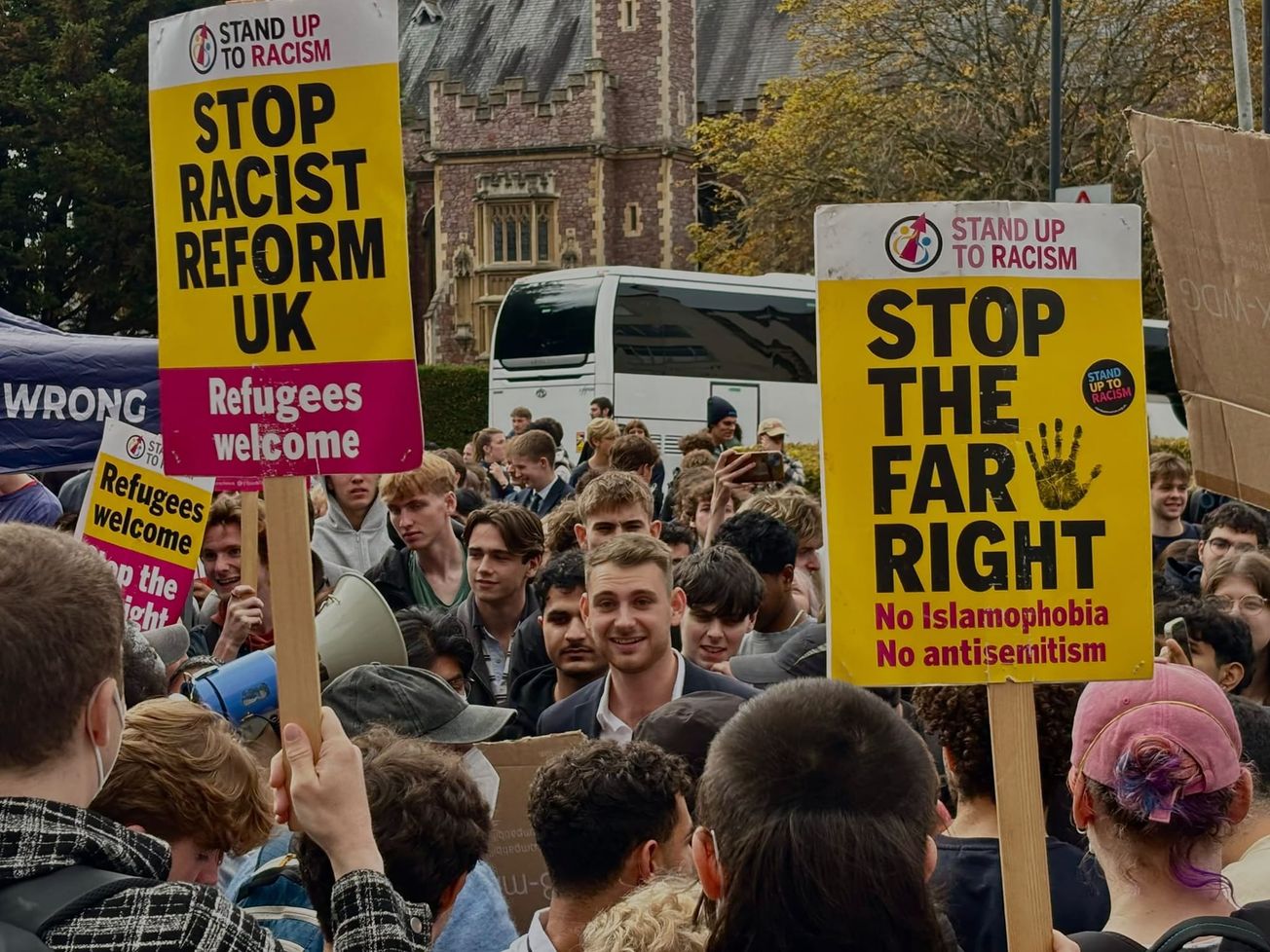
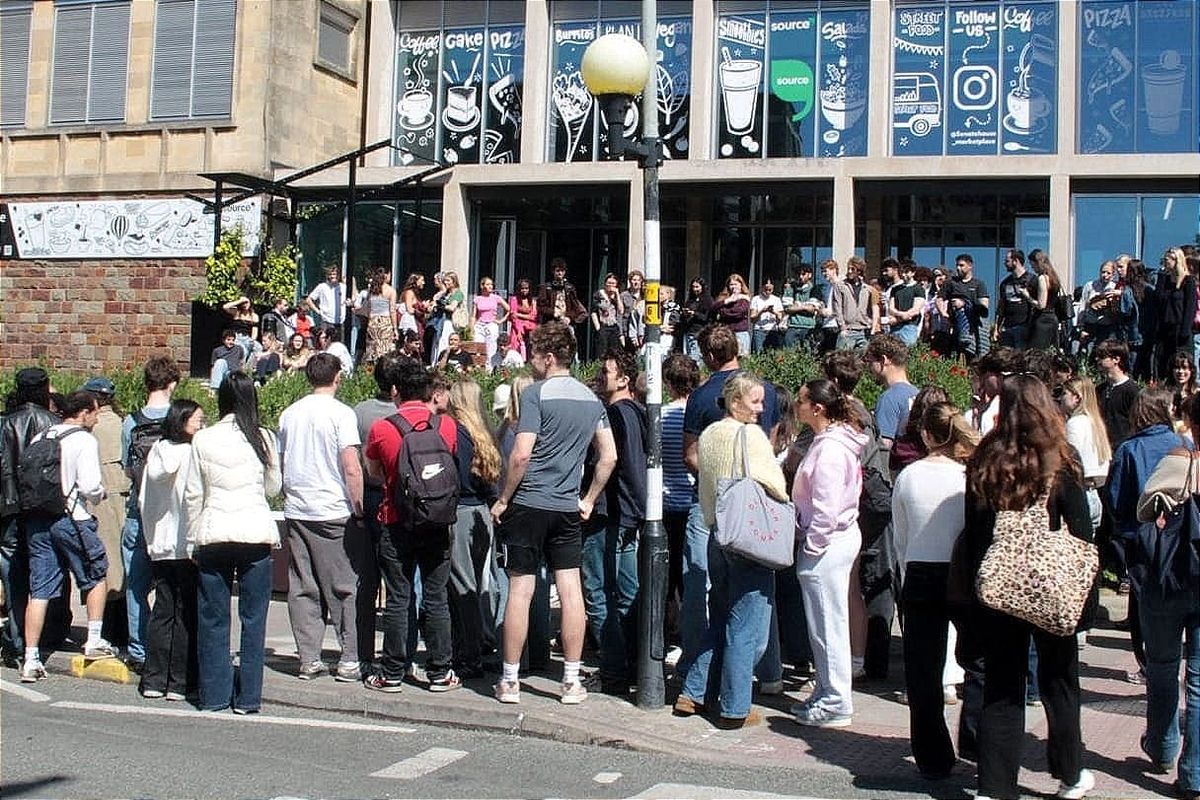
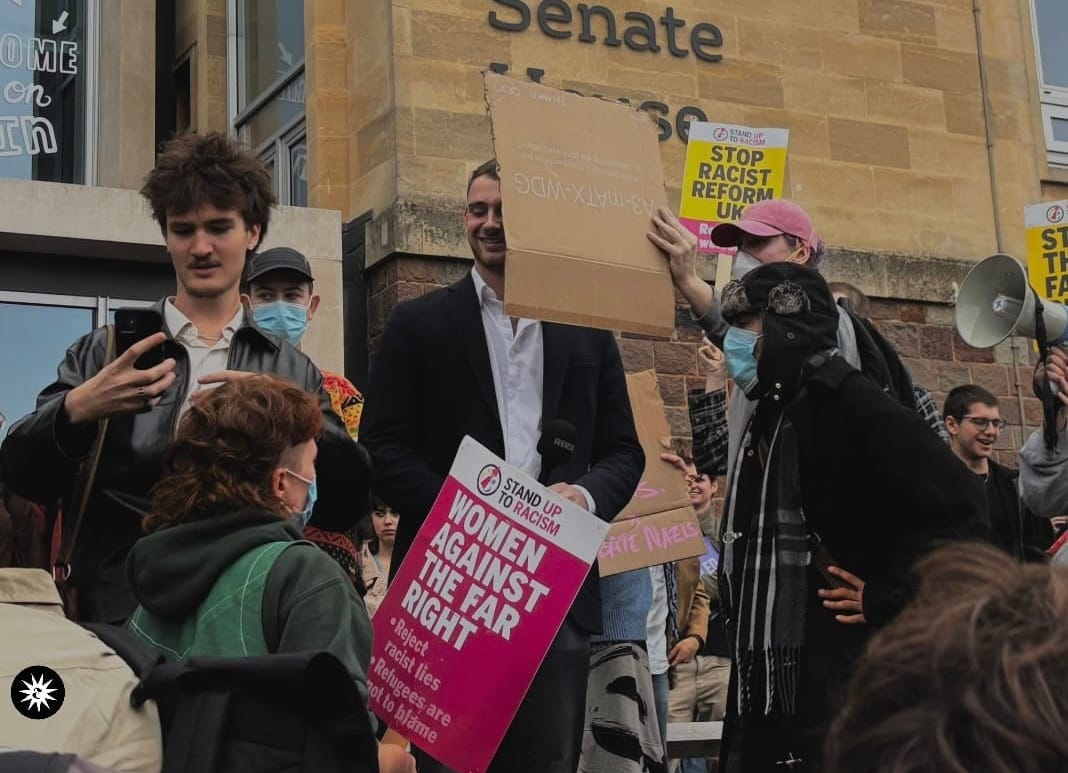
Two weeks ago, Bristol University was graced by the presence of the far-right ‘Charlie Kirk-style’ debater and provocateur Montgomery Toms. Toms set up a stall outside Senate House on Monday, onlookers quoted by the Tab claim hearing the commentator telling Jewish students that they could not be British unless they are ‘white’ and ‘Christian.’ Protestors eventually dismantled his gazebo and he was escorted away by police. Toms, aged 21, is the founder of the radical youth organisation ‘Freedom Watch GB’ and has links to Rupert Lowe’s Restore Britain.
The former UAL student, who ‘felt forced to leave’ his previous university after he received backlash over his anti-transgender views, has, over recent months, been carrying out a nationwide tour of UK universities to ‘challenge ideological capture in education.’
He holds street debates with members of universities on topics ranging from climate change, LGBTQ rights and of course, immigration, posting the most controversial and combative clips online. Other destinations on his tour, aside from Bristol, include the universities of Manchester, Brighton, Cardiff and, last week, UCL.
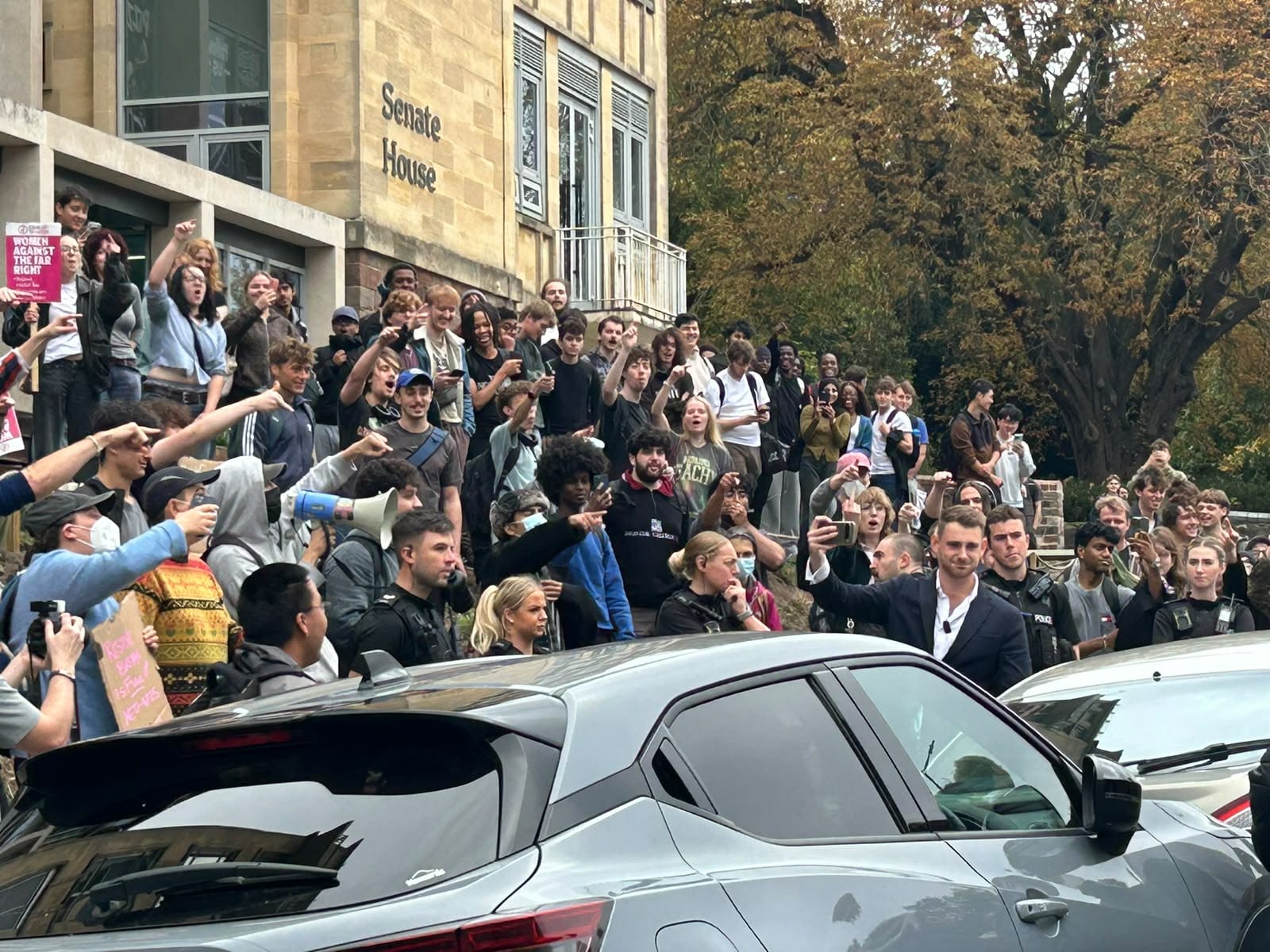
This is not the first time such a character has set up shop outside Senate House with the intention of sparking outrage. At the end of April, an equally provocative 17 year old debater named ‘Young Bob’ of ‘Turning Point UK,’ the British offshoot of Charlie Kirk’s ‘Turning Point USA,’ assumed the same spot outside the heart of the university holding a banner reading ‘Abortion should be completely banned, change my mind.’ As Epigram’s Grace Rose wrote at the time, an all too familiar script played out: initially, students scoffed at the teenager, incredulous that anyone could take this baby-faced knock-off seriously, let alone his radical views. Yet, as the afternoon wore on, tempers flared, the police were called and the event culminated in a curry being thrown at the 17-year-old.
 Grace Rose
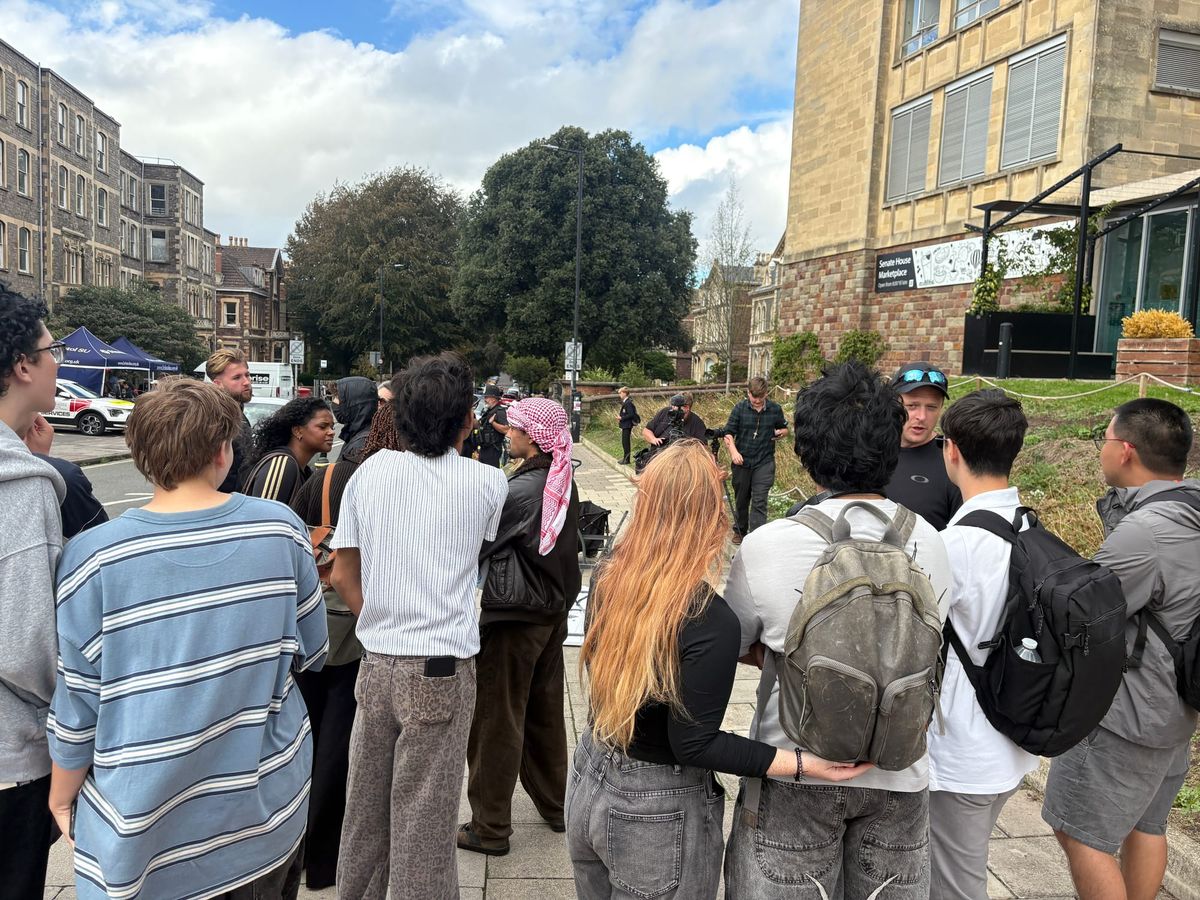
‘Young Bob’ was not the last far-right agitator to unfurl a banner and unfold a lawnchair outside Senate House, and Toms probably won’t be either. UCL is unlikely to be the final destination on Toms’ UK tour, in fact, it seems as if he is just getting started.
So, in future, how should those of us who wish to challenge the rise of the far-right - as many students do - respond to a character like Toms? Should we engage with the discussion he wants to create or should we ignore it altogether? I argue we can do both.
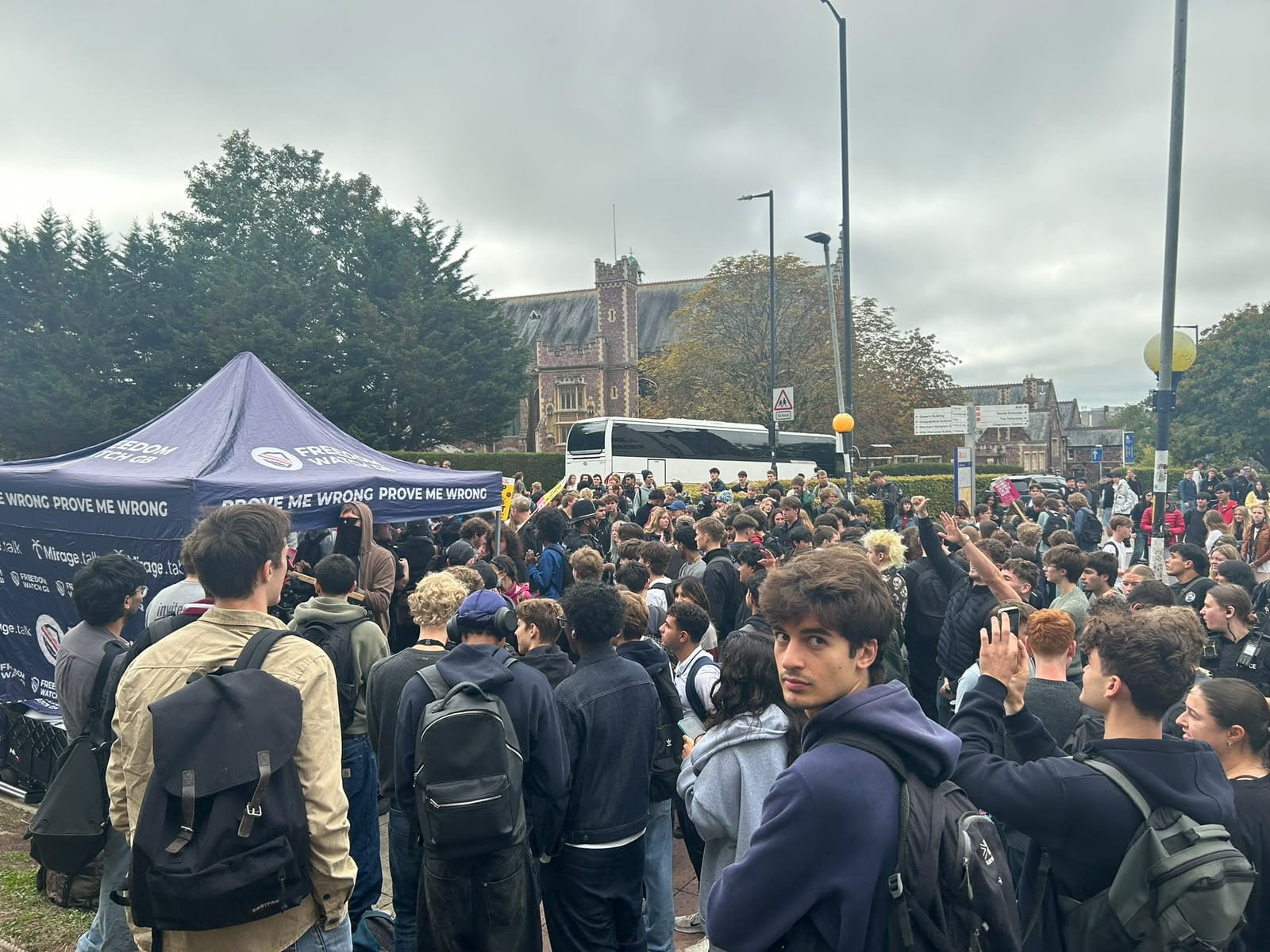
First, if we wish to challenge him, it is necessary to consider what Toms actually wants from his visits to universities. Ostensibly, he is a champion of free speech and robust debate who merely wants to have reasonable conversations with students who do not share his political ideology. In my view, the reality is the complete opposite. Toms’ self-promotion relies on his social media accounts, which are successful and rewarded monetarily if posts receive views. The algorithms (themselves a twisted and regrettable feature of modern society) mean posts are more likely to go viral if they are controversial and shocking. So, what Toms ultimately wants is a spectacle. More specifically, a spectacle in which the person he is debating appears heated and rash, whilst he seems calm and rational. This allows him to humiliate the person he is debating (and by extension the progressive causes they represent), in turn, legitimising his own radical position. In short, he wants to ‘ragebait’ students for clicks, and frankly, the reason he is so widely followed is that he is annoyingly good at it.
Why is he so skilled at making people angry? I’d put forward two reasons. Firstly, it is quite literally his job. Toms has hundreds of thousands of followers online and a GoFundMe page with over £11,000 in donations in just the past year, including £1,000 from the QAnon conspiracy theorist John Mappin, who has ties to Restore Britain. This means Toms has the financial backing to make debating his full-time job. So, he can prepare statistics, 'gotcha questions’ and witty one-liners which a random student off the street is in no position to handle. Secondly, he has full control over what is posted and what is deleted, allowing him to cherry-pick the debates in which he appears most composed and his opponent most enraged.
So, now we know what he wants (views and clicks online) and how he gets what he wants (by ‘ragebaiting’ students), what should those who wish to curb his influence do if they come into contact with Toms in the future? I say, bite your tongue and ignore him.
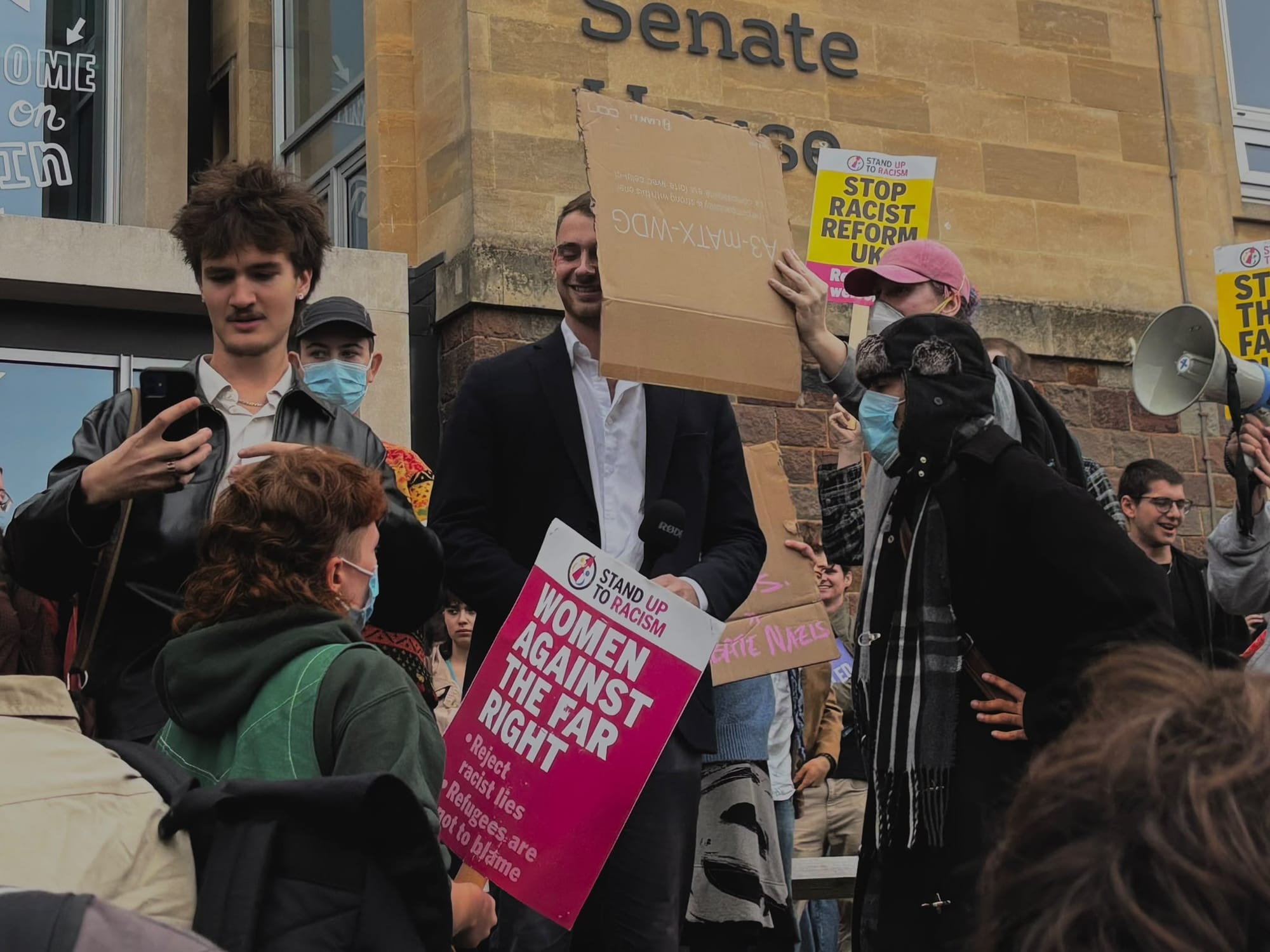
As a heterosexual white man, I understand that this is easier for me than most. The incendiary rhetoric he espouses doesn’t affect me directly and it is not my identity or right to be in this country that is being thrown into question. Yet, refusing to play into his performance is important. For one thing, his following is not based on the substance of his arguments but rather the reaction to his arguments. He is purely dependent on those disgusted by his opinions to generate clicks. Without a reaction, the power and reach of his words are severely diminished. More importantly, entering into a debate about his views merely normalises and legitimises them.
Jeremy Waldron in his 2012 book ‘The Harm In Hate Speech’ argues that one shouldn’t engage with speech which questions certain core ideas which define liberal democracy, like equal rights and dignity. According to Waldron, by engaging in conversations which question these principles, one has implicitly validated the notion that these principles potentially shouldn’t exist, as if they are ‘up for grabs in a debate- as opposed to settled features of the social environment to which we are visibly committed.’ When Toms enters into a debate with a student about whether ‘migrating from your homeland is selfish’ or whether ‘Britain should colonise again,’ no matter how well they argue against this notion, the student has already in some important way lost.
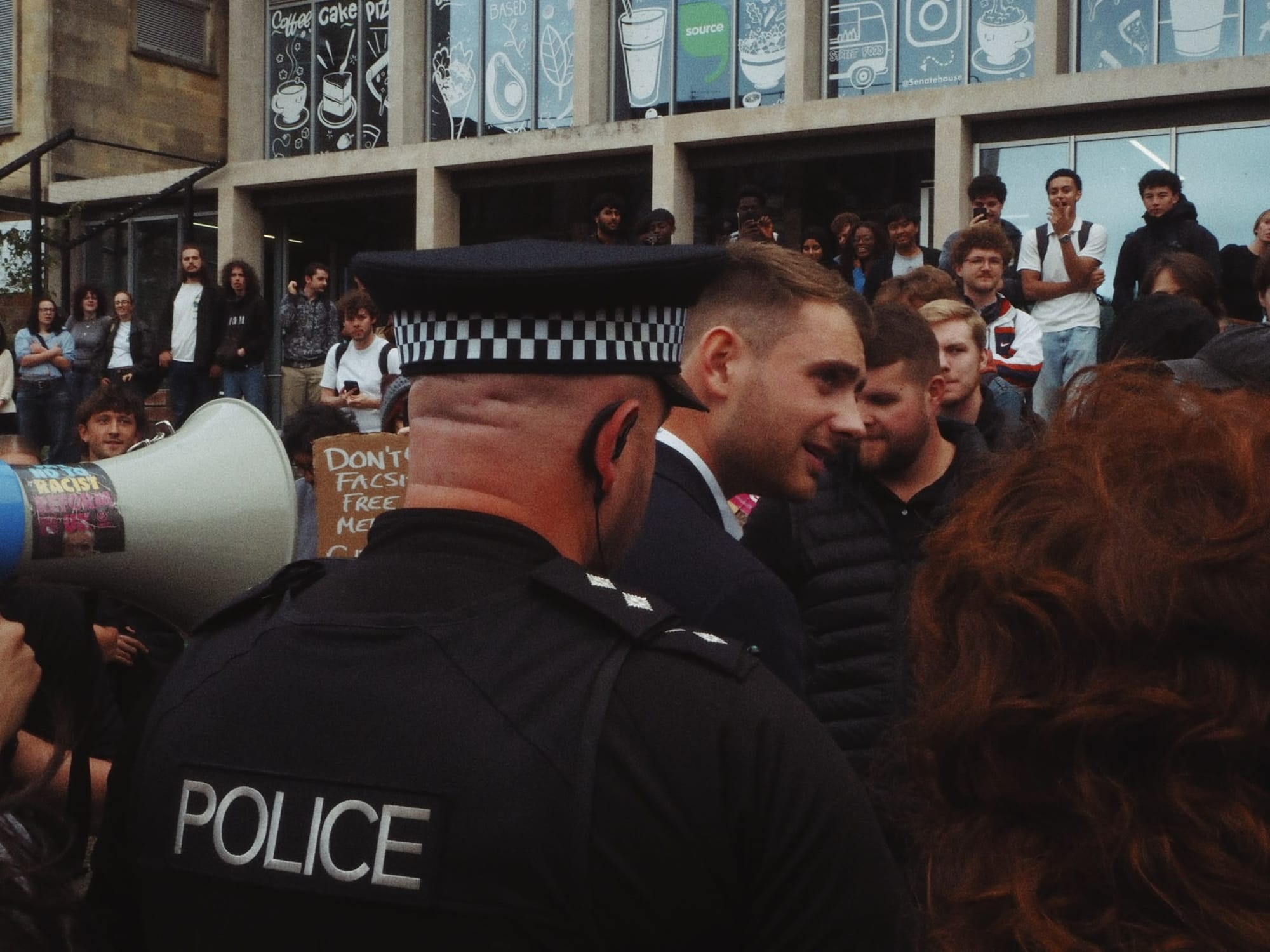
They have lost because both parties (not just Toms) have treated questions that should be settled as open ones. This in turn signals to his followers that these views could be acceptable, if argued for properly. Ignoring his provocation simply rejects the idea that there is an argument to be had.
Yet ignoring the man does not mean ignoring the ideas he represents. Sheer refusal to engage with or challenge the far-right would breed polarisation and allow views like his to spread unchecked, especially among impressionable young people.
My argument is that the most effective place to make a stand against the far-right is not at a stall on his terms, in front of a camera he controls, in a format he thrives in; where. As Epigram’s Rosie Moore pointed out when writing about Young Bob, ‘the rules are written in the edit.’ It is in the spaces and events he can’t doctor, where can students organise themselves, that real progress is made.
 Rosie Moore
We can and should ignore the man but engage with his ideas. So, the next time Toms, or one of his understudies, swaggers onto a university campus and props up their canopy with a conceited smirk, walk past. They will squirm but don’t look back to watch.
 Lenny Osler
 Lilianna Car

Featured Image: Epigram / Emilia Ibarguen Donoso
How do you feel about the new trend of the far right turning up on campus? What do you think the most effective way to engage is?