By Sadie Lessman, Third Year, English and French
Buildings boarded up and barricaded, bins set alight, mass arrests and frequent acts of indiscriminate police violence. France has seemingly been transported back to the late 18th century, with young people leading the charge against national budget cuts and the abysmal state of French high schools. Instead of sitting around complaining like the British, they have taken to the streets to protest the worsening conditions for students and civil servants across the country. Is it time for another French revolution?
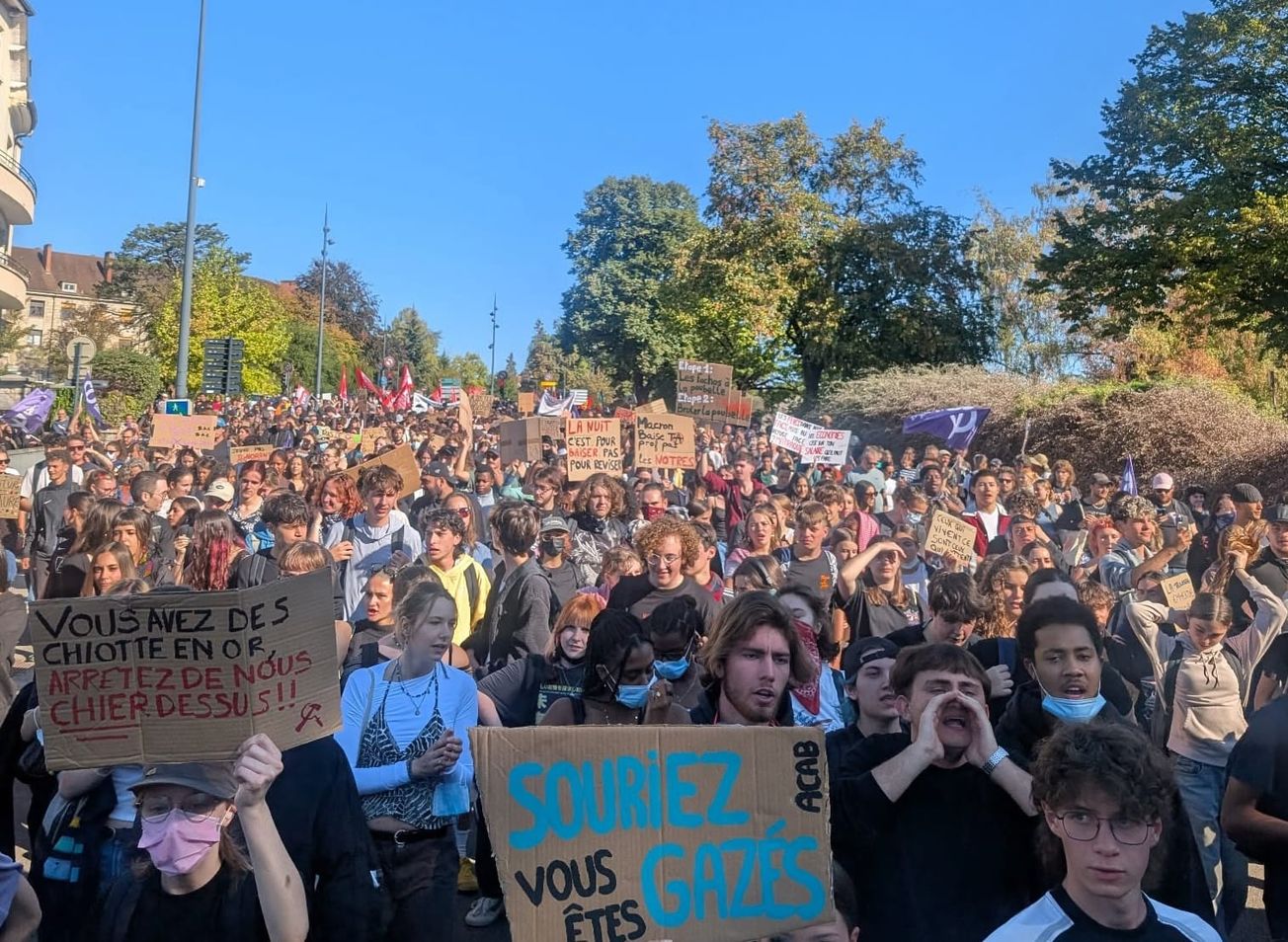
On the 6th of October, a record number of 450,000 people, including 100,000 in Paris, have gone on strike. However, others online estimate the number to be over 800,000 people. Everywhere in France, particularly in Lille, Paris, Nîmes, Toulouse, Clermont-Ferrand, Marseille, and Lyon, hordes of manifesters of all ages march down the cobblestone streets holding placards with phrases such as ‘Merci pour le bac de math on pourra calculer combien de fois vous nous avec enculer’ [Thanks for the maths baccalaureate, we can now calculate how many times you’ve fucked us over].
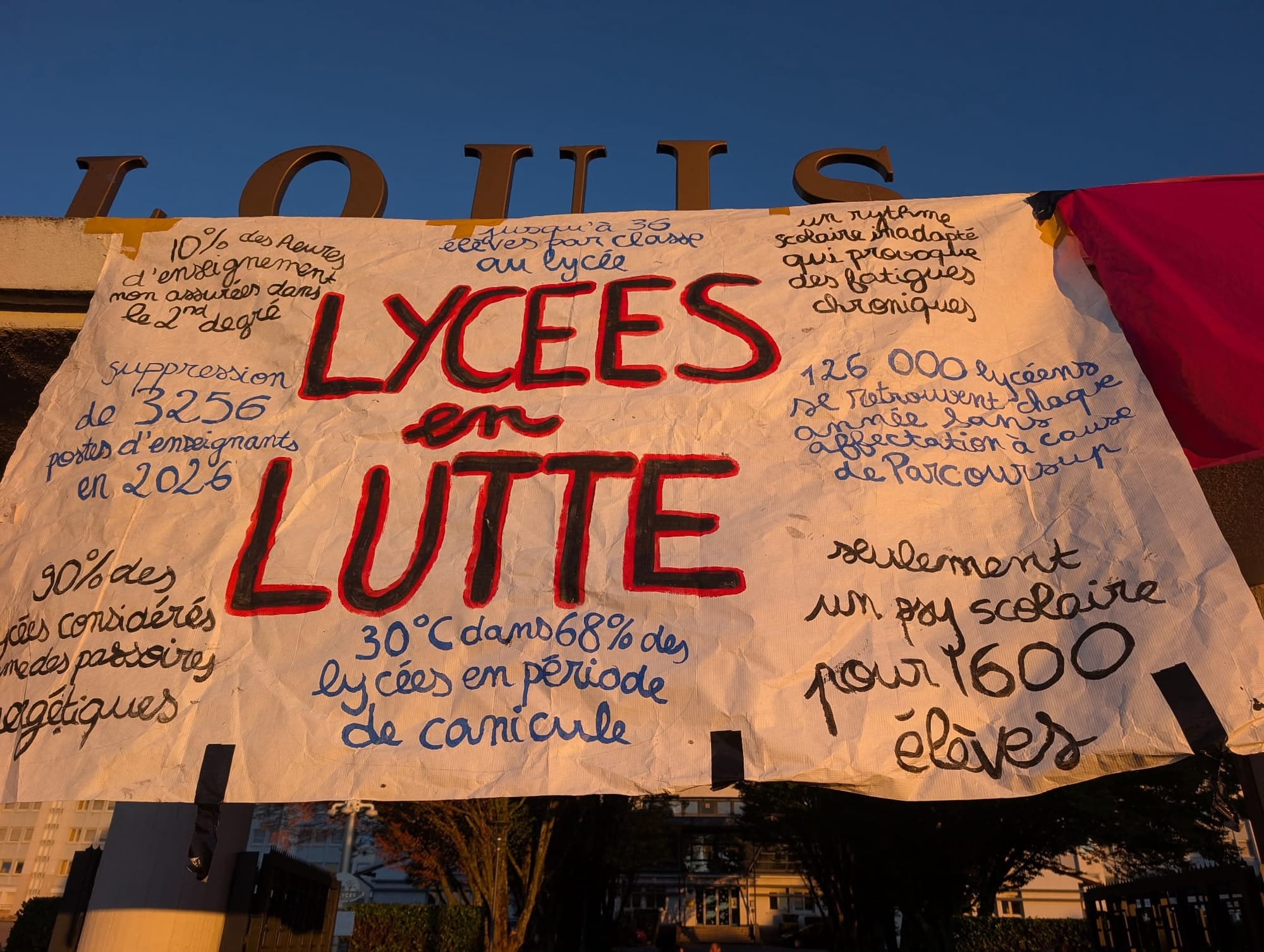
It all started on the 21st of September, with a protest over teaching vacancies at one high school in the Paris suburb of Créteil, and has since sprung up spontaneously in high schools, fueled by social media and calls to action from the L’Union étudiante et l’Union syndicale lycéenne [The Student Union and the Union of High-School Students]. On October 1st, nearly 30% of the country’s 3,600 high schools were affected by the strikes, and new protest actions were reported in additional schools each day. The protests, barricades, and strikes respond to staff shortages, a lack of replacements for absent teachers, classes with 35 students, overloaded timetables with school days from 8am to 6pm, growing pressure on exam results, and the deteriorating state of school buildings.
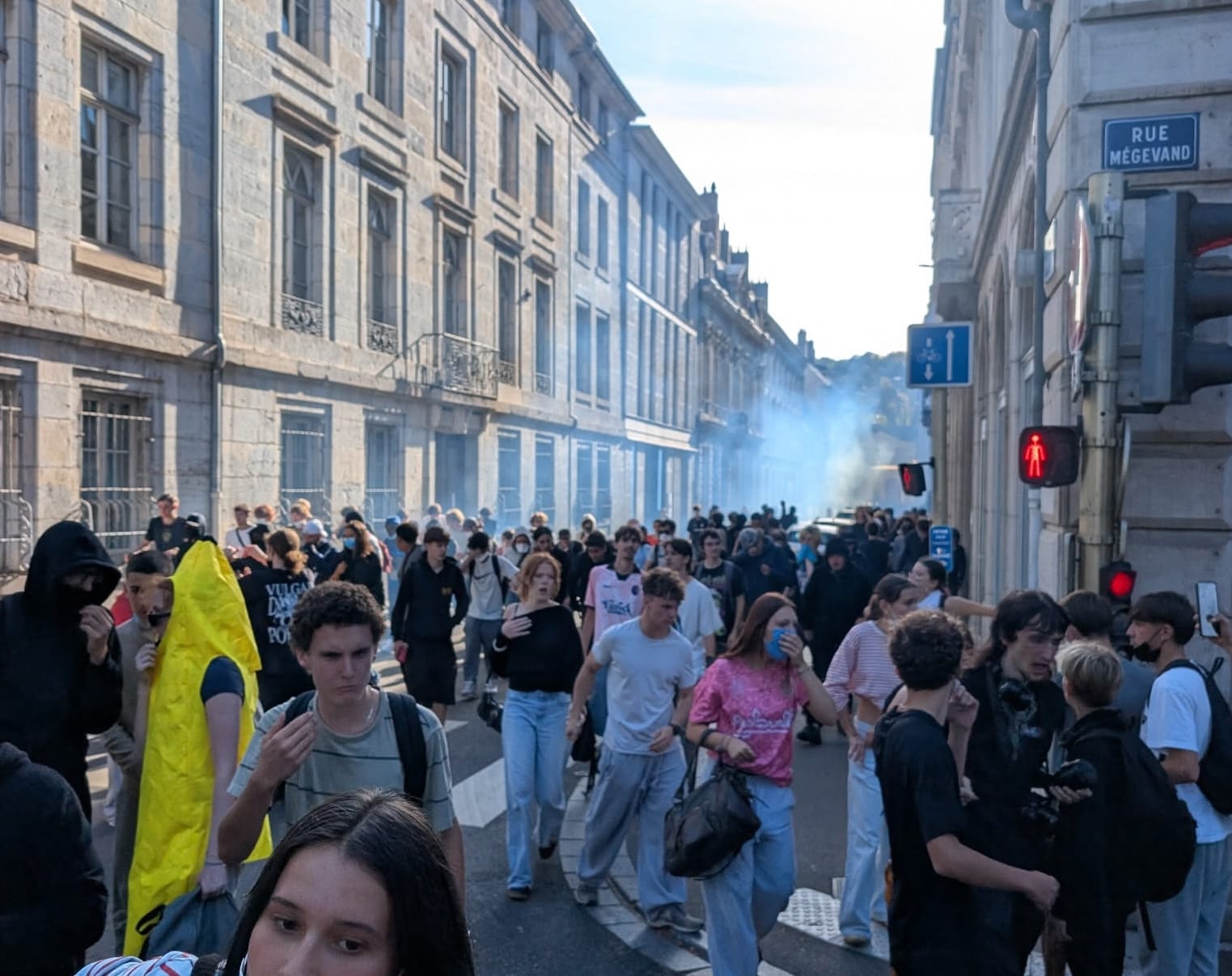
In response, there has been a systematic deployment of police and an unprecedented number of arrests- particularly of students. On Oct 9th, the justice ministry said more than 6,800 people had been detained since the demonstrations started, 86 percent of them minors. Every day, more and more videos of police brutality and alleged sexual assault (notably from the national riot police: Le CRS) circulate online; whilst six investigations have been opened by the IGPN (General Inspectorate of the National Police) for violence committed by the police in various French towns.
Some people argue that it is police repression and brutality that has contributed to the escalation of violence, with the League of Human Rights accusing the government of “repressing” high school students with “disproportionate” brutality. While others disagree, such as Interior Minister Laurent Nuñez, who maintains that law enforcement “is not repressing young people” but “protecting” students who wish to “peacefully voice their demands,” and condemns the student violence and property destruction that have accompanied several blockades.
So what happens next?
On October 1st, Sébastien Lecornu, the French prime minister, convened a crisis meeting, cancelled ministers’ travel, and warned against further escalation. Five days later, he announced a suspension of high school classes from the 7th to the 9th of October for “a period of internal democracy”. But until tangible action is seen, further demonstrations and school blockades are expected, and authorities brace for continued unrest as protests spread and some turn violent.
These future protests don't just involve students either; the national mobilisation taking place has led many other groups to take to the streets to express their dissatisfaction with Macron's government.
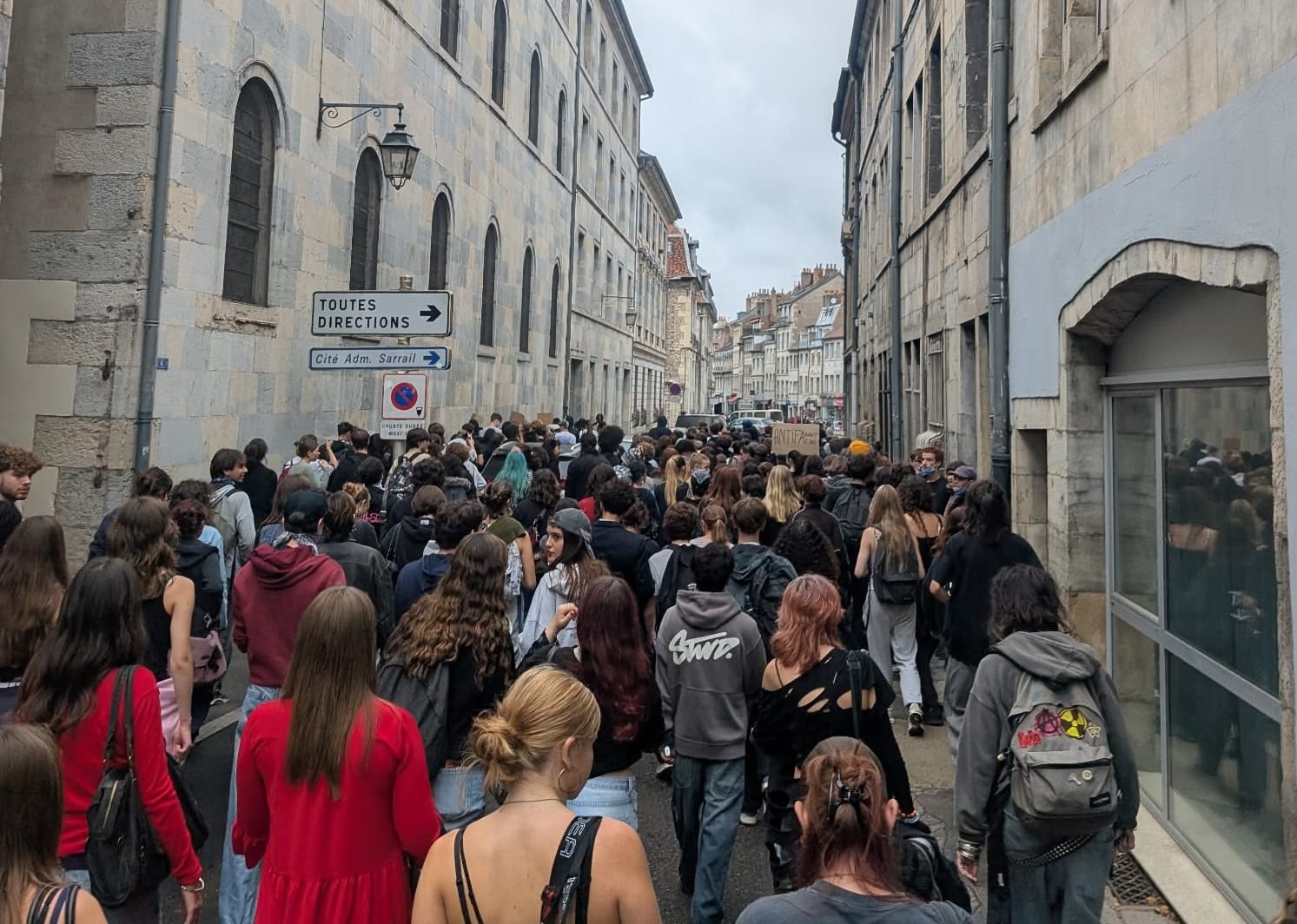
On Oct 17th, this upcoming Saturday, a day of action is scheduled to take place nationwide. While the protest day was originally proposed by the Gilets Jaunes (Yellow Vests), who intended to focus on the energy crisis and rising gas prices, it is becoming clear that the manifestations will be joined by high school and university students alike in a continued and united expression of general frustration at the government. Even beyond the student unions, labor unions have stepped in, as well as firefighters, who have also been seen protesting in recent weeks. The CGT (one of France's largest and oldest trade unions) published on Oct 5th a call to mobilise over wages, public services, jobs, and industry. Also confirmed for Oct 17th is a large-scale aviation strike, and it is rumoured there are more strikes planned for other transportation sectors which are yet to be confirmed.
One thing is clear; young people are becoming an increasingly visible force in France's growing wave of social discontent. For many students, these demonstrations are more than immediate concerns over education; they are also an opportunity to challenge the political direction of the country and demand a greater say in their future. With the next presidential election scheduled for April and May 2027, the coming months will be crucial in determining whether this energy can extend beyond the streets and translate into meaningful political engagement. Although many of the youngest protesters will not yet be eligible to vote, their mobilisation has the potential to shape the national debate and influence the priorities of political candidates.
Watching videos capturing these young people protesting on social media; talking to teachers at my schools who are taking part alongside their students; standing face to face with the formidable blockades and marches, I can’t help but feel inspired by the fortitude of France’s resistant spirit and the tangible action taken to protest the abysmal conditions in schools. Should the English be more like the French? Put down our phones and take to the streets, vocalising our opinions not on social media but instead in real life. Perhaps these protests will have a ripple effect, not only in France, but in other inspired countries too. We will just have to wait and see…
Featured image: Lycéens protesting on Oct 6th | Epigram / Sadie Lessman