By Daniel Cale-Caplan, First Year, Politics and Philosophy
With the Student List winning the majority in the Serbian parliament, will this act as a catalyst for other student movements across Europe? As part of an increasing global trend of student-led movements, could the success of the Serbian students become a template for students across the world to replicate?
14 years of Aleksandar Vučić’s political dominance in Serbia came to an end on the 25th of October 2026 after the Serbian Progressive Party (SNS) lost the snap parliamentary elections to a student-led protest movement. The Student List won the parliamentary election with 53 per cent of the vote, compared to the SNS’s 39 per cent, a wider margin than analysts expected, given how evenly matched the two parties seemed in the opinion polls published in the weeks leading up to the elections.
But how did a movement that was formed less than two years before the election manage to uproot a government who had been in power for nearly a decade and a half?
The current wave of student protest arose in response to the roof collapsing in a recently renovated railway station in Serbia’s second city of Novi Sad. Students and the public took to the streets, blaming the incident on widespread government corruption and nepotism, which they believed to have caused the poor construction.
Epigram spoke to Dr Milos Damnjanovic, a political analyst in Belgrade, who described the Novi Sad tragedy as a ‘wake-up call,’ illustrating that ‘corruption was leading directly to people’s death.’

Protests persisted over winter, culminating in what independent media described as the largest-ever protest in Serbian history, on the 15th of March 2025, where estimates of 325,000 people gathered in the capital of Belgrade. Amid the protest sudden panic arose and people began to flee, with independent outlets reporting that the police had illegally made use of the ‘sound-cannon,’ a crowd-control device. Despite denial on behalf of the authorities, over 3,000 testimonies collected from civil society organisations described feeling physical distress which then caused the crowd to disperse.
This only fueled the anger of the student protesters, which led to calls for an early general election in May 2025. As the student movement increased in strength, the students began organising themselves into plenums, eventually selecting 250 candidates to run for parliament.
Damnjanovic attributes the success of the Student List to a combination of factors, including the political environment and the structure of the party:
despite many being ‘sceptical of the fact they didn’t have leaders, having had specific leaders would’ve allowed for the state media to blacken their name.’
He also argues that the ‘lack of a good political opposition’ paved the way for the politically inexperienced students who in comparison seemed ‘new, untarnished and uncorrupted.’
According to Damnjanovic, another strength of the Student List was their ‘positively vague’ manifesto, which ‘allowed people in the country from far right and left to get behind this movement: they didn’t give voters something that could put them off.'
The Student List still has an arduous task ahead. Acting on their promises of reforming state institutions could prove very challenging and it remains unclear who will propose laws and changes within the party.
Nonetheless, the achievement of the Student List cannot be understated, and with the increase of student protests across Europe, it raises the question: can the success of the Student List be reproduced elsewhere?
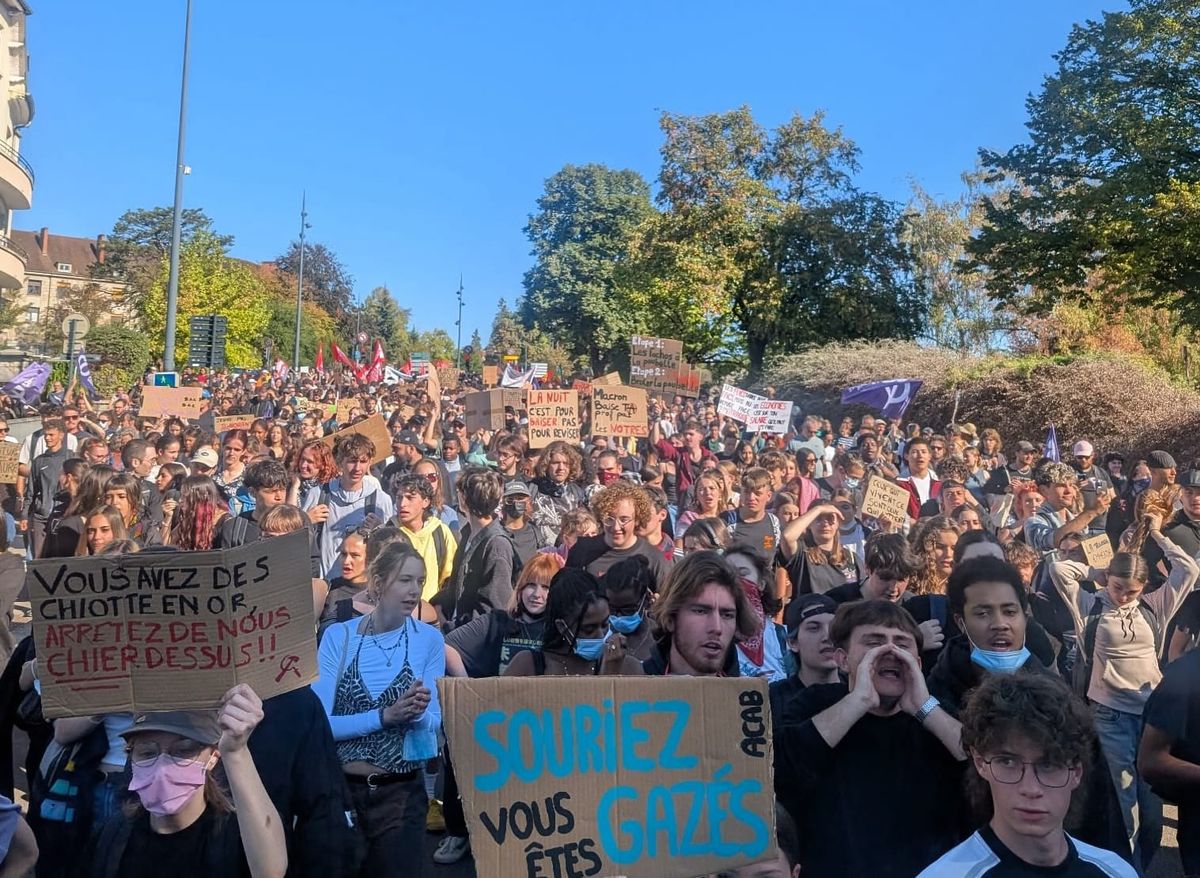
Since September, French high school and university students have been taking to the streets complaining of poor conditions and a lack of resources in schools. Recently several unions joined the students, demanding better wages and public services for their workers.
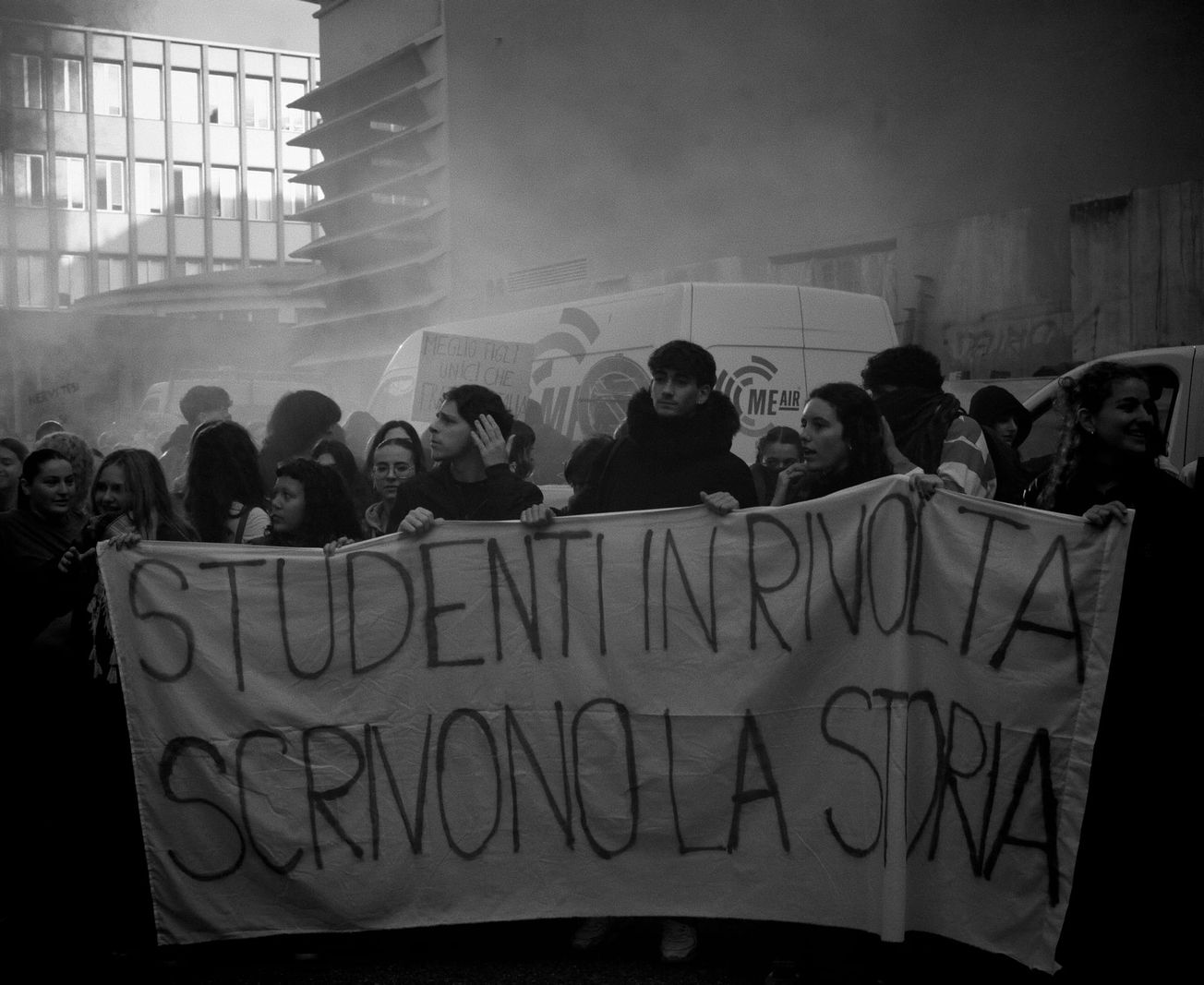
In late October, Milan and Rome also saw surges in student protests over poor conditions in schools and the rising cost of living.

Epigram spoke to Marco Campanella, the Rome executive of ‘Rete degli Studenti Medi,’ a student union:
‘It’s unacceptable that families have to choose between buying their children's textbooks or putting food on the table whilst the whole of Europe is focused on rearmament.’
These sentiments were echoed by students in Milan; Greta, a 17 year old high school student, told Epigram:
‘The government puts too much money into defense when schools are falling to pieces. Sometimes the heating doesn’t work which means that students don’t have a good learning environment.’
Epigram also interviewed Prof. Andrea Ruggeri, a professor of political science at the University of Milan about the government response:
‘So far the government has largely treated the protests as a security and public-order matter, pointing to a few episodes of disorder in a handful of demonstrations, and has passed new emergency rules restricting demonstrations. The parliamentary opposition is trying, somewhat timidly, to pick up and organise some of the issues the students are raising.’
Across the border in France, high school students were initially protesting against ‘parcoursup,’ the admissions portal for higher education, arguing that the platform evaluated academic records without any adjustment for socioeconomic backgrounds. This has led to critics describing the process as opaque, discriminatory and elitist.
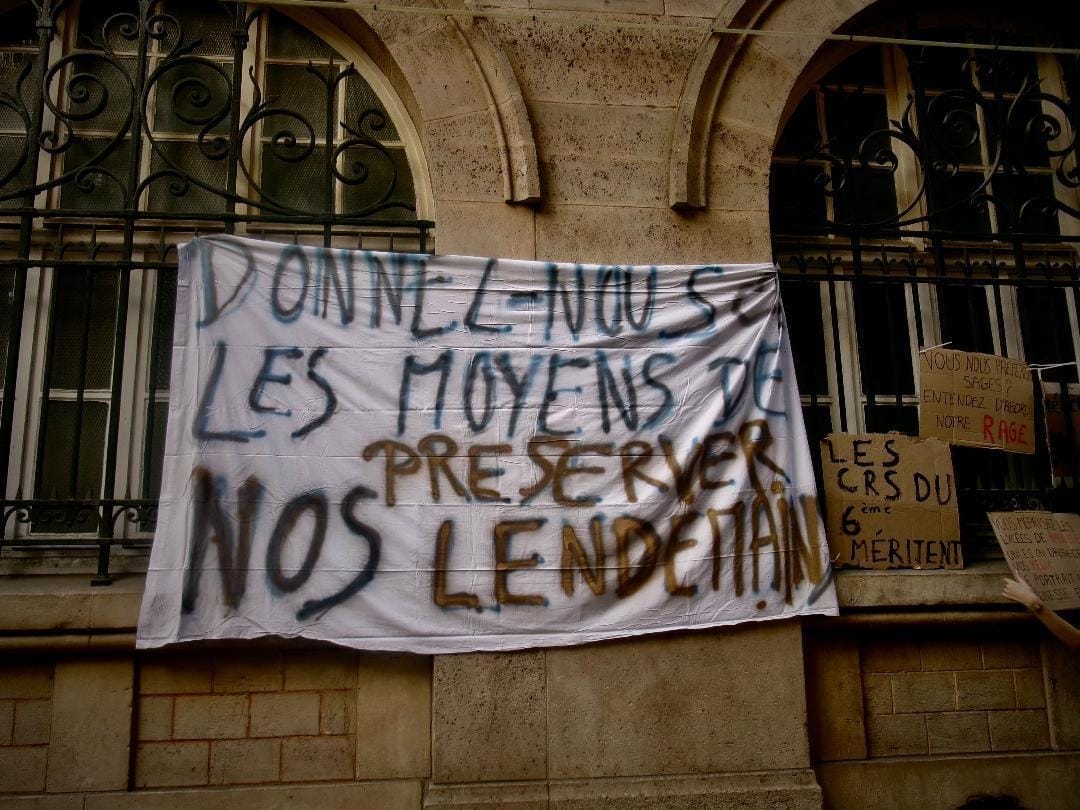
Since the initial wave of protests, the French Prime Minister Sébastien Lecornu, has vowed to abolish the system. Yet, with one of France’s largest trade unions (CGT) joining the protests, focus has shifted to wider societal issues such as the high cost of living.
For some French student protesters the issues lie elsewhere. Théo (18) from Toulouse, told Epigram about the racism he had experienced from the police:
‘It has happened more than once and I am not alone. What I want for France is the dissolution of law enforcement: we need to start from scratch.’
David, a 19 year old university student in Paris views the current political situation as an opportunity to push for great structural change:
‘the Fifth Republic has massive issues; it gives too much power to the head of state. A Sixth Republic with a new constituent assembly would revive democracy in France.’
Looking forward, the success of the Student List is an empowering message to student protesters in Europe and around the world, however there are significant challenges that French and Italian students would face by trying to mirror Serbia’s triumph.
Despite the presidential elections being around the corner in France, according to polls it is unlikely that Jean-Luc Melonchon, the far-left candidate, would beat the far-right’s Marine Le Pen in a run-off. Moreover, the next round of parliamentary elections will not take place until June 2029: a difficult test for the movement’s momentum and resilience.
Furthermore, the main political class in France and Italy is nowhere near as discredited as it was in Serbia, making it more difficult for a student movement to gain traction amongst the majority of voters.
Nonetheless, the victory of the Student List is just the latest example in the global trend of student-led political change and no doubt illustrates the capacity of students to make a meaningful difference in the world of politics, with the preliminary success of French high-school protests in eliminating the ‘parcoursup’ further supporting this thesis. Even if success on the scale of what has happened in Serbia seems currently out of reach, the predictions of analysts have consistently been proven wrong.
Ultimately only time will tell what these student movements are capable of.
 Tara Cox
 Sadie Lessman
Featured Image: 'Italian students hold a banner: 'Students In Revolt Make History'' | Epigram / Sebastiano Cabassi
Do the stories of student protests abroad inspire you to protest in Bristol?