By Dabrowka Nowak, Third Year, English
The Rocky Horror Picture Show is nothing if not reliable; reliably camp, reliably queer, reliably fun. Its very popularity is perpetuated through tradition, a counter-culture tradition celebrating its fiftieth birthday, a tradition where anyone can dress as their campest selves, walk into a cinema and sing and dance with the same props and callbacks.
I’ve been to several Rocky Horror showings and plays as part of my own queer tradition. Each has a unique spin, given the individuality and creativity the film brings out and allows for within its fans. Previously in Bristol I’d attended The Rocky Horror Party Show at Zed Alley twice, performed by only drag queens and kings. A poster signed by the cast hangs on my wall, a treasured possession as I’m sure they all will be as famous queer icons as the original cast some day.
So, given that everything in praise of Rocky Horror has been said time and time again for fifty years, I have listed here unique moments from the 50th Anniversary showing which stuck in my mind, setting this performance aside from others’:
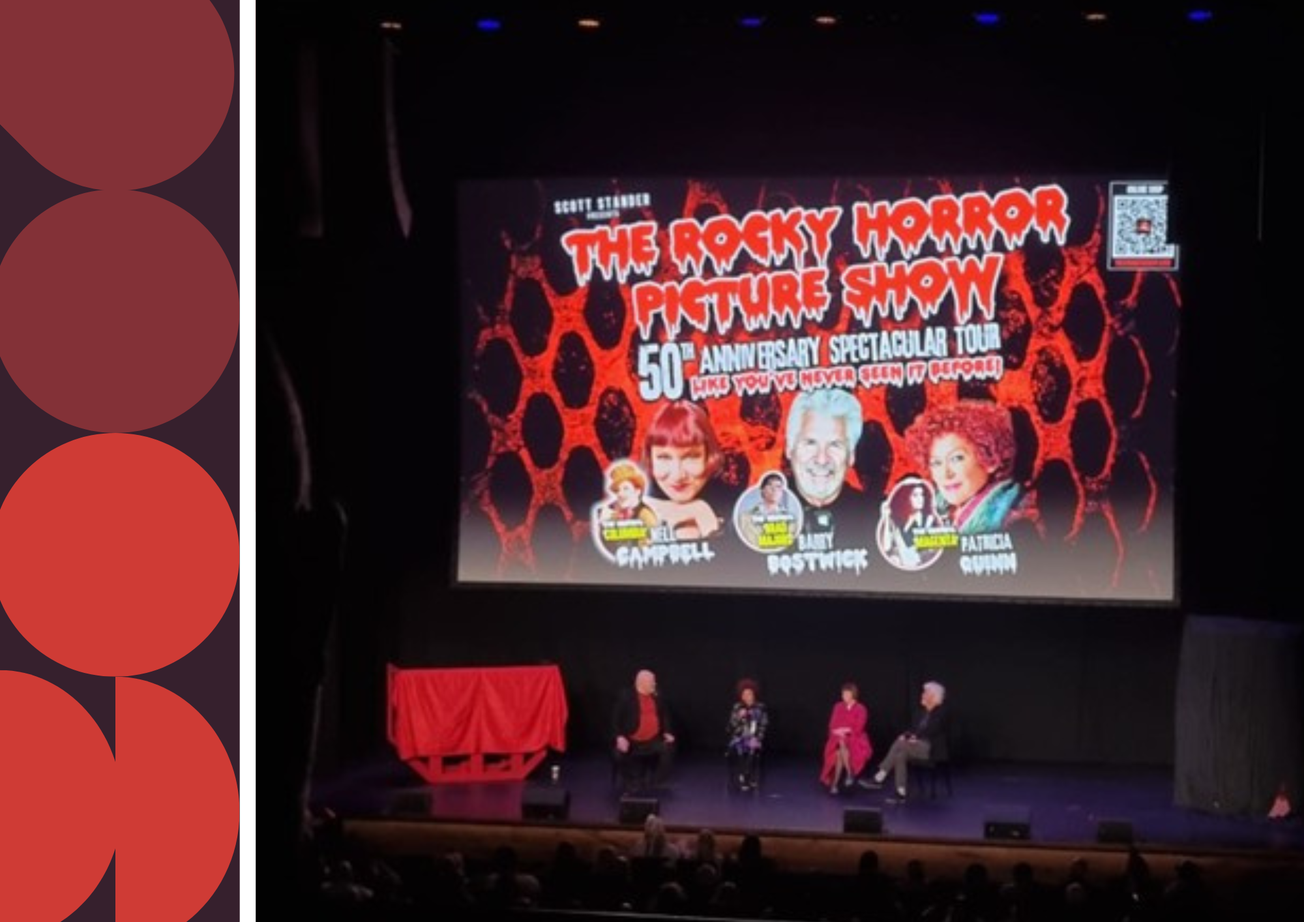
The most exhilarating aspect of the night was when some of the original cast, Patricia Quinn (Magenta), Nell Campbell aka. Little Nell (Columbia) and Barry Bostwick (Brad Majors), participated in a Q&A. It really felt like an honour and rarity to be in the presence of the very people who I have seen on TV and cinema screens countless times.
The actor’s voices were remarkable. Bostwick’s distinct American accent was delightfully Brad-esque. Quinn’s low, mildly nasal tone and frequent use of a drawn out ‘daaaarling’ surprised and delighted me, having always assumed Magenta’s voice was acted.
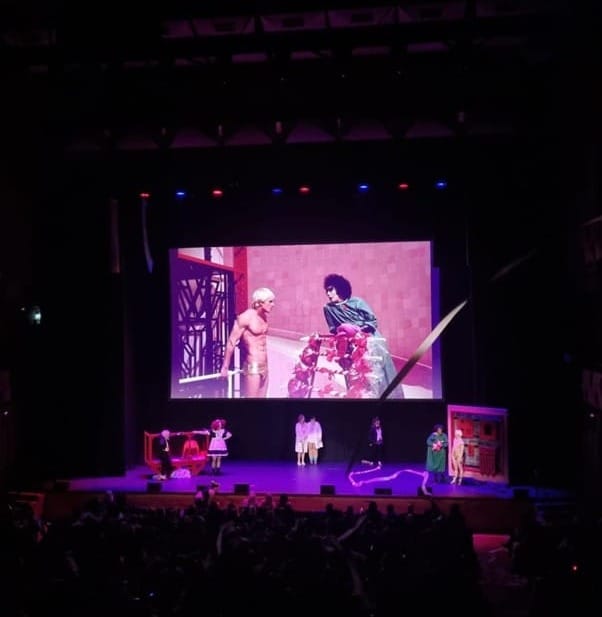
There was an intimate feel to the actors’ depictions of the backstage of Rocky Horror, especially in the way they worked together to recount their memories of a certain story, from auditions for the stage performance to interactions with Tim Curry and Susan Sarandon. They spoke to each other, interrupting, laughing and joking with a familiarity lovely to witness.
Campbell’s easy charisma and confidence made her perfect to judge a costume contest. I felt such jealousy for those on stage- imagine being told you look incredibly camp by Columbia herself!
The winner of the contest was an individual dressed as The Narrator, having excited by Campbell who claims it was the very first time she’d seen someone dress as him. A child dressed as Brad at his first ever Rocky Horror screening impressed Campbell, demonstrating a joy radiating from the original cast towards the branching of the tradition into a new generation.
Individuality and creative self-expression were notably praised under the Rocky horror name, not just direct character cosplay. Two winners of the contest which stuck in mind included a woman in a unique red latex flared bodice, the extravagance of which fascinated Campbell. The other was a woman who had knitted a skirt where the rim was made of squares detailing every scene from the movie. I was lucky enough to see this in more detail later on, in the seating. I love that the cast did not come across as superior celebrities, instead choosing to cheer on passionate, individual creativity.
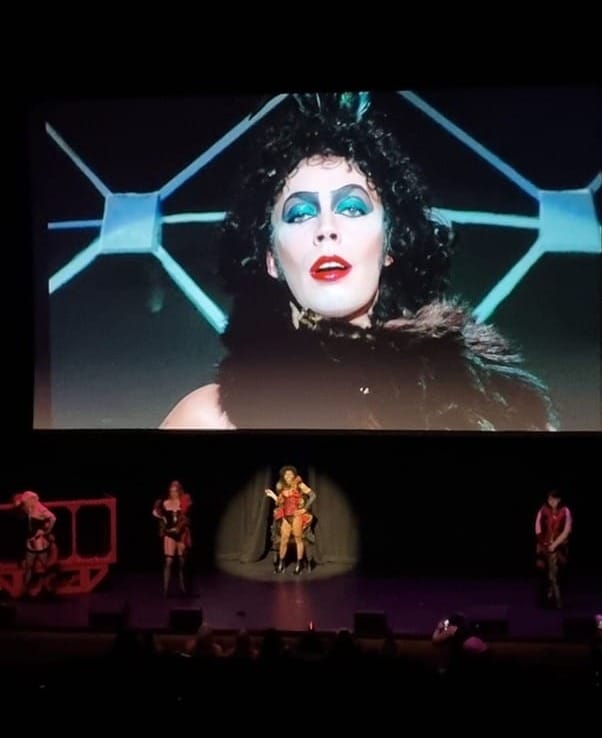
On arrival each audience member was handed a prop bag of props corresponding to quotes from the movie, such as a glove to snap in time with Dr Frank N’ Furter and some cards to throw as he sang. The highlight was a whole toilet roll, where the cue was miscommunicated and the full auditorium were throwing toilet rolls across the hall for about fifteen minutes, laughing as they unravelled in mid-air.
The shadow cast was the most diverse in age and possibly the most in-time with the film I had ever seen, with possibly the most enthusiastic Frank N’ Furter too. A love of Rocky Horror was really shown to be something accessible and welcoming to everyone.
After the comedy and chaos comes Rocky Horror’s most emotional moment; ‘don’t dream it, be it.’ The meaning of this to masses of people cannot be understated. To hear the original cast members praise the queer community and preach the importance of that line, first performed less than a decade after the decriminalisation of homosexuality in the UK and still significant today in the face of growing transphobia, felt incredibly powerful.
 Aaron Franks
I am delighted and grateful to have been shown a glimpse into the world which frequents my screen so often, and for that world to be confirmed as one which authentically encourages people to be their fullest, realest, most creative and camp selves.
Featured image: Dabrowka NowakAre you a Rocky Horror fan?