By Ella Heathcote, Arts Editor 2025-26
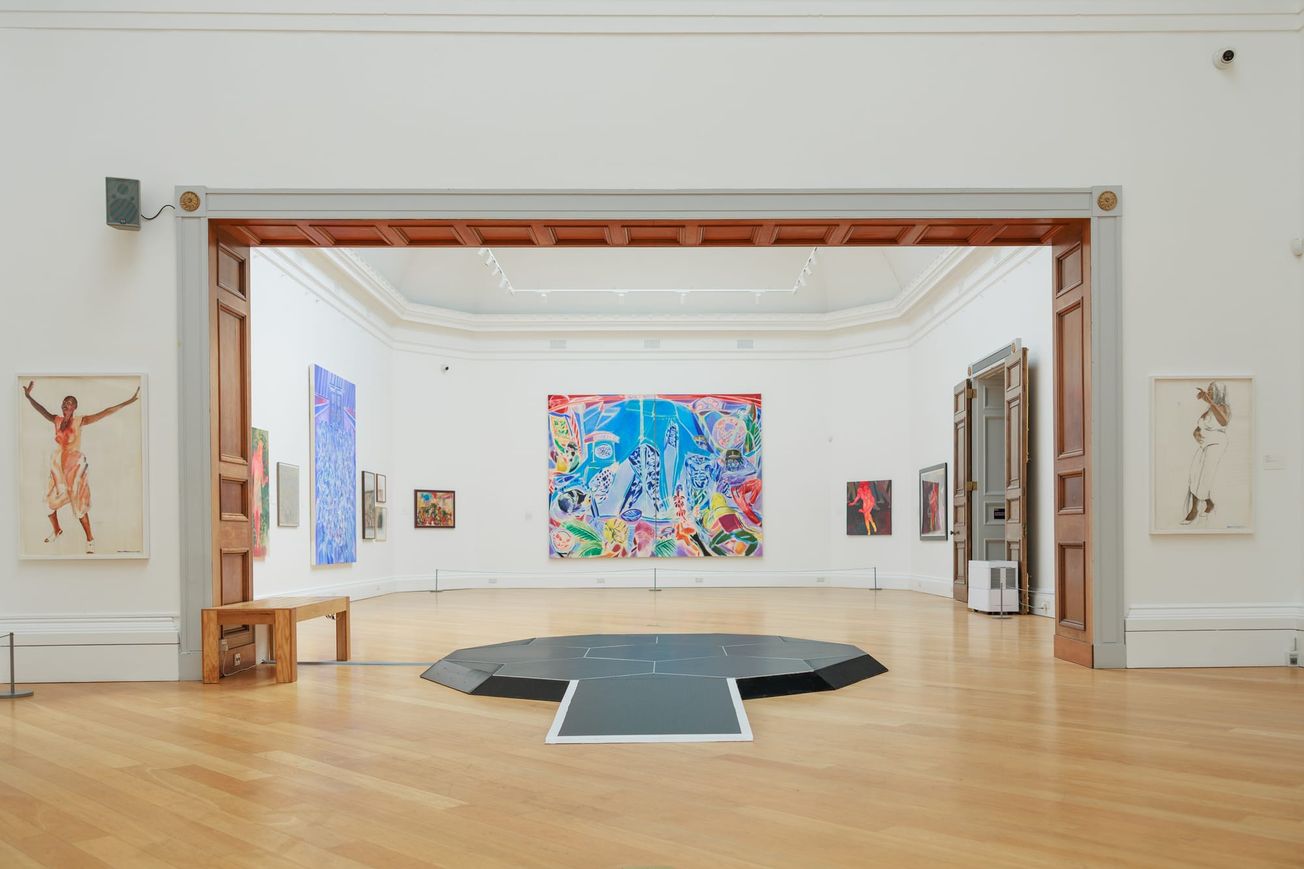
The RWA’s new show ‘Dance Out’ is the first exhibition in a while to have had a real positive and prolonged impact on me. Its host of well-known artists is impressive, and its curation even more so. It is a multidisciplinary dream, privileging no one artwork over another, with sound, film, painting and drawing filling the space. On walking up the stairs, we are met with a seemingly typical gallery space. The huge painting at the end of the room, Denzil Forrester’s ‘Blue Tent’ is an arrangement of vibrant fragments which immediately catches the eye, but venture further in and you will notice a haptic floor, videos and an ongoing sound installation which floods the room.
RWA Head of Exhibitions Kathryn Johnson tells me it’s the first time an RWA show has had a soundtrack specifically curated for it, connecting the audible with the visual through the sounds of Bristol DJs. This is played through a haptic floor in the middle of the main room, which we stepped onto while we had a chat (needless to say, my voice recordings from that point are completely useless). The dancefloor acts as an installation – although visually subtle and fairly unimpactful, once you step onto it, vibrations oscillate throughout your body; you’re infected with music, with movement. It also makes you look at the paintings around you differently. The floor was installed with the deaf and hard of hearing in mind, though the sensation is universally enjoyable. Music is universal, and the curators have extended that into this show. It’s an undeniably uplifting exhibition. I have been trying to avoid turning to cliché, but the apparent must be pointed out: dance, at this moment, as throughout history, is a uniting force.
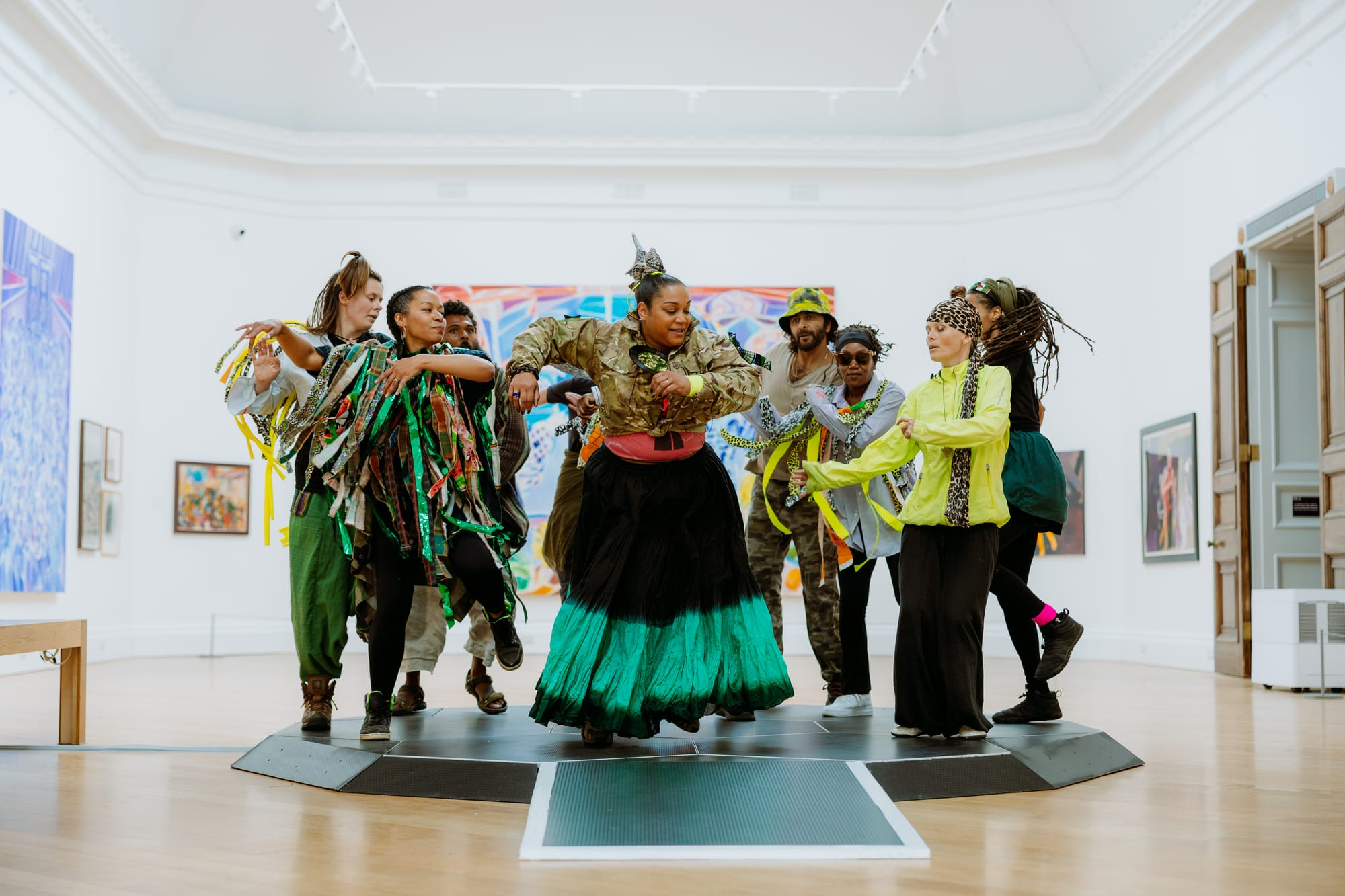
The show, I’m told, is intended to break into a wider audience. Students, for example, rarely know what the RWA is, although it is essentially on campus. While Bristol’s art scene thrives through non-traditional art forms – from graffiti to installations at club nights, its galleries often get left behind. Everyone knows the building, but perhaps its solemn neo-Renaissance façade pushes students away. What could be housed there but some old oil portraits of aristocrats we don’t know or care about? ‘Dance Out’ tips this idea on its head. This exhibition proves why galleries are necessary and relevant – the RWA is evolving with its audience, combining interactive work with oil painting, film with drawing.
‘the medium mirrors the subject, the translucent paints, as they melt across the page, take on agency; they dance.’
Of course, most of the works in this exhibition are paintings – they should be flat and static, being two-dimensional objects, yet these particular artworks are brimming with life and movement. Curator and artist David Remfry RA tells me that he uses watercolour because of the movement it allows; the medium mirrors the subject, the translucent paints, as they melt across the page, take on agency; they dance. We see this in the dried and darkened drips of paint which have made their way down over planes of colour. One aspect of the paintings that stuck out to me was the clothes – a woman with a red vest top, red heels and black capris dominates one painting, a girl in a green 50s style dress another. Remfry paints real people, not vague crowds. The strong and decisive sense of character creates a vibrant sense of the humanity at the core of dancing.
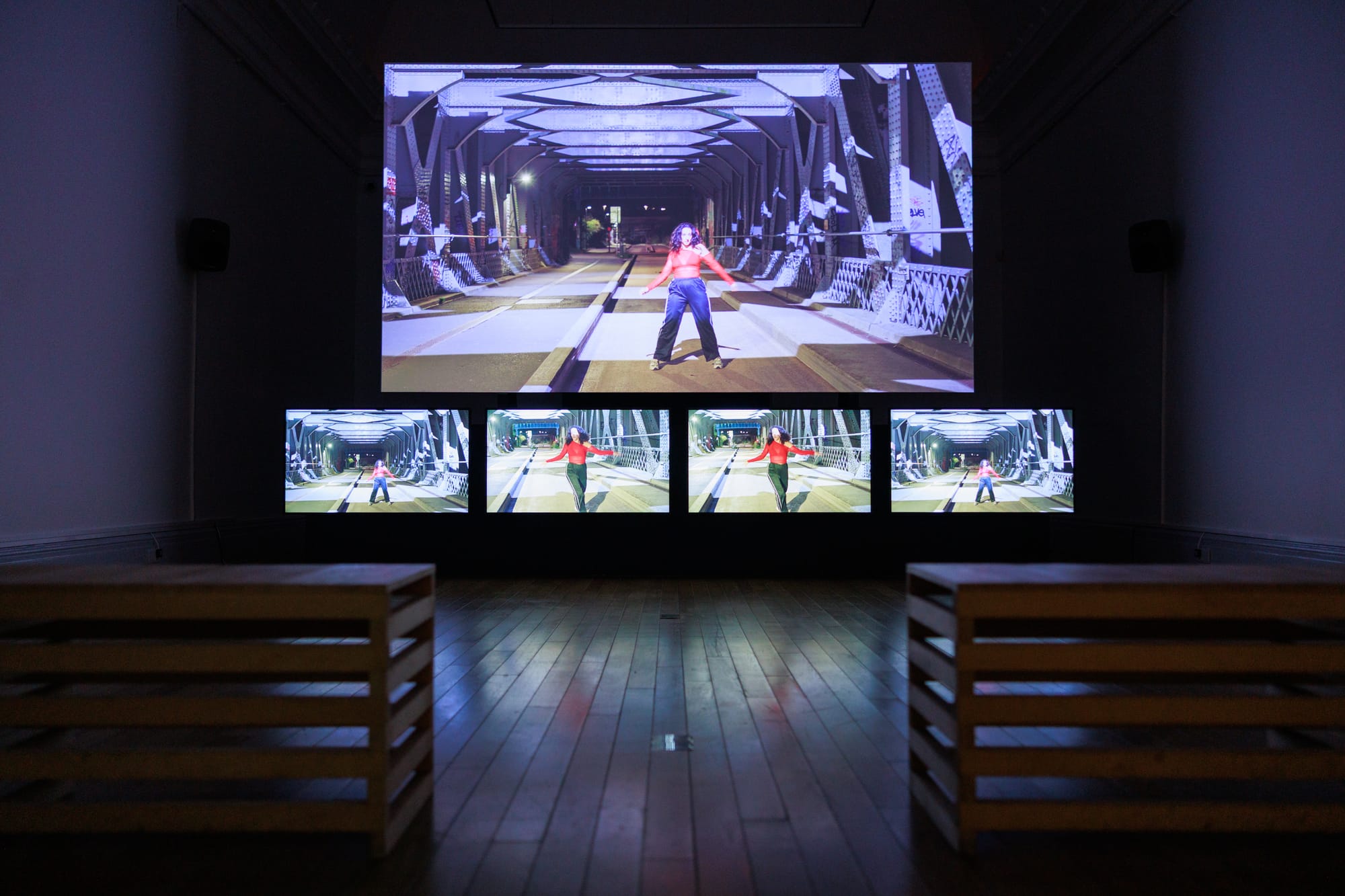
In a room off to one side is a set of screens playing films by Melanie Manchot, in a piece called ‘Night Moves’, in which dancers move in various locations in the city – which means fun for any Bristol resident to spot where each video is filmed. The artist describes the film as a celebration of ‘Bristol’s trailblazing nightlife culture and recognises its need for protection amidst financial challenges and the privatisation of public space.’ So dancing becomes about more than movement; it is a reclaiming of space, it is a marker of our existence within space, a struggle against erasure.
A Tracey Emin video plays in another room, her 1995 piece ‘Why I Never Became a Dancer’, which shows dance as a form of resistance – for Emin, against the violent men of her past. This sense of resistance runs through the various events that the RWA is hosting around this exhibition, a list of which can be found here, which includes youth dance classes, listening labs and performances and workshops surrounding dance in various cultures.
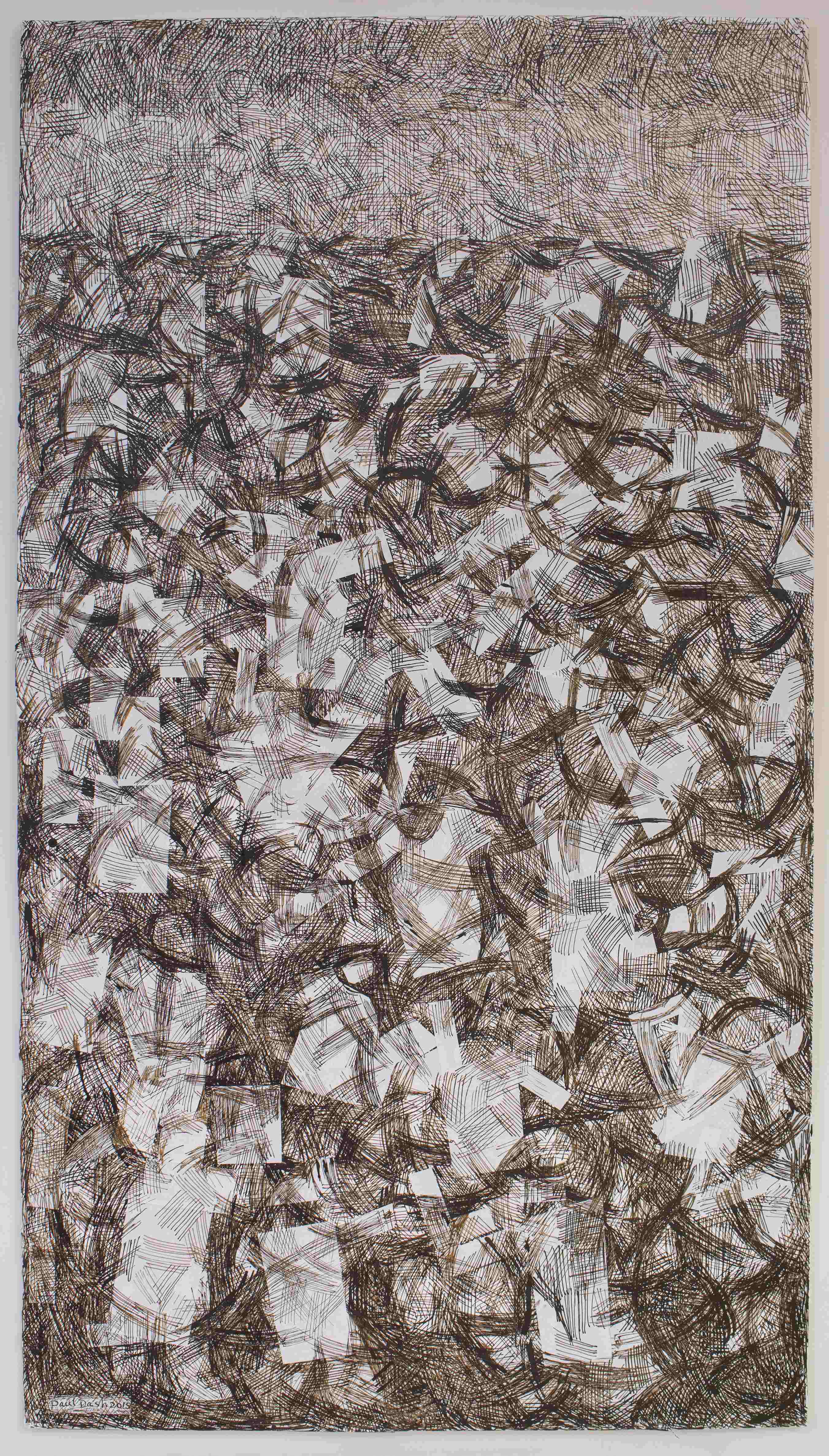
Despite the diversity in medium and subject (of course, within the wider theme of dance), there wasn’t a single piece of work that didn’t warrant attention – or, in fact, demand it. Each painting and drawing had a magnetism about it, yet each offered something different. The attention to character in Remfry’s work that I mentioned is absent in Paul Dash’s pen and ink drawing ‘Whirling Dervish Parade’ and ‘Revellers Relax at a Refreshment Tank’, yet such a phenomenal movement is conveyed that it is clear through the artist’s rash pen strokes what we are seeing. These works unite Dash and his subjects through movement; we can imagine the artist’s gestures as he creates the work, a movement which is itself a kind of dance.
This show is a real pleasure – it makes you want to dance; it makes you think about dancing as a fundamental and universal act, it’s simply a collection of brilliant, vibrant and far-reaching art.
The exhibition runs until 9th August. Please go! Please! For me! For art!
Student entry costs £1.
Featured image: RWA / Alastair Brookes
Have you ever been to the RWA?