By Anna Dodd, Features Editor
Amidst the throes of what feels like endless deadlines, I was able to lift my head out of the water for a precious evening spent watching live music at the Fleece, a venue I’d only ever frequented for the occasional emo night. I had the rather interesting experience of being completely unfamiliar with the main act, Tyler Ballgame, having initially attended to see his opener, Truman Sinclair, but was luckily in for a beautiful evening.
I came across Sinclair’s indie rock band Fat Evil Children on a random Spotify mix last summer and their EP became my soundtrack to those sunny months. I have since discovered his Midwest emo band Frat Mouse and his solo work, a myriad of albums and EPs which slot somewhere between indie folk and Americana, with the influence of emo running through. It's safe to say Sinclair can be defined by his versatility. When I heard he was coming through Bristol in support of Ballgame’s tour, I jumped at the opportunity, having missed out on his last UK visit in September.
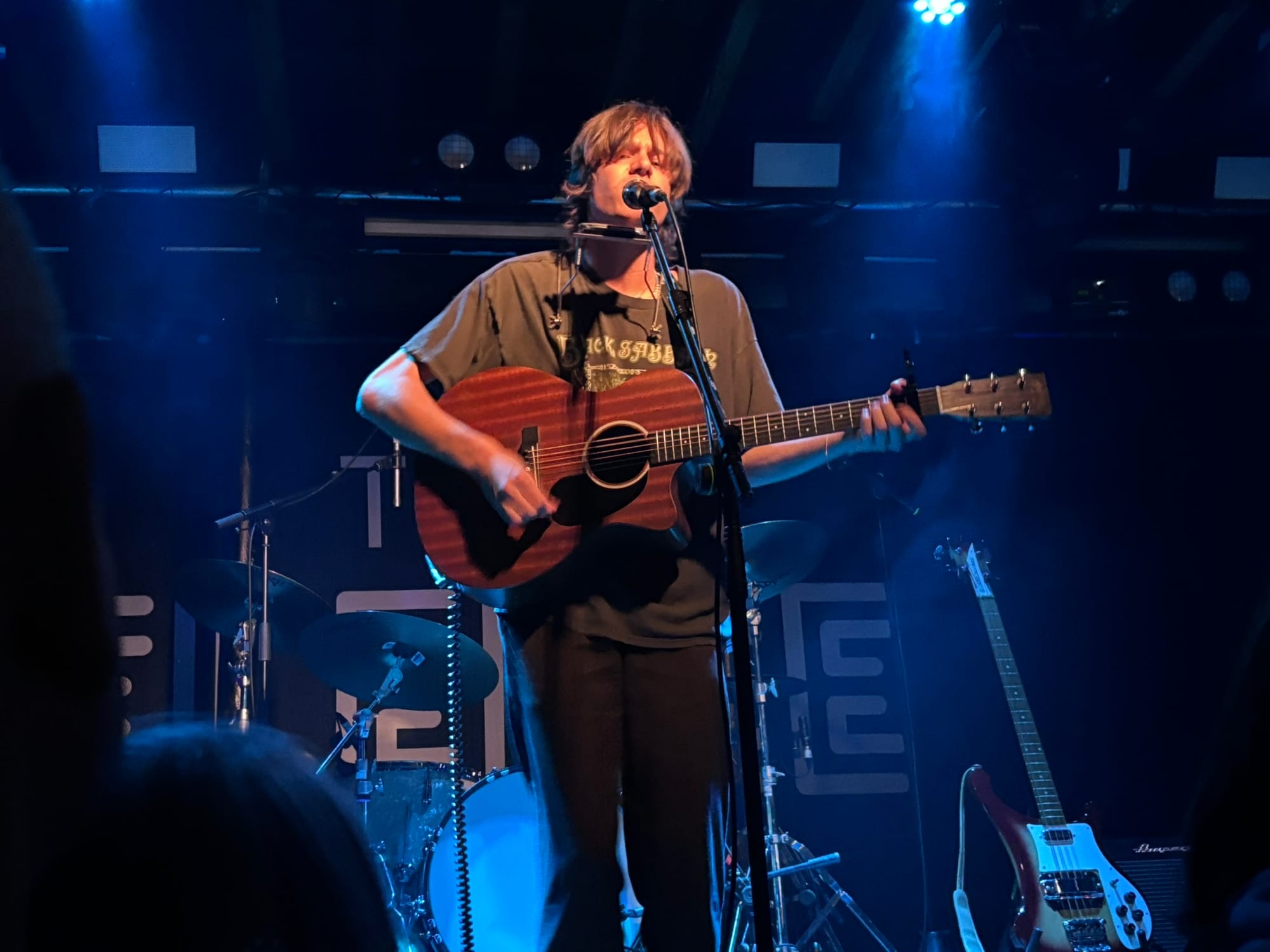
Not being familiar with the main act made me even less familiar with the type of audience to expect, I seamlessly drifted through a milling crowd, mostly made up of couples in their fifties and sixties, and found myself close to the barrier with a central view. From the moment Sinclair took to the stage the silence felt electric. He immediately captured the room's attention by catching everyone off guard and opening with an a cappella ballad that sent chills down our collective spine.
There is nothing quite like the first encounter with the sound of an artist’s voice singing to you in person after being so accustomed to hearing them in your headphones. The comforting and knowing voice you carry in your ears on the bus, doing your weekly food shop, walking home from work, is suddenly there, materialised in front of you, seemingly uncanny and yet so familiar.
‘he ruminates on some of the darkest aspects of modern culture, digital addiction and extraction: ‘And they're filling your mind with addictive design/ Can you feel that pine, stop them drilling that line/ They're sucking bloodline from the earth/ I feel them die, I hold my sign’.’
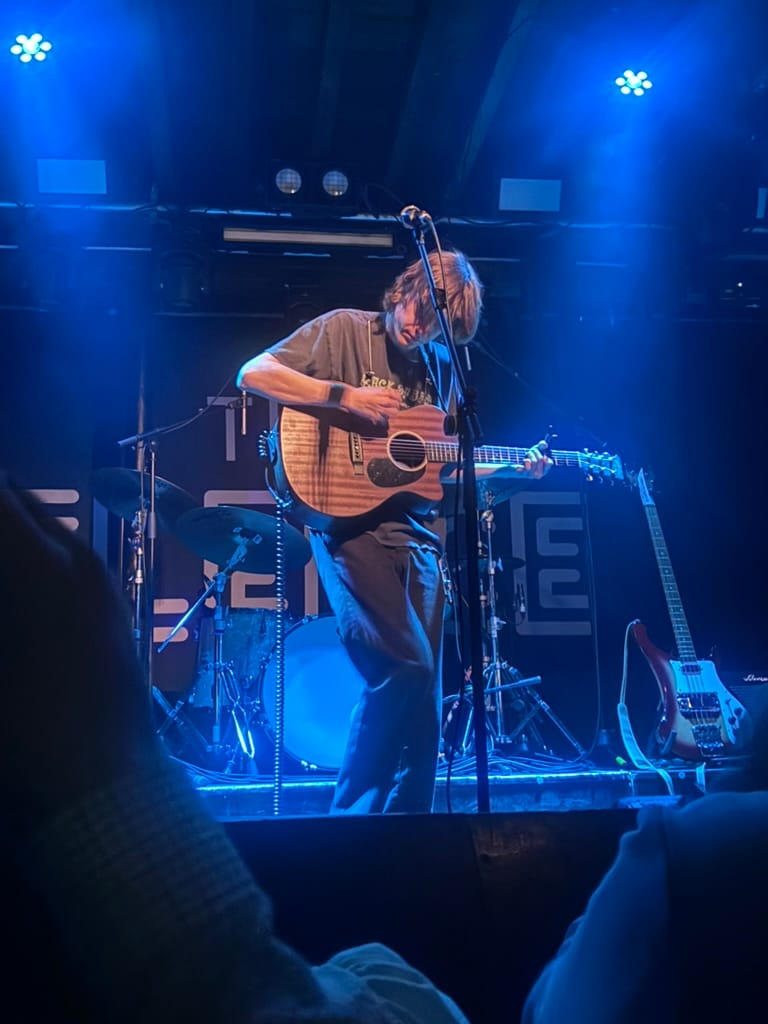
He was completely alone on stage for the entirety of his acoustic set, transfixing the audience with only a guitar, harmonica and the twang of his distinctive, piercing voice. He confidently breezed through a setlist of folky songs, sonically and lyrically reminiscent of Neil Young and Bob Dylan, particularly in his effortless manoeuvring of the harmonica, and lyrics which capture the spirit of 2026 America through vignettes and poetry.
Despite Sinclair being only 24, his style, precocious talent and perspective go beyond his years. The ethos of his songwriting is both spiritual and political, in ‘Bloodline’ he ruminates on some of the darkest aspects of modern culture, digital addiction and extraction: ‘And they're filling your mind with addictive design/ Can you feel that pine, stop them drilling that line/ They're sucking bloodline from the earth/ I feel them die, I hold my sign’.
I spent the time between the sets in conversation with some people in the audience who were enamoured by Sinclair’s performance. A group behind me asked for his name and we ended up chatting for the next thirty minutes about live music and our favourite artists. The beauty of concerts is the ease at which it brings people together from all over the country, and how by showing up alone you can meet people you’d never normally cross paths with, simply because you have an affinity for the same style of music. One guy I was talking to had seen all the greats live, Bob Dylan, Michael Jackson and the Rolling Stones to name a few, and called Sinclair a ‘class act’, telling me he’d rate his performance close to a 10/10.
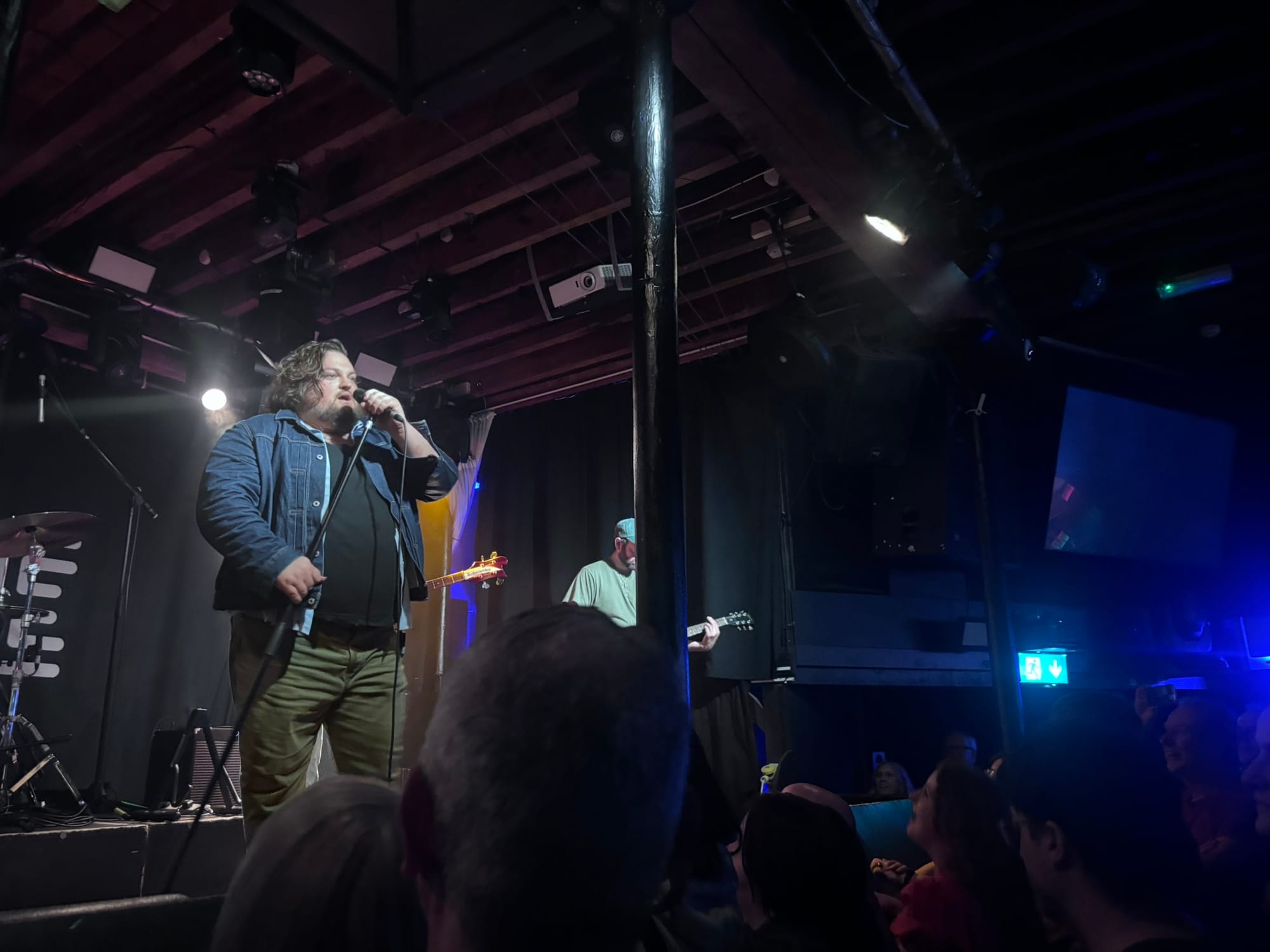
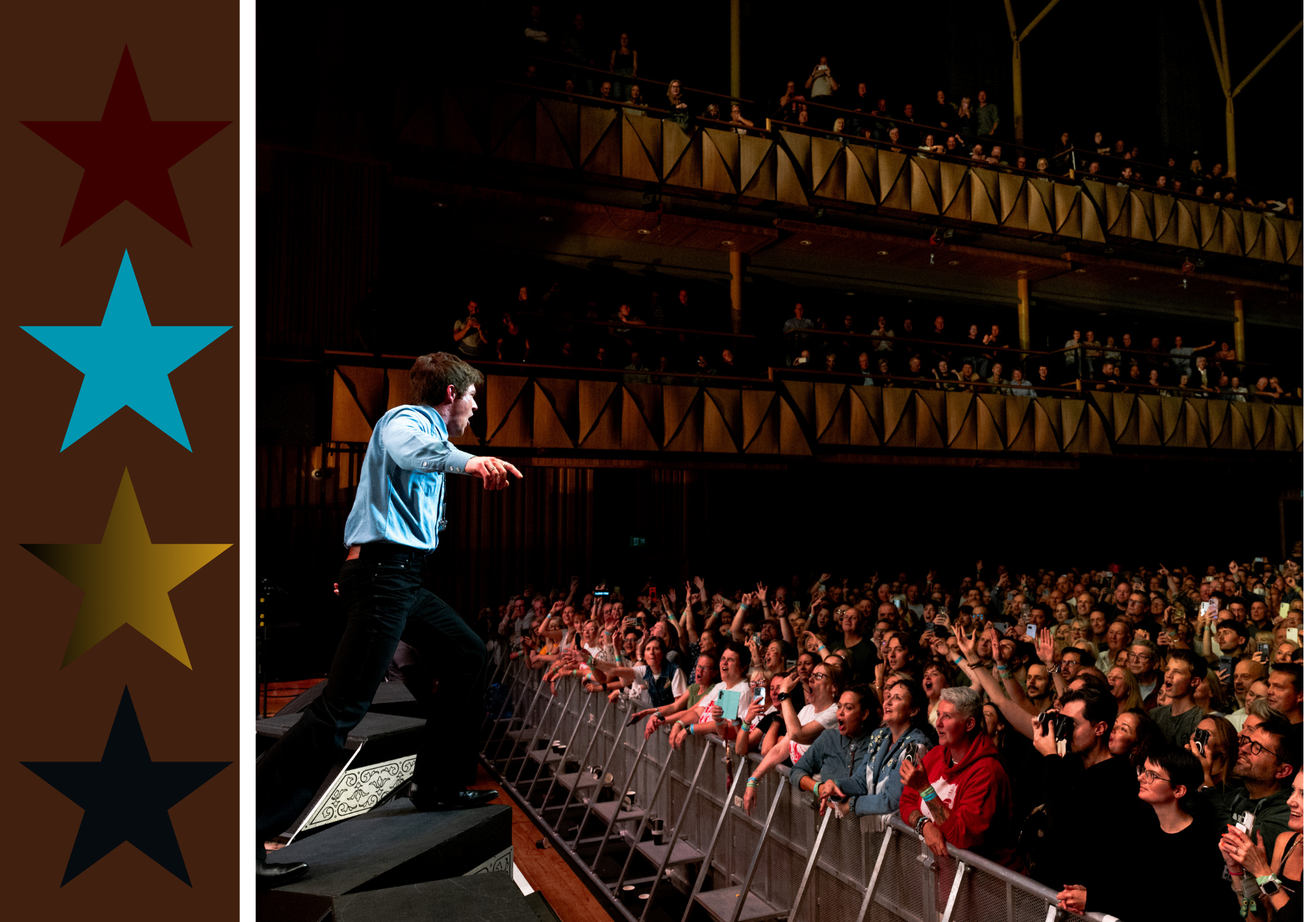
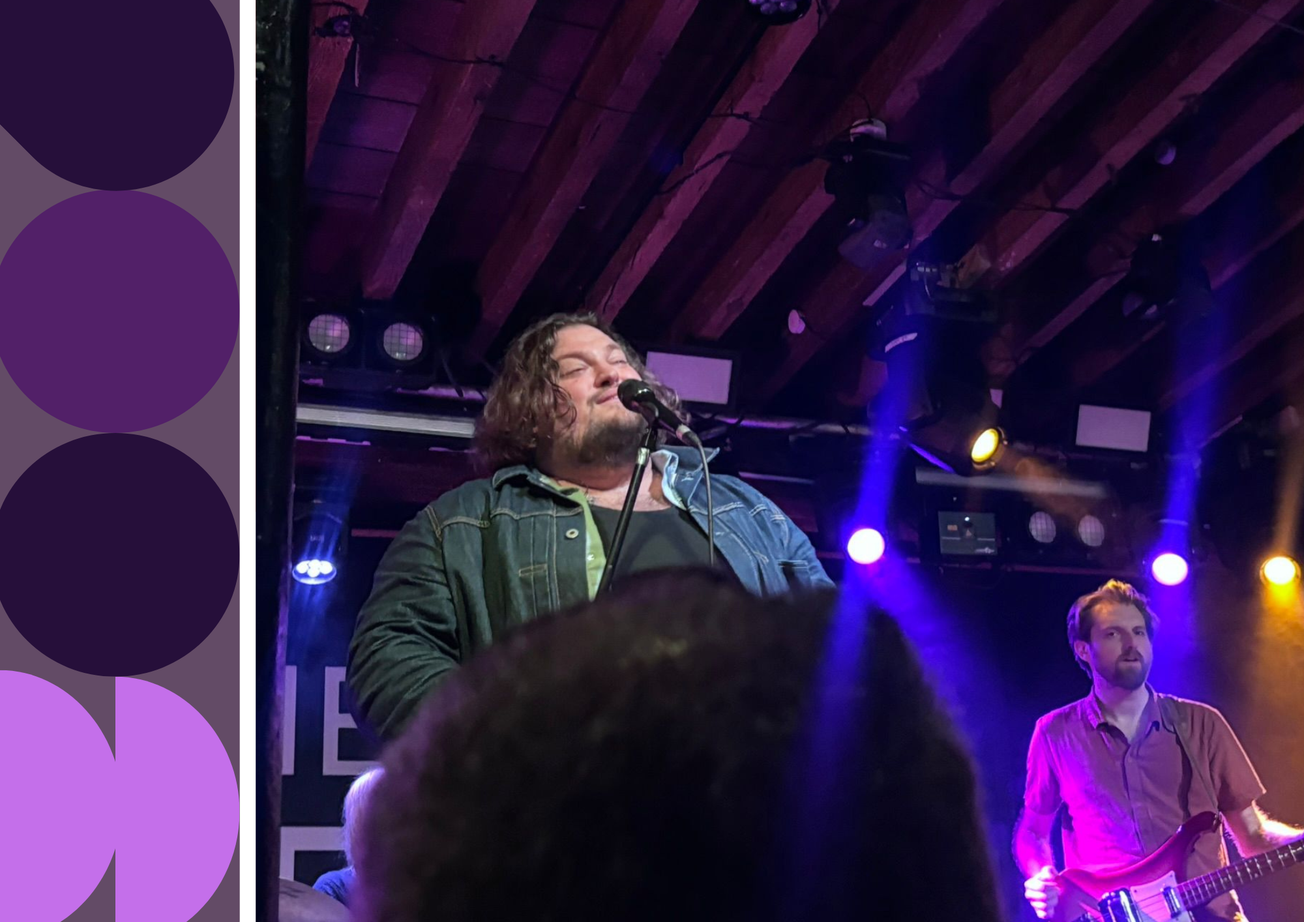
My new friends in the audience raved about Tyler Ballgame, telling me that he sounds just as good as the record live, and that I was sure to love his music, so I went in with high hopes as the lights dimmed. The husk of his smooth voice immediately brought a feeling of ease, and observing the way the crowd erupted with a love for him that felt very sincerely reciprocated was heartwarming to say the least.
Ballgame's style takes clear inspiration from the classic rock of the 60s and 70s, and he was joined on stage by a five-man band, all effortlessly cool in a Californian way, and exceptionally polished in their craft. He sang soulfully through a range of tracks, from upbeat indie folk-pop bangers like ‘Matter of Taste’ and ‘I Believe in Love’ to stripped back ballads with just him and his keyboardist.
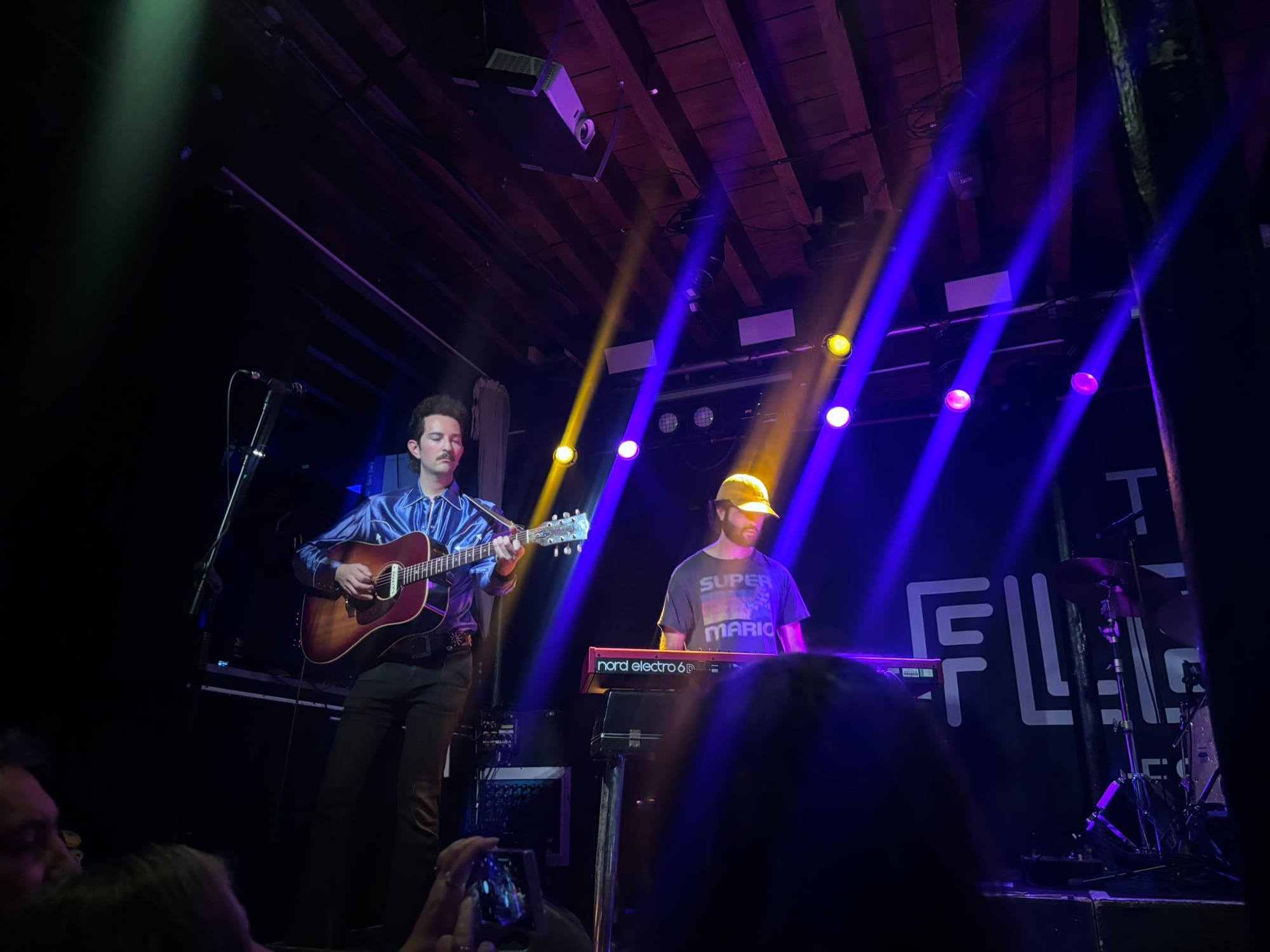
His music was notably characterised by a distinct earnestness, thematically centred around notions of hope and joy. The energy in the room was exuberant and pleasant, and by the end of the night Ballgame had fully relaxed into his performance, confidently encouraging the audience in a call and response and expressing his gratitude for our support.
 Eden Chambers
I turned to the strangers I had met that evening after the stage had emptied and told them I had loved Ballgame’s performance - it seemed as though we both left that night with a new artist to add to our Spotify playlists. Later at home I read Ballgame’s Spotify bio, a short but meaningful encapsulation of his craft: ‘Radical surrender to presence in expression’. To me, both him and Sinclair perfectly embody this notion; two musicians who take their artistry seriously and write music that is authentically honest, spiritual, and grounded. It was a true pleasure to behold such work live, and I will welcome both of their upcoming returns to UK ground with excitement.
Featured Image: Epigram / Anna Dodd
Who's your favourite artist that you've seen at The Fleece?