

By Anna Dodd, Features Editor
Cherish the Orange are back on a Bristol stage once again with their new play Foul is Fair, a brassy and bold exploration of female friendship in keeping with the themes of their previous works, Fruitcake and Kick Off. Set the night before an English GCSE exam, writers and directors Dulcie and Tildy return to their schooldays with a play centred around dynamics of an all-girls school, as pupils in Year 11 navigate the joys and perils of being a teenage girl.
The play starts with a bang, immediately establishing the central dilemma and mystery of the piece as Sid (Phoebe Taylor) informs us via voiceover that she has been expelled after someone on her close friend's story snitched on her doing drugs in the school bathroom. Accompanied visually by the cast on stage energetically dancing to a bassy cover of ‘I Feel Love’ by Sam Smith, this opening hit all the right notes, filling the room with an electric pulsating atmosphere and setting up a sense of anticipation and excitement.

‘All the cast excelled in convincingly playing fifteen and sixteen year old girls who are nervously still trying to figure out their place in the group and indeed, the world.’
The piece then unfurls entirely over the course of one night from Sid’s house, who has invited her classmates over under the guise of hosting a ‘group revision session’, but is in fact set on finding out who is responsible for getting her expelled.
All the cast excelled in convincingly playing fifteen and sixteen year old girls who are nervously still trying to figure out their place in the group and indeed, the world. Cherish the Orange have a knack for writing and devising a contrasting range of characters within a cast, which makes for an entertaining watch as each girl in the class had a recognisable and distinct personality with her own opinion and contribution to the group.
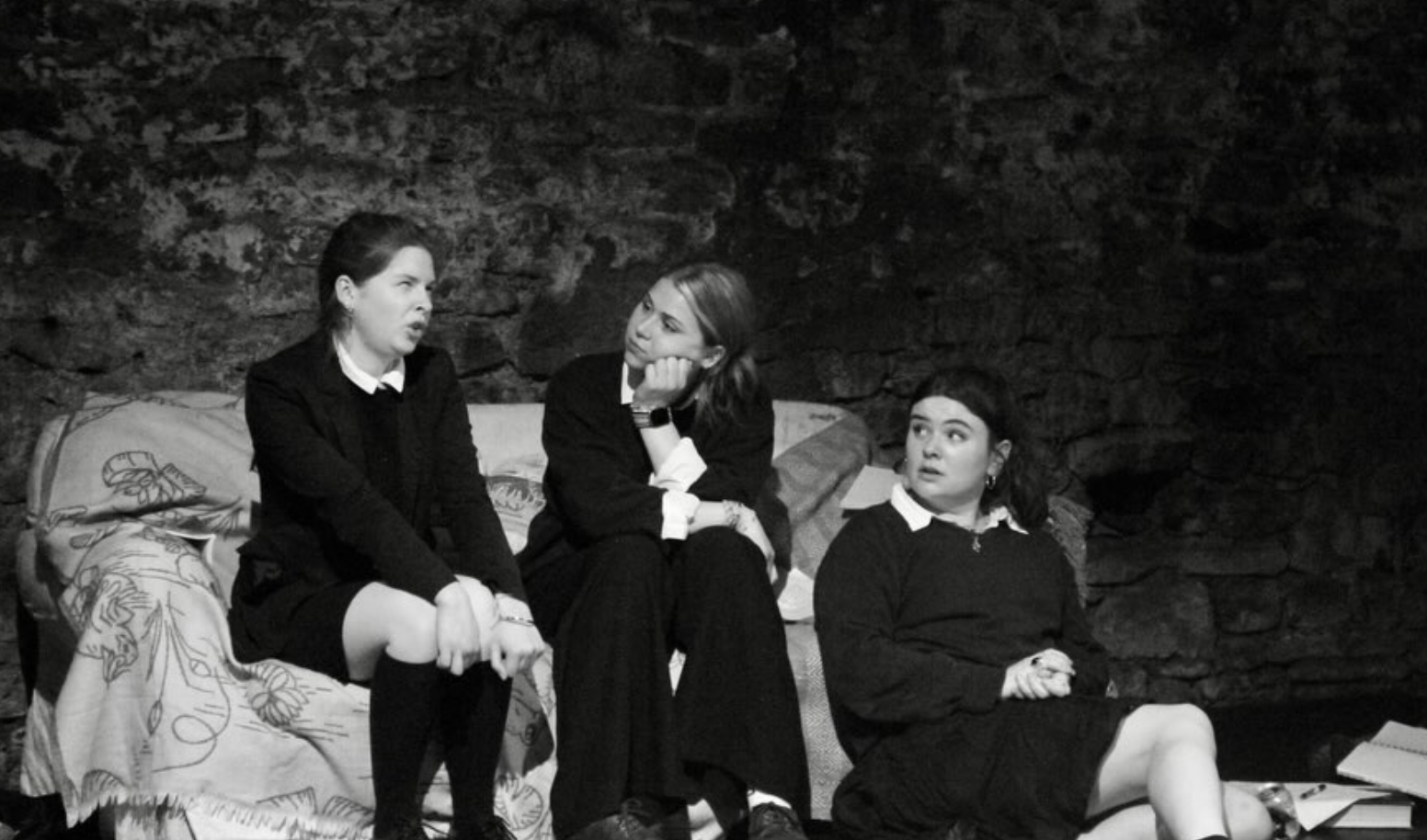
Perceptive theatre fans may notice the name Foul is Fair is a line uttered by the three witches in the famous opening scene of Macbeth. There are many comparisons to be drawn from this quote to the themes of the play: notions of deception, the hazy nature of morals and confusion over right and wrong, and of course, the presence of unapologetically strong female characters. Macbeth is an anchor for the narrative, often used as a springboard for wider discourse including the nature of Lady Macbeth’s femininity, and what it means to be a woman as they sit on the cusp of adulthood. It was entertaining to watch the girls get sidetracked from their purpose of ‘revision’ and I enjoyed the nostalgic feeling these moments brought out as they anxiously fretted over their looming exam.
Each scene was broken up by a blackout and the soundtrack of choral music which emphasised the characters backgrounds as students at an all girls Christian school, and gave the piece a distinct atmosphere. This often created a comical juxtaposition between something like the rebelliousness of underage drinking and the pious drawl of a choral hymn.
Foul is Fair felt like Cherish the Orange’s most experimental and ambitious work yet, successfully working through the difficulties of traverse staging over the traditional end on configuration, and including more ambitious moments of stylised choreography and group work. The play moved away from solely stark realism with the inclusion of dance and dream sequences that were crowd pleasers to say the least.

A standout moment had to be when Fran (or ‘Fart’ as she is referred to by her classmates due to an unfortunate sequence of initials) played by Hattie Parkinson, falls asleep, and we are plunged into a hazy and hilarious dreamscape involving Matilda the Musical, Draco from Harry Potter, and the famous TikTok slo-mo edit of Timothy Chalamet dancing that dominated our feeds in lockdown. This voyage through cultural hallmarks of the 2020s had the audience guffawing and whooping to no end. A similarly entertaining moment was the arrival of Jack (Milo Gray), the only male character in the piece, who is invited to the revision session much to the glee of the group who, like many students at an all-girls school, have been deprived of interactions with boys. They all swear to each other before he shows up that they will ‘act normal’ which gained a knowing chuckle from the audience, before a very well placed jump cut immediately skips to them doing the very opposite: all sat in a circle gazing lovingly up at Jack standing in the middle.

Cherish the Orange have perfected the act of leaving the audience with a warm fuzzy feeling in their chest by the play’s end. We are left with a heartfelt and nostalgic message from the future, as Sid writes a letter to her younger self who at the time felt as though her life was over after the expulsion. She reflects on her years as a student now at Bristol, an expression that almost felt meta and most certainly came from the writer’s own experiences of student life. The final message was sweet but simple, emphasising the importance of appreciating each phase of life (even the pain of being sixteen!) and remembering you’ll one day miss these moments.
Green Light by Lorde, a staple Gen-Z anthem about growing up and letting go, was the perfect closing track, and the audience just couldn’t help but get up to our feet and run onto the stage to join the cast in one final dance. This left all of us on a palpable high and giddy rush tainted by the wistful feeling of gratitude and sentimentality that lingered from Sid’s monologue.
 Charles Hubbard
 Lewis Burley
All in all, Foul in Fair was another great success from Cherish the Orange, who are reaching new heights with each piece of work, always centring the female perspective and consistently characterised by a hilariously Gen-Z sensibility. You can catch their previous play, Kick Off, in London this summer and follow @cherishtheorange on Instagram to stay updated with what they get up to next.
Featured Image: Cherish the Orange
What shows have you enjoyed watching in Bristol?