By Charles Hubbard, Second Year Theatre and Performance Studies
Nicholai La Barrie’s sneakily timely restaging of Oscar Wilde’s tale of political corruption and double standards is packed with barn-burning gags guaranteed to have you rolling in the aisles, even while it lets its characters off the hook and uses queerness as a costume.
Like many an Oscar Wilde play, An Ideal Husband, while no doubt viewed as shocking and incendiary when it was first performed in 1895, does seem rather tame now. This is because, when viewed in the context of our modern political hellscape, Wilde’s story of a wealthy and respected politician being blackmailed by the fact that he leaked some confidential cabinet information 18 years prior seems much more like a fairy tale version of the sincere contrition we wish our politicians embodied, rather than a condemnation of their heinous actions. Can you imagine what would happen if it came out tomorrow that Nigel Farage had tipped off a wealthy businessman to buy shares in a certain company in 2008? Nothing! We’d chuck it on the gargantuan pile of reasons why he’s unfit for office, his supporters and sycophants would ignore it completely and the man himself would sail right on ahead, entirely unencumbered. It may be for this reason that Nicholai La Barrie’s restaging of Wilde’s text foregrounds the entertainment value of the original play rather than its political message. And it certainly milks the most out of every one of Wilde’s astonishingly fun verbal gags and throws in a couple of its own for good measure (though, with no credited co-writer or dramaturg, I’m not sure who these are coming from). La Barrie’s “vision” (if you can even call it that) may be toothless and sloppy but I cannot deny that I spent much more time with a wide grin on my face than a scowl.
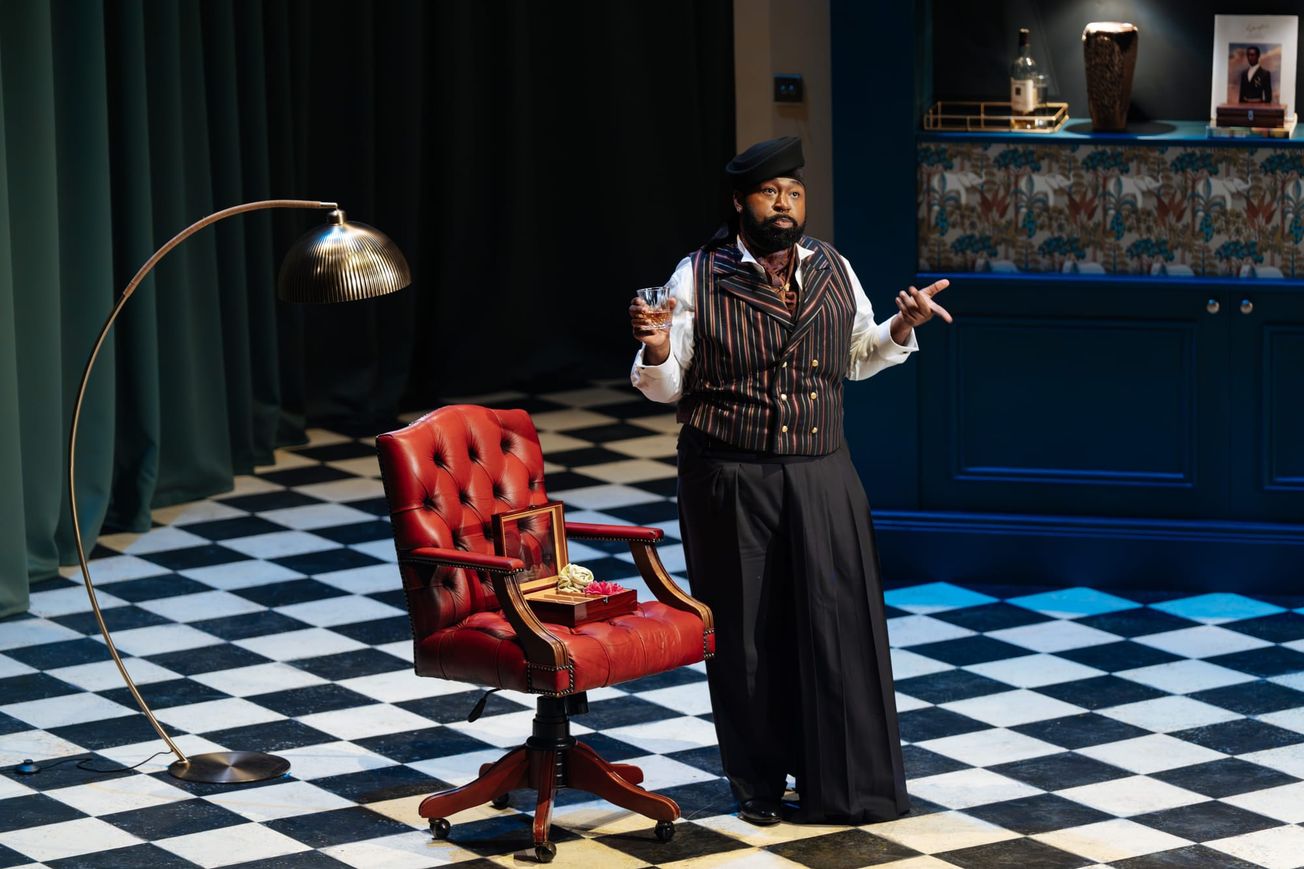
Lord Chiltern (a pretty limp Chiké Okonkwo) has everything: the perfect wife (an equally perfect Tamara Lawrance), a gorgeous home and a seat in the House of Commons when the MPs couldn’t distract themselves with tractor porn quite yet - though the question of time period here is incredibly muddled. And yet his bubble of domestic tranquility is defiantly popped by the arrival of Mrs Cheveley (a thoroughly flavourless Aurora Perrineau), who threatens to unearth a shameful secret from his political past, lest he sign off on her new unreliable financial endeavour. While Chiltern reels, the rest of the characters float along rather unbothered, pausing occasionally to mock his desperate pity party. There’s Lord Goring (an incandescent Jamael Westman), whose ongoing flirtation with Mabel Chiltern (an immensely charming Tiwa Lade) - complete with foot stuff - keeps being interrupted by his father’s (Jeff Alexander, embodying a bulldog more than a human) growled commands that he finally settle down and find himself a wife. Looking at this synopsis, the jokes don’t exactly write themselves but Wilde delights in pushing his characters into tighter and tighter corners so that hijinks have no choice but to ensue.
I was slightly worried at first when Okonkwo, the default protagonist and seemingly the titular role, was being left at the starting blocks by the rest of the cast, both in terms of dramatic heft and number of laughs. When the script required him to be charming, he was never charming enough. When it needed him to be rage-filled, or laced with pathos, he failed to hit these marks as well. Fortunately, when the curtain comes up for the second half and his character becomes a relatively harmless buffoon to be pushed around by the other characters, he finally rises to the occasion and engages in some legitimately hilarious physical comedy. Far outshining him in onstage matrimony is Lawrance, who finds just the right balance of sincerity and irony when playing her exchanges with Okonkwo - she invites the audience to confront the reality of a woman who’s built a marriage on rock-solid political principles only to find out her husband is a fraud, while never missing a laugh.
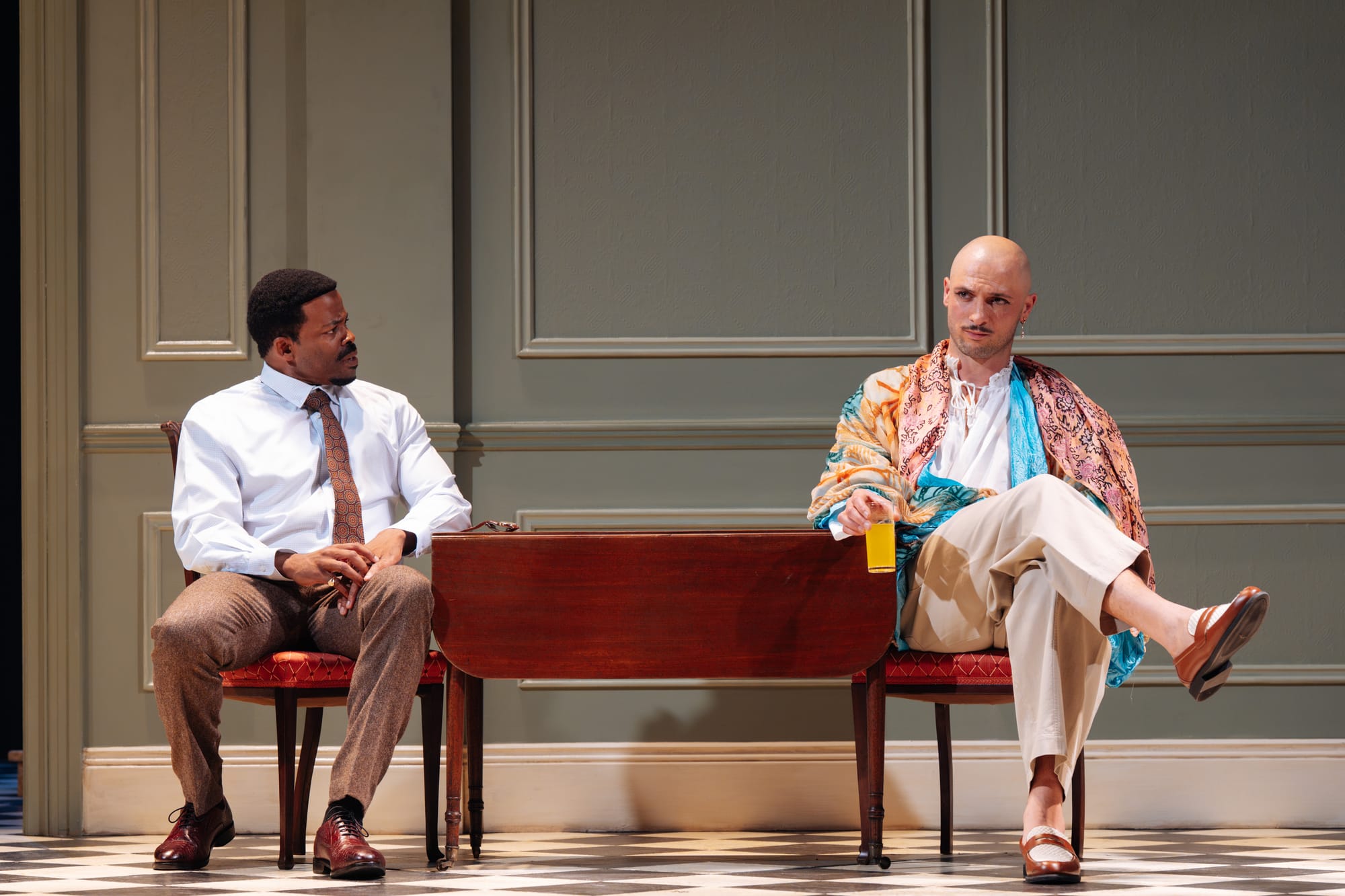
Westman, who is slowly revealed to be the actual protagonist of the show (and an incredibly obvious Wilde self-insert), delivers a sparkling and winningly versatile physical performance, using his towering height both as a character detail, a punchline and, occasionally, a tool for intimidation. However, his dynamic with Mason, his exceptionally camp butler (Emmanuel Akwafo, who is double cast as Mason, Chiltern’s butler, in a performance of equal subtlety and nuance), is emblematic of the show’s generally irritating and potentially problematic depiction of queerness. For a play written by one of the most famous closet cases ever (and one who wasn’t exactly shy about queer-coding his plays), I don’t think I’ve ever seen a production so explicitly catered towards straight audiences who think gay men are fundamentally silly and not to be taken seriously. Goring and Mason are constantly holding eye contact for too long and running their hands over one another and yet, at the end of the play, Goring straightens right up and marries a woman and Mason is never heard from again. It couldn’t be more explicit if, at this point, La Barrie had a sign lowered from the rafters with “NO HOMO” written on it.
 Charles Hubbard
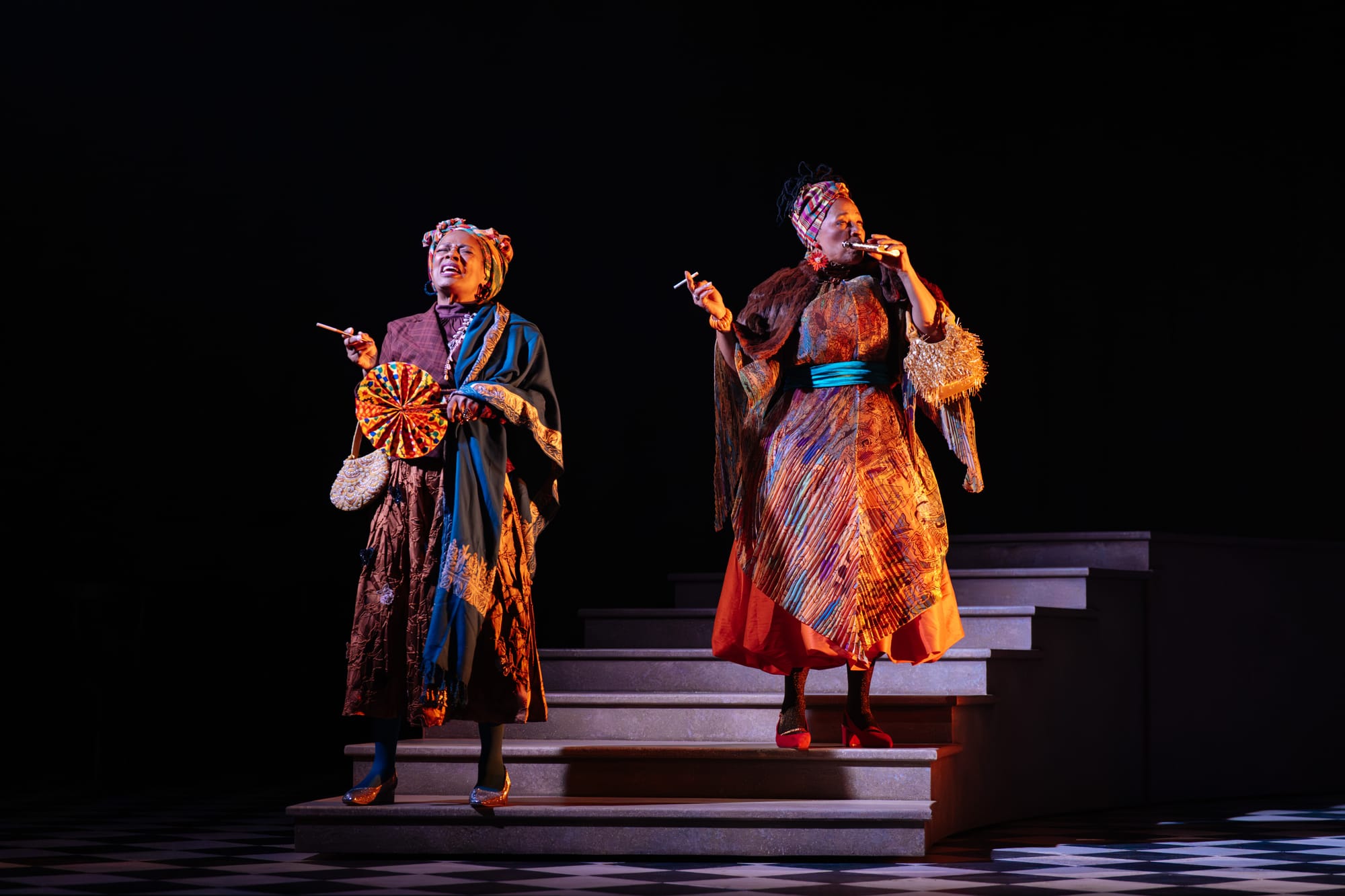
The tone of the entire production is often so broad it frequently threatens to spin off the rails and enter into downright pantomime - which I’m not necessarily against. Wilde is certainly a smart vehicle with which to carry out the noble task of dismantling the classist and outdated barrier between high art and low art. But I might have to draw the line when one of the characters brings up the AI chatbot Claude (I’m not joking - that is an actual line delivered in a production that transferred from the ostensibly respectable Lyric Hammersmith theatre). There’s nothing wrong an out-and-out comedy, especially one with onstage craft this immaculate (the costumes, designed by Rajha Shakiri, are a real standout) but should professional productions like this really feel like they’re taking cues from student theatre, such as having the entire cast, out-of-character, dance onstage at the end? It’s a fun time but it’s difficult to imagine that this is what BOV Creative Director Nancy Medina had in mind when she took the job.
Tickets can be found here.
Featured image: Bristol Old Vic / Helen Murray
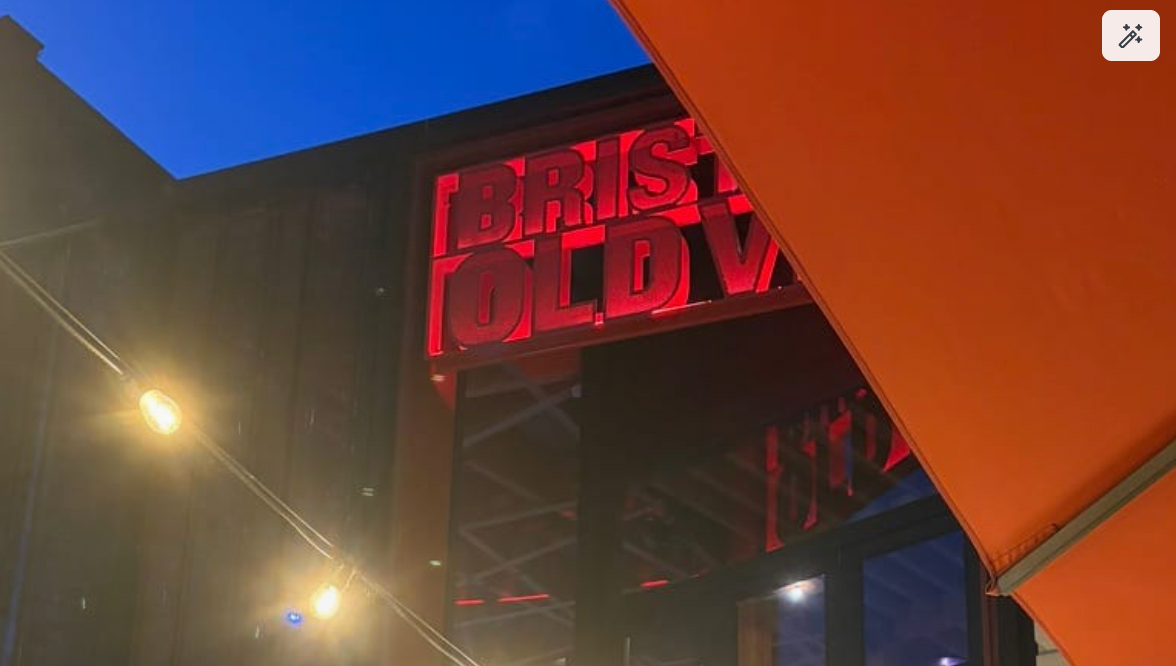
Have you ever been to the Bristol Old Vic?