By Rosie Napthine, Third Year, English
Rebuilt from ruin yet still treading water through a hazardous political ocean. Application 39 creates a satirical future, 100 years from the Nakba, wherein Gaza City, of a divided Palestine, has succeeded in a bid to host the 2048 Olympic Games.
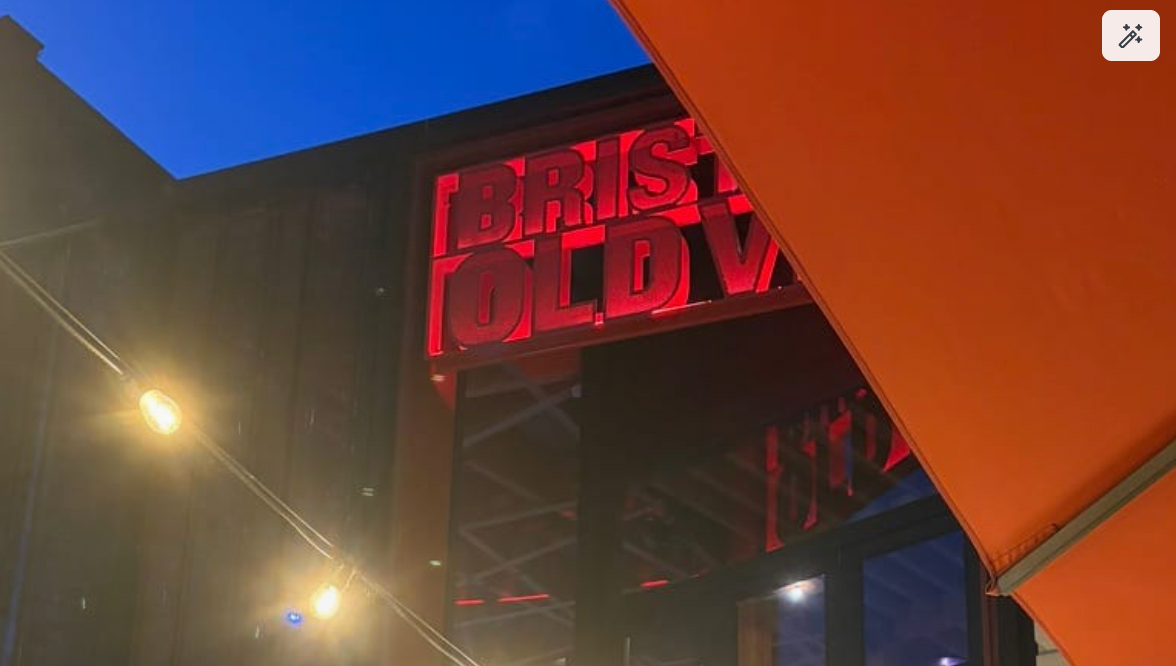
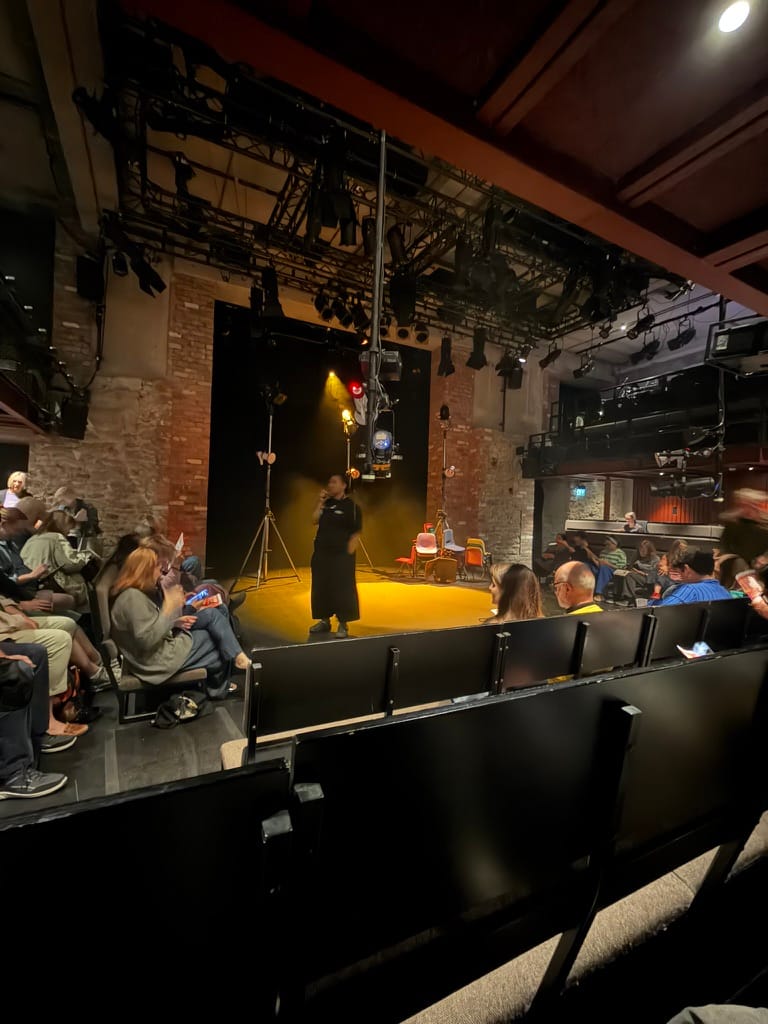
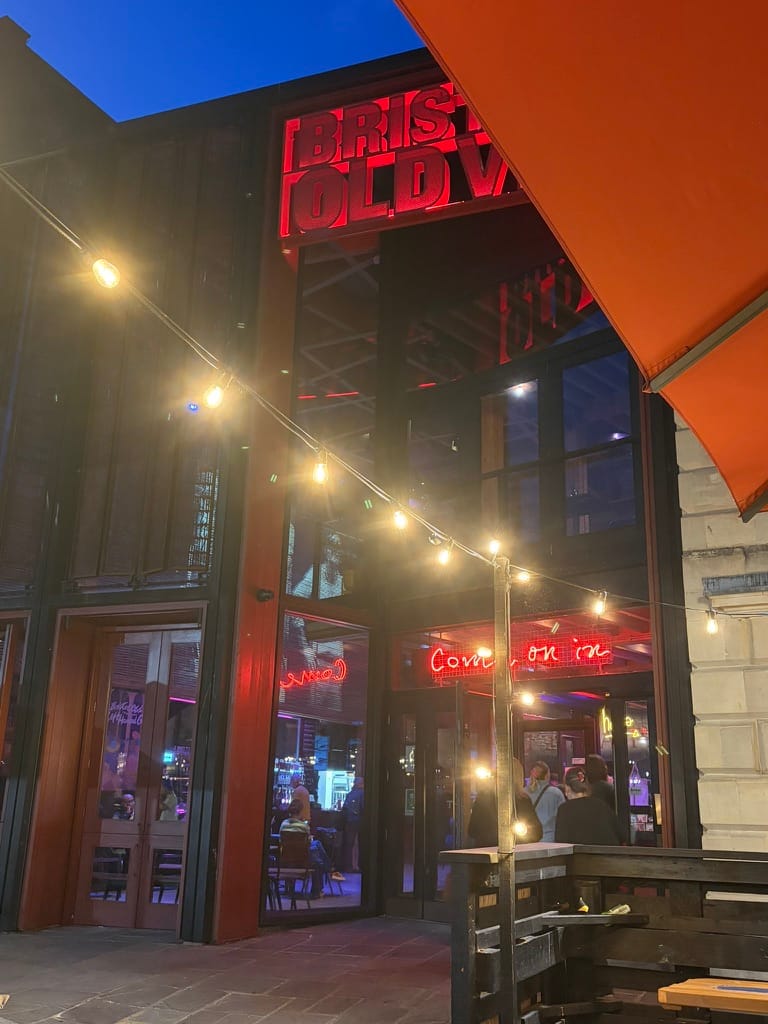
Walking into Bristol Old Vic’s Weston Studio sends us two thousand miles and 20 years ahead into a logistical blizzard: a flurry of Olympic planning. It seems an unexpected possibility, in a city so torn, still rising from the rubble, yet writer Ahmed Masoud understands the vision he has for a free Palestine. Its theatrical activism disallows our ignorance of the horrors surrounding us. It is destruction and heartbreak, but it is also renewal, identity, and bravery.
It is a bold idea to create a future for a place so currently devastated. Application 39 suggests a Palestine held under the suggestion of a ceasefire yet still living under strong restriction and divisions. When a joke backfires from our two protagonists Selma (Sama Rantisi) and Rayyan (James El-Sharawy) we brace for impact, uncertain of their fate. Enter the President of Gaza City (Ghantus Wael), in his tracksuit and backwards baseball cap. A seemingly unserious character, yet yielding what become the boldest ideas for unity. Though I understand this costume choice, it was hard to grasp for many. A play plagued by destruction, and a never-ending cycle of hope being slain by power, we leave finally feeling some possibility for change. Hope rises through tragedy. Through discussions of building tunnels for track sports, and where the diving team could practise, we see a production wherein an idea of such previous ridicule seems not only plausible, but a true beacon of magnitude.
Though doubtful, we bear witness to a substantial change in character of the assistant to the President, Lammer (Nadia Dawber). Sceptical, making bold accusations of the dangers to the so-called ceasefire agreement, we see her finally relent. She moves from a place of accusation to support- excitement, even. We follow alongside. Her emotional opening dialogue aligns the very idea of the games with terror and destruction, outlining her disapproval towards our hero duo. Yet as hope emerges, she relents, moving from fear of a reversion back to the previous occupation, a sense of safety in simply being alive, to this shared desire to be free. To not only be alive but to live.
Importantly the play discusses Dr Hussam Abu Safia, a key figure in the effort to end the genocide. Using his nephew’s life as a model for that of duo Selma (Sama Rantisi) and Rayyan (James El-Sharawy) roots this play in reality. We cry in pain with them as we watch their tragedies unfold, and sit in darkness, with nothing but their childish terror to accompany us. We are set to dwell amongst the ghosts both real and fictional. Forced to think of nothing else but our own inadequacy in support of the cause.
This duo is truly breathtaking. They transport us so eloquently from current to past, flipping effortlessly into their 9-year-old selves. We follow them from the day they met; we are shown a unity forged from destruction and heartbreak. We sit in silence and are grappled from our thoughts by their screams of agony, then paradoxically lifted by comical exchanges. Modelled from reality, we see through these two children, the suffering inflicted, and the resilience forced on so many young shoulders, barely strong enough to lift themselves from rubble, let alone save others too. We follow their journey through separation, interrogation, and military detention. And we feel it all, as we sit with them in the darkness, trapped in rubble, their fears echoing from one ear drum to another. And we laugh with them, as their joke Olympic bid, their entry copied from the French one, landed them not in the expected execution but in fact on the planning team alongside doubtful Lammer.
It creates a world so dystopian, yet simultaneously so very real; a set made simply of sand and strobe lighting. The close atmosphere of the basement studio feels tight and claustrophobic, the tension inescapable. If so many cannot be free, humanity as a whole can never be. This idea shone through so strongly, as these shared moments of terror and darkness forced us to unite. Children’s school chairs become both rubble and a defence, and the sense of devastation forced upon children was choking. If one criticism could be put forward however, it would be its speed of progression. At times the plot seemed so fast as to be somewhat difficult to follow.
In a full house of standing ovations, I look around and see myself surrounded by those who share some hope with me. A room of people calling out to Free Palestine, with all the breath their lungs can allow.
Information on how we can support Palestine, as advised by the team at Application 39 is below:
https://www.matthewschmolleproductions.com/application-39-more-info