By Leo Sefton, Arts Editor
Since its transcription around the 8th or 7th century BC, Homer’s The Odyssey has been a source of constant artistic inspiration. Nowhere is that more apparent than in the legion of paintings the story has spawned. In this article, I’ll look at the literal depictions of this great text as well as those that portray the story subversively, and even those which go further than the original text and depict unwritten scenes just like modern fan fiction. While Christopher Nolan’s recent film adaptation has been rightly heralded as a brilliant retelling of the story, the following paintings strike just as deep into its core.
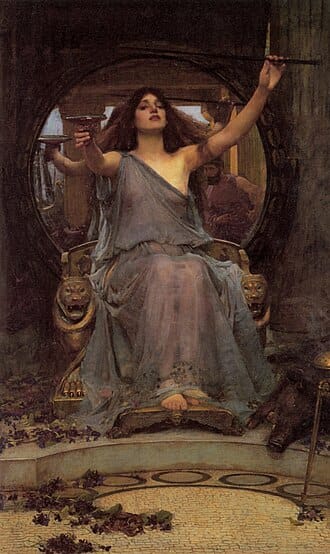
In John William Waterhouse’s ‘Circe Offering the Cup to Ulysses (Odysseus)’, the sorceress Circe sits upon her throne with two pigs, once members of Odysseus’s crew, at her feet. In her hand is a cup containing a potion to bring Odysseus under her spell. Waterhouse places a large mirror behind Circe, a device he used on a handful of occasions, to highlight Odysseus’s cunning, which is yet unknown to the sorceress. Odysseus is reflected in the mirror behind Circe’s back, highlighting how though Circe sees him, she does not know that he has taken a herb to make him immune to her curse. This is a physical depiction of Odysseus’ crafty and deceitful nature, always approaching the enemy while their back, metaphorically, is turned.
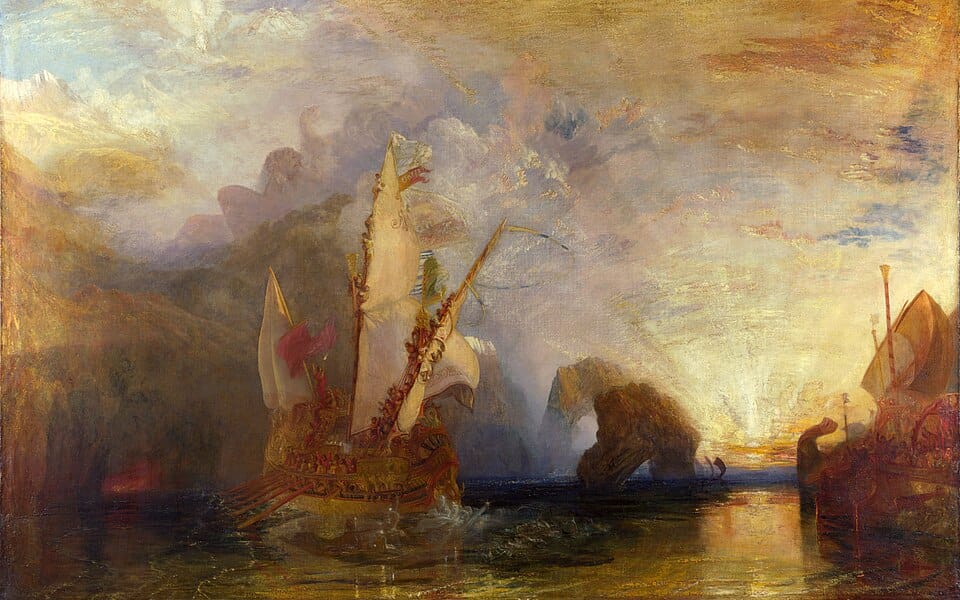
J.M.W. Turner’s ‘Ulysses Deriding Polyphemus’ captures the atmospheric in a way that swallows up the interpersonal. Odysseus cuts a striking figure in scarlet robes and helmet aboard his ship, his ego on full display in his posture as he taunts the cyclops Polyphemus, who he has just blinded. The giant, while obviously larger than Odysseus, still seems small, partially hidden behind the cliffs in the left of the painting, and both figures can easily be lost in the vast expanse of the light filled composition. Here, Turner’s focus on the environment and its atmosphere highlights the foolishness of Odysseus’ overconfidence, as he is dwarfed by nature, and the gods who rule over it, including the father of the cyclops... one hell of a pissed off Poseidon.
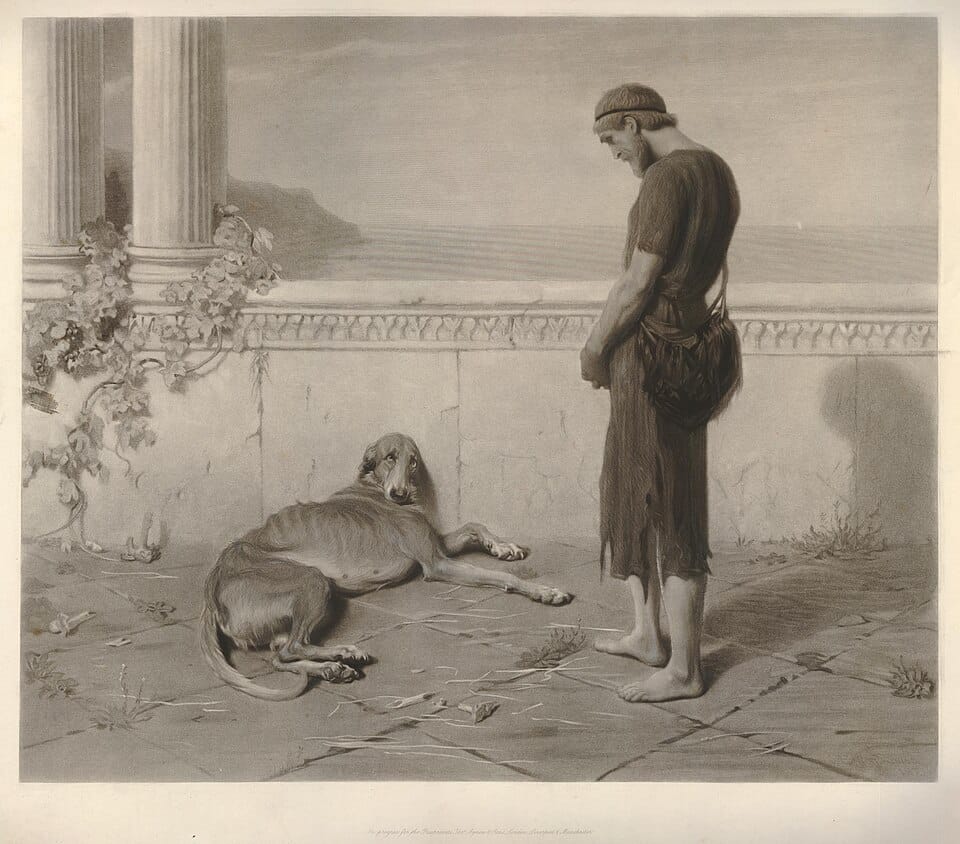
Returning to the personal, ‘Ulysses and Argus’ by Briton Rivière depicts with a certain quietness and tenderness, the reunion of Odysseus and his loyal canine companion Argus. The way they are centred in the painting portrays a kind of equality between them, like two old friends together again rather than a dog and his master. Shortly after this scene, Argus passes away, content with Odysseus’ return. While the human characters of the story largely await the return of Odysseus as a ruler, Argus welcomes him home even disguised as a beggar. In this way, Argus is portrayed as a symbol of devotion, and in Rivière’s work serves as a contrast to other, often more bombastic and impersonal, depictions of The Odyssey.
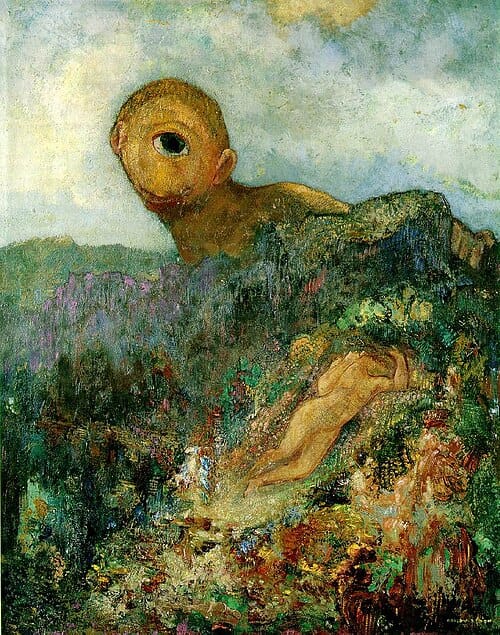
The Odyssey also creates rich meaning for paintings that may not literally depict any particular scenes but focus on characters that play a part in the text, seen in a different light. This is the case with Odilon Redon’s ‘The Cyclops’, which depicts a different story involving Polyphemus gazing longingly at the sea nymph Galatea. Here, Polyphemus is portrayed as calm and pensive, the softness of his gaze and features invoking a deep sympathy. Without the aggressive, violent portrayal of Polyphemus in The Odyssey as a contrasting depiction and as most people’s initial impression, this piece would lose some of its power. While it doesn't literally rewrite the Cyclops’ story, it shows him from a different emotional angle, at peace among the verdant hills.
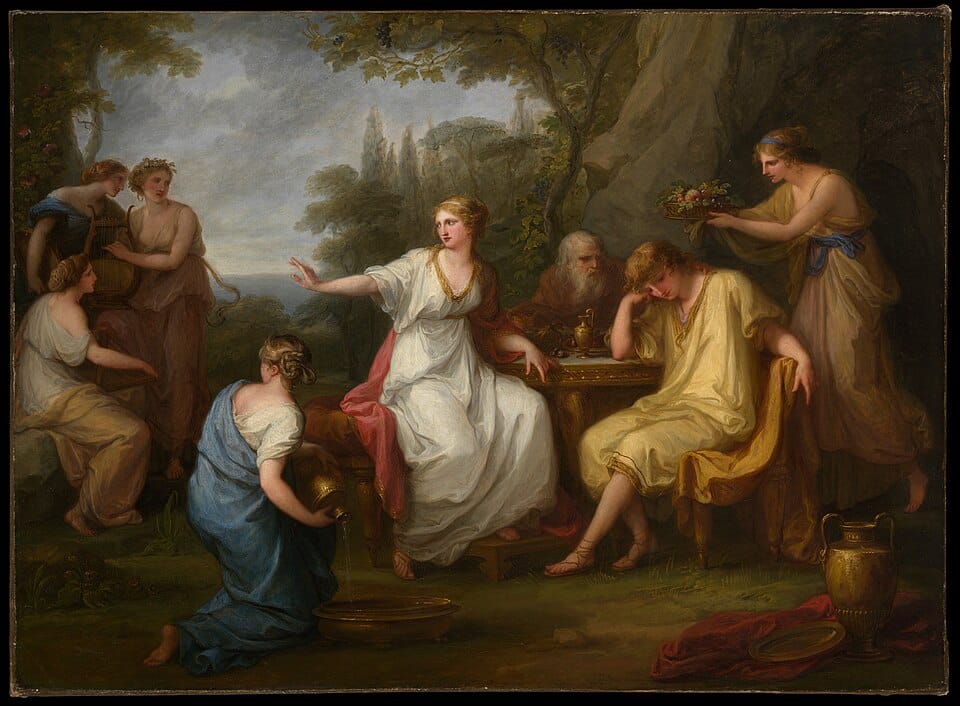
Another work that goes beyond the confines of Homer’s tale is Angelica Kauffman’s ‘The Sorrow of Telemachus’, based on Fénelon’s later expansion of the story. While the painting initially seems grand, featuring numerous characters, this is at its core another deeply personal and emotional exploration of the text. As nymphs sing of Odysseus, the goddess Calypso attempts to silence them as Telemachus grows distressed. This depiction of emotional fragility, and of an act of kindness by Calypso subverts grand narratives of battle and toughness and adds reality to the motivations of Telemachus to find his missing father.
Together, these works should serve to highlight the broad range of artistic interpretations that The Odyssey has inspired, as well as explaining part of the enduring appeal of the story – its malleability which makes it such a rich source of inspiration for varied depictions of its characters and narrative.
 Charles Hubbard
Featured Image: Wikimedia Commons / J.M.W. Turner
Has anything inspired you recently?