By Beth Robinson, PG Science Communication
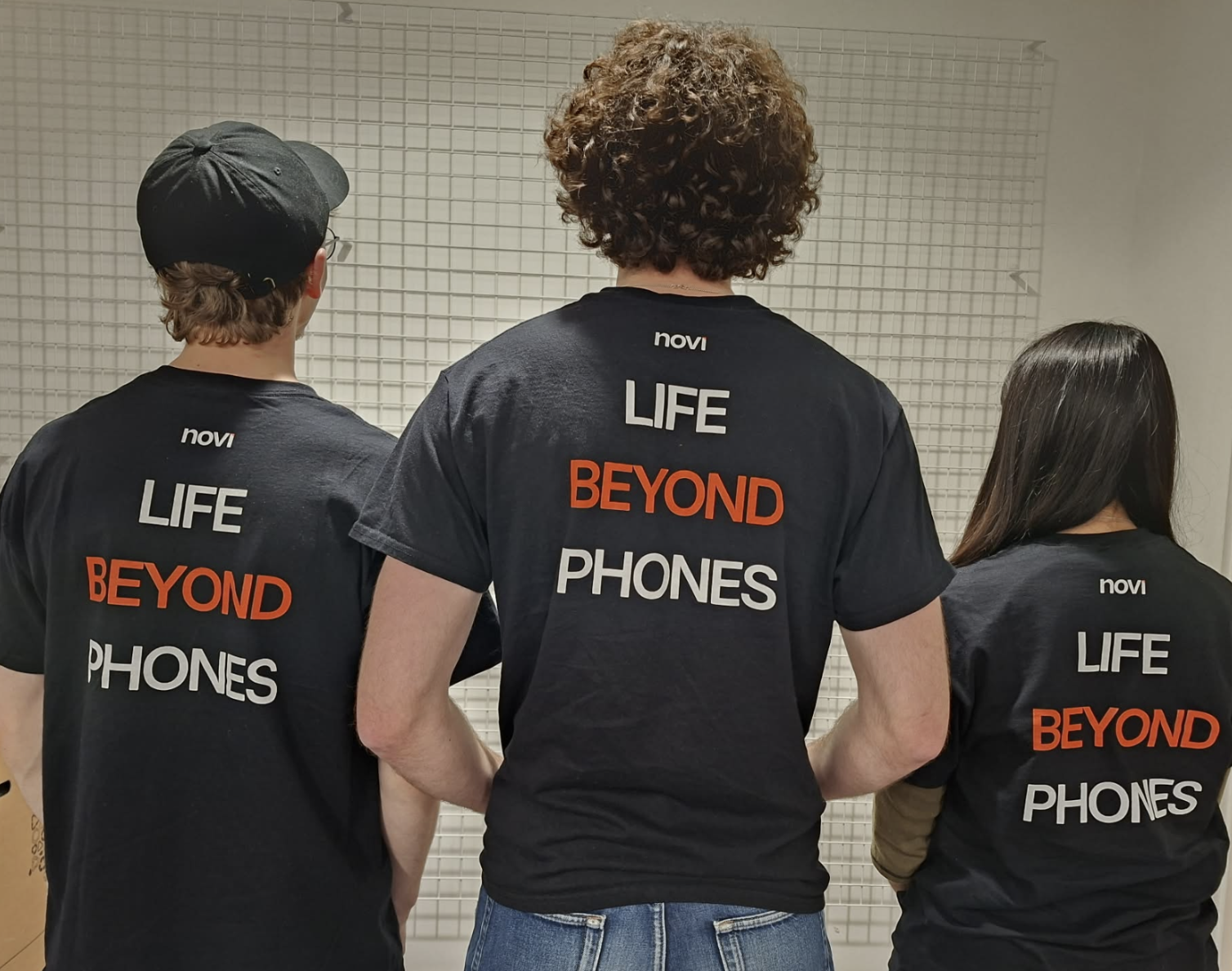
Novi is a start-up company by students at the University of Bristol, which aims to tackle distractions, scrolling, phone addiction and focus. It will be available to use in campus buildings during exam season.
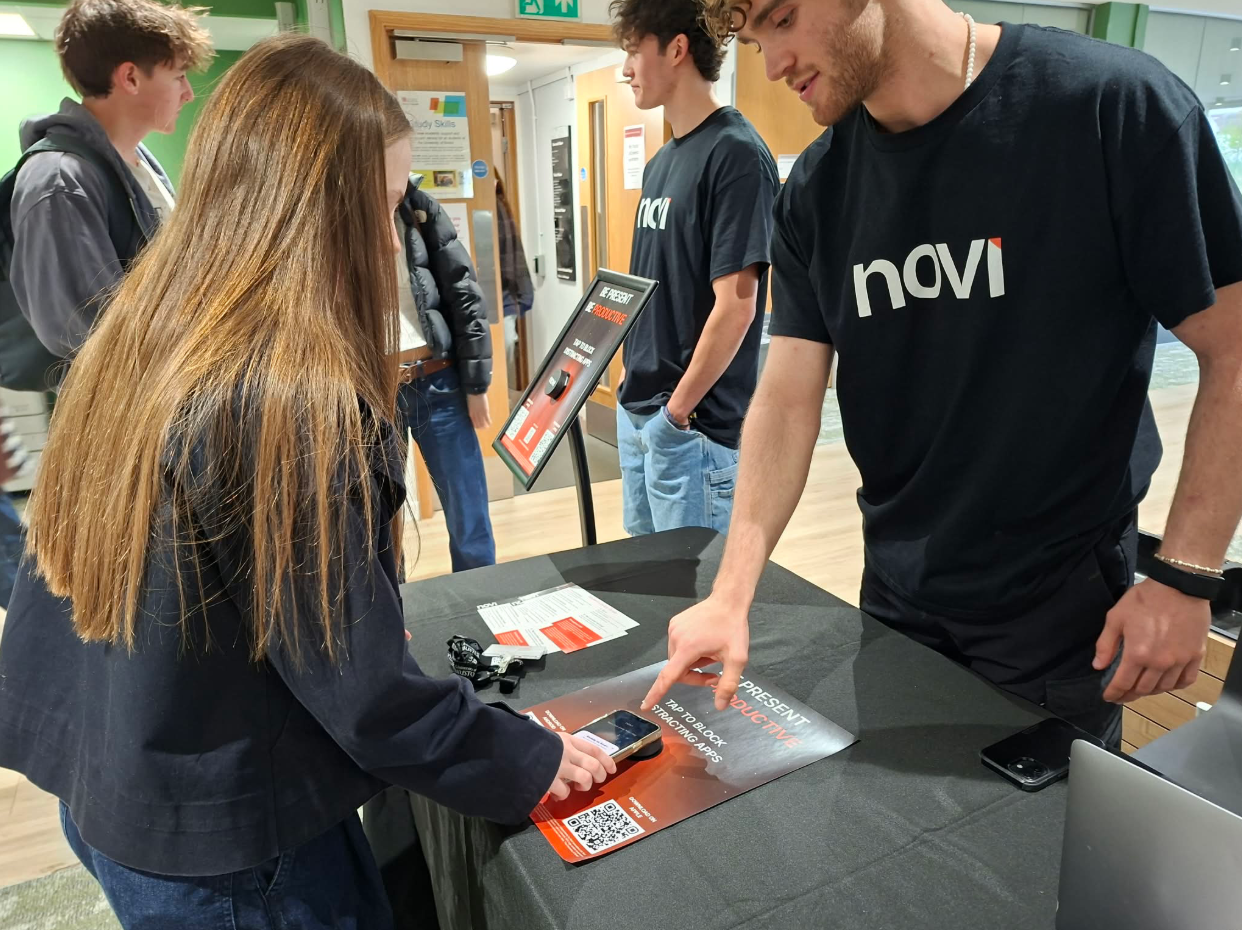
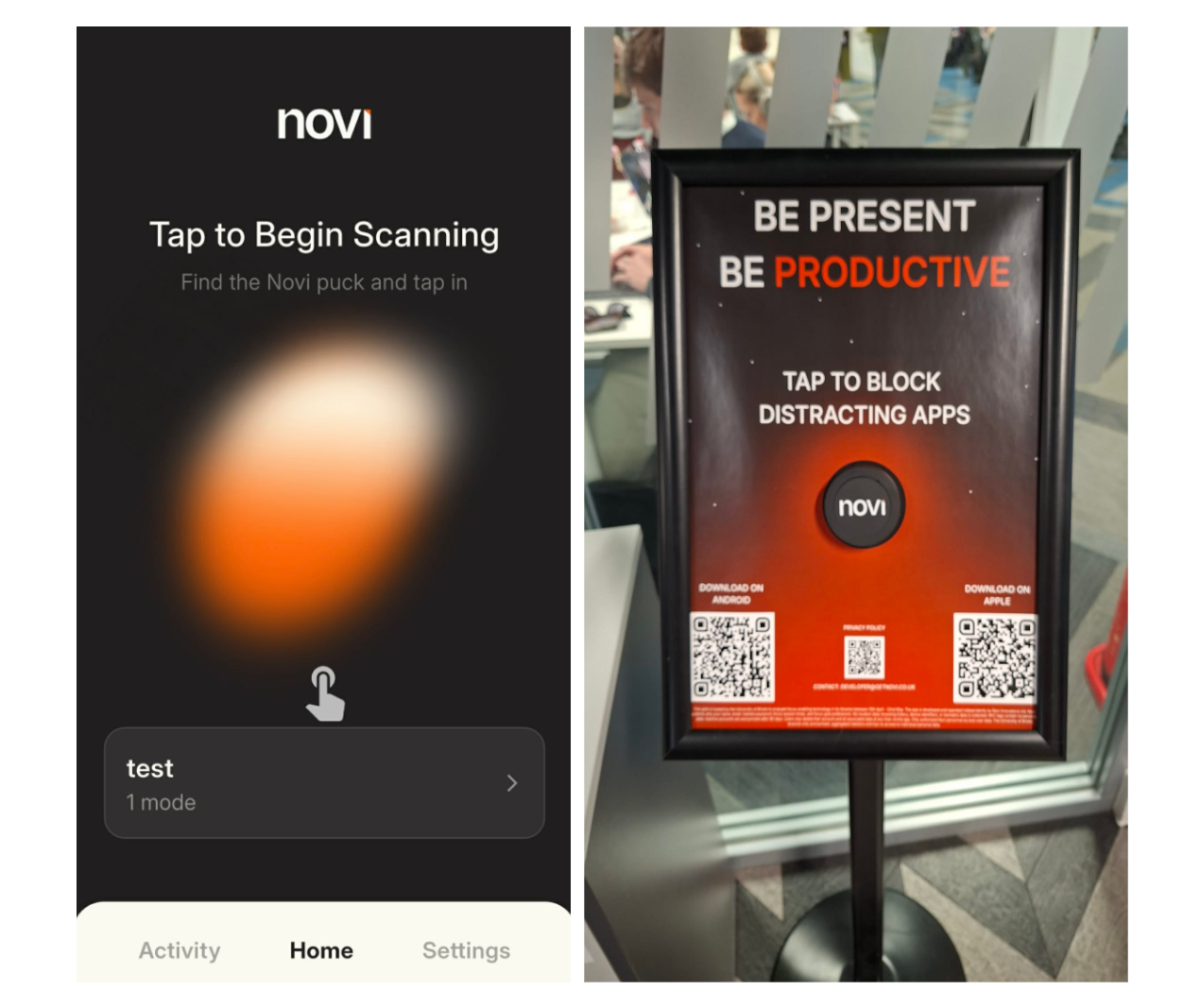
A new mobile app, Novi, has recently launched as a pilot on campus. Founded by student entrepreneurs Matt Stewart and Nadav Jacobs, the software blocks distracting apps on your phone whilst you study, with a twist. Unlike other app blockers, Novi uses an accompanying piece of hardware placed in a fixed position in the building. After downloading the app, you can decide which apps you would like to block, then tap in using this hardware, which blocks the selected apps. You then later tap out again, requiring you to pro-actively move, rather than being able to press a couple of buttons on your phone to get around a blocking system.
The Tech
Technical lead Louis Harris described building the app in Flutter, using the programming language Dart, where developers can use one codebase to update software on both Apple and Android. Tapping in and out is similar to using contactless payment or a UCard, using an NFC (near-field communication) chip, where your phone places energy into a chip, emitting and receiving back a signal once prompted. When asked about data security, Harris described how the app relies on securely encrypted Google servers. He went on to explain the process of working with the University’s data team, which he describes as ‘scrupulous’. He said the only data collected on users is a name, email, and time spent with apps blocked, used for further app development, and emphasised an ethos of not selling user data.
The Features
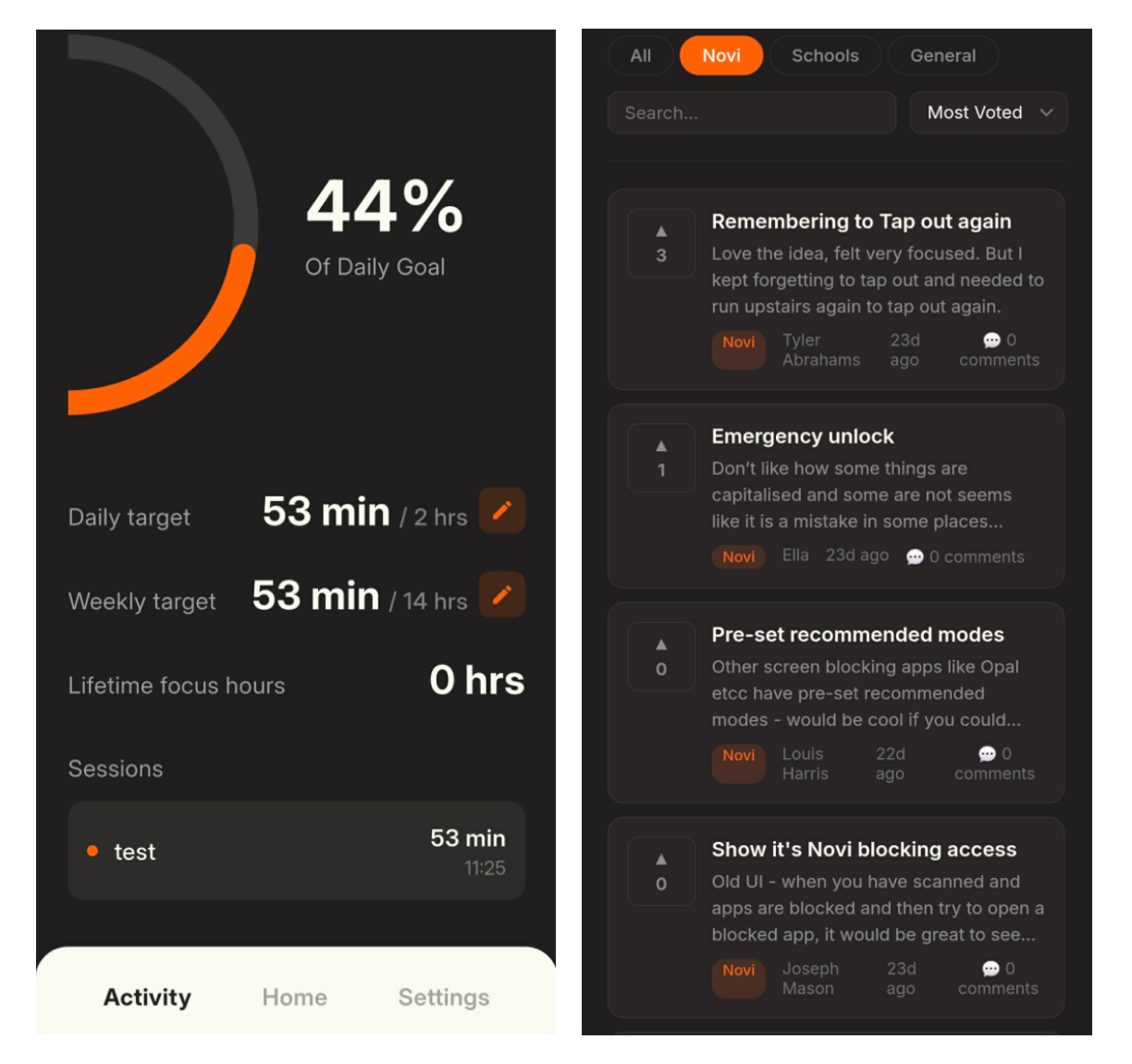
When testing Novi (on Android), it took around a minute to set up, and there were no obvious problems tapping in and out, with blocked apps instantly closing when you try to open them. On the home page sits a tracker where you can set goals for how long you wish to remain off your selected apps, and a community tab for suggested improvements. Thus far, the biggest seems to be to add reminders to tap out. There are currently three emergency tap outs should you forget, which re-sets every month.
The Founders
In speaking with the team, there appears excitement, ambition, and passion to create a genuine movement, with personal anecdotes and concerns for the future cited as key inspirations. Nadav Jacobs described growing up with ADHD and mental health struggles as a key motivator for his involvement, with Matt Stewart experiencing addiction to Instagram over summer. Both have seen the first-hand effects of how detrimental phones can be, and said they compliment each other well through the ‘rollercoaster ride’ of late nights, joking that they probably see each other more than their families these days. The co-founders also shared how great the start-up infrastructure in Bristol is, with plenty of opportunity and support from the School of Innovation.
Something which stands out is the intent of the two co-founders. Discourse around phone use is all around, with new laws passing related to social media around the globe. In discussing this, Jacobs said ‘people are starting to understand it, everyone knows there’s a problem with their phones, but no one knows how to capitalise on it’. Both described how useful phones are - to communicate, to travel, to pay, emphasising the need to build long-term healthy digital habits rather than to be authoritative and remove phones altogether.
The Future
In addition to the pilot on campus, the Novi team has been working with local schools to explore how to address phone usage in the classroom, with expansive aims to extend into spaces such as at gigs, museums, restaurants, and in parks, to enable people to be ‘present in society’, and ‘change the way society functions’ as it pertains to phone use. When asked to describe Novi in three words, ‘community’, ‘presence’, and ‘freedom’ were used to describe its purpose. Their vision is to build their social impact for profit company into a focus infrastructure for society, hoping that there will be a space for Novi everywhere you can imagine.
Novi has raised more than £62,000 in seed funding, with more pitches forthcoming. Throughout the exam period, the app will be available to explore, initially in the Arts and Social Sciences Library (ASSL) and Beacon House, with further locations expected soon.
You can download the Novi app from the app store on both Apple and Android.
Featured Image: Epigram / Beth Robinson