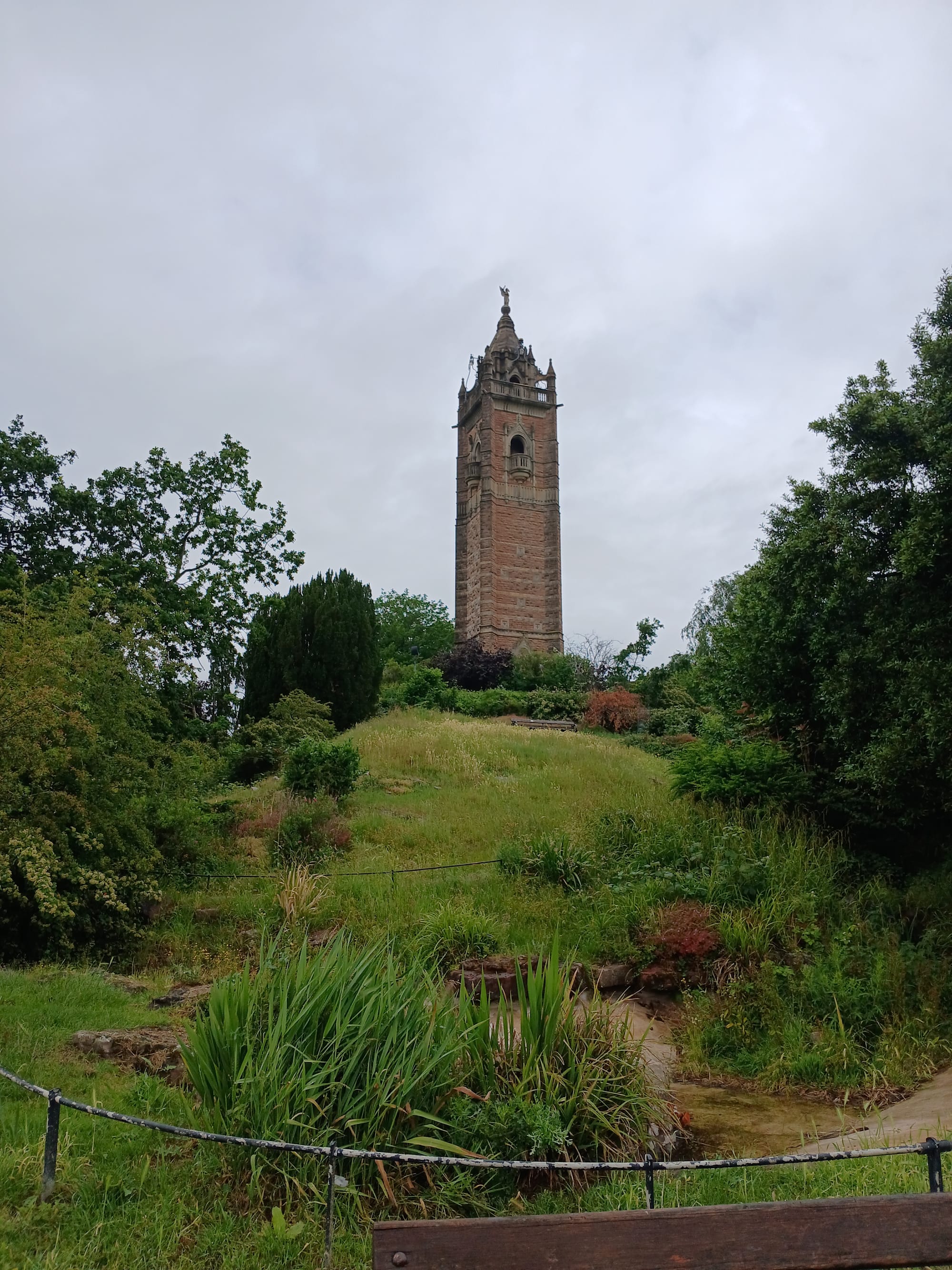
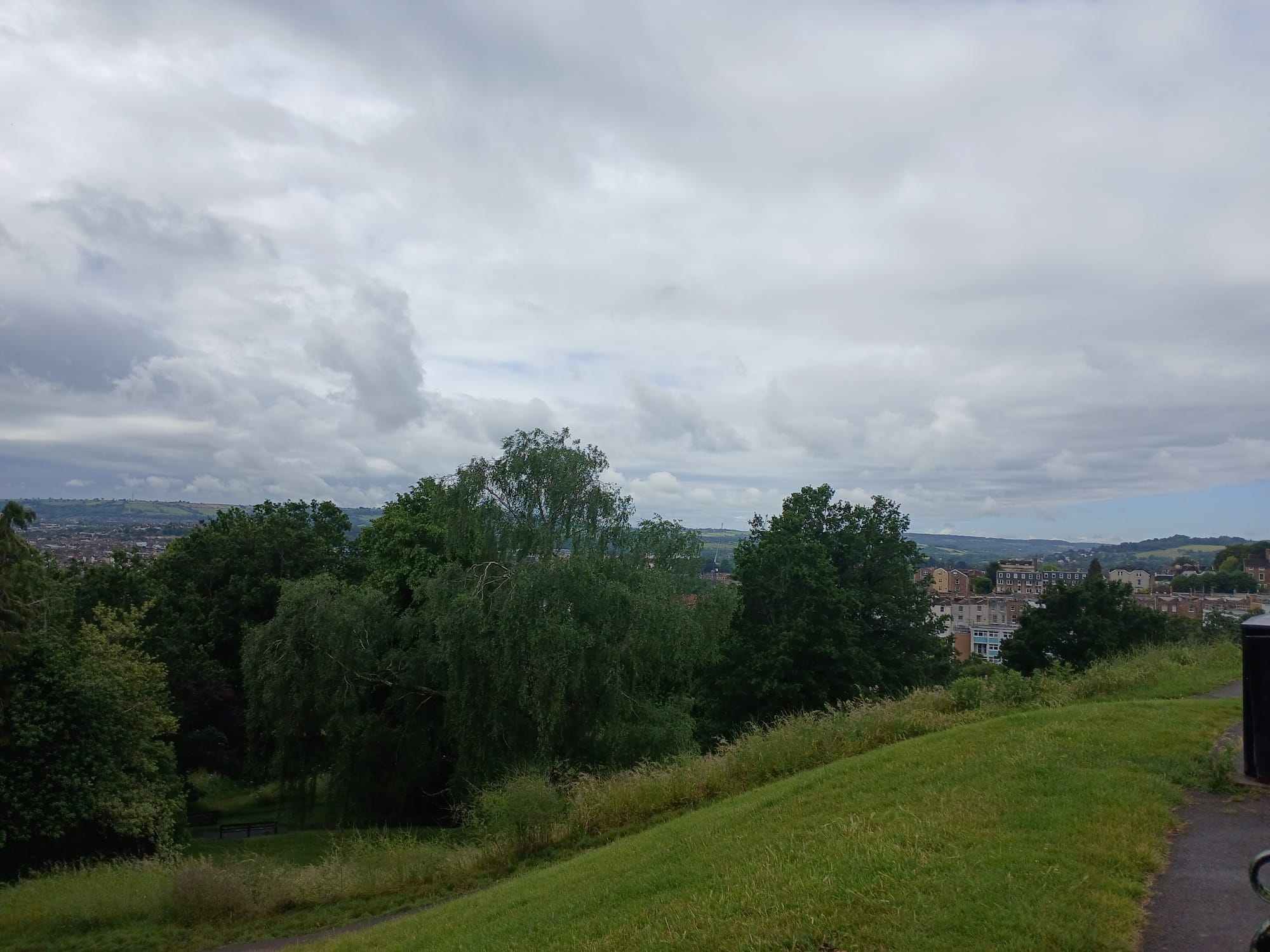
It's drizzled all morning but it's now stopped and the sun is trying to break through the clouds at Brandon Hill. A husky runs over and thoroughly investigates me as I sit on a bench in front of Cabot Tower.
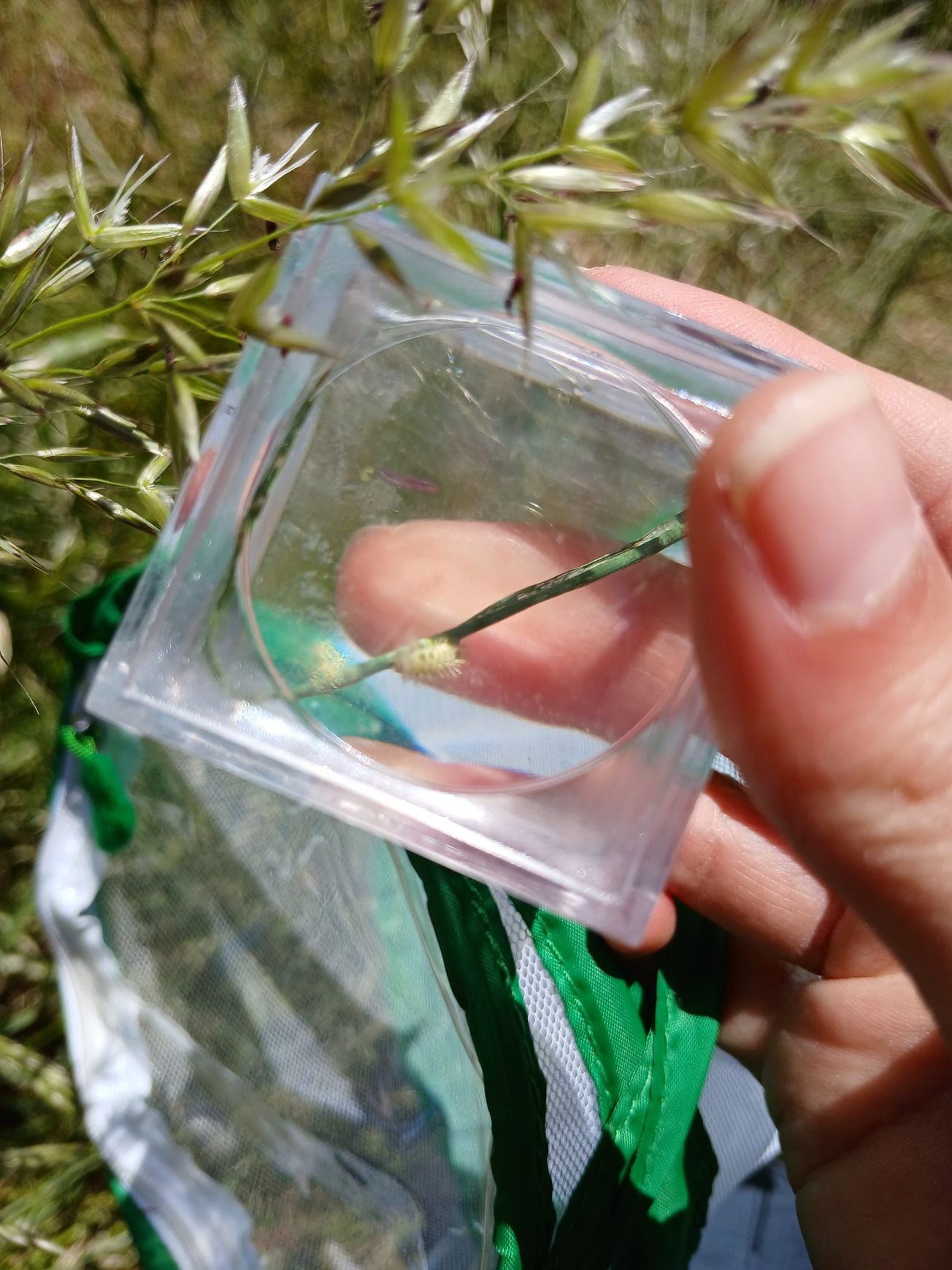
A few minutes later I meet Eric, who’s just parked up his bike and walked up Brandon Hill. Equipped with a wildlife net, insect capture pots and identification leaflets, he is undoubtably the expert for leading today’s bioblitz!
A bioblitz, contrary to its destructive name, is a communal effort to record as many species as possible within a dedicated location. It’s usually a race against the clock but today’s event is done at our own pace.
This sort of work is, dare I pun, a walk in the park for Eric, who has vast experience as a Community Ecologist. He has a degree in Environmental Science from Plymouth University, experience as a park ranger in East Devon and worked for organisations like the National Trust and Avon Wildlife Trust.
Alongside leading events like this bioblitz Eric is part of a community-run project called Really Wild Lockleaze which is improving green spaces and marginal lands in the neighbourhood for local residents to enjoy.
He explains the impact of the project. Through door-knocking, surveys and liaising with Bristol City Council Really Wild Lockleaze has brought nature closer to residents and improved their health and wellbeing.
Eric stresses the importance of striking a balance when working with spaces so close to people’s homes- including minding football pitches, creating borders and ensuring accessibility. The idea is to make the changes to green spaces intentional.
Recently the Really Wild team have used turf cutters in targeted ways to regenerate grassy areas. The earth left behind is a great place to plant wildflower seed while the newly carved-up turf is placed in a new area. It's like a skin graft!
Eric recommends using iNaturalist- an app that uses AI to identify species of insects and plants you’ve taken pictures of. It also has a feature where you can share the location of where you found the species so others can find it too.
A black Labrador bounds up to me, stick-in-mouth, and smears my trousers in mud. Maybe not one to log on iNaturalist, but recorded nonetheless.
Eric explains that so much wildlife can be found in one square metre of ground. He is optimistic about the health of Bristol's green spaces and says we need an abundance of common species like blue tits and bees which then encourage rarer species to settle and thrive.
More participants gather and the bioblitz begins. We head to an area of long grass armed with pots and nets. Some participants quickly spot lurking critters like ladybirds and grasshoppers. I find an ant hill. I do not to take this as a slight of nature against me. All discoveries are welcome here.
 Lucie Weston
 Grace Golby
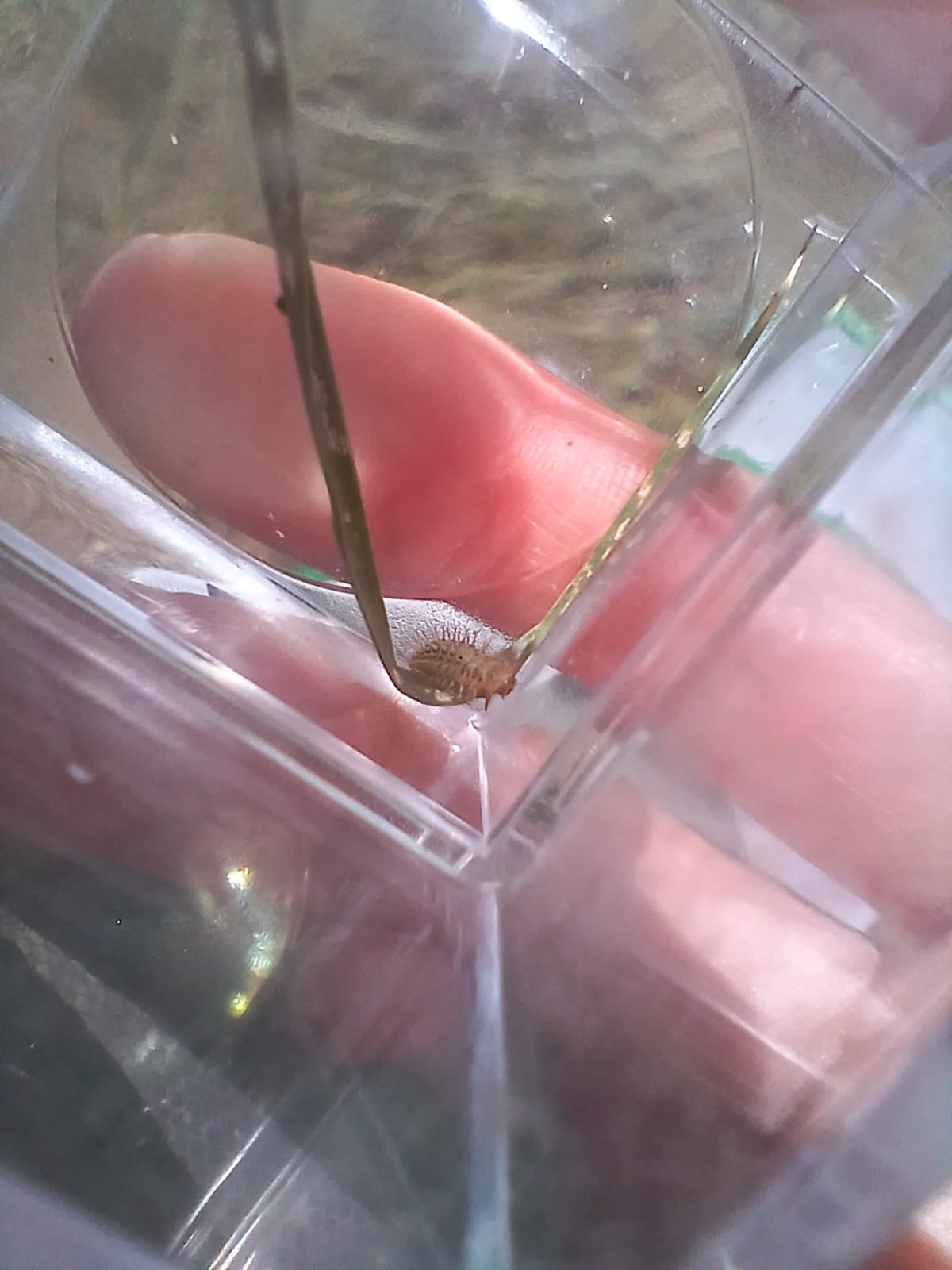
My patience is rewarded with capturing... I'm not sure what it is at first. A caterpillar is my first guess. Using iNaturalist and Eric's expertise we identify it as a 24-spot ladybird larva!
Think you know your ladybird larva from you caterpillar? Find out for yourself. Eric’s next bioblitz is in Stoke Park on 12th June. More free events like this are on until the 14th June. Visit the Festival of Nature 2026 events page for more details.
Featured image: 24-spot ladybird larva | Epigram / Hannah Corcoran
Which Festival of Nature event will you attend?