By Hannah Corcoran, Features Subeditor
In between pulling my hair out over the MHRA referencing system, I step away from my laptop, hop on the bus, and walk across the Downs towards Bristol's Botanic Garden.
The Botanic Garden, previously based near Avon Gorge, has called Stoke Bishop home for over twenty years. It is a garden and research hub for staff, students, and members of the public alike to enjoy.
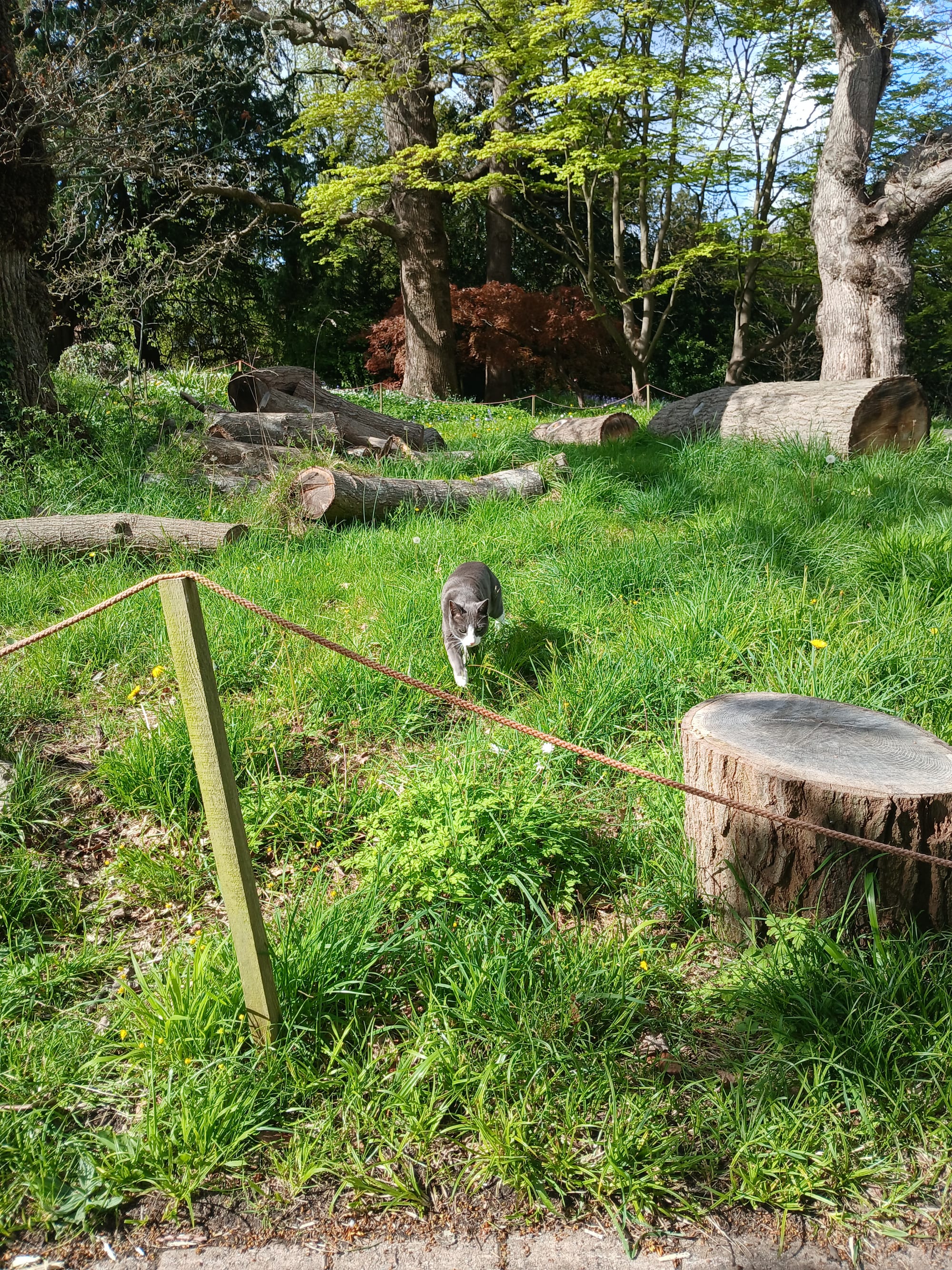
It's a dry and sunny but blustery day. I show my student ID at the reception lodge for free entry and walk into the garden. I reach the Chinese herbal garden and wait to meet Andy who is Bristol’s Senior Botanical Horticulturalist. I'm not the only one loitering: a silky grey cat, who I later learn is called Cooper, emerges from the wildflower meadow, looks me up and down, then slinks off.
A few minutes later and Andy greets me. As he introduces me to the history of the garden, we are interrupted by a raven flying overhead. Andy immediately identifies it by its croaky call. Or, for those of us who are bird-detecting novices, the raven shares the same raspy voice as the chain-smoking Bristol student.
The raven appears to be following a bird of prey… which turns out to be an osprey! They are a rare sight but fly over Bristol on their way north at this time of year.
After that soaring performance, our attention is brought back to the ground where Andy points out a series of willow sculptures. Each one depicts different pollinators: birds, flowers, wind, bees. Behind one of the sculptures is a magnolia tree. Andy tells me that magnolias were one of the first flowers to exist in evolutionary history, and before bees existed they were pollinated by beetles.
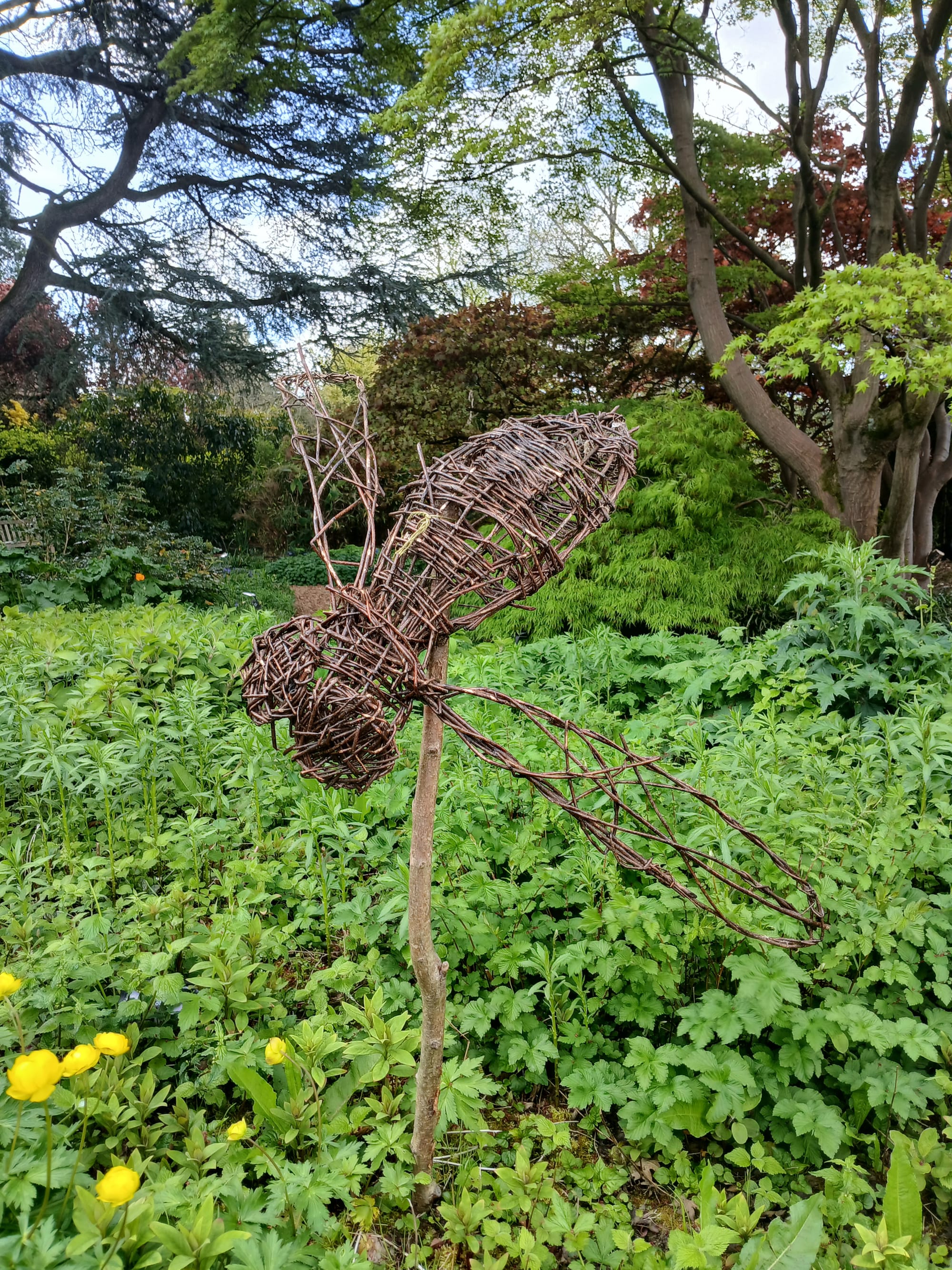
To our backs is a pond bordered with rocky mounds that sprout local floral and fauna including Bristol whitebeam, found exclusively as Avon Gorge, and Bristol onion (new Monster Munch flavour, anyone?).
Across the road at Churchill Hall is an ancient oak tree- four hundred years old and somehow still alive with a giant hole in its trunk. Oaks aren’t the only relics among the trees at the Botanic Garden. A redwood, not unlike a Calippo in shape, stands at the back of a wildflower meadow.
The path slopes downwards to the prehistoric section of the garden, where it’s easy to mistake the trunks of fern trees for replicas of Chewbacca. Just beyond are two monkey puzzle trees which are closely guarded by a resident rusty dinosaur.
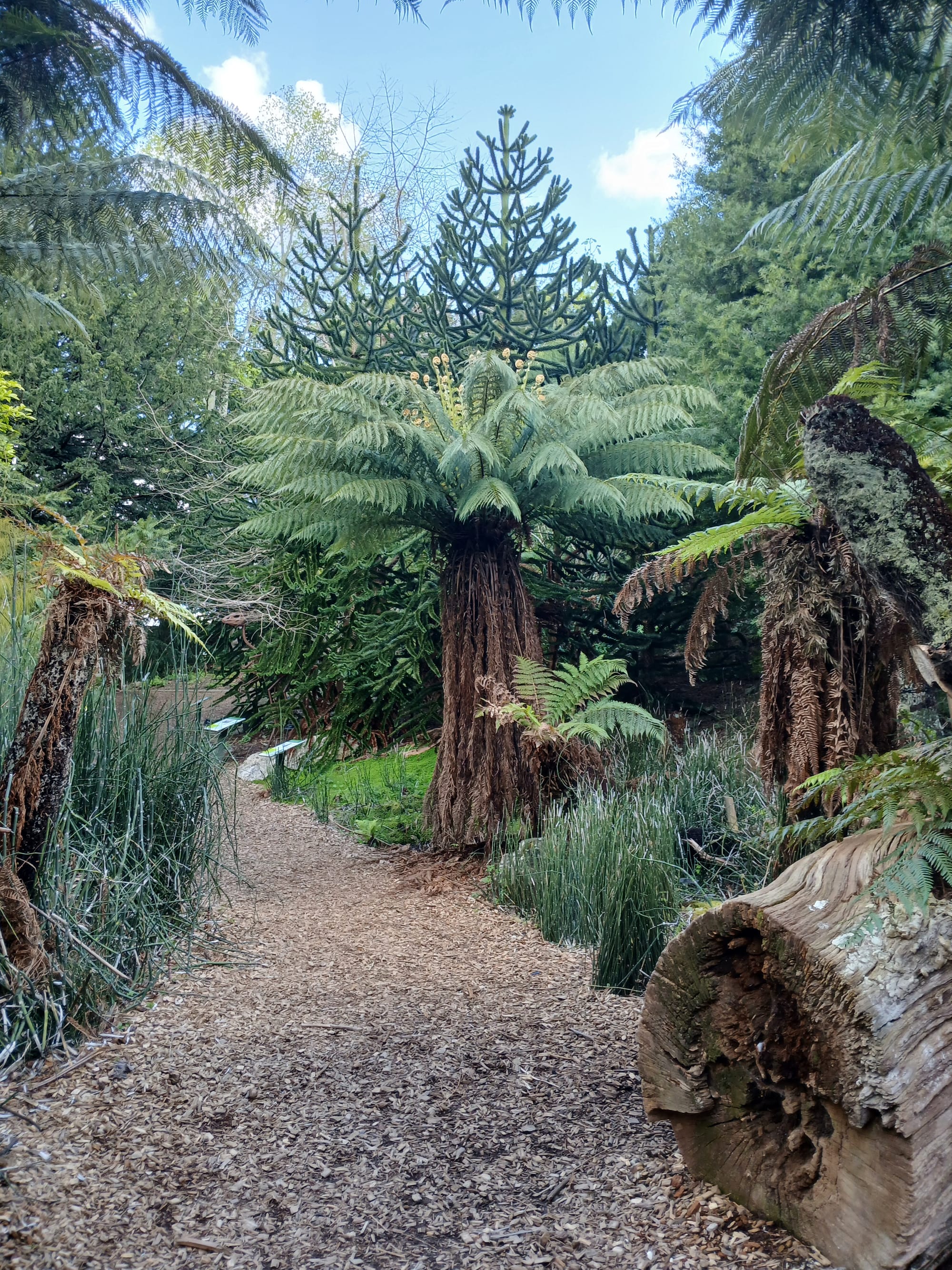
Winding left, we reach the herbal garden. This is a living pharmacy where plants used in traditional Chinese medicine are cultivated. Andy tells me he is forever learning new things about the plants’ properties, especially from international students who find pockets of home in the garden.
At the centre of the site is Holmes Hall which has been a student residence for nearly eighty years and home to the Botanic Garden for over twenty of those. Andy says returning alumni are amazed to find what used to be a croquet lawn turned into a Mediterranean garden, where I half expect a lizard to pop out from the undergrowth.
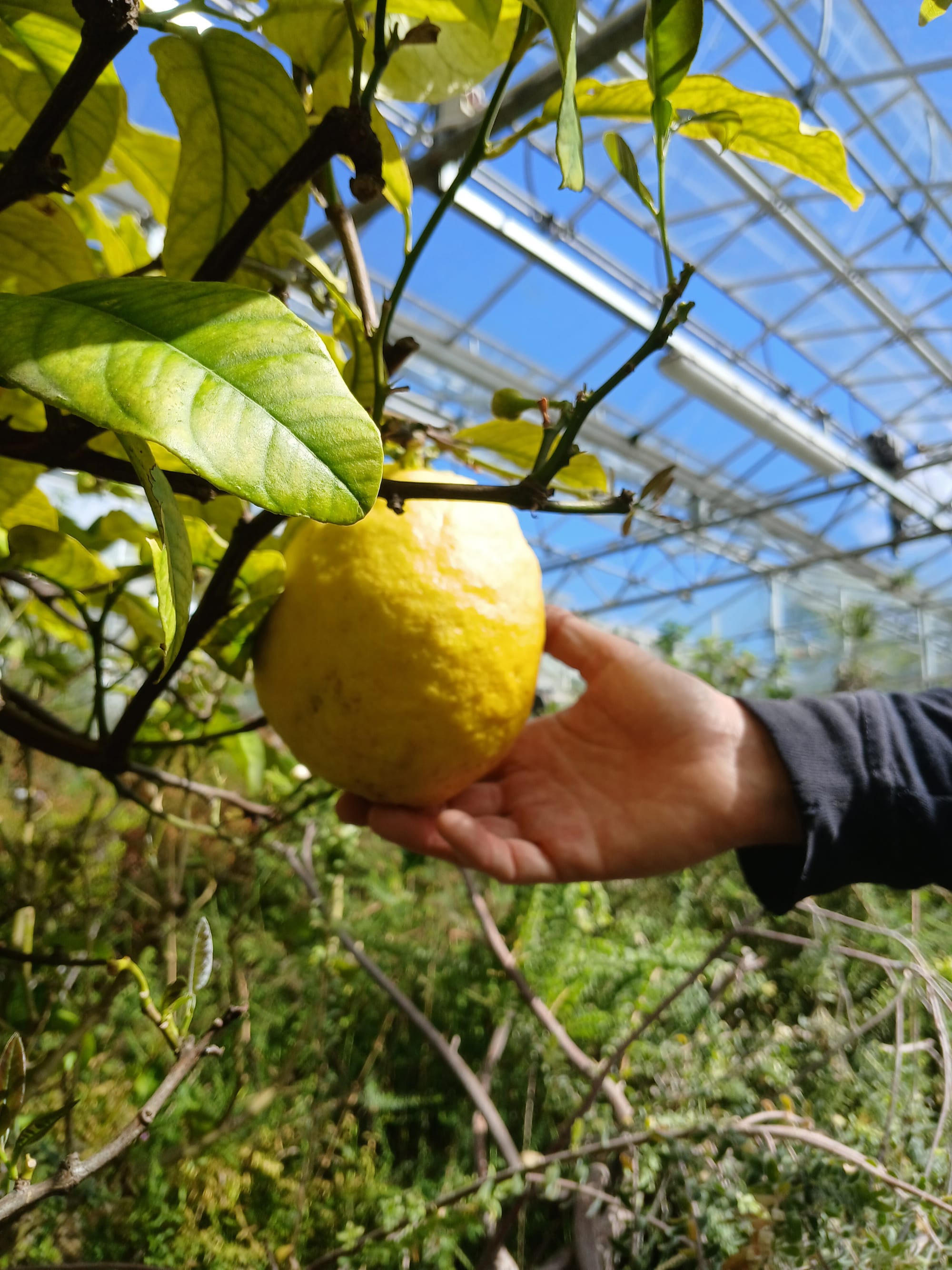
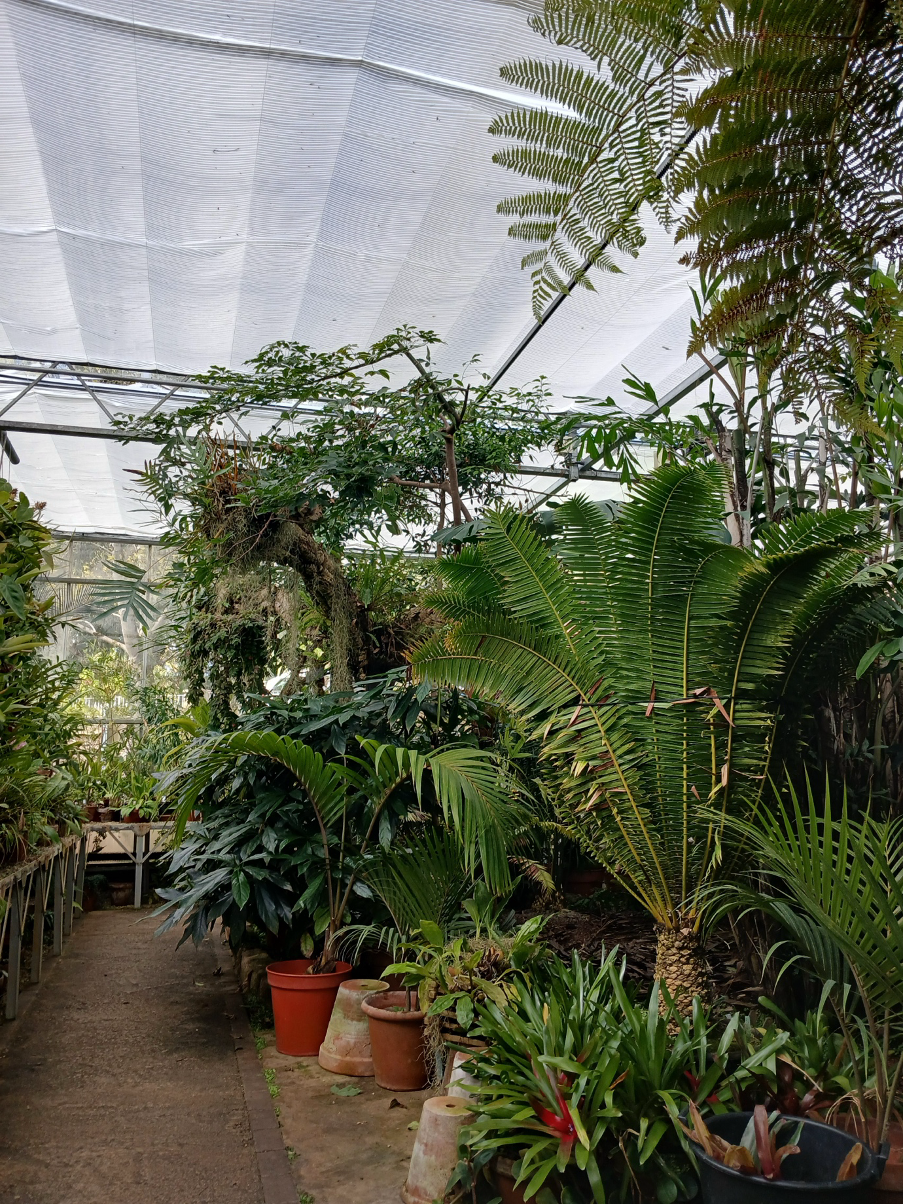
Walking around the back of the house and down a level, we reach the greenhouses. The first room is semi-arid. As you walk in, you are greeted with a citrus plant that bears lemons- each one the size of a toddler's head (see how it compares with Andy’s hand). Meanwhile, at the other end of the room, a bird of paradise sports a mohawk.
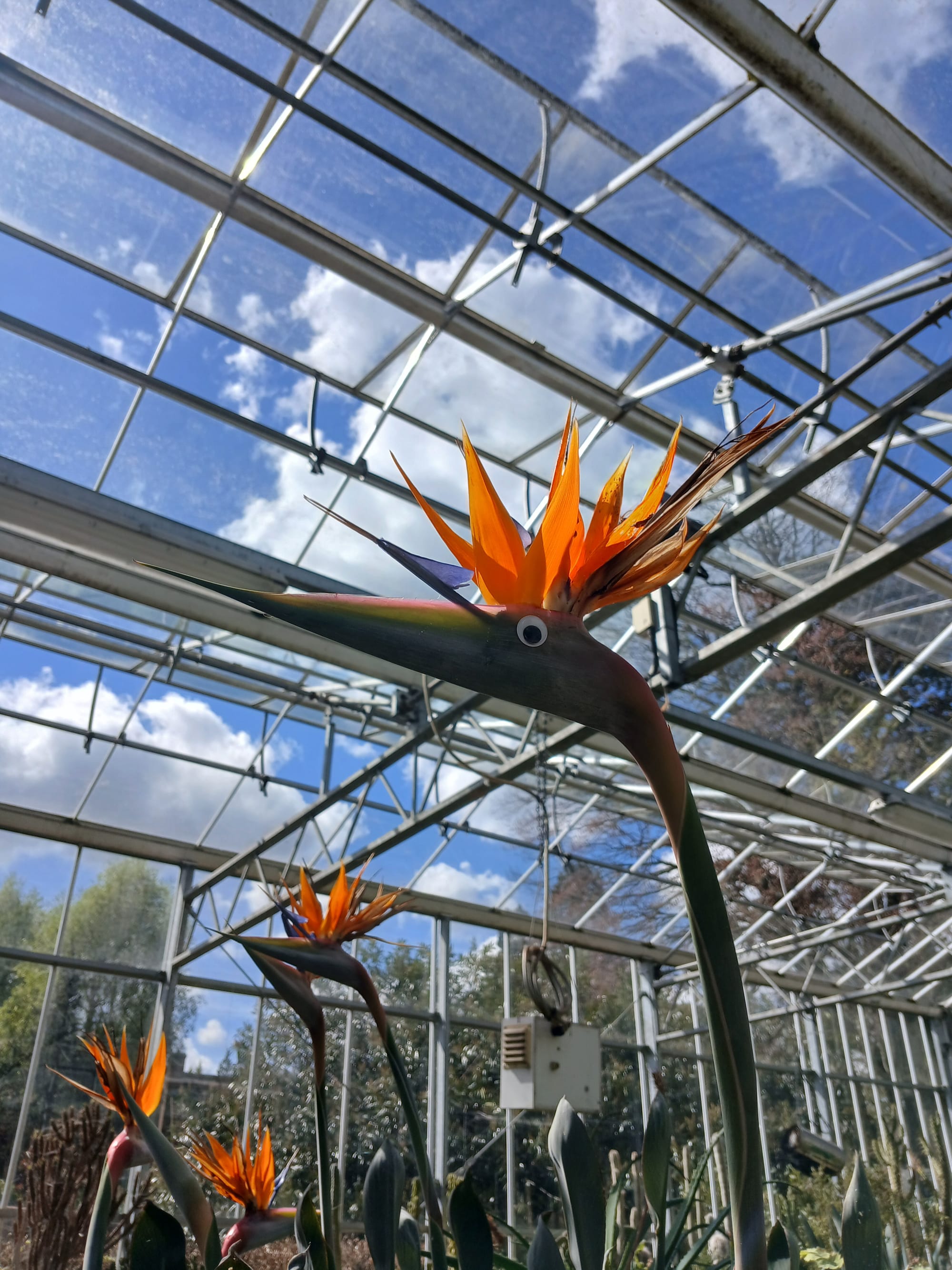
The adjoining greenhouse is a tropical zone- the humidity hits as soon as you walk into this mesmerising and dense micro jungle. Just beyond is one final room that’s currently closed to the public but will hopefully be open in the next academic year. A tantalising glimpse for now.
 Beth Robinson
 Luke Beaumont
After stepping out of the greenhouse I thank and wave goodbye to Andy and head to Chandos Deli for a cold drink.
As I take the bus back to campus, clearly in need of lunch, I’m eager to shift the feeling of hunger, but not the peace of mind visiting the Botanic Garden has instilled.
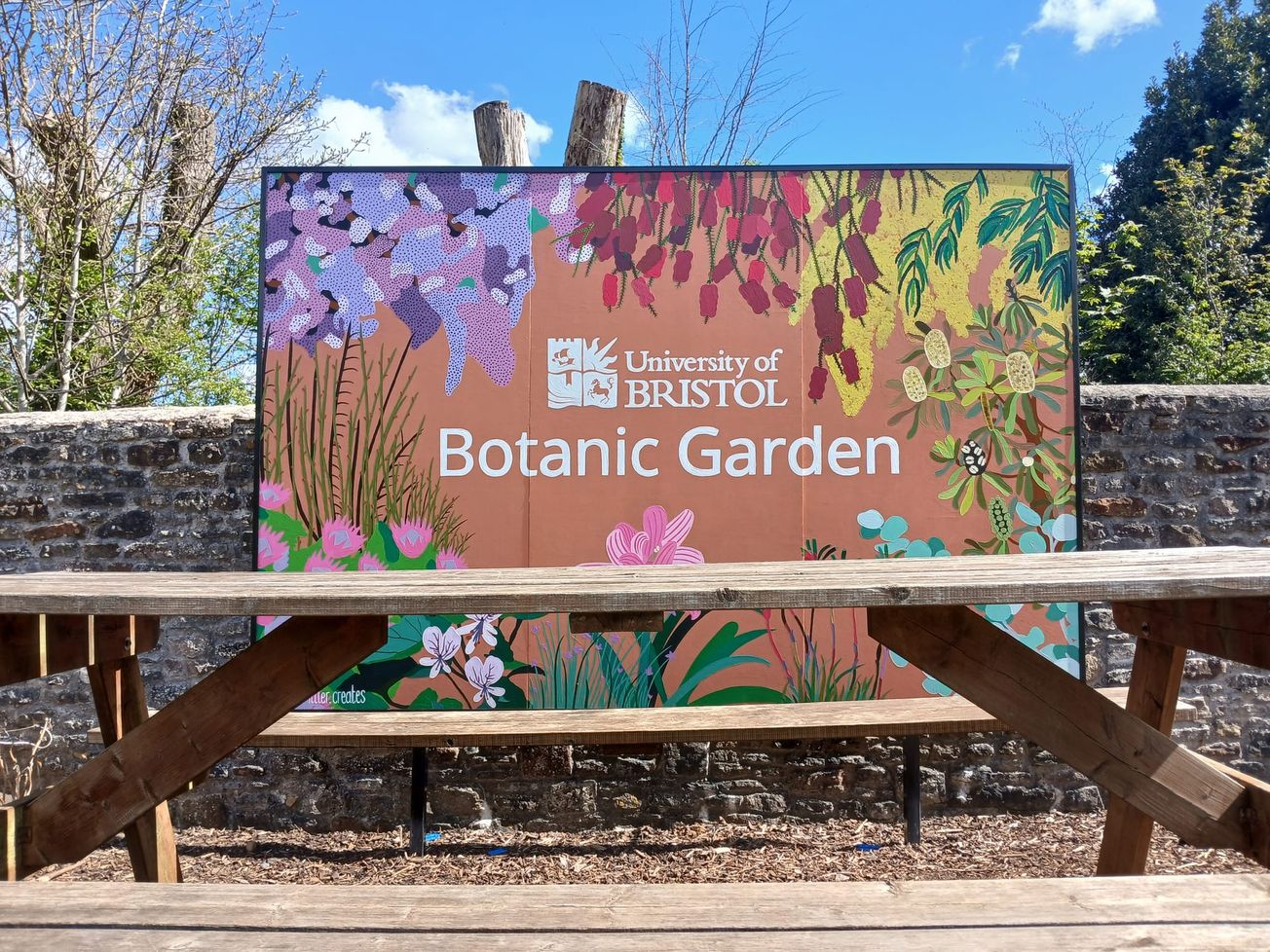
Featured image: Botanic Garden sign | Epigram / Hannah Corcoran
Visiting information can be found here. University of Bristol students can visit for free if they show their UCard at reception.
When will you visit the Botanic Garden?