By Leo Sefton, Arts Editor
‘This is a true story. The events depicted in this film took place in Minnesota in 1987. At the survivors' request, the names have been changed. Out of respect for the dead, the rest has been told exactly as it occurred.’
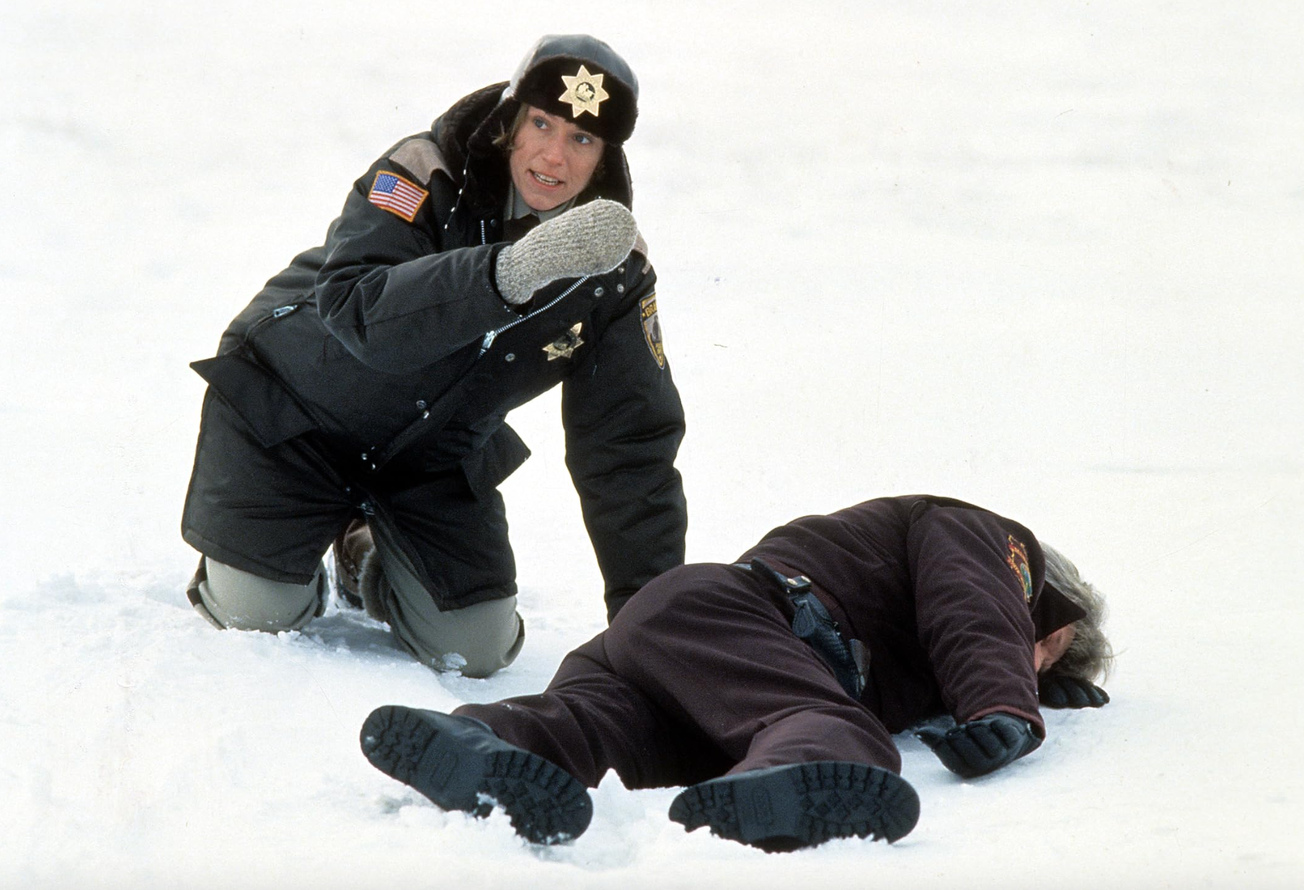
Thirty years ago, the Coen brothers’ hit crime thriller Fargo (1996) opened with this line, setting the scene for a story and mythology which blurs the lines of the real and the farfetched. At the time of its release, it was groundbreaking. Made on a relatively modest budget of $7 million, it went on to gross over $60 million and won numerous awards, including two Oscars and three Golden Globes. Narratively, it was on relatively unfamiliar ground too, with its emphasis on ‘normal’ characters rather than scheming villainous masterminds and oversimplified victims. It’s no wonder why Fargo has had such a lasting effect on both film and television in the thirty years since its release.
Hapless car salesman Jerry Lundegaard (William H. Macy) hires two untrustworthy hitmen (Steve Buscemi and Peter Stormare) to kidnap his wife so that he can get the ransom money from his father-in-law to pay off his debts. However, when the kidnapping plan goes horribly wrong, pregnant police chief Marge Gunderson (Frances McDormand) sets off on their trail of bloodshed, misplaced number plates and Minnesotan sex workers in order to jail them for good. What starts off as a fairly trivial mishap slowly extends into a much deeper exploration of greed and morality with the help of the Coens' impeccable screenplay, the deep bench of terrific performances and Roger Deakins' gorgeous cinematography.
The most direct manifestation of Fargo’s influence is the TV adaptation of the same name (2014-2023) helmed by Noah Hawley, who also created Legion (2017-2019) and Alien: Earth (2025). While a sixth season has been planned out, it is still in the early stages of development due to Hawley’s busy schedule. The TV adaptation, just like the film, has gained a strong cult following and is praised for its anthology format, which encourages fresh narrative and visual creativity with every distinct season.
While the series earned critical acclaim from its very first episode, it has only recently reached a peak of popularity with its fifth season. In some ways, this underlines a quiet subversion of the television format just as the film shied away from blockbuster popularity by choosing a more idiosyncratic path. The concept of ‘Minnesota nice’, popularised by the original film, is on full display in the small screen adaptation, where mild-mannered façades continue to hide something darker within.
Of course, Fargo’s influence runs deeper than direct adaptation. Many big screen crime thrillers have taken cues from the Coens' classic, including Sam Raimi’s acclaimed neo-noir A Simple Plan (1998). The film stars, among others, Billy Bob Thornton, who would later go on to play the iconic villain of the Fargo's first season - Lorne Malvo. The film borrows the tone and aesthetic of Fargo and it could be said that this lent it some of its critical success with Thornton earning a Best Supporting Actor nomination.
In terms of television, perhaps the most notable show to be influenced by Fargo is Breaking Bad (2008-2013). Walter White (Bryan Cranston) almost perfectly mirrors Lundegaard – he is an ordinary man who resorts to crime to reassert power over his life. Breaking Bad creator Vince Gilligan has also cited Fargo as a key influence on the tone and pacing of his iconic series. Looking to the future, it seems Fargo will continue to have a huge effect on TV and film culture. After the increased viewership of the TV show's last season, it looks like the show has earned a more prominent place in the ranks of streaming television. This in itself is sure to carry forward Fargo’s original appeal as other series look to replicate its popularity.
 Alfie Coan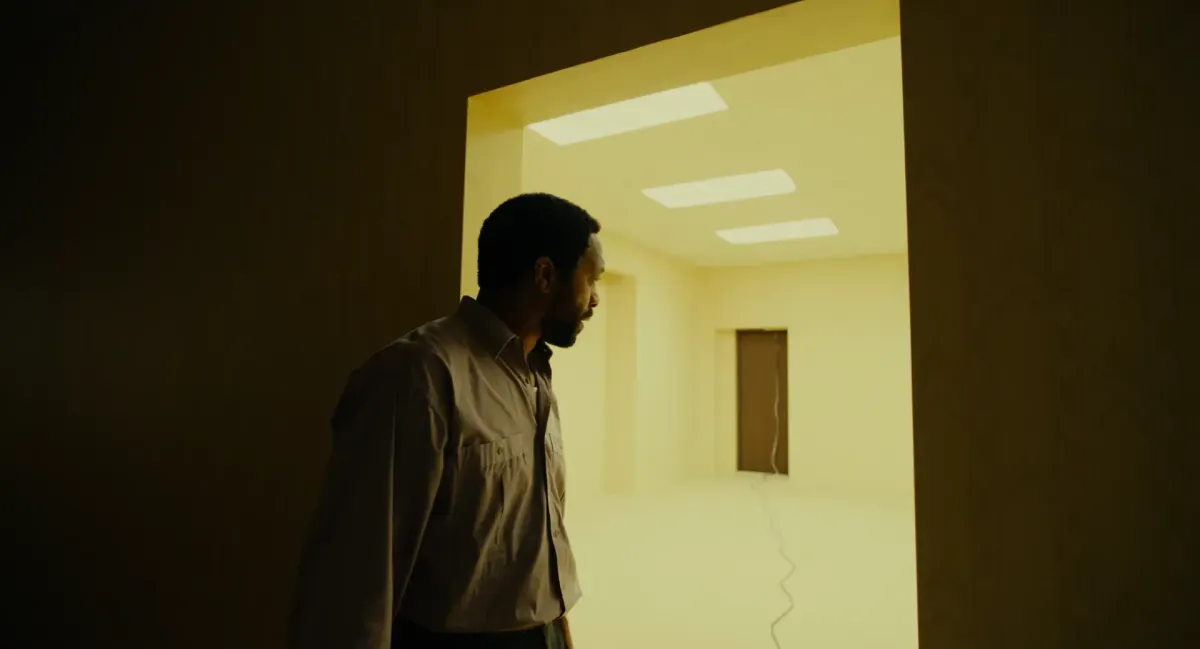
In terms of film, Ben Wheatley’s Minnesota-set action romp Normal (2025), released in the UK earlier this year to positive reviews, is perhaps the most direct spiritual successor to Fargo stylistically and narratively, even if it trades the slow burn mystery for full-on action in a similar setting. It seems therefore that Fargo continues to be a gold standard for crime thrillers and the market for similar films is far from slowing down. It is almost certain that over the next few years we will see many more Fargo-esque works coming out of Hollywood.
All in all, it’s clear that Fargo has had a deep impact on the world of film and television in the thirty years since its release. Its Midwest setting, quirky characters and unique narrative have inspired legions of filmmakers and television producers. In answer to the question of whether this will continue for another thirty years, I’ll borrow a phrase from Gunderson herself: ‘Oh, you betcha.’
Featured image: IMDb / Fargo
Do you agree that Fargo has earned its status as an enduring crime classic?