By Jed Dixon, Epitome Curator
When you think of organised crime in Latin America, images of El Chapo or Escobar will likely come to mind. As Bonello highlighted, the outward image and mystique of this sphere is entirely dominated by a set of strongmen figureheads and macho ideals, with the only famous women in this space tending to be wives or moles.
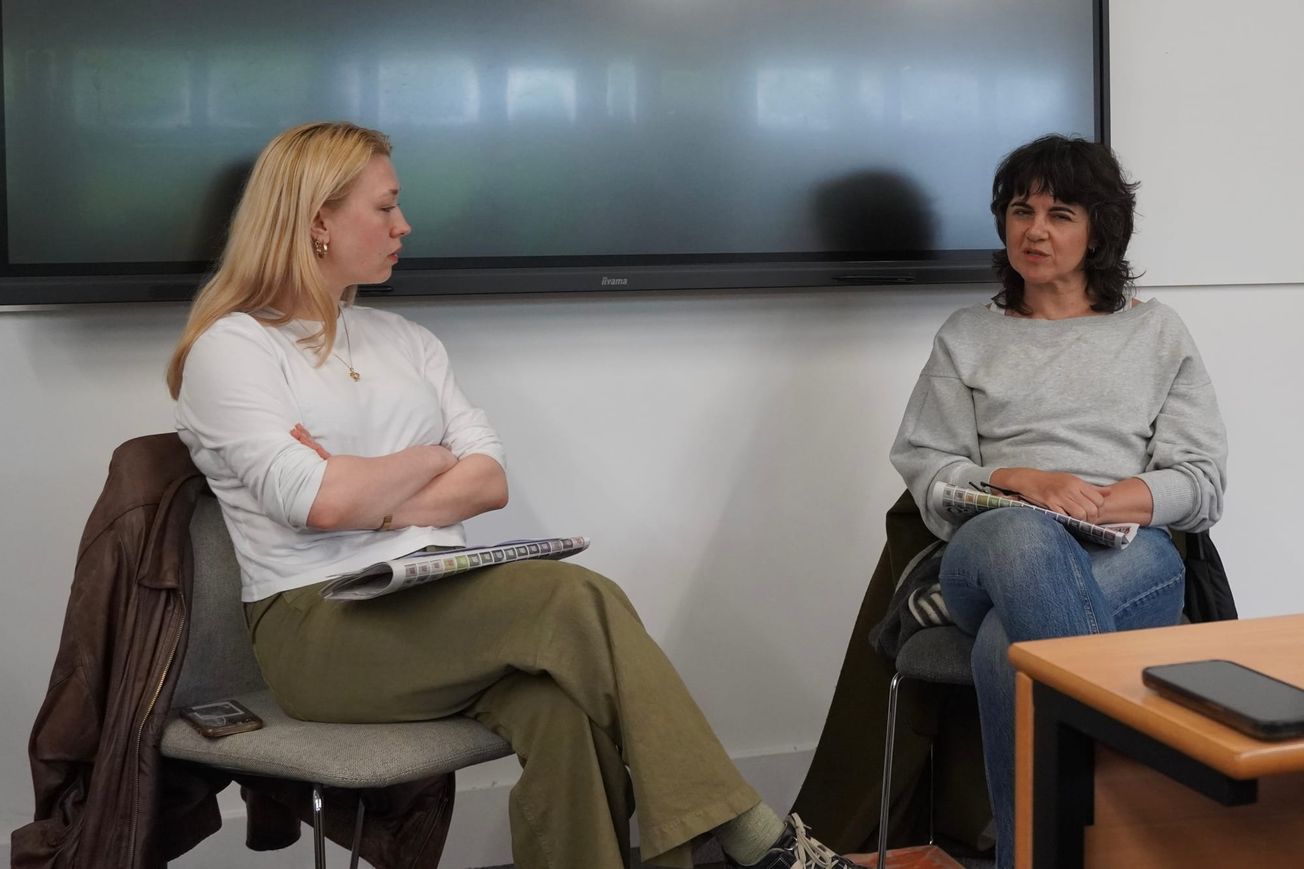
The visible gender split goes beyond just the world of crime, extending itself to the reporters that cover it. This is the world Deborah Bonello presents us with, the one that she entered and has helped transform. Her belief that ‘narrative is everything’ in modern journalism has clearly been practiced throughout her career. Bonello's years of reporting, and her recently published book Narcas, have focused on shifting the long-held narratives surrounding the role of women in the drug trade.
Entry into this reporting scene was far from easy — Bonello began as a freelance reporter, slowly building up the reputation for her multimedia skills to land work with the BBC, the FT, Al Jazeera, and far beyond. She highlighted the importance of having a wide skillset, now more than ever:
‘Writing is not just about narrative non-fiction; storytelling in the world today is moving towards this incredibly diverse set of skills that you have to have — from the way we use social media to tell stories, but also the way AI is changing the way we tell stories.’
The rise of AI and social media has meant our consumption of news is longer simply reflected by website traffic, and a certain pragmatism is now necessary to keep afloat. Bonello’s advice for adapting to this was to stay ‘unattached from this old-school romantic idea about writing’ if you want to make a living. Of course, there is still very much a place for this kind of writing, which she maintains in her work as an author, but practicality in the workplace is a different matter.
This results-centred approach is crucial to her current work at InSight Crime — limited funding since Trump's gutting of USAID (United States Agency for International Development) means strictly resource-led priorities. A day in the life for Bonello involves working out what her personnel are best suited to cover, identifying their weaknesses, and whether the results will be worth the input. Perhaps a sensible, realistic approach like this could be what you need to finally get your essays over the line.
Bonello's pragmatic words of wisdom didn't stop there, as she advised the room that, ‘you should be honest with yourself from the beginning about what you are doing.’ She herself is remarkably upfront about what attracted her to the scene.
‘I was an adrenaline junkie, I was obsessed with Latin America, I was always pathologically curious, I had and still have an ego — I’ve become better at controlling it, but it is a massive buzz to see your name in print on the front of a newspaper.’
As many of us are aware, being a reporter won't make you millions, but Bonello sees this as no reason to shy away from any passion you have. She thinks you should ‘do it because it’s important to you, it motivates you, someone's paying you to do it, and you enjoy telling those stories.’ For those convinced by this, she offered a few key pieces of advice. First is that, like she has been throughout her career, you should be able to report as a ‘one man band.’
Bonello also shared that as an aspiring journalist, you should aim to feel that you can comfortably ‘write an article, you can put together a podcast, you can take decent photos, and you know how to write for social media.’ For those of you who want develop these skills, fear not, for a diverse and adaptable set of roles will soon be open to you in the shape of Epigram's 2026/27 editorial team. Alongside flexibility, Bonello also highlighted the importance of specialisation and the enjoyment she found reporting on stories that nobody else did.
General reporting is a skill itself, but having a niche provides you a topic to become an expert on, which opens the opportunity to write longform or independent pieces, and offers a pivot to becoming an author. If this is the path you want to take, Bonello heavily recommended that you stay on top of your resources, claiming that ‘75 per cent of the work is being organised.’
Finally, she encouraged us to not fear the concept of subjectivity in our work, ‘there are things that tether us like gender, race, and nationality, but at the end of the day everyone's experience is utterly different to everybody else's.’ Bonello's acknowledgement of her own subjective experience of life is what allowed her to reveal hidden stories of women in the drugs trade — a clear example that all of us can bring something different to long established narratives by embracing how the world has shaped us.
 Emma Griffiths
Bonello closed her talk with the poignant remark that ‘storytelling is what distinguishes us from animals;’ no matter how the storytelling process has changed. In a fast-moving media landscape now shaped by narrative more than fact, she reminded us of the eternal value of telling the tales of those who cannot themselves, and the practical importance of delivering them in a way suited to the audience.
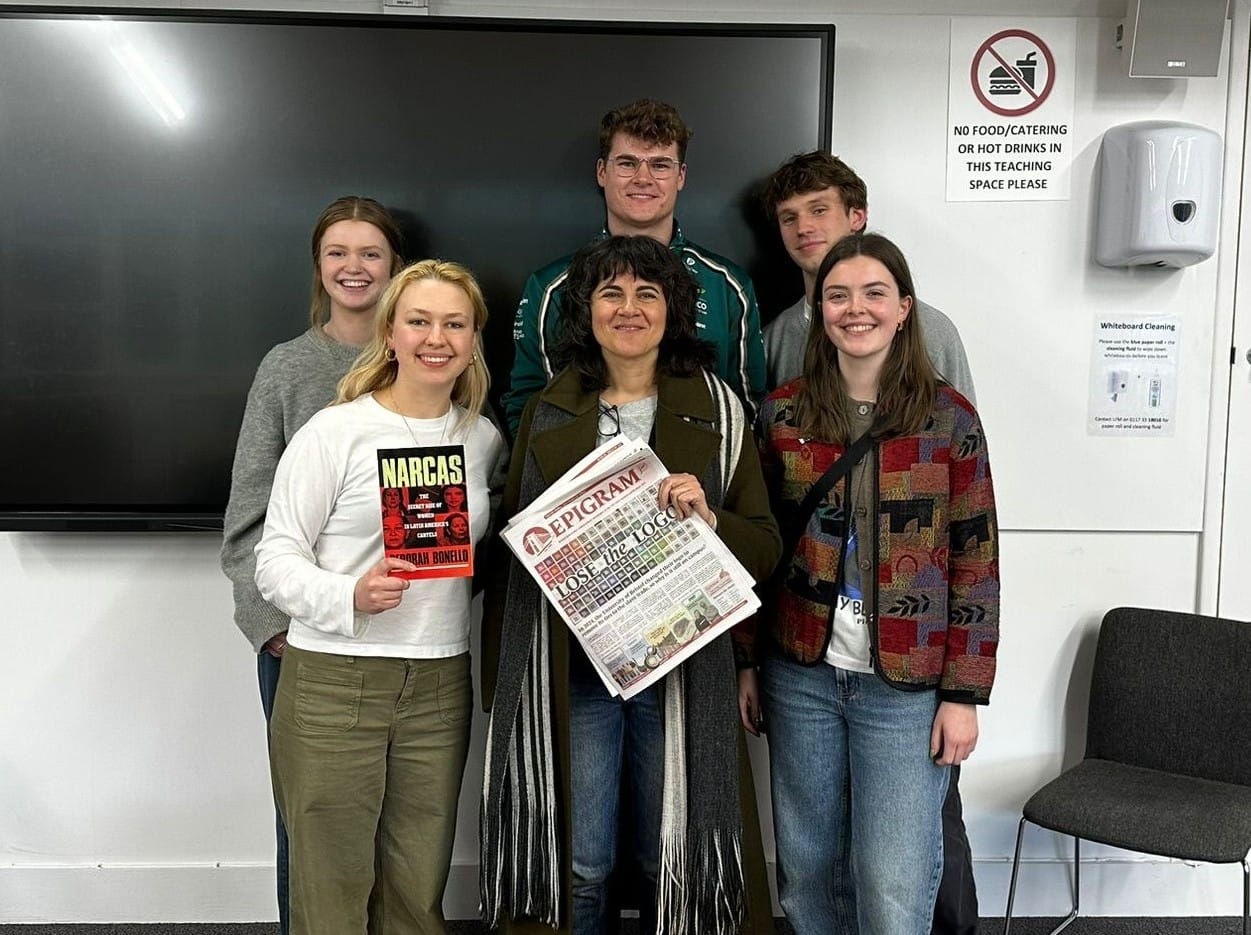
Epigram are extremely thankful to Deborah Bonello for sharing her career story and pragmatic advice with us.
Who would you like to speak to Epigram next?
Featured image: Epigram / Eden Chambers