
By Zoe Lewis, Second Year, English Literature
If the word ‘Traitors’ doesn’t immediately bring to mind Claudia Winkleman, a Castle in the Scottish Highlands or Alan Carr, then the most talked-about British show on television, which had 14.9 million people glued to their screens in 2025, has somehow escaped your attention.
For anyone who has managed to avoid the hit BBC show, The Traitors sees a group of contestants – all of whom claim to be Faithful – try to work out who among them have been secretly assigned the role of Traitor. Each day, the contestants participate in challenges to build up the prize pot, which remains to be won at the end of the show, and each night, a Faithful will either be murdered or recruited by the Traitors.
Whilst the Traitors are tasked with concealing their identity, the Faithfuls are tasked with uncovering their disguise. In other words, to win the game, you must either be good at telling lies or detecting them.
So what happens in our brains when we lie? And why are some brains better at lying than others?
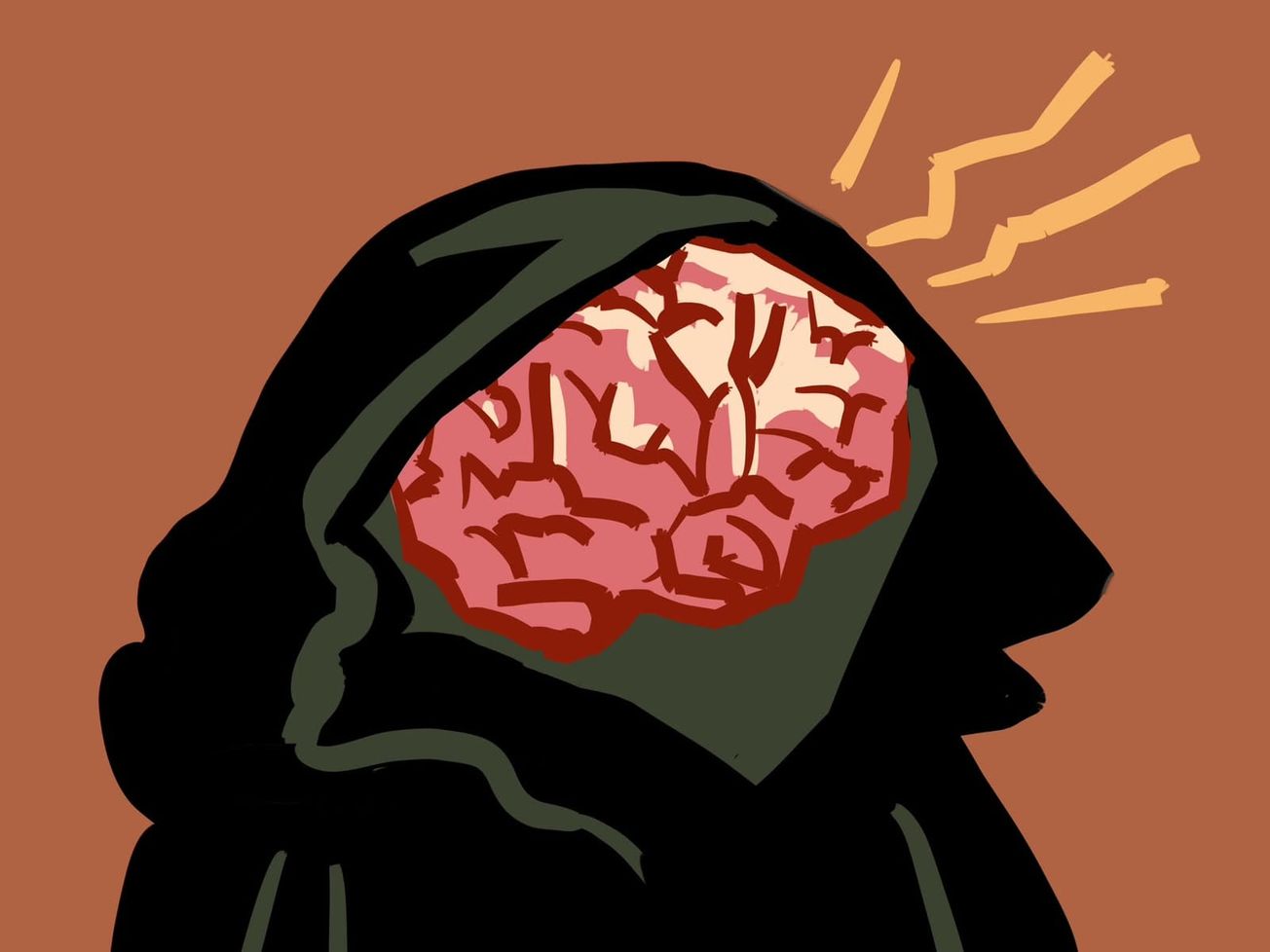
The difference that occurs in our brains when we lie or tell the truth is not as simple as the flick of a switch. The process of lying involves a complex sequence of neural activity across multiple regions in the brain. Scientists using fMRI (functional magnetic resonance imaging) have been able to identify the areas of the brain that become more activated when a subject lies, such as the anterior cingulate cortex, dorsolateral prefrontal cortex (DLPC), and parietal cortex. Essentially, the regions of the brain responsible for planning, self-monitoring, and managing conflicting information all work harder when a person is lying.
According to Dr Sydney Ceruto, extra cognitive effort is required to lie than when telling the truth because the brain needs to form the motivated reasoning behind the lies, e.g. the lies the brain tells itself. When telling the truth, the brain is simply recovering a memory or an opinion, but when you lie, your brain has to simultaneously suppress the truth, devise a believable narrative, monitor the listener's response to ensure that the lie is believed, and confirm that the fake narrative is internally consistent. Like when you tell your flatmate, 'No I didn't use your washing up liquid, I think I borrowed the one next to it', your brain is working over-time to convince itself of the lie as well as your flatmate.

What makes Traitors such a gripping show is the frequency at which the Traitors are forced to tell bare-faced lies under pressure to defend their fake roles as Faithfuls. During these nail-bitingly tense exchanges that make you want to crawl behind the sofa, the Traitor’s brain is hard at work: The Prefrontal Cortex (the area of the brain responsible for executive functions including decision-making, planning, and the suppression of prepotent responses) is activated. This region of the brain is tasked with suppressing the truthful response, devising the lie, checking the lie for internal consistency and then predicting the listener's response. In particular, the DLPC is vital in keeping the lie in mind whilst also making sure it is valid and believable, which was demonstrated in Christ et al.'s (2009) meta-analysis of the Cerebral Cortex.
As demonstrated by Langleben's 2002 fMRI study, the Anterior Cingulate Cortex (ACC), the brain's conflict monitoring system, is also activated during deception. The ACC has to contemplate discrepancies between the lie being relayed and what is known to be true, signalling to the prefrontal cortex to exert additional control. This extra effort has further consequences down the line, as it creates the ‘psychological signatures’, in other words, the visible signs of lying, that can be picked up by a polygraph machine, a somewhat inaccurate machine traditionally used to tell if someone is lying.
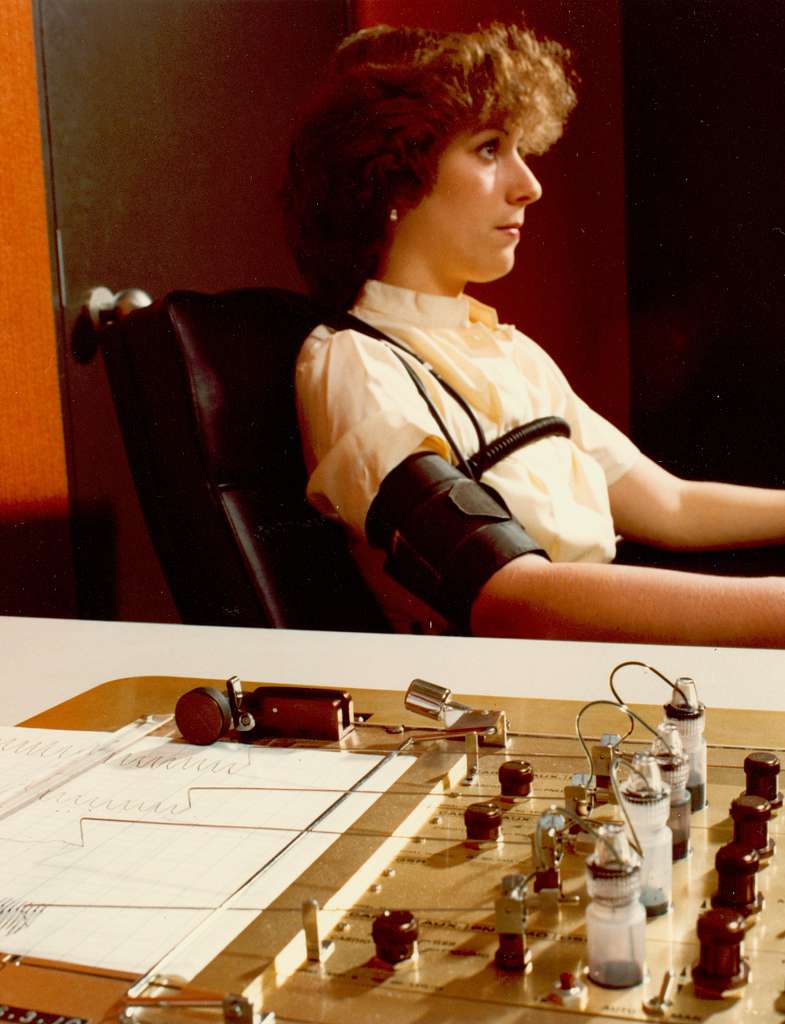
The amygdala, a key component of the limbic system that controls our emotions and behaviours, is also activated. This region of the brain calculates the potential social risk of the lie and triggers the autonomic nervous system to generate an equivalent guilt response. For example, raised heart rate, increased blood pressure, micro-expressions of stress, and activated sweat glands triggered by increased cortisol. It is these signs of stress which a traditional polygraph might be able to detect.
So is it possible to use these emotional response symptoms as signs to spot lies even from your own flatmates? Well...not entirely: different brains may be more or less suited to lying, which is one reason why polygraph machines are inaccurate and why some Traitors are more believable liars than others, as their brains generate less of an emotional response to lying than others. For example, research shows that the amygdala's response to dishonesty lessens with frequency, meaning that the more lies you tell, the less visible emotional signs of lying you will show. In other words, the brain can become desensitised to lying. Starting to feel serious doubts about flatmates you've made at uni? Don't worry, the chances that your flatmates are all lying to you constantly is extremely unlikely.
However, if your flatmates do happen to be compulsive liars, the brains of habitual liars have been shown to be structurally different, showing a roughly 22-26% increase in prefrontal white matter compared to non-habitual liars. A subsequent study showed that the extra white matter was stored in the orbitofrontal, middle, and inferior frontal gyri and that the increase of white matter could range from 23-26%. The researchers also theorised that having more of this white matter concentrated in these areas may cause some people to be predisposed to pathological lying because less cognitive effort is needed for them to lie due to the extra connectivity.
Furthermore, one stress response caused by lying is an increase in levels of adrenocorticotropic hormone, which is a hormone responsible for signalling cortisol release, which can cause higher skin conductance, causing the sweat glands to become activated. This symptom clearly affected fan-favourite traitor, Alan Carr, whose forehead glistened during every round-table of the 2025 celebrity spin-off show. However, people with more manipulative personalities, yes, like your ex, may even experience a drop in cortisol, rather than a rise. These personalities may therefore have less of a stress response to lying, which makes their lies more imperceptible.
 Keira Guy

In conclusion, playing the role of a Traitor takes more cognitive effort due the fact they are required to tell lies in order to stay undercover. These lies can cause physiological changes in their body such as increased heart rate, blood pressure or sweating. However the emotional response to lying varies from person to person in symptoms and intensity which is why polygraph testing is inaccurate. Some research even shows that some brains are better adapted to lying than others. Who knows… maybe you would make a brilliant Traitor, or perhaps your lying skills are more similar to Richard E Grant’s.
Feature Illustration: Epigram / Romina Trevino Santa Cruz
Do you think Wills Memorial Building will be the next Traitors Castle?