By Grace Rose, Community Subeditor
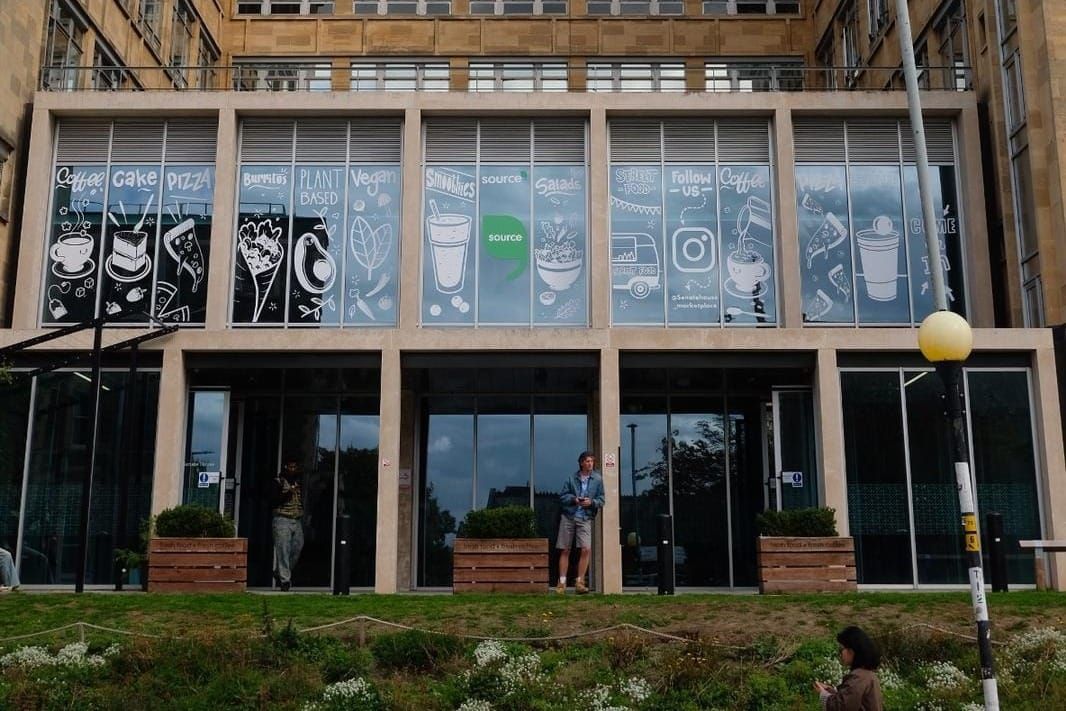
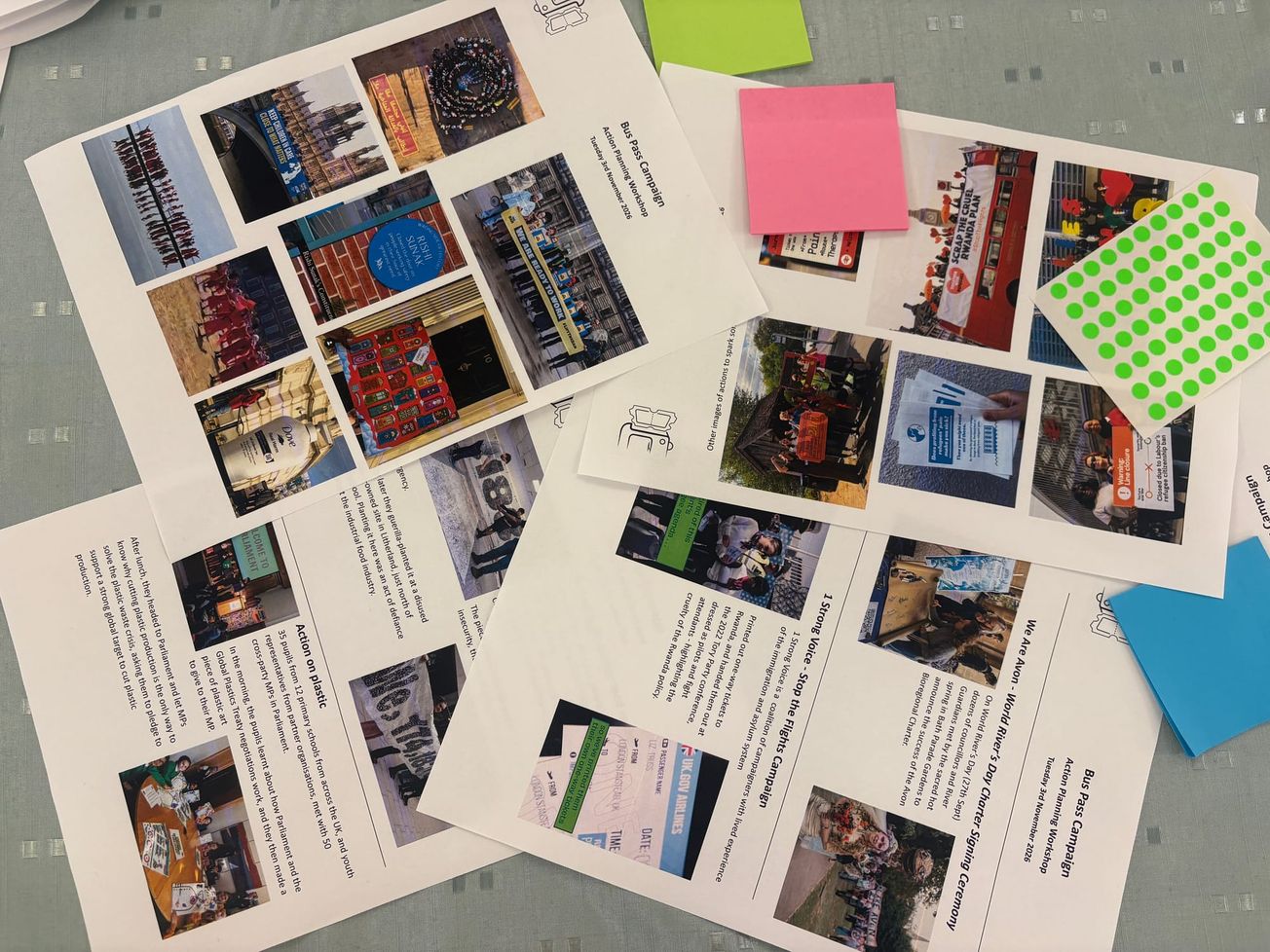
On Tuesday 3rd November, I attended an action meeting for the ongoing Free Bus Pass Campaign at Broadmead's Sparks Bristol. The campaign, headed up by the South-West division of Citizens UK, Bristol City of Sanctuary and Bristol North West Foodbank (amongst thirteen other supporting organisations), has one very clear aim: ‘to get free bus travel for anyone in the West of England for whom the cost of transport is a barrier to meeting their essential needs’. While the exact road to achieving this aim appears to be in the developmental stage, the evident fervour of those in the room in the morning hours of Tuesday left me with the feeling that no stone would be unturned in the pursuit of its success.
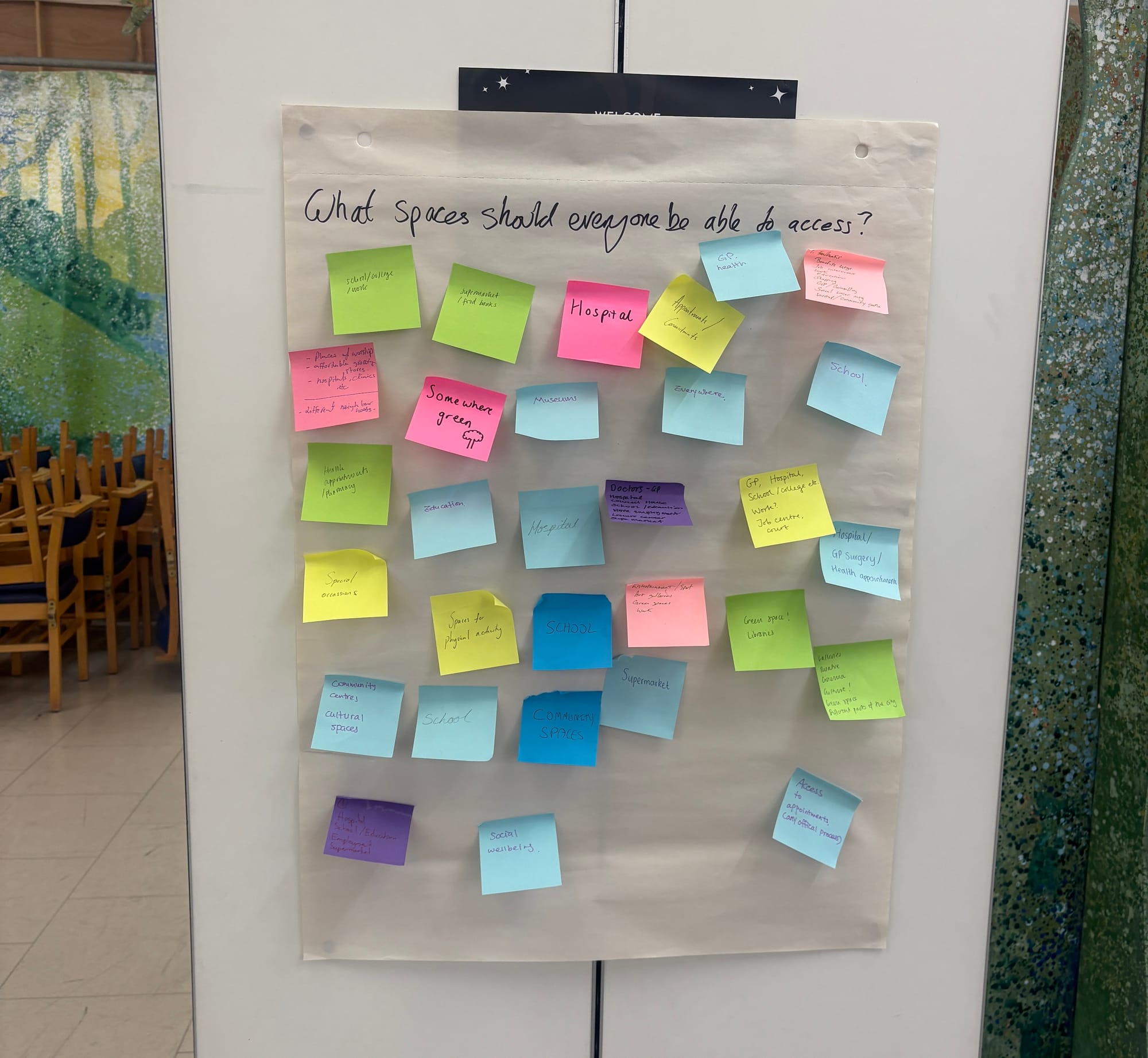
The first part of the morning saw attendees met with warm introductions from the organisers that set the foundations for an informal environment; at once bringing everyone together in the unity of a shared goal. Attendees were divided into five tables and each table was asked to make a note of all the places that every person should have access to via public transport; a challenging task, as our table discussed, given the shared opinion that it is difficult to name a single public space that people should not have access to. Everywhere we could think of seemed to provide the basic tenets of human necessity in some way or another; be it community, education or healthcare.
We then heard from speakers affected by the issue at hand. One speaker dealing with the asylum system lamented at the difficulty they faced attending appointments on a daily basis. Another spoke of the financial difficulties they faced while in-between jobs and how this left them and their children with little surplus to afford the bus; putting their health and the children's education at risk. We heard of the inability of the job centre to help; offering only a food bank ticket in place of transport.
One attendee shared that these meetings had ‘opened her eyes’ to the struggles of others and allowed her to see that the issue impacted many different people from various walks of life. Refugees, for example, are being placed in remote outer-city locations and are struggling to find access to any of their necessities because of the staggering daily cost of bus travel. The mood prevails that the January 2027 national cap on bus fares at £2 (only 60p cheaper than the current single fare of Bristol buses) will not be enough to alleviate this hidden cost.
'In grassroots campaigns such as these, there really is no participation too small; pushing for your organisation to attach itself to the campaign, attending action meetings and even informing your peers and forming action groups all contribute to mounting the public pressure necessary for the council to act.'
Fiona Meldrum of Citizens UK (South-West England) next provided insight into the structure of the campaign thus far by analysing their targets and their varying levels of power. In the past six months the campaign has successfully moved many of their power targets over to the ‘inclined towards’ side, including WECA (the West of England Combined Authority) deputy Mayor and member of Green Party, Tony Dyer.
WECA Mayor and Labour party member, Helen Godwin, remains firmly in support of maintaining the status quo. Following a written plea from the Bishop of Bristol and Swindon, Godwin maintained the position that she was not prepared to put a budget toward it at this time, while acknowledging that ‘no one should feel isolated from opportunities or essential services because they can’t afford the cost of travel.’
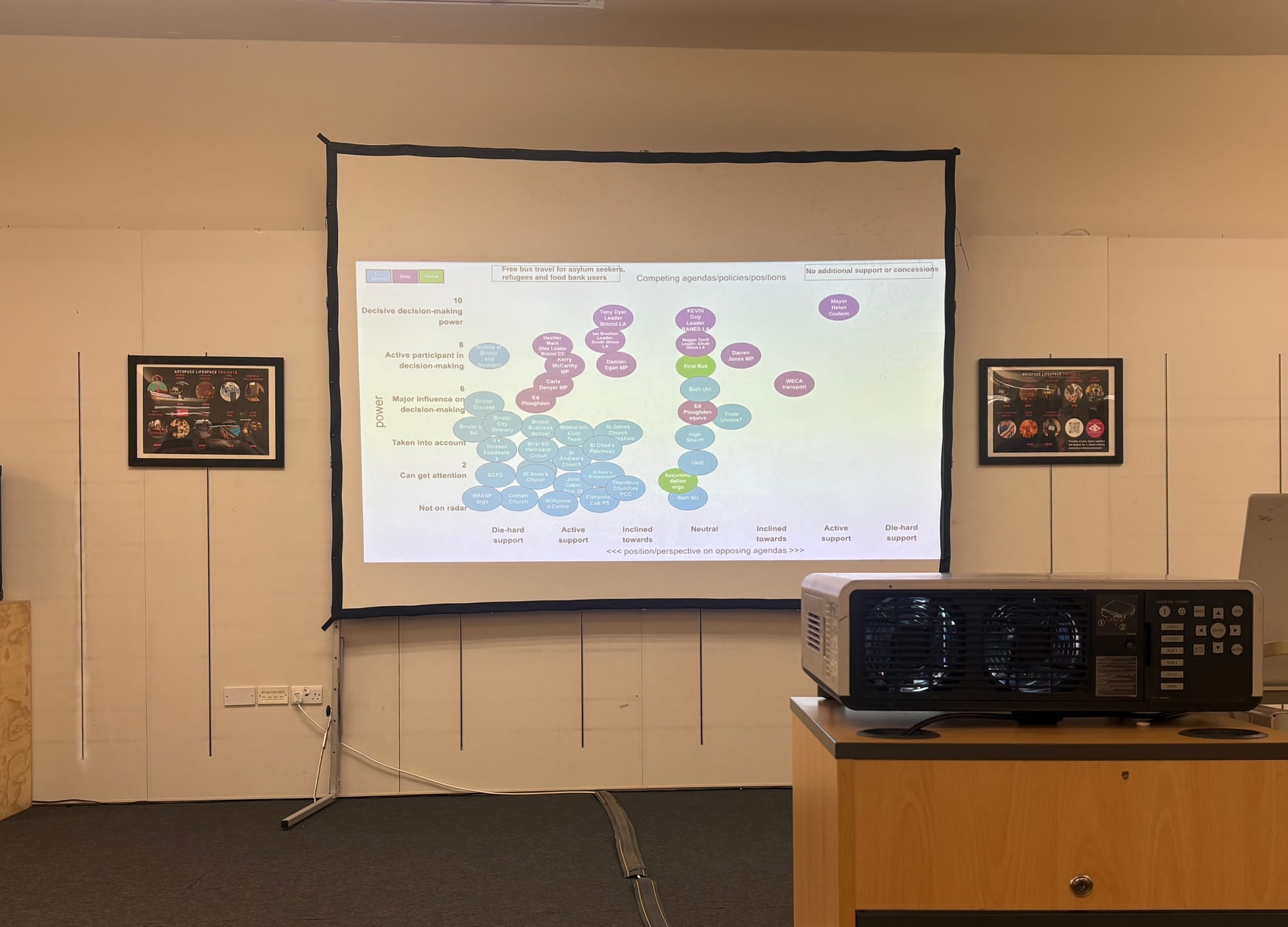
The analysis of target individuals/organizations and their varying levels of power presented also indicated how organisations in support can be of aid despite their lack of formal political power. Alice Quigley at Bristol Business School, for example, has been of great assistance in working out costs and budget for the campaign; analysing costs for free bus passes based on the average number of asylum seekers and foodbank users in the relevant area.
Some of the many other organisations holding a place on the power map included the University of Bristol Student Union, The Diocese of Bristol and Bristol City Deanery. Organisers admitted that at this stage the campaign is still fine tuning the details of what it is asking for, whether that be two days of fully subsidised bus transport, a full week, or subsidized transport only within certain hours of the day. They do however ardently recognise the importance of coming to the council ‘with solutions’ such as the premapped costs that the Bristol Business School helped to provide.
Another potential solution proposed was using some of the previously allocated Kids Go Free public transport scheme budget to fund free bus passes to foodbank users and asylum seekers - given that the scheme was initially WECA founded and funded, but went nationwide as of August 1st 2026, thus some surplus budget is probable.
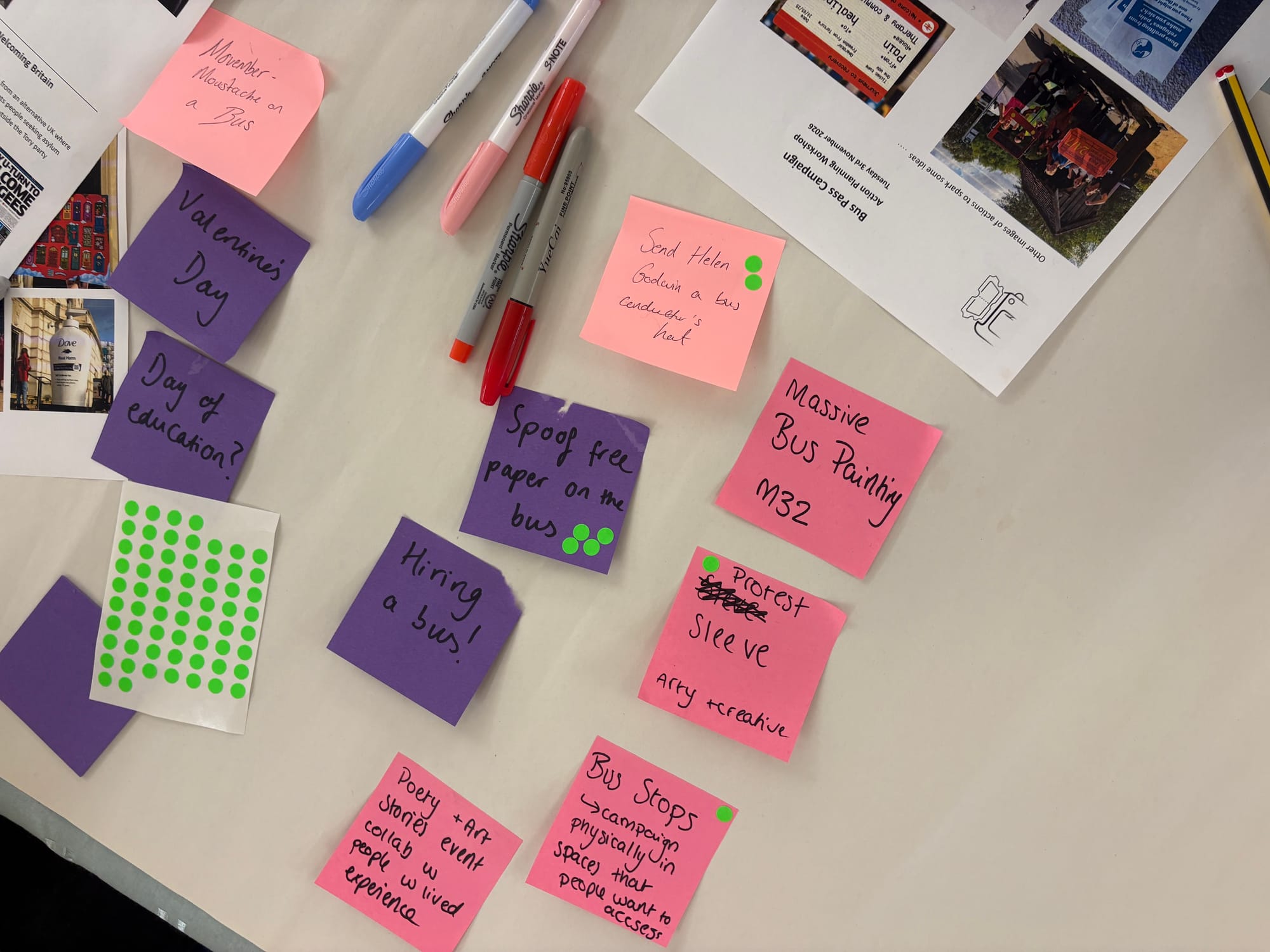
The final task of the day was for each table to brainstorm a potential next action for the campaign. The collective effort brought about ideas ranging from a spoof newspaper distributed on Bristol buses to a game of chance rethought and applied to bus travel in an attempt to make the ‘invisible cost’ more visible. Another drew upon the heritage of the Bristol Bus Boycott of 1963, highlighting the injustice that ancestors of those involved are not able to afford that same transport today. Many attendees demonstrated their commitment by putting their names to the projects before leaving for the day.
I left the meeting with a renewed sense of the importance of collective power. Through brainstorming and power mapping it became apparent that no matter what level of formal power the individual or the organisation possesses, all contributions are significant in the actions and reactions they may stir. In grassroots campaigns such as these, there really is no participation too small; pushing for your organisation to attach itself to the campaign, attending action meetings and even informing your peers and forming action groups all contribute to mounting the public pressure necessary for the council to act.
Sitting down to hear not only the logistics of the campaign but first hand accounts of those it stands to benefit instilled in me the renewed feeling that the campaign and the organisations heading it are imperative in fighting for basic necessities that many may take for granted on a daily basis. If you can, come to the next one and remind yourself of your shared humanity by joining a collective fight that really can change the quality of life for many.
If you are interested in joining the campaign efforts and helping to develop and run actions, contact Eleni Morus at Bristol North West Foodbank via the email community.organiser@bristolnwfoodbank.org.uk or sign up to the newsletter to receive updates on the campaign and its upcoming actions.
 Isaac Osborne
Featured Image: Epigram / Grace Rose
What do you think should be done to make travel more affordable?