By Jemima Choi, Sci-tech Co-editor
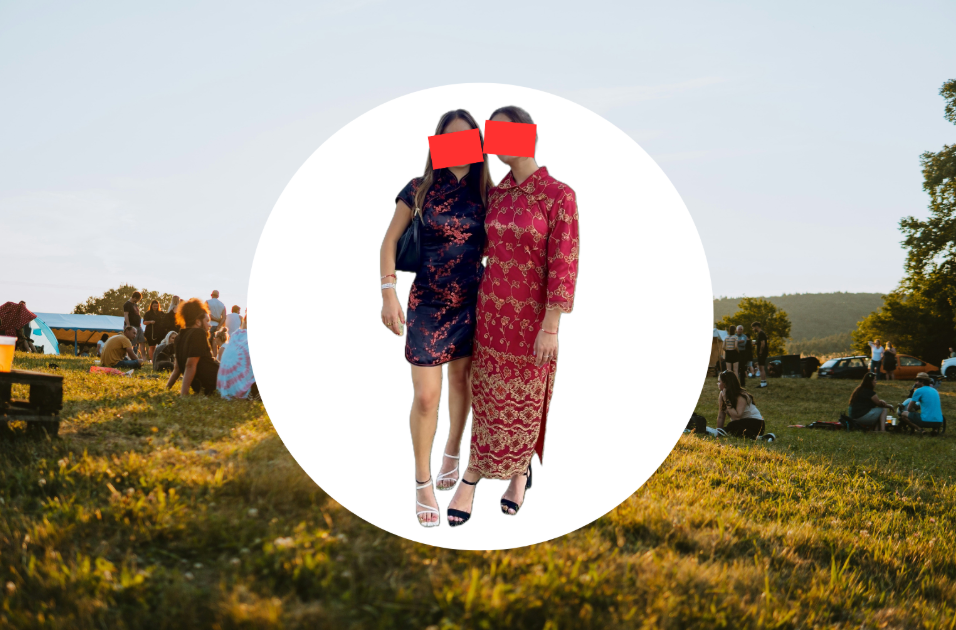
There I was, staring at a friend’s Winestock dress wishlist, ‘umming’ and ‘ahhing’ whilst I think of a way to tell her the cheongsam style dress she has picked, is more suited to a traditional tea ceremony than an (albeit ceremonial) pissed roll around on the downs. I am half-Chinese, half-white. In the age of ‘chinesification’ and ‘chinamaxxing’ I feel it’s time to settle my opinion on the age-old cultural appropriation debate. And I say: do it right or don’t wear it at all.
In today’s Western world, Chinese culture might be trending, but Chinese people rarely are.
Power imbalances still stand, perpetuating the feeling of coloniser and colonised. The 2015 Met Gala theme ‘China: Through the looking glass’ clumsily summed it up, with British Met curator Andrew Bolton aptly stating, ‘the show is not about China per se’ but instead about the ‘collective fantasy of China.’ You could not better condemn yourself of fetishisation if you tried.
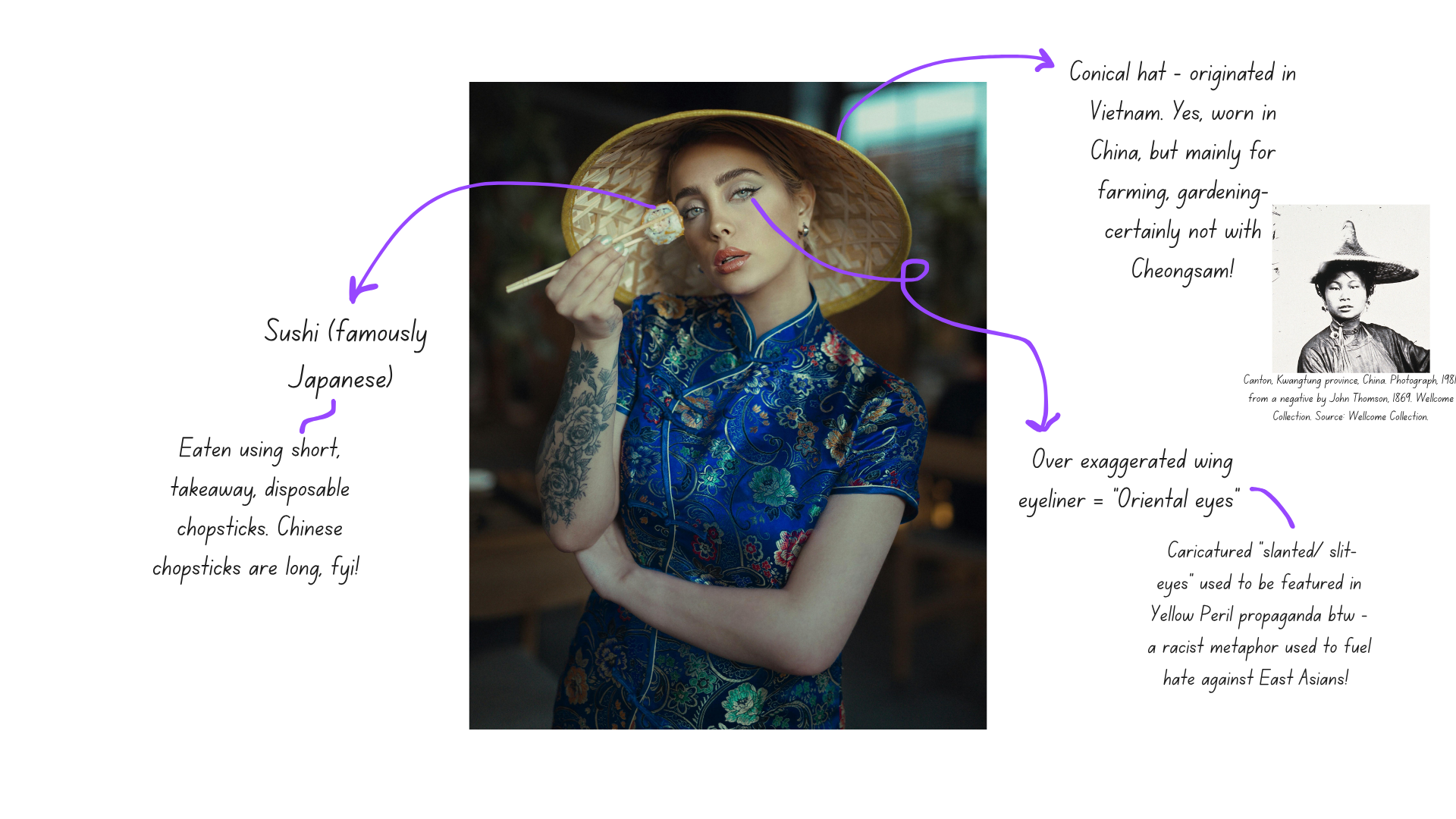
The fantasy isn’t just about clothes, but our bodies too. Fu Manchu, a Yellow-Peril era propaganda cartoon, depicted a caricature-like yellow-skinned Asian supervillain. I can vividly remember someone wanting to get plastic surgery to get ‘asian eyes’ because their non-monolid ones were ‘too boring’. At university, I have been called ‘slit-eyes.’ Though naïve singular comments, it highlights a systematic problem. The same features that East Asians are continuously mocked for, are only permitted as the hottest cosmetic upgrade for a white person; an aesthetic without any of the lived reality.
It’s time to talk about THAT Adidas jacket
This jacket is based on a traditional jacket called Tangzhuang. Originating in the Qing dynasty, they represented the wearer’s identity, social standing and boasted motifs to bring the wearer good fortune.
Hundreds of years of embroidered family history now replaced by… erm… three stripes?
What was initially meant to be an Asia-exclusive December 2025 release, caved quickly to an international sell-out and crazed scrabbling for the ‘holy-grail’ jacket in February. A Bristol status symbol of whose daddy could fly out first to China and grab it on their work trip. Two months on, and reddit communities are filled with just two sentiments: ‘Everyone is going to be wearing it [...] it will look dated by November’ and ‘locals don't buy them only foreigners do.’ It makes you wonder, with the way this ‘exclusive drop’ was marketed, was this product ever really for Chinese people?
The ‘Oriental’ Winestock dress
The one we’re all thinking of is called a cheongsam in cantonese (長衫) and a qipao in mandarin (旗袍) (these terms are interchangeable). The qipao comes from the Manchu people during the 17th century Qing dynasty, and originated as a loose, modest garment. With the end of the Qing dynasty in 1911, Shanghai feminists reinvented the qipao as a symbol for women’s liberation - utilising a leg slit and tighter silhouettes to increase mobility. It was the roaring 20s –they had to dance! After 1949 saw Mao’s rise in mainland China, qipaos were considered too bourgeoisie, and thus dressmakers moved to British-ruled Hong Kong, where styles further diversified.
Thanks to fast fashion giants, many cheongsams are now cheaply made. The master tailors that immortalised their allure in their precise skill, are disappearing.
‘Measurements were taken in silence, nothing was written down, the red silk (called “an old-style pattern” by Mr Leung) was folded and the outlines of the shape marked on the silk with soft tailor's chalk and a metal ruler. Only one fitting was needed.’ (V&A on dressmaking by Ching Wah Leung at Linva tailors).
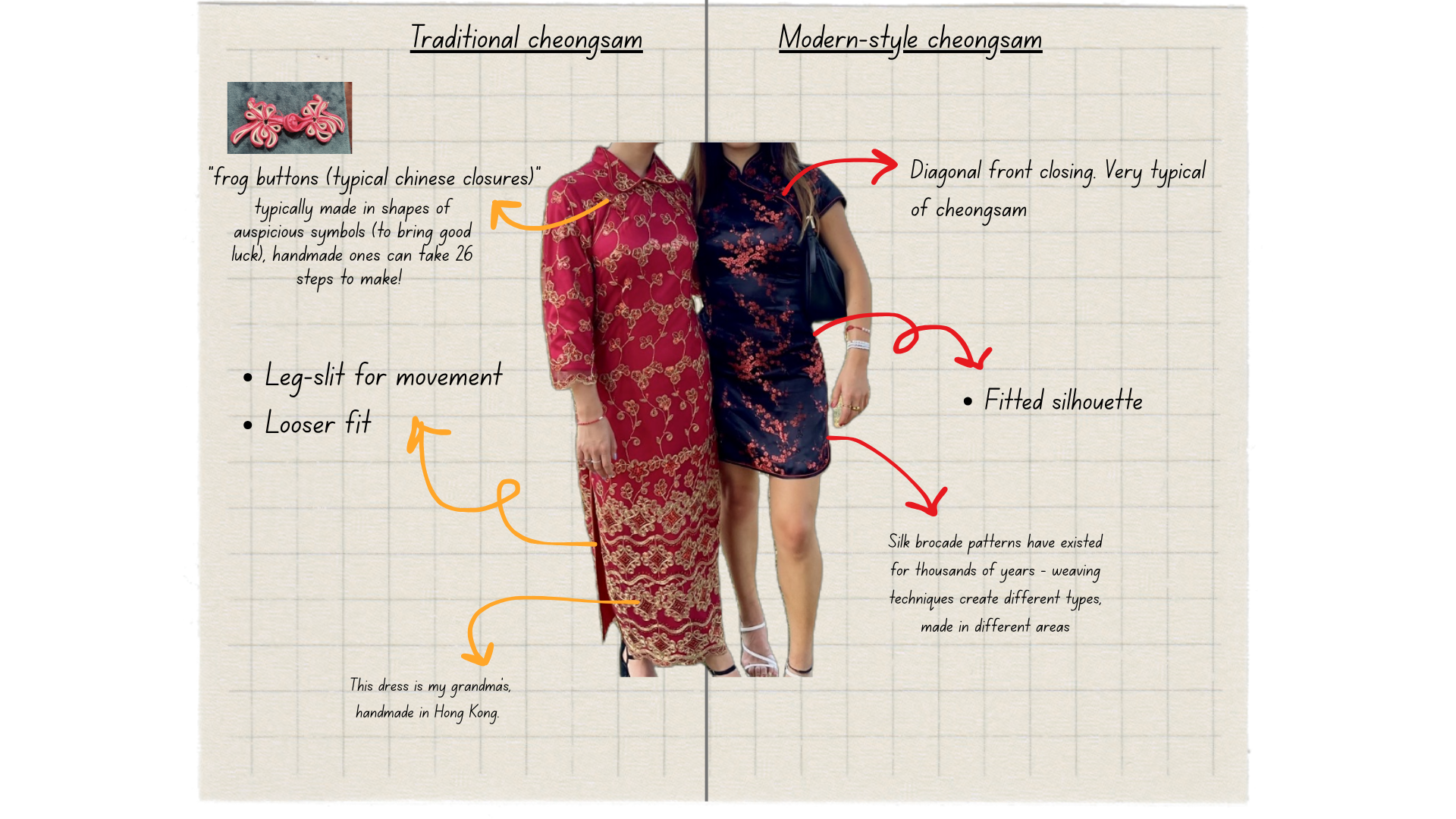
In the 1960s, Hong Kong boasted 1,000 cheongsam makers; today, barely 10 remain. While the West profits from Chinese aesthetics, the wealth rarely reaches the source, leaving traditional methods ‘critically endangered.’ In 2024, 88-year-old qipao master Yan Kar-man lamented, ‘you can’t make a living by making qipao because it’s no longer the trend.’ Yet 6,000 miles away in Bristol, Stradivarius mass-produces ‘qipao’ in multiple colorways. We must ask: who profits from 'Chinesification' if not actual Chinese people?
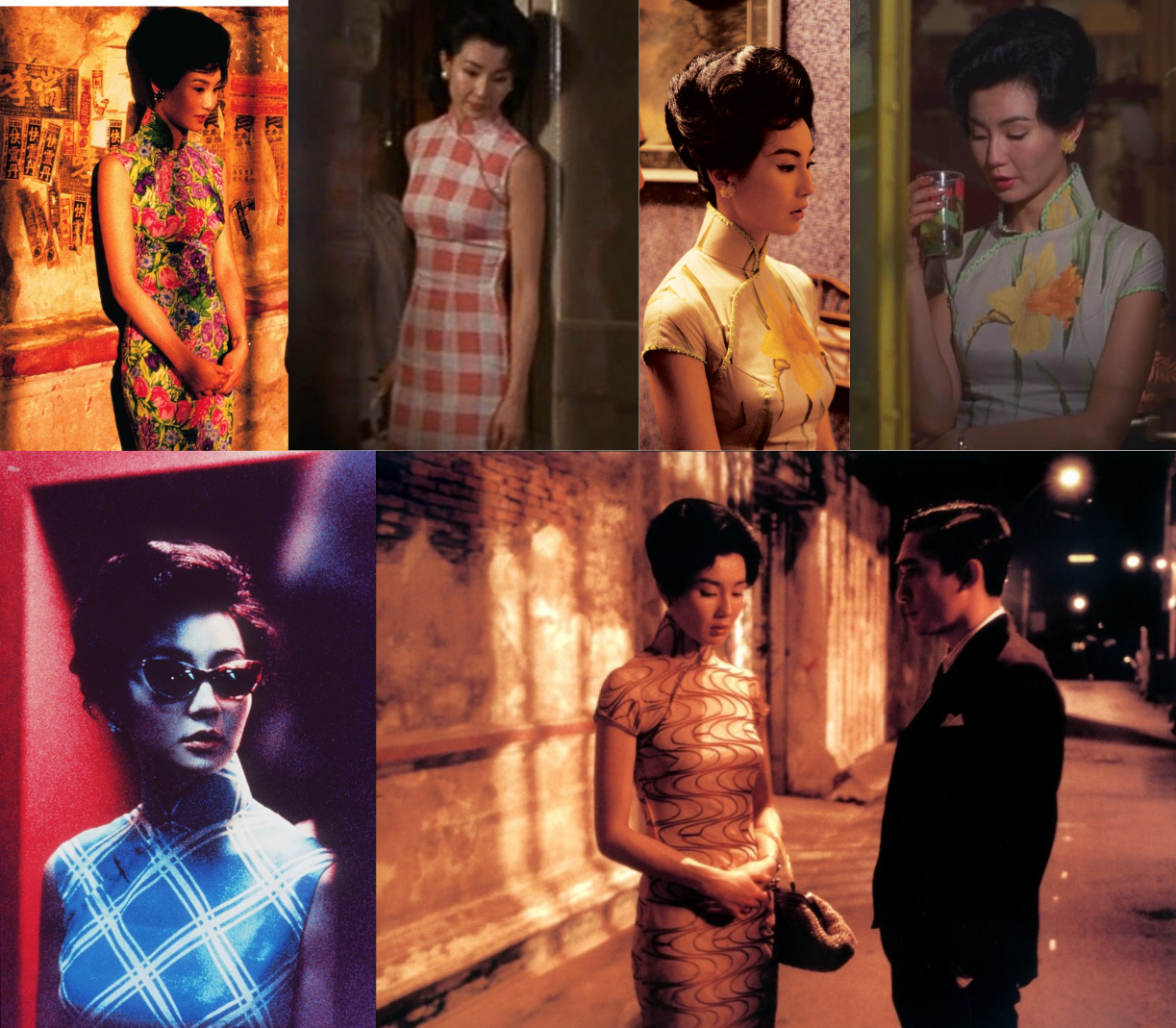
If you can, there’s a plethora of tailors you can order from. Linva tailor (年華時裝) is a third-generation traditional dressmaker, responsible for a few of the qipaos in Wong Kar Wai's In the Mood for Love, and reachable by email (linva.tailor@gmail.com). I’d recommend sending an inspiration photo of the design or material that you would like, before sending over standard tailoring measurements. Don’t be afraid- ordering online is standard practise for many overseas clientele, even if you don’t speak Cantonese. A ready to wear qipao will set you back around £260, a bespoke one around £400, which is why these dresses are indeed a life investment, not a trend.
With a student budget, I can understand why buying a tailored handmade cheongsam doesn’t appeal. In this case, I’d recommend going for something second-hand. Charity shops along Whiteladies road, Beyond Retro in the city centre, and Vinted have a plethora of dresses on offer. Avoid excessive leg slits, cheap polyester materials and exaggerated motifs. Or why not rent!
Final Verdict
While modernising fashion should create mutual exchanges, fast fashion reduces culture to microtrends. Herein lies the crux: Chinese nationals often welcome global participation, but the British Born Chinese diaspora, having endured systemic racism in the West, remain fiercely protective of a culture they were once mocked for. Respect is the sole line between appreciation and appropriation.
So here I arrive back at my verdict: if you want to wear something Chinese-inspired, then do it right. Ask first, could I find this from a chinese maker, is it respectful (i.e. the chinese part is not the overwhelmingly sexy element), and are you just wearing it to be ‘different’ and ‘exotic’ now, or will you cherish and wear this for years to come? If the answer is to be different, put the dress down, and invest in something better for that capsule wardrobe. And please, stop wearing chopsticks in your hair. They’re for eating.
Featured image: Jemima Choi / Epigram and David Dvořáček / Unsplash
What are you wearing for Winestock?