By Milly Middlehurst, Fourth Year, German and Italian
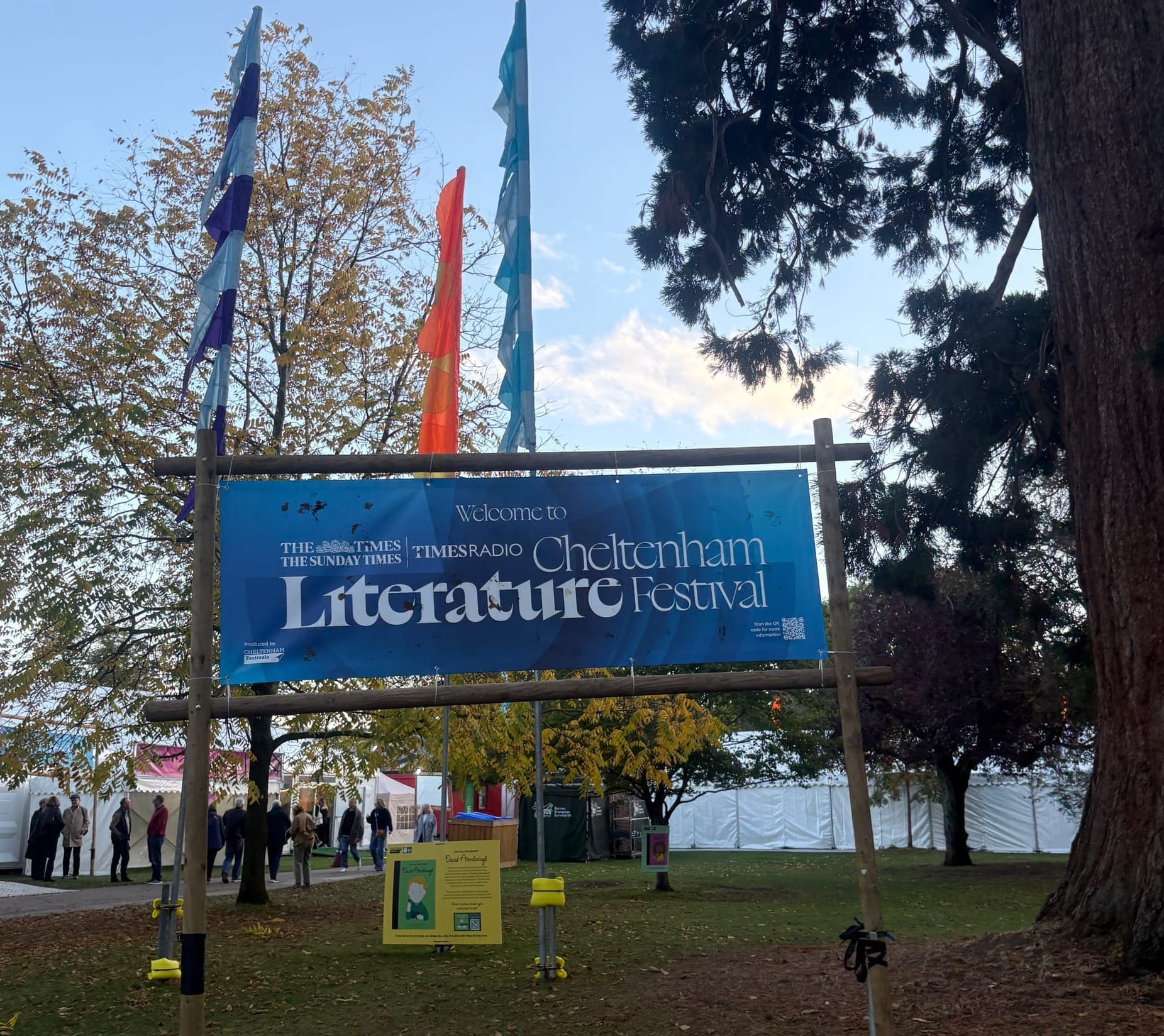
Having started last Friday, 9th October, the Cheltenham Literature Festival is ongoing until Sunday 18th October (explore events here) and boasts a hoard of literary events for all ages throughout the course of the week. Based just a short walk away from Cheltenham Spa train station – and therefore easily accessible from Bristol – the festival is the world’s longest-running literature festival and attracts approximately 100,000 visitors annually. Ticketed events take place throughout the week at a variety of different venues throughout the city, but the main event space is found in Montpellier Gardens and hosts two large sponsored temporary Waterstones bookshops among a variety of temporary stages for talks, free event tents and food and drink stalls.
I attended the festival on its first two days, Friday 9th and Saturday 10th October, and was pleasantly surprised by the free festival area being much larger than I anticipated, with much more to do than simply go to the talks I had tickets for, though they were of course the main events for me.
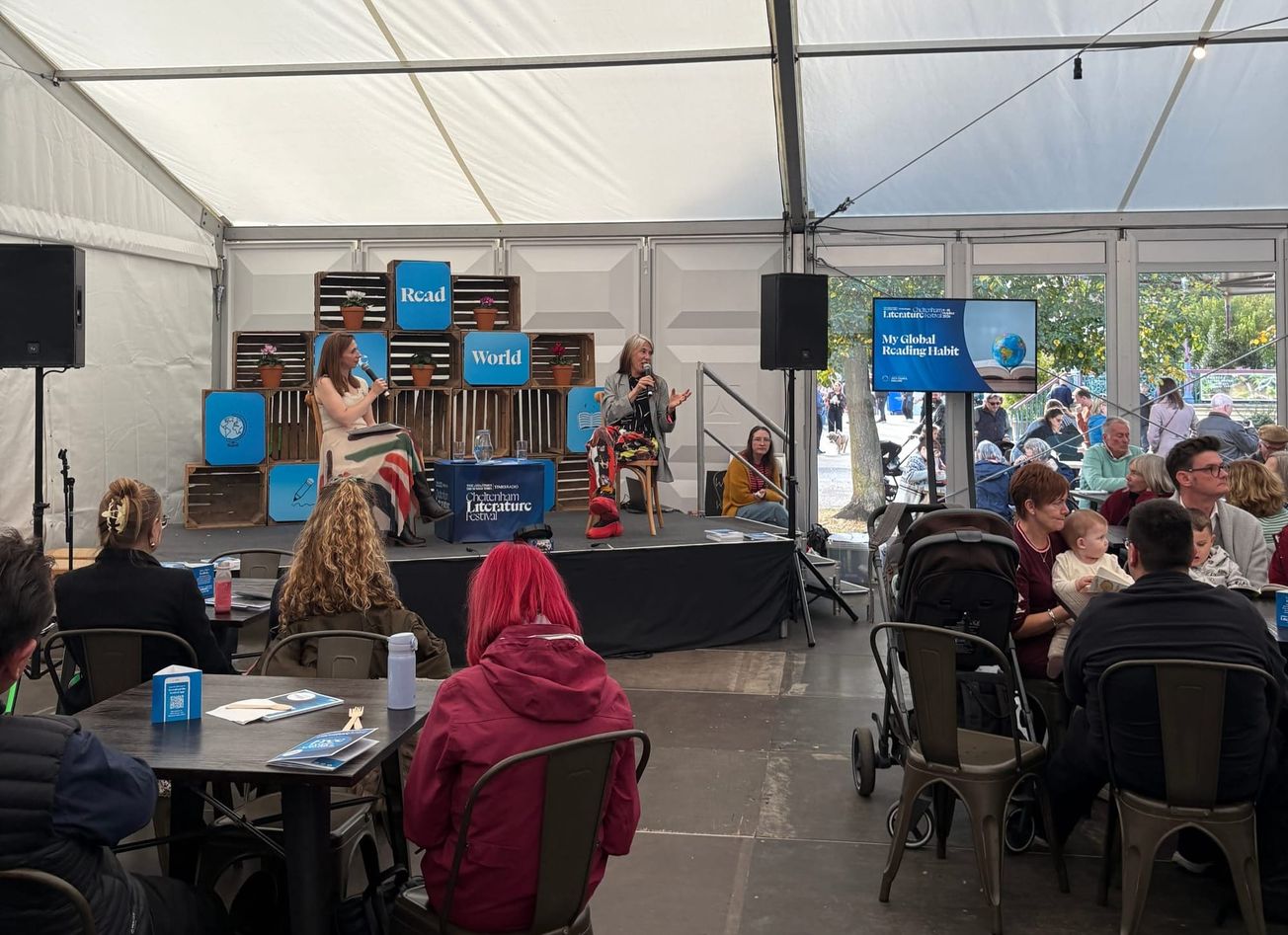
Drawing the biggest crowd on the Friday was naturally the live version of Jack Edward’s Inklings Book Club in conversation with Meg Mason about her new book titled “Sophie, Standing There”, however unfortunately I couldn’t be in two places at once. The language student in me chose instead to watch Sophia Smith Galer, a former Spanish and Arabic student at Durham and now BBC journalist, speak about her book “How to Kill a Language” on a panel with Len Pennie, a poet who writes in Scots who spoke about her new collection “Poyums Annaw”. They were interviewed by the festival’s resident literary explorer Ann Morgan and discussed language death, minority languages and their experiences around languages between childhood and now, especially languages and dialects that are viewed as lesser or unofficial. I felt like I came out of the talk having learned something – fun fact, you can tell an accent from a baby’s cry. After the event (and most of the events at the festival) there was a book signing and I look forward to reading both of their works. My only complaint was that the event was too short to have a full deep dive into both of their experiences, so I wish it could’ve carried on for much longer.
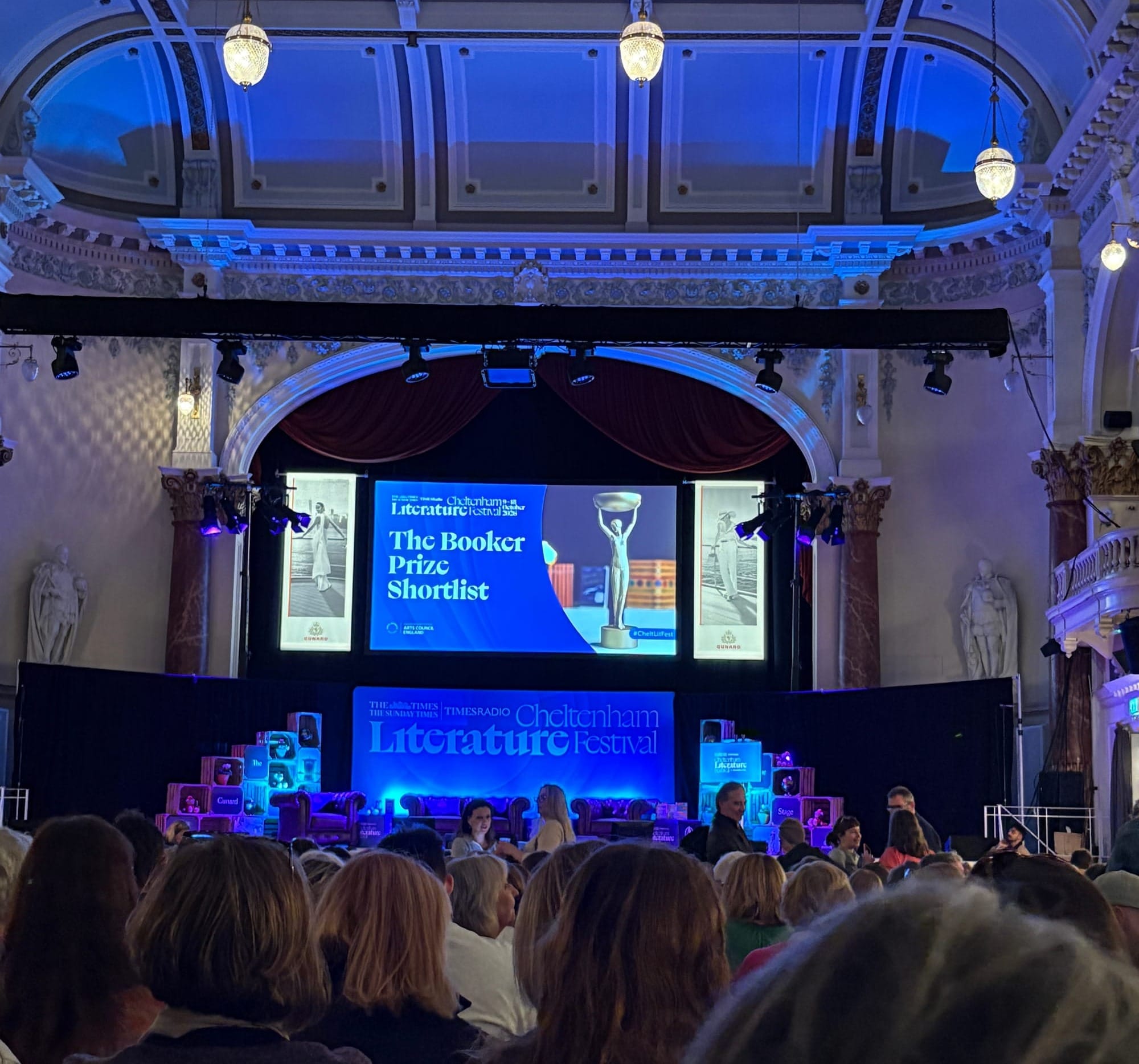
On the Saturday I watched the highly anticipated Booker Prize shortlisted authors discuss their books, ahead of the winner being announced in November. The Chief Executive of the Booker Prize Foundation, Gaby Wood, interviewed the six authors for a short introduction to their books. M. John Harrison, Rebecca Perry and Luke Kennard attended and spoke in person while Marlon James, Elizabeth Strout and Douglas Stuart attended virtually. Their books are ‘The End of Everything’, ‘May We Feed the King’, ‘Black Bag’, ‘The Disappears’, ‘The Things We Never Say’ and ‘John of John’ respectively. Snippets of the short film adaptations of the books were also shown. Without giving anything away, I would highly recommend reading more into the books and I especially look forward to reading Kennard’s ‘Black Bag’ which I bought a copy of and had signed at the end, since it is based partially in a university setting so it seems like a good read whilst still at university. My only qualm is once again how an hour was such a limited amount of time to speak about six books, and M. John Harrsion spoke last and unfortunately didn’t have as much time to advertise his book to the audience. The format of the interview was slightly too straight forward and didn’t manage to delve as much into the books – instead it was just a basic overview that could be found written. However, it was still fabulous to hear the authors reading sections of the books and speaking in person.
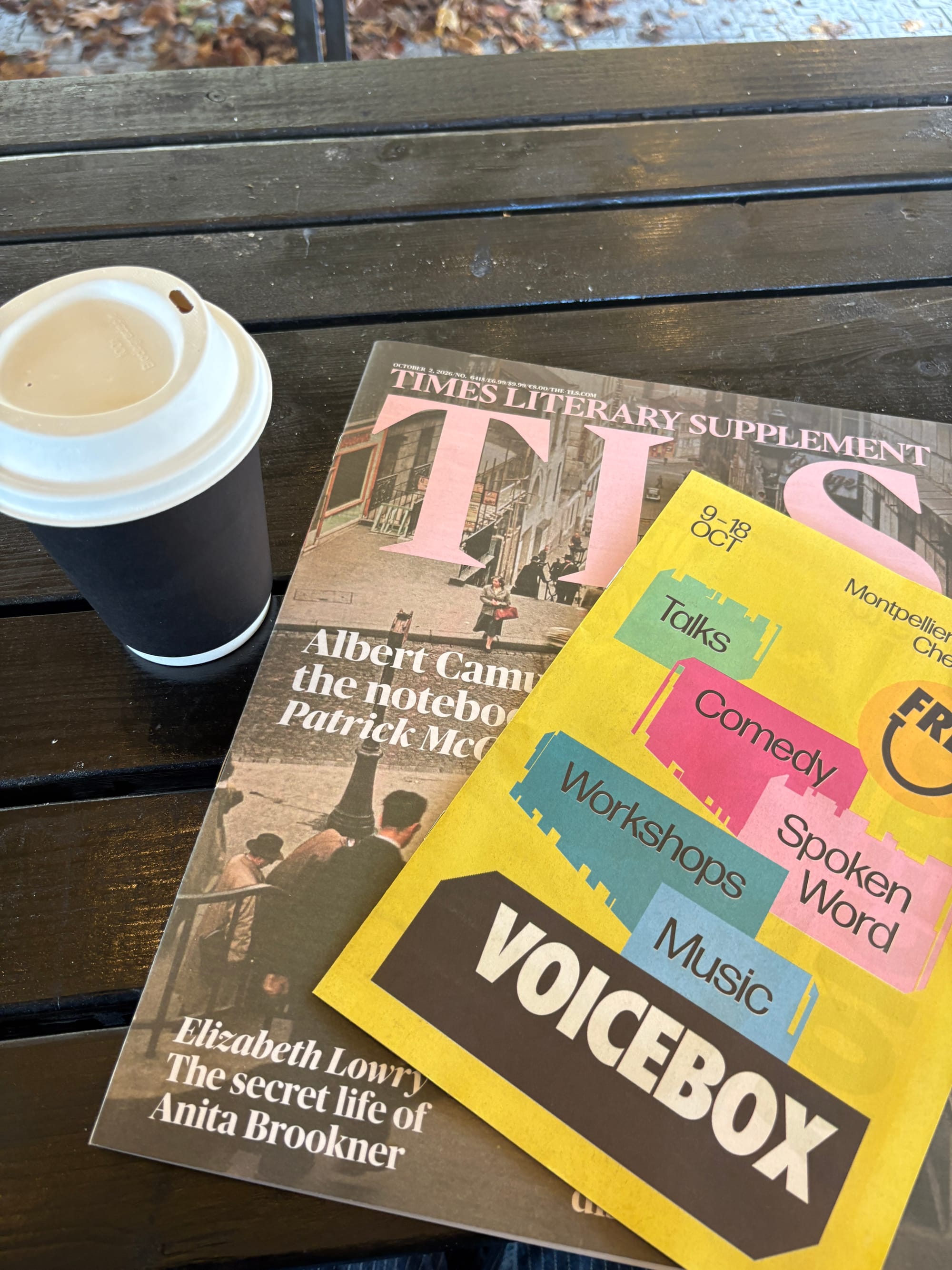
Other than these paid events, the festival has a free stage in the food hall where I briefly caught Ann Morgan speaking to Eva Meijer while I ate my lunch. There is a stage called Voicebox which has an assortment of free events throughout the festival too, featuring up-and-coming creatives like David Larbi as well as well known faces such as Russel T. Davies and Katherine Ryan, along with a New Voices Spotlight event. The festival is sponsored by The Times and The Sunday Times, so they too have a tent at the festival where copies of the newspapers are available as well as exclusive wines, with wine hours also taking place periodically throughout the week. Tablets demonstrating the Times’ daily games are displayed inside the tent, though when I tried them, it appeared as though the games had already been played or were not available due to not being a subscriber – a minor flaw if trying to demonstrate and advertise said games.
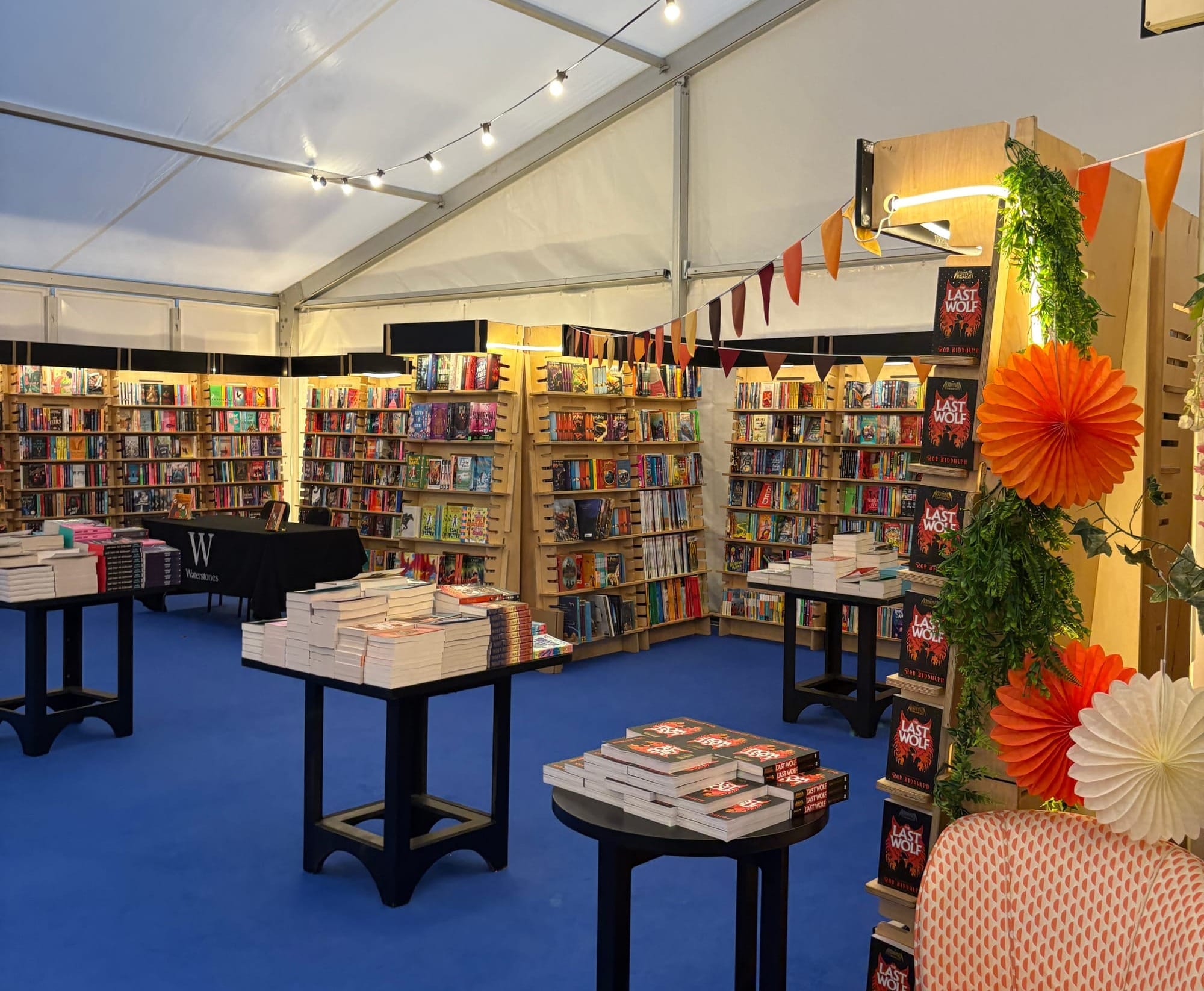
Overall, I found my time at the festival to be pleasant despite going alone, and the volunteers in the sponsored bookshop were especially friendly and helpful when giving recommendations of books! If attending on the weekend of 17th-18th October there is even a discounted wristband to attend any number of the ticketed events for a significantly discounted price. Though not my demographic, the family and children’s activities look good, and I would recommend the festival to everyone!
Featured image by: Milly Middlehurst
Are you going to the Cheltenham Literature Festival this weekend?