By Ella Joshi, President
Bananas are being duct-taped to walls and urinals are displayed in the Tate Modern - what happened to art? Living in a postmodern world means that our definition of art is constantly pushed to its limit, and sometimes it feels like pretentiousness has taken over. This article discusses different ways to experience art in the modern-day and whether it must always be understood to be enjoyed.
It has been seven years since artist Maurizio Cattelan first displayed his artwork Comedian - or as some might know it, a banana duct-taped to a wall. Since its debut, that banana has sparked both outrage and praise from art critics, been stolen and eaten by gallery visitors, and most recently sold for approximately $6.2 million to a crypto entrepreneur - who promptly ate it. Even as a passionate defender of postmodern art, I can see why many insist that Cattelan’s piece simply is not art. The piece is neither beautiful nor technically skilful, has no obvious emotional depth, no creative medium, and is seemingly repeatable by anyone with £1.62 and a bit of wall space. To some, Comedian represents a creeping pretentiousness that threatens the sincerity and accessibility of the art world, where art is no longer a form of expression but a superficial gimmick to be bought and ‘understood’ exclusively by wealthy art collectors. So how can the average person like or understand this kind of art? As a Bristol student and avid enjoyer of abstract and experimental art forms, I suggest a change of perspective.
Imagine this: you walk into the Arnolfini Gallery in Bristol and head upstairs to their new exhibition. Before you enter the gallery space, you are met with a description of the exhibition you are about to see. It reads, Mellifluous Subliminalities: A Meditation on Existence. The description talks about the artist’s passions and creative techniques, their exploration of the ‘liminal tension between existence and non-existence’ that ‘coagulates into a tangible, raw expression of human autonomy and psychospiritual transcendence.’ Now that sounds pretty exciting, whatever it may mean. Imagine then walking into the room and there is a single smiley face scribbled in crayon on the wall. I think that plenty of people would feel cheated at this point, with many thinking, ‘That’s not art’ or ‘A child could do that.’ The epic, sweeping tones of the exhibition’s description fall flat when compared with its visual reality.
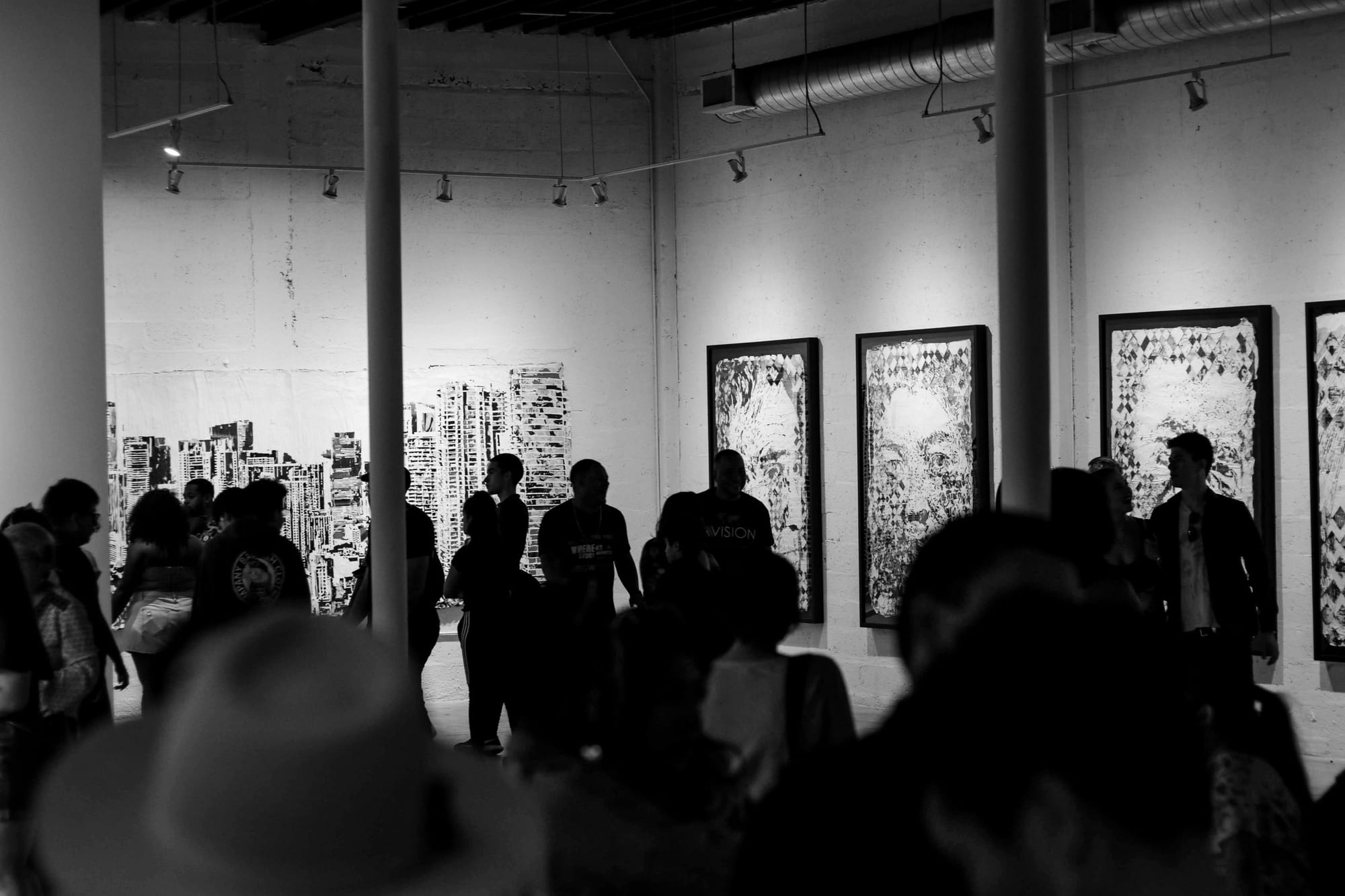
Although this scenario is fictional, the experience is not. The phenomenon of ‘Art Speak’ describes the language of convoluted nonsense used to overexplain and inflate artworks beyond what they can ultimately deliver. This extravagant, wordy way of describing art, although a lovely piece of literature to read in isolation, can make the artworks themselves feel disappointing, artificial or pompous.
My suggestion? Don’t read it!
At least, not when you first enter the gallery. Instead, allow yourself to form your own opinions and emotional responses to the art without external intervention. If you see a room full of scribbles and feel cheated, or think ‘I could have done that’, your next move could be to think about why. Why do we feel anger or frustration if an artwork doesn’t live up to our expectations? What are those expectations? Does art need detail, realism, colour, technique, a fancy description or deeper meaning to be considered ‘good’? Is it offensive that the artwork displayed in front of you could be recreated by you or a child, or does it remind you of all the times you have doodled that same symbol on a napkin or a letter? Does art have to be ‘clever’, or can it be simple and repeatable? Allow yourself to indulge and interrogate every emotion and reaction to the art without the imposing shadow of ‘Art Speak’ telling you what to think. Don’t be afraid of disliking an artwork - but also ask yourself why you don’t. Usually the reasons are tied to our expectations that art must always be beautiful, impressive, or complex.
Art exists as a way to communicate the human experience, and that includes our curiosity. Often, modern art involves simply asking the question, ‘What if I did this?’ and following through with the result, however nonsensical or ridiculous.
What if my painting had no subject? Can colour have meaning without words or shapes? What if I stopped using colour altogether? What if I stopped using materials? What if I tape a banana to a wall and sell it? Will people find it ridiculous, or buy it because it's on display? What does the response to art say about society or how people think?
 Alex Boersma
Generations of artists have found inspiration by questioning the possibilities of art. As viewers, enjoyers, and even participants in art, I suggest that we ask questions of our own about the artworks we consume, how they make us feel, and why. Stay curious, and don’t be put off by not ‘understanding’ art - that’s part of the experience!
Featured Image: Unsplash / Yap
Which art pieces have you not understood?