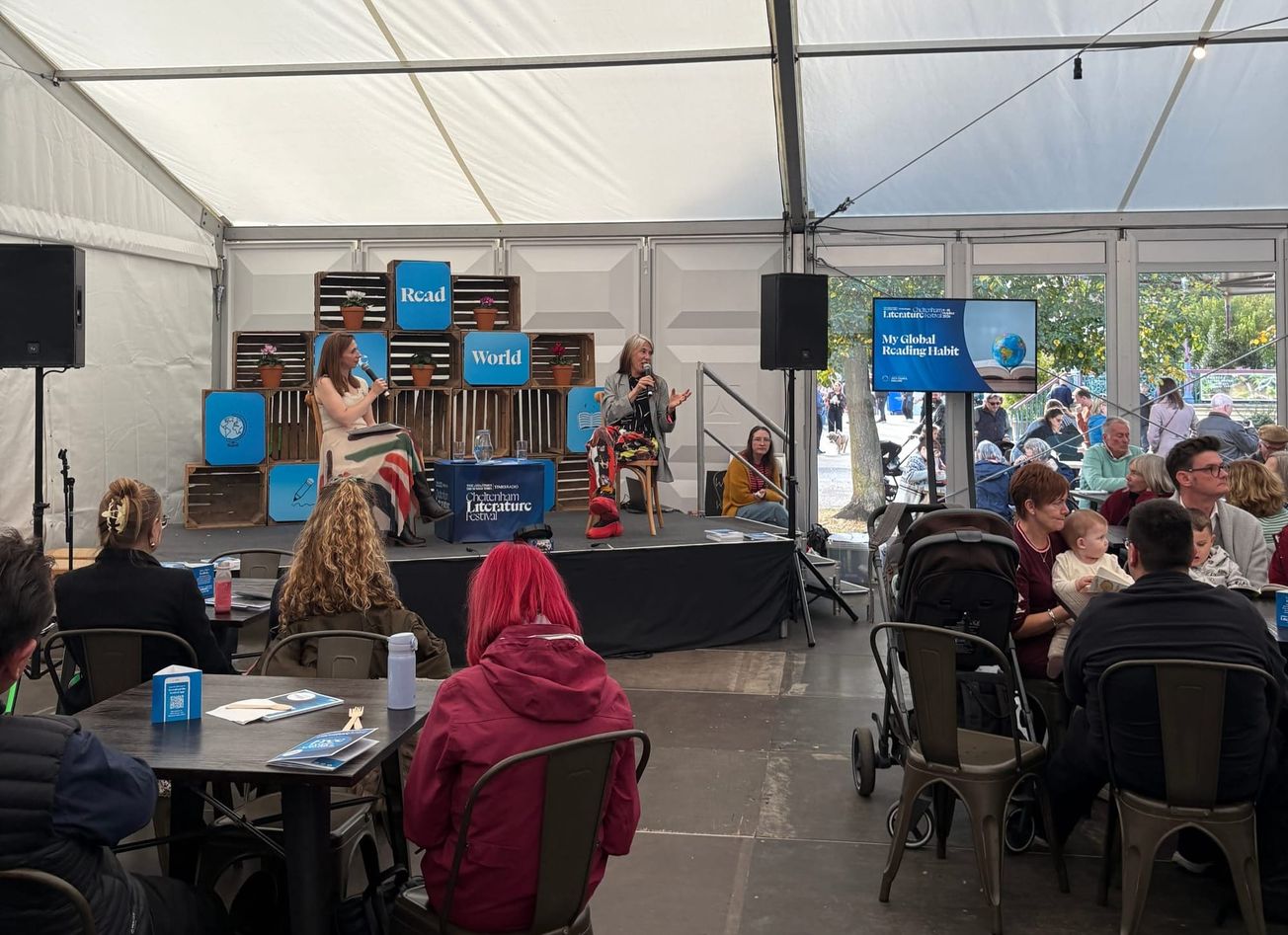
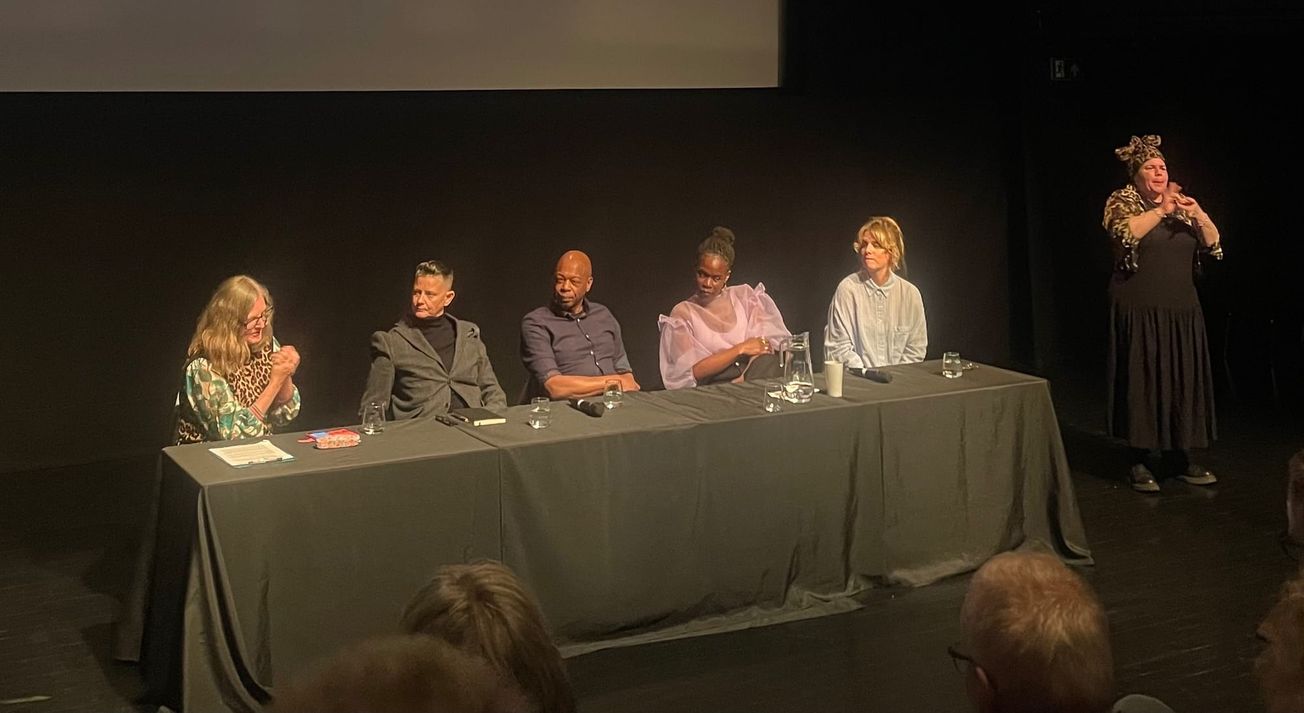
The opening event for this years Lyra poetry festival was a panel on the power of poetry. Hosted by the festival's co-founder, Lucy English, the panel consisted of poets Joelle Taylor, Georgie Jones, Bertel Martin and Vanessa Kisuule.
By Alex Boersma, Literature Columnist 25/26
Perhaps the most crucial question discussed was why are we still turning to poetry?’. Joelle described poetry as an ‘urgent’ practise and ‘constant witness’ which allows us to ‘explore empathy’ while simultaneously providing ‘a safe space to be dangerous’. For Bertel, poetry's power is in its personal transformation as it ‘distills what's going on in his head’ and gives those who feel they don't have a voice, a voice. Georgie similarly identified poetry's power as providing permission to slow down, encouraging presence and slowness in a world frequently occupied with ‘output, hustle and efficiency’. Vanessa identified the reality of poetry-that the majority of poetry goes unread and mostly read by other poets, with ‘the exemption of a few Sunday Times bestsellers’. She correctly identified how the world and politics have used words ‘carelessly and violently’. She notes that poetry allows us to give words their meaning and weight back and allows us to make sense of the abstract.
With multiple wars occurring and the air feeling heavier than usual, we begin to question the place of art and poetry amongst all the chaos. For Bertel, it is easier to write satire and comedy to provide some comic relief in such hard times. But contrastingly, the others struggle to write during hard times. Georgie feels uncomfortable writing anything joyful during these times and Vanessa hasn't written a poem in a while. She believes ‘capitalist imperatives bleed into poetry’. For Joelle, the contrast and dissonance in promoting her work and performing while people are dying elsewhere is stark.
The poets all agreed that poetry can be used as a tool for healing. Joelle describes ‘poetry allows me to directly confront things’. For Bertel, it is not poetry itself which is healing but rather how it allows him to express himself creatively alone by developing ideas as well as promoting connectivity when shared. For Vanessa, writing was a therapeutic process when she was younger and discovering how she related to the world and be understood. However, now she is older it is the connectivity which she finds key to writing poetry. On the other hand, for Georgie, poetry freed her from the shyness she experienced as a child and allowed her to indulge in oversharing publicly.
In terms of muses, Vanessa is particularly inspired by the works of Ben Learner and discussed the mystical process of feeling moved to write. The other poets and many nods from the audience shows this mystical experience is shared. For Joelle, she feels like she has to keep writing and explains it begins to feel like an out of body experience, as if she isn't the one writing. For Bertel, a big inspiration is the very relatable act of earwigging and listening in to people's conversations, he does so on buses regularly. He loves the feeling he gets when he writes a poem and strives to recreate that feeling in his poems. Georgie explains that poetry has been life changing and encouraged her to be present and notice things more than she ever would have otherwise. She jokes that her need to write things down constantly must be insufferable for those around her but she just can't stop!
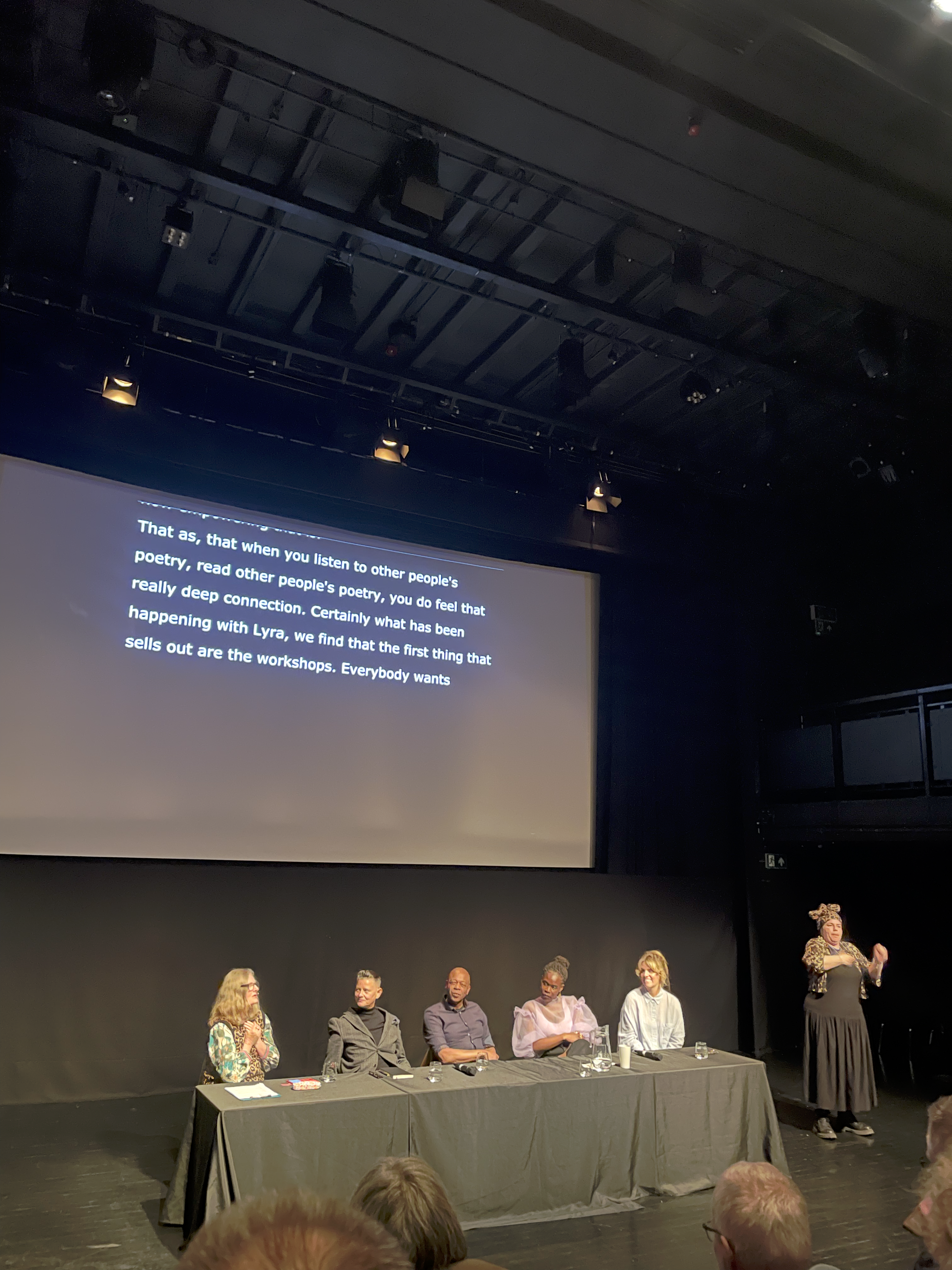
All the poets raved about their empowering experience facilitating workshops. Joelle facilitates workshops in schools and describes them as ‘incredible spaces’ where you can watch participants develop their power through poetry and grow individually and collectively. Georgie identifies how we are encouraged out of creativity as we get older unless it is monetised and powerfully concludes that ‘being is a more important verb than doing’. Joelle builds on this, reminding us that poetry is the most accessible and ‘last free art’ with theatre, opera and other creatives being expensive and often making years to pursue.
 Alex Boersma
Bertel exclaims he gets as much out of facilitating the workshops as those taking part in them do as he gets to hear new ideas and witness different writing and developing processes which can inform his own work. Vanessa explains that workshopping models how to be a good and active listener. She beautifully adds that even if she were to never write a poem again, she can be a lifelong listener and reader of poetry and that alone is a beautiful and powerful statement.
Feature Image: Epigram/ Alex Boersma
Have you read any of these poets' works?