By Charles Hubbard, Second Year, Theatre and Performance
No film director in history has ever been more powerful than Christopher Nolan is right now. Not even Steven Spielberg at his peak (founding his own studio off the back of making Jurassic Park and Schindler’s List in the very same year) could have dreamt of how the Westminster-born mega-auteur is able to make the landscape of film culture shake with every industry-redefining step he takes.
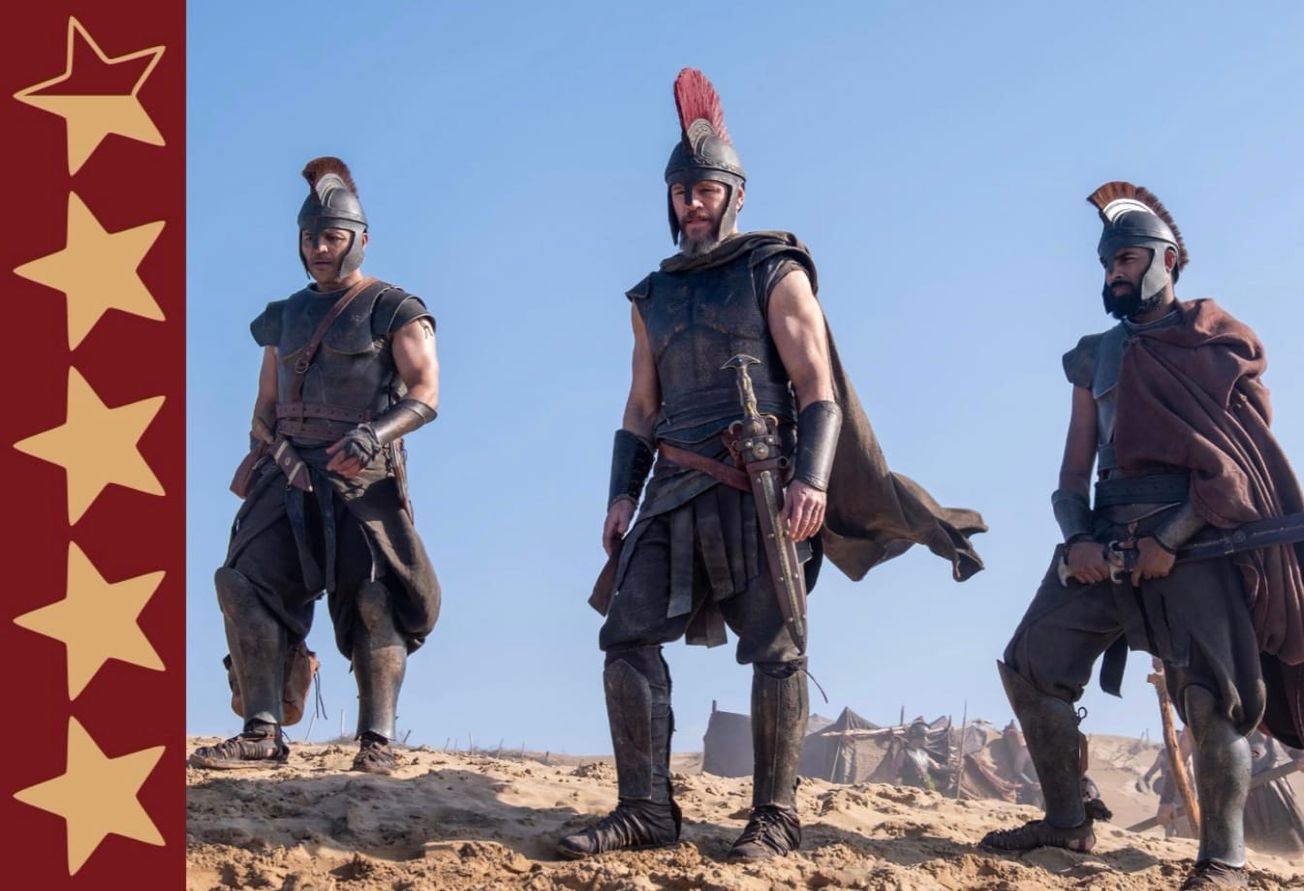
Perhaps that is why, as he enters his second decade of superstardom, he is increasingly drawn to stories of men with equivalent power in their respective spheres. This time, Nolan seems to be more interested in the impact a clan of chest-pounding soldiers - so dogmatically dedicated to their leader that the chance to follow him to the literal ends of the earth is treated like winning the lottery - can have on the psychology of their leader, especially one who has to make split-second, life-or-death decisions as frequently as you or I tie our shoes.
While I wouldn’t go so far as to describe this gargantuan historical epic, as a closet autobiography for Nolan, he’s clearly ready to get to grips with the benefits and follies that become men handed his kind of power. Fortunately, Nolan’s latest film, which is as awe-inspiring and thematically rich as anything he’s ever done, represents all the benefits and none of the follies of tremendous power.
Twenty years after their long-departed king, Odysseus (Matt Damon), left the shores of Ithaca, his wife Penelope (Anne Hathaway) and son Telemachus (Tom Holland) are stuck in a state of constant emotional purgatory - not knowing whether to mourn Odysseus or wait for him to return. Forced by moral obligation to abide by Zeus’ law, which stipulates that a Greek must allow a stranger into their home for the chance they might be a god, their home becomes a fetid feeding ground for an excess of potential suitors for Penelope’s hand, led by the preeningly arrogant Antinous (Robert Pattinson).
An indeterminate distance of ocean away lies Odysseus himself, being half tended to, half held captive by the nymph Calypso (Charlize Theron), whose lotus flower concoctions have stopped him from remembering how he got to her, and the necessity of his return.
While textual purists and scholars of Greek mythology alike will probably scoff at deviations from the source material, this is a pretty straightforward adaptation. The ‘past’ timeline (a personal favourite of Nolan’s) is largely constructed of a series of vignettes where Odysseus and his men dock their boats at a mysterious new shoreline in search of food, realise that the regions’ inhabitants are somewhat less than friendly, and are promptly set running back to their boats with their tails between their legs.
I’d be lying if I said all the vignettes here feel entirely necessary. Specifically, the scene featuring the giant Laestrygonians is nothing more than a narrative cul-de-sac that serves exclusively to reduce Odysseus’ entourage down to a skeleton crew.
Nolan feels a tad beholden to checking off all the sequential boxes of the source material in a way that often risks sacrificing narrative momentum and potentially even devaluing the stronger sequences, such as the Trojan horse sequence - perhaps otherwise the single most invigorating set piece of his entire career.
I will admit to being worried walking into The Odyssey that Nolan was hardy enough of a visual stylist to tackle material this inherently phantasmagorical. His immensely stubborn need for realism in all his films is one of his most enduring traits as a filmmaker. How could such a neo-realist possibly hope to adequately adapt a story that calls for gigantic cyclops, sentient whirlpools and witches that transform men into pigs? Strangely enough, Nolan’s need to square-peg round-hole fantastical concepts into the realm of reality, be they a billionaire who dresses up like a bat to fight crime, or the complexities of interstellar travel, is exactly what makes so many of the scenes here so brutally effective.
For example, the Trojan horse sequence fully confronts the reality of the crippling claustrophobia of being trapped in a wooden horse, including the fact that several of Odysseus’ soldiers drowned at the bottom of the horse when the tide submerged the lower third of the statue.
Nolan also embraces the indomitable psychotic trauma of listening to the songs of the sirens without being able to swim towards them - a scene that Damon plays with the same level of exquisite emotional torment he brought to the climatic “it’s not your fault” sequence in Good Will Hunting (1997).
Notoriously a career-long proselytiser of in-camera, practical effects, Nolan, and makeup designer Luisa Abel, conceptualise the Cyclops Polyphemus with a stunning mix of puppetry and animatronics. Equally impressive, though exponentially stomach-wrenching, is the scene where Circes (Samantha Morton) physically moulds the faces of Odysseus’ men into those of pigs - Rick Baker would be proud.
However, this does mean that the few moments of CGI here stick out like the sorest of thumbs. During the scene where the man-eating monster Scylla (here depicted as a spindly stick insect hiding in a rockface) takes the lives of six of Odysseus’ men, you can feel Nolan rushing to get it done as quickly as possible, lest the audience realise that he didn’t actually film it for real.
That’s not to suggest that Nolan is entirely unwilling to step out of his comfort zone here when it comes to content. If Oppenheimer saw him staging a sex scene for the first time in his career (in the most bizarre setting imaginable, if memory serves), The Odyssey sees him leaning at last into blood and viscera - he certainly earns the 15 rating that many industry insiders are unduly worrying will affect the film’s box office takings.
The scale of what Nolan is able to accomplish here (especially the fact that he somehow got it all done in 91 shooting days) would be enough to put this titanic feat into the history books forever all by itself. However, it only becomes more engrossing when viewed in the context of his career.
 Charles Hubbard
He seems to be approaching the topics of his youth (well, the most youth the perennially middle-aged sourpuss can possibly have had) with the perspective and gravitas of a learned elder statesman for the very first time. And he seems to be more than a little ambivalent about his strangle-hold on film culture.
However, if he continues to keep making films of this calibre of integrity and quality, he needn’t worry about the kind of power he wields. He’s using it just fine.
Featured Image: IMDb / The Odyssey | Illustration by Epigram / Sophia Izwan
Have you managed to catch Nolan's epic in IMAX yet?