By Charles Hubbard, Second Year, Theatre and Performance
Perhaps the only thing more historic than Steven Spielberg’s run of industry-redefining successes that ended in the mid-1990s (making Jaws (1975), Raiders of the Lost Ark (1981) and E.T. (1982) within seven years of each other) is his profound failure to replicate that kind of crossover blockbuster magic in the wake of Jurassic Park (1993). While Spielberg continued to produce great work, all of his 21st century features were either too weird for mainstream audiences to accept, too dismal for a post-911 America to stomach or much more successful at appealing to ageing Oscar voters than the booming multiplexes.
I’m sorry to say that Disclosure Day (2026) - his first genre film in eight years - follows this pattern to a fault. Only, unlike his brilliant but uncommercial efforts, such as A.I. Artificial Intelligence (2001), Minority Report (2002) and War of the Worlds (2005), I doubt it’ll get much better with hindsight. Since Spielberg hasn’t made a film in four years and has been very open about his ongoing flirtation with retirement, I went into Disclosure Day mistakenly believing that he must have a new and vital answer to the age-old question “are we alone in the universe?” Why else would he return to a subgenre he’s already given us so many interesting and wide-ranging takes on? Unfortunately, I was wrong. It turns out that the Hollywood veteran’s newest exploration (if you can even call it that) of the topic goes no deeper than a puddle. And one that insists on taking two and a half hours to wade through.
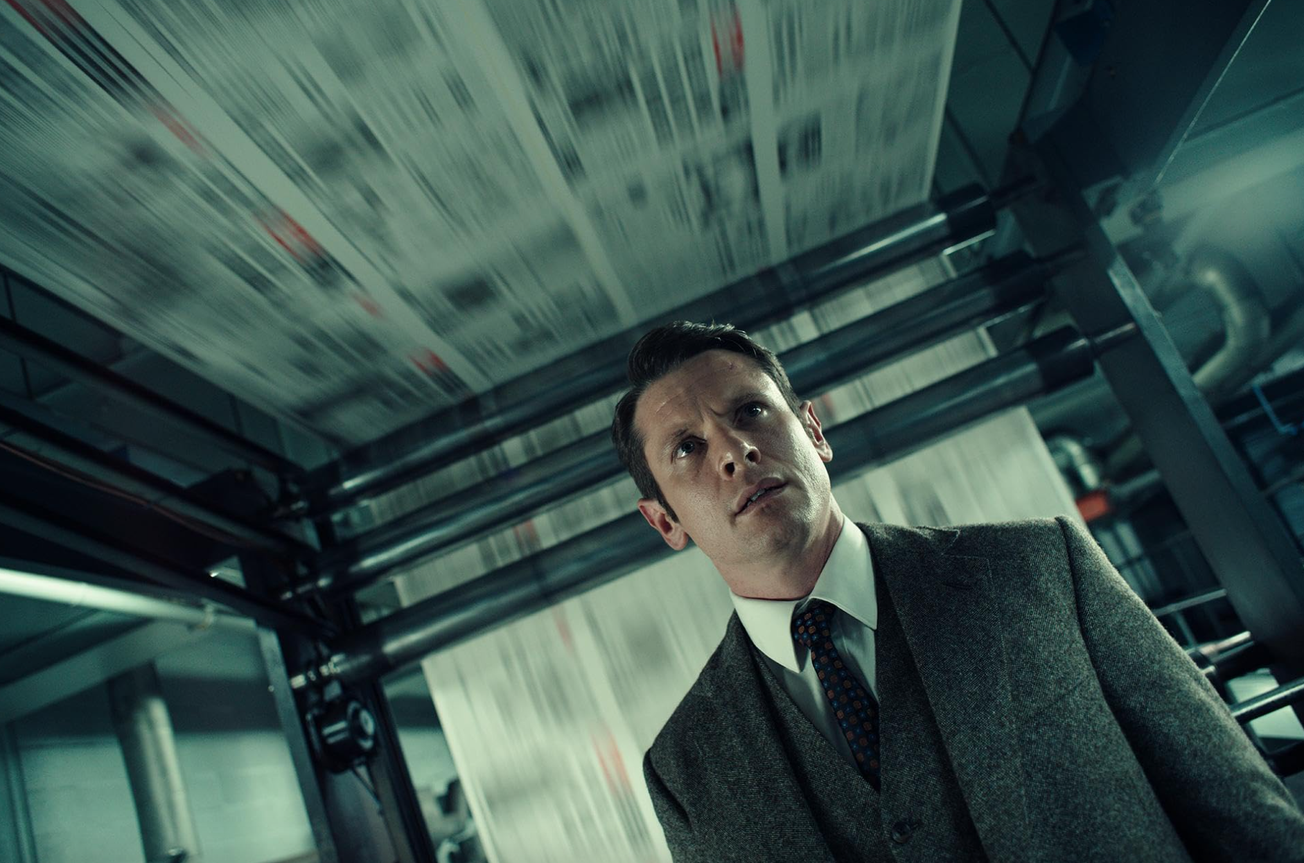
In his latest step on the road to superstardom, Josh O’Connor stars as Daniel Kellner, a paranoid big-tech whistle blower and by far the world’s worst hider. After being apprehended by the faceless non-governmental organisation Wardex (led by a cartoonishly moustache-twirling Colin Firth) for stealing their data on extraterrestrial activity, he sets off on a merry chase with his not-quite-nun girlfriend Jane (Eve Hewson, child of U2 frontman Bono). This leads the two towards Margaret Fairchild (Emily Blunt in a superb technical showcase) - a Kansas TV weather reporter who has recently, and unknowingly, become a psychic and interpreter.
Cut the word ‘extraterrestrial’ from that plot synopsis and this essentially just becomes a pretty standard conspiracy thriller with an army of menacing G-men trying to get hold of our heroes’ suitcase of secrets. And that’s the problem. Spielberg and screenwriter David Koepp (the two of whom have collaborated several times before) certainly aren’t shy about foregrounding the existence of aliens - it’s hardly a twist when it is revealed - and yet the specificity of exactly what information Kellner wants to publicise never really affects the plot in any meaningful way.
In an age where the US government is trying to keep a very different set of files secret from the public, the question of whether Richard Nixon did or didn’t once meet a martian feels a little paltry by comparison.
This might be forgivable if the film used aliens as a placeholder to discuss humanity in a much broader sense. After all, Close Encounters' (1977) study of obsession and the destruction of the family unit certainly doesn’t need to be provoked by extraterrestrial life, nor does Arrival’s (2016) depiction of linguistic barriers and international co-operation. However, Disclosure Day seems to have nothing to say about any form of life, whether indigenous to the Planet Earth or not.
The only stab the script attempts at making a thematic point is that the revelation of extraterrestrial life would make the concept of God completely obsolete - a viewpoint clangingly spelled out by Jane, who feels like she only exists so that Spielberg can vaguely gesture towards a hint of a narrative argument. A compelling case, especially considering the pseudo-Messianic reputation Fairchild develops in the second half, but the film is too wrapped up in the mechanics of its in-world technology to expand upon it.
The aliens are styled in the most childishly literal and conventional way possible - spindly grey arms and legs, swollen heads and massive eyes. Again, I wouldn’t mind this too much (it’s typical of Spielberg, who has shown aliens the exact same way in Close Encounters, War of the World and even the fourth Indiana Jones film) if the design of the aliens wasn’t revealed to the audience in the first forty minutes. It means that, when we’re treated to much more oblique and abstract depictions of the aliens for the next two hours of the runtime, there’s zero tension or mystery. We already know that they don’t look any different to the Space Raiders mascot.
While the film isn’t quite as pathetically dismal as Ready Player One (2018), which is genuinely in contention for one of the worst works ever produced by a major artist, it’s still poorly conceived and virtually empty-headed. It feels bizarre to say this, but I think the film would have benefitted hugely from Spielberg penning the script alone (he has a ‘story by’ credit on the film as is).
It’s no coincidence that, in my opinion, his three thorniest and most interesting films (Close Encounters, A.I. and his 2022 quasi-autobiography The Fabelmans) were also the only three he wrote himself.
 Tylah Hendrickson
You can certainly feel the destructive and homogenous influence of Koepp’s writing here, especially with a lot of the more openly expository dialogue and weak attempts at humour. It’s also worth noting that this is Spielberg's first film in forty years that wasn’t edited by Michael Kahn and he certainly could have trimmed a lot of the fat here.
If this is the last film Spielberg ever makes (it seems pretty likely as he doesn’t have anything else in the works), the lasting impression he’ll leave is of a veteran oilman returning to his favourite well for one last time and finding nothing new to tap.
Featured Image: IMDb | Illustration by Epigram / Sophia Izwan
What do you think of Spielberg's cinematic return?