By Lara Kurtulus, Second Year, History of Art and Italian
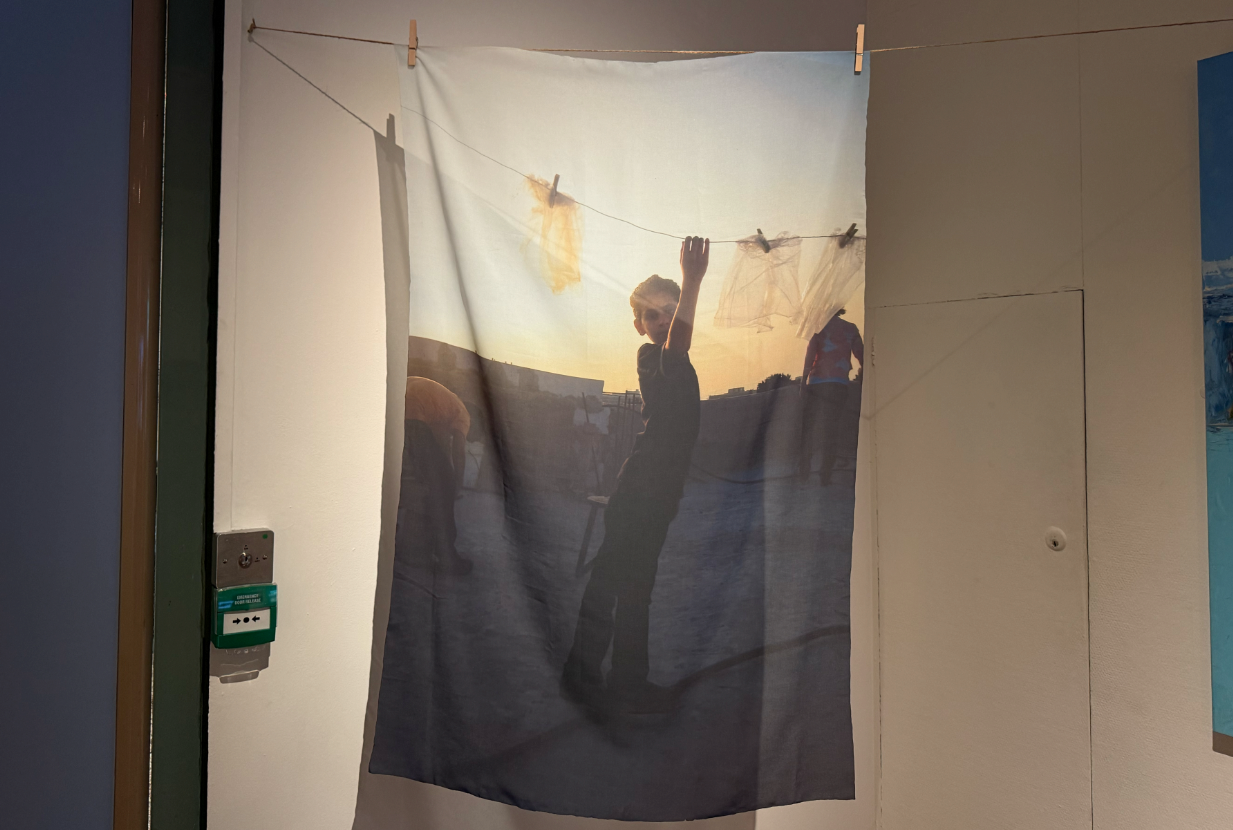
Are you a student interested in history and art? Bristol is renowned for its creative spaces and communities, and Bristol Museum & Art Gallery is home to many exhibitions and pieces that could catch any art enthusiast's eye. If you're looking for an activity steeped in academia and culture during the first few weeks of university, head to the museum for their latest exhibition The Lost Paintings: A Prelude to Return.
In 1947, Palestinian-Lebanese artist Maroun Tomb was preparing to open an exhibition in Haifa. The opening was scheduled for 29 November, the same day the United Nations approved the partition of Palestine. Amid the war that followed, and the events surrounding the establishment of the state of Israel, the exhibition was lost. Today, almost nothing remains of the original exhibition apart from a handwritten letter that Tomb sent to his friend Jacques Motola, which included the invitation to the opening and a list of the titles of the paintings that were to be shown. Nearly 80 years later, those surviving records, particularly the titles of the paintings, have become the starting point for a new exhibition. After presentations in Montreal, Boston, Belfast and London, The Lost Paintings: A Prelude to Return is now on display at Bristol Museum & Art Gallery.
The project brings together three curators: Joëlle Tomb, Maroun Tomb’s granddaughter; Haidi Motola, the granddaughter of Jacques Motola, Tomb’s friend and the recipient of the invitation and titles of the lost paintings; and Palestinian curator, historian and critic Rula Khoury. Their personal connections to the original exhibition, alongside a collective commitment to Palestinian cultural history, give the project another dimension. I interviewed Haidi about the family history behind the exhibition, how the project came together, and what it means to bring these lost paintings back into conversation almost 80 years later.
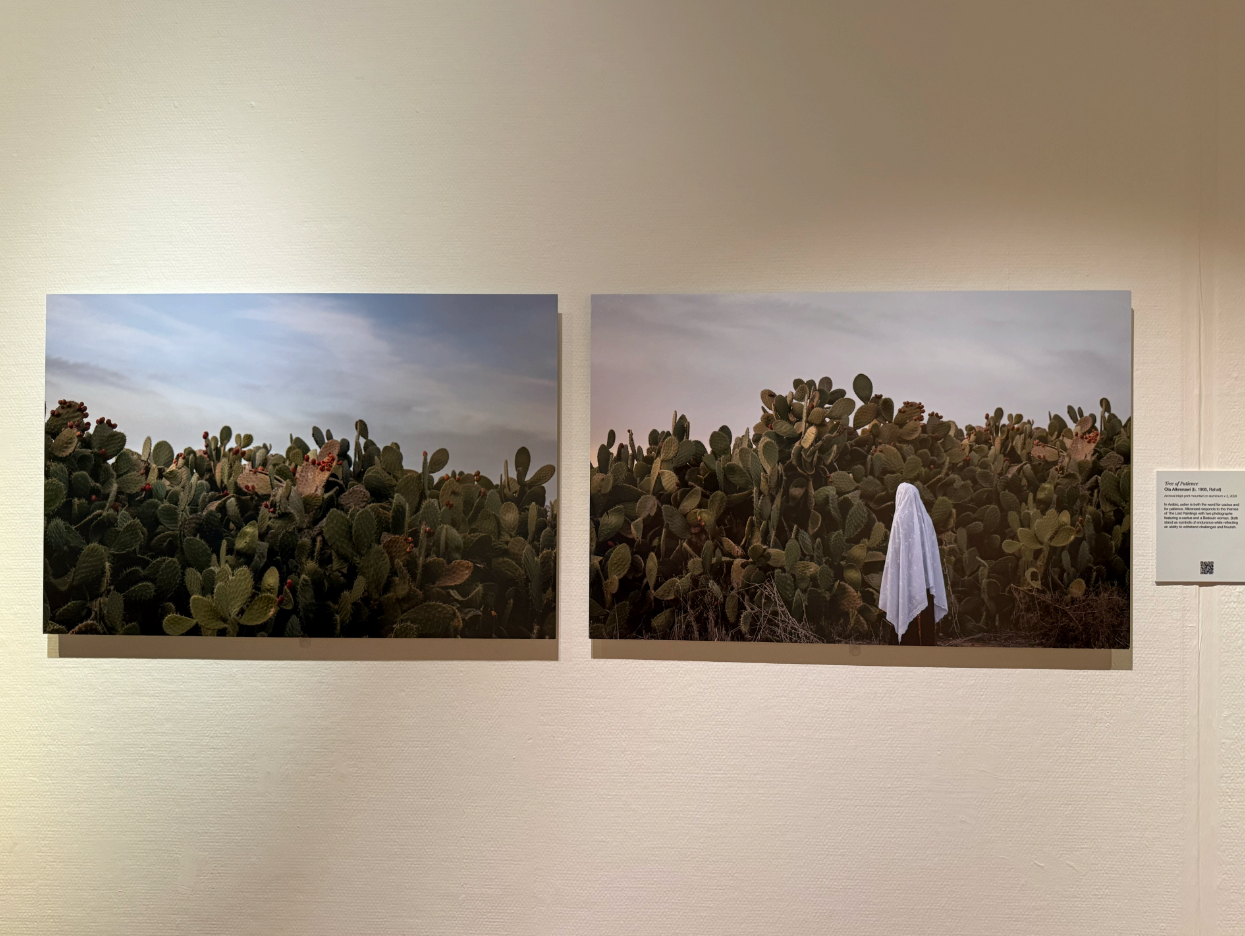
There is something unusual about building an exhibition around paintings that no longer exist. How can you curate something through absence?
The intention, Haidi explained, was never to recreate Tomb’s exhibition. There was no visual record to work from, and that absence became part of the process. Instead, it opened up possibilities. The artists were given the freedom to ask what those titles might mean now. The titles became a way of moving between three lenses: how things were, how they are now, and how they could be. The project asks what can be made from what remains, and what contemporary Palestinian artists can say about that loss from where they are now.
By the time the exhibition was developing, the distance between 1948 and the present had become harder to ignore. The project began in 2023, before the ongoing genocide in Gaza. As the artists worked, some had family members in Gaza, and the exhibition changed and developed with them. It therefore became not only about what was lost in 1948, during the Nakba and in the following years, but about what is being lost, documented and remembered now, as we speak.
That raises another question: who gets to tell this history?
It is a particularly relevant question in Bristol.
The city has spent years confronting its own connections to slavery, colonialism and the wealth built through them. Bristol Museum & Art Gallery is part of that history. The building was funded in 1905 by George and Henry Wills, whose family made huge sums of money from the tobacco industry. The tobacco they bought was grown by enslaved people in the southern United States. Against that background, an exhibition concerned with colonialism, cultural erasure, and the loss of identity and history takes on another layer of meaning inside the museum.
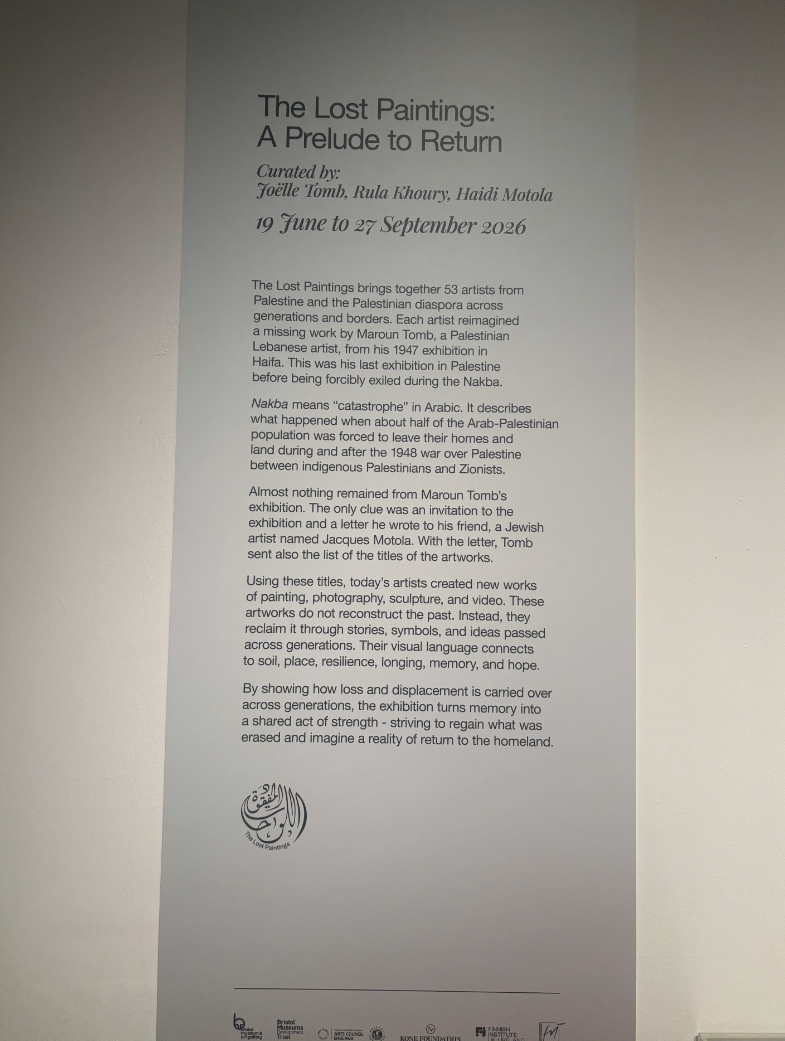
How important was it to you that this exhibition was shaped by Palestinian artists and curators themselves, including voices from both Palestine and the diaspora?
Haifa, where Tomb’s exhibition was supposed to take place, is itself central to that history. The city remains marked by the consequences of the Nakba, while Palestinian communities continue to live across different geographies and with looming questions surrounding heritage and belonging. For the project, bringing together artists from different Palestinian communities was therefore essential. The question is not simply how Palestine is represented, but who is doing the representing.
Here, the artists and curators are responding to fragments of an interrupted exhibition through their own experiences, family histories and imaginations. A project that began with one surviving letter became a way of uncovering stories that had also been fragmented or forgotten. Haidi explains that, for Joëlle Tomb, who is descended from Maroun Tomb, the exhibition became a discovery of her own family history. Researching the lost exhibition brought back a part of that history that had been taken away. The exhibition was initially called The Lost Paintings. Later, as the idea of return became increasingly central to the project, A Prelude to Return was added, shifting the focus away from what had disappeared and instead towards what the future might hold.
 Tessa L Holmes
I wondered what “return” was referring to. To history? Legacy? Maybe to ourselves?
For Haidi, return is more literal. It refers to the right of return of Palestinian refugees, unfortunately something a single exhibition cannot make happen on its own, but something that can continue to be spoken about, remembered and imagined. In that sense, the exhibition becomes a space for keeping return alive until it can become concrete.
I asked Haidi if there is a specific work or space in the exhibition that she personally finds difficult to walk past.
One of the works Haidi spoke about most strongly is by Sliman Mansour, one of the major figures in Palestinian art, who died on 24 August 2026 at the age of 79. Mansour took part in the project and created new work specifically for the exhibition. He was part of a generation that helped shape Palestinian visual culture, and his work continues to be closely associated with resistance.
Today, almost 80 years after Tomb prepared an exhibition that was never seen, another group of Palestinian artists have been able to fill a museum with their voices. The original paintings are still gone, but what remains are the titles, the artists who have chosen to respond, and the curators who have carried the project forward. That is where The Lost Paintings: A Prelude to Return finds its present tense: not in reconstructing what was lost, but in asking what can still be made, remembered and returned.
The Lost Paintings: A Prelude to Return is at Bristol Museum & Art Gallery until 27 September 2026. More information can be found through their Instagram account: @lostpaintingsproject.
Featured image: Epigram / Lara Kurtulus
Will you be visiting the exhibition?