By Cameron Lawrence, Fourth year, Liberal Arts
War films have been at the heart of cinema for decades . However, the purpose of cinematising war is much harder to pin down. In an age of constant exposure to conflicts accross the world through social media, films about war often provide us with a different reality.
Up-close graphic violence, death and terror pervades the genre. This begs the question, does any depiction of conflict make war palatable and even entertaining to a viewer? Or is it simply glorifying and stylising the loss of life that comes with warfare? Steven Spielberg argues, “Any war movie, good or bad, is an anti-war movie”. Depicting violence that come with conflict does not automatically make a film anti-war. So, is it possible for these films to lobby against war whilst stylising brutality for our screens?
“Every film about war ends up being pro-war”. Stated filmmaker Francois Truffaut. While Truffaut’s claim oversimplifies an extremely complicated issue, it does raise the question of what a war film’s purpose is. The basis of his claim is that all cinema is, at the core, made to entertain, and to trigger an emotional response. War films are no exception to this: fundamentally they are made as entertainment. Each frame, each gunshot and death is intentional. Every directorial decision made inevitably impacts the audience and wets an appetite for brutality. The audience becomes invested in the bloodshed, mourning the death of a film’s hero, cheering the downfall of the antagonist. We internalise the battlefield on screen, often provoking a physiological response.
Recent scientific research help further the understanding behind this. In ‘Neurocinematics’, a term coined by neuroscientist Uri Hasson, MRI and biometric scanning are used to study how the brain responds to cinematic stimuli. Hasson finds at the core of Neurocinematics that the brain cannot distinguish between a real threat and a simulated one, and so our brains respond with adrenaline when faced with these stimuli. This includes the threats to human life depicted in war films; herein lies the paradox. War films frequently portray viscerally gruesome combat sequences, and the human response is to produce adrenaline. This inherent and irrepressible reaction forces a person into a state of heightened alertness which transforms the viewing experience into one of greater engagement and potential excitement. Neurocinematics therefore reveals how the spectacle produced by a war film – whether its director believes they are making something anti-war or not – is objectively alluring and so risks losing any pacifist intention through glorification.
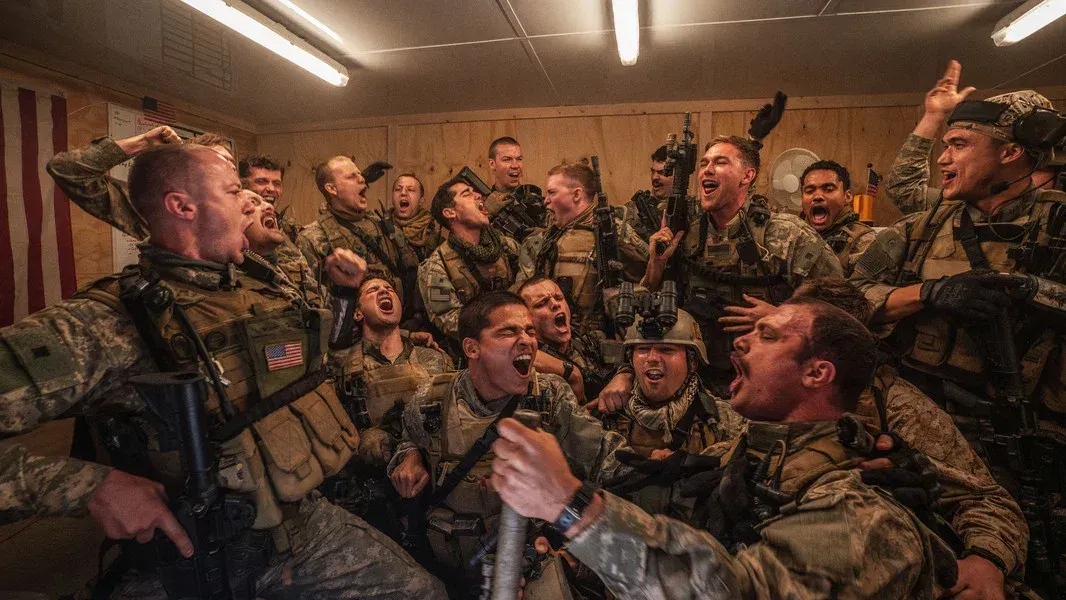
Of course, it is almost impossible for a film to be successful without the traits which make it an alluring spectacle, or simply a good film. Warfare (2025), the latest film by Alex Garland – 28 Days Later (2002) and Ex Machina (2014), is undoubtedly a good film: it’s sound design alone should be lauded for its brilliance. However, it is not a good anti-war film. A lot of this is because it misses a major feature of what make’s something anti-war: the acknowledgement that the war and violence it depicts was not justifiable. Like Spielberg, Garland argued that any authentic war movie is automatically anti-war. Discussing Warfare (2025), Garland said, “I would say it’s not possible to show war in any way that resembles what it really is... without it being anti-war”. Warfare follows a platoon of American Navy SEALs in a surveillance mission gone wrong in 2006 during the Second Gulf War. Despite Garland’s assertions, to say Warfare is a controversially labelled anti-war film is a great understatement. And this is simply because it fails to acknowledge the unjustness of America’s war in Iraq. There is no mention of why the Americans are there in the first place, or of how the war began under the accusations that Iraq possessed WMD’s. For a film to truly be ‘anti-war’, surely there must be at least some reflection on why that war should never have happened, on why the soldiers it depicts should not have had to endure what we are witnessing on screen. Without this, the violence on screen does little other than glorify and submit to the making of spectacle.
 Megan Mclean
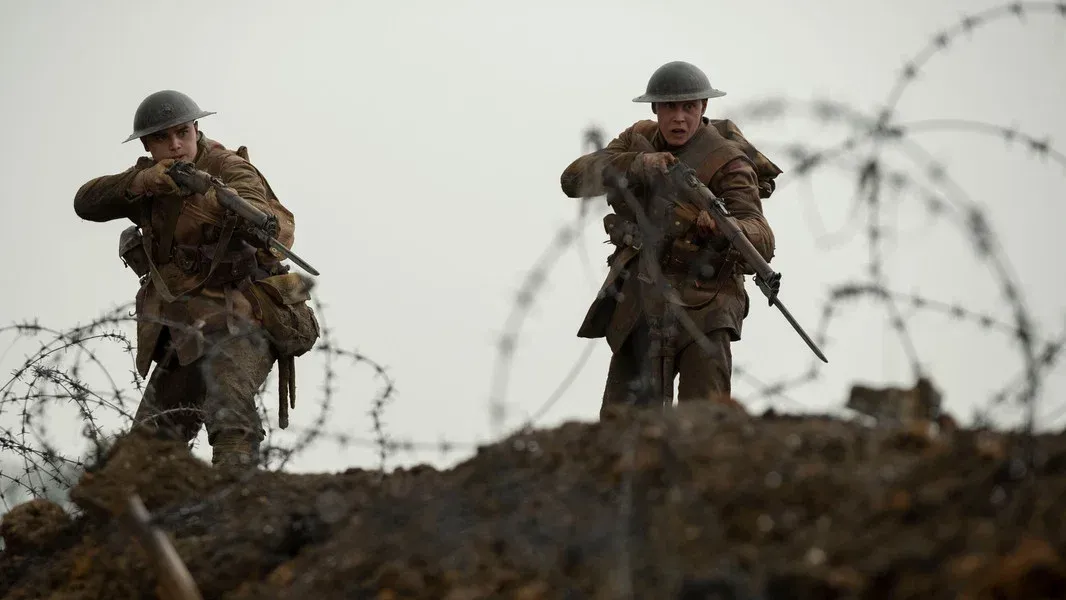
But perhaps the issue with Warfare is not that it glorifies bloodshed. Within Stanley Kubrick’s illustrious career, he made multiple war films including Paths of Glory (1957) and Full Metal Jacket (1987). Regarding the latter, Kubrick famously remarked “it’s not pro-war or anti-war. It’s just the way things are”. For me, this is what Warfare succeeds at, it's neutrality and simplicity are for me what make it a brilliant war film. As well as this, it is birthed from real life experience: the film was based on the co-director Ray Mendoza’s personal experiences. Instead, therefore, the issue is with how it was marketed and advertised as anti-war.
For Warfare, and any film, to be convincingly anti-war it cannot just rely on the argument that showing the brutalities of violence make it anti-war. More must be done by filmmakers to ensure films depicting the gruesome reality of past conflicts are acknowledging the reasons for the violence. Without conveying this – the irrationality of violence – a war film will always run the risk glorifying and romanticising. By avoiding glorification, capturing the full devastation of conflict, and respecting the stories it portrays, a film can legitimately be deemed ‘anti-war’.
Featured image: TMDB / Warfare IMDB
What do you think makes a film anti-war?