By Charles Hubbard, Film & TV Deputy Editor
Gregory Doran is regarded by many to be one of the finest living Shakespearean directors. Artistic Director of the Royal Shakespeare Company for ten years, he has worked with such legendary Shakespeareans as Patrick Stewart, Simon Russell Beale and Anthony Sher, who was also his husband until his death in 2021.
So hearing that Doran has decided to direct a production for Bristol Old Vic Theatre School (the school Doran himself is an alumnus of) to celebrate the school’s 80th anniversary is a little like hearing that LeBron James is taking some time off from the NBA to do a season of secondary school little league. Only this particular occasion sees James swaggering onto said court and then finding out that he has forgotten how to dribble.
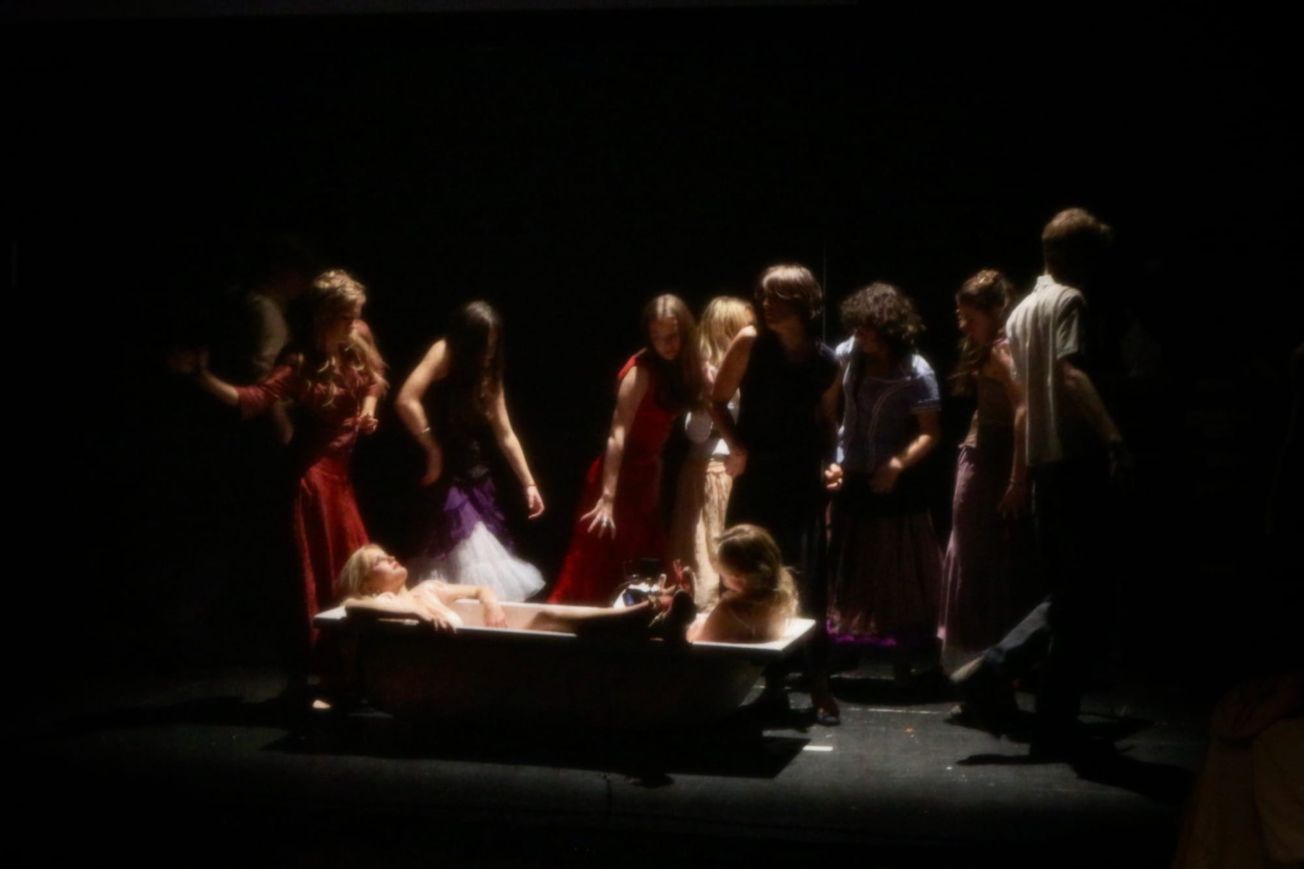
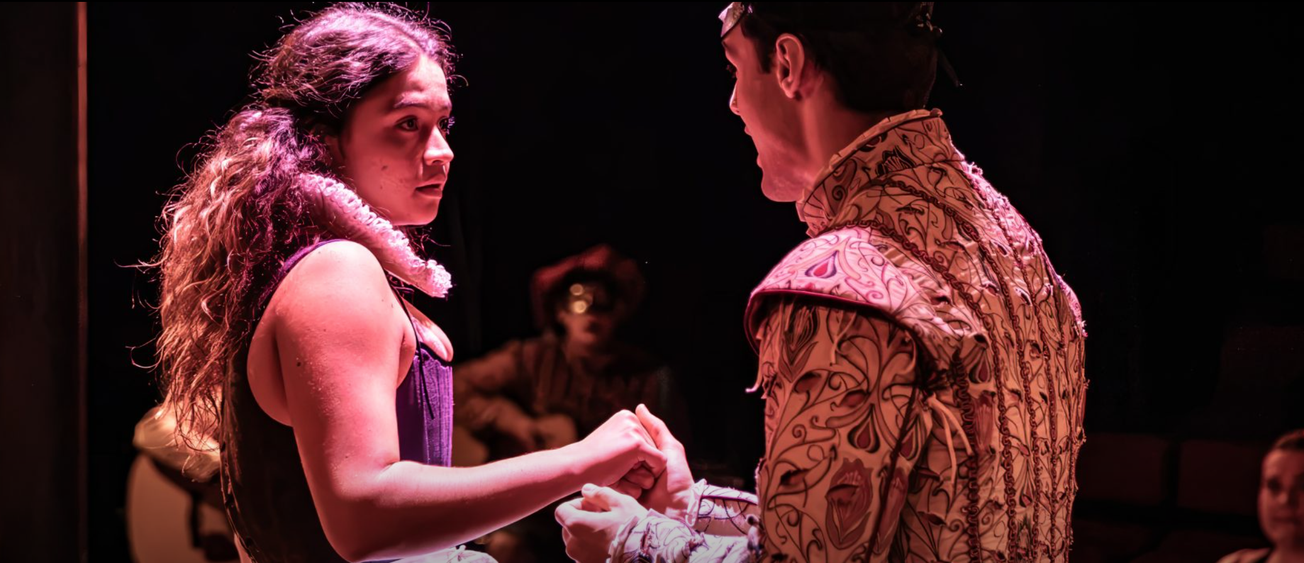
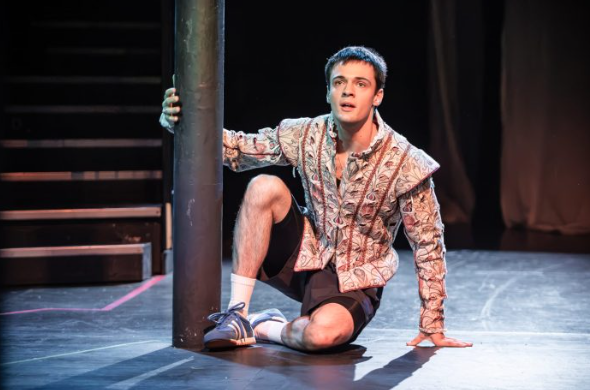
As referenced in the entirely inexplicable programme note written by Misha Nye, Doran’s big concept for this production is to make it a ‘rehearsal room production’. Reminiscent of (but not nearly as cogent as) the 1964 John Gielgud / Richard Burton Broadway production of Hamlet, in which the performers wore the clothes they would have done to a rehearsal, the costumes mark a mix of contemporary wear and more traditional period costume with the stage floor taped out as you would see in any rehearsal room. For almost his entire career, Doran has shied away from the kinds of big-swing directorial concepts his contemporaries indulged in (upon taking the role of Artistic Director, he smugly claimed that he would put the ‘Shakespeare’ back in ‘Royal Shakespeare Company’). And now I can see why - he’s no damn good at them!
As the audience enters the auditorium, virtually the entire cast are warming up onstage, which gave me the rather funny thought that they must have had to do a warm-up for this warm-up before the house was opened. Announcements on the intercom signal to the performers their five-minute calls and beginners’ calls. Now, Doran reportedly prides himself on being a ‘rehearsal room director’ so why does this pre-show make it seem like he’s never set foot in one? Why are the performers warming up so assiduously for what is supposed to be a rehearsal? Why do they not rush to their starting marks when their beginners’ call is announced? And why, oh why is an intercom announcement read out as “standby music, sound and lighting” when anybody who has ever heard a show called knows that is not how it works!? I know these quibbles may seem pedantic but, if this is how Doran is first going to present his concept to a presumably theatre-literate audience, he really needs to get the details right!
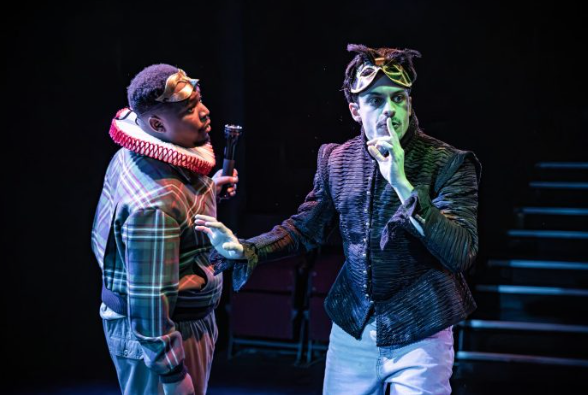
As the lights go down and the performers put all their hands together in the centre (Doran got that bit of pre-show conduct right at least), they then all exit the stage (save for a few performers) and the opening “two households” prologue commences as usual and any semblance of the audience watching a rehearsal room vanishes. So what the fuck was the point of the pre-show? The mixed costumes (designed and supervised by Jill Blundell) - usually an Elizabethan shirt or ruff over a t-shirt and shorts - is an interesting opportunity to expand upon the rehearsal room idea but remains entirely unexplored.
And there are so many avenues to go down for the costumes. You could have the Montagues in period costume and the Capulets in modern dress or vice versa. You could have the high-status characters in period costume and the low-status ones in modern dress. You could have the performers slowly accumulate period costumes, or shed them instead, as the melodrama progresses. Doran and Blundell opt for nothing, rather choosing each costume entirely arbitrarily. And the tape on the floor is another wasted opportunity as, with the exception of the “I defy you, stars!” scene, they are never used to signify different locations in the play with the performers trampling over all the lines willy nilly. In other words, if an audience member had entered but 30 seconds late, they’d miss the bus on Doran’s entire concept and wonder why the hell there was tape over the floor. And if your concept can’t even survive a one minute tardiness, I’m afraid it’s back to the drawing board!
It’s also worth noting that the text remains entirely unabridged, turning the “two hours traffic” described by the prologue into a “two hours and 45 minutes traffic” - though I doubt that would fit in iambic pentameter. Nye’s programme note attempts to justify this by saying that the text doesn’t need to be updated because of the “metatheatrical conceit” when it’s obvious Doran is just too much of a prissy, regressive purist to stomach cutting but a word of Shakespeare’s sacred text. And viewing it in its unabridged form makes you really value the cuts that are often made by smarter directors and dramaturgs, such as Romeo’s murder of Paris (staged here by some admittedly fantastic stage combat), which adds nothing and slows down the play’s pace when it needs to speed forwards the most.
And yet Doran feels the need to pointlessly gild the lily of Shakespeare’s jokes by having several annoying side characters utter “prick” or “what the fuck is he on about?” at certain moments as if the audience is so stupid they need someone to turn to them and signal something that is extremely clear to even a total Shakespeare virgin. Speaking of which, despite the long list of creative and technical team members who line this programme (almost exclusively a mixture of visiting professionals and BOVTS staff), there is no credited dramaturg and this is glaringly obvious from the first second to the last. Maybe Doran feels he is already such a Shakespeare pro that he doesn’t need one. Think again, Greg.
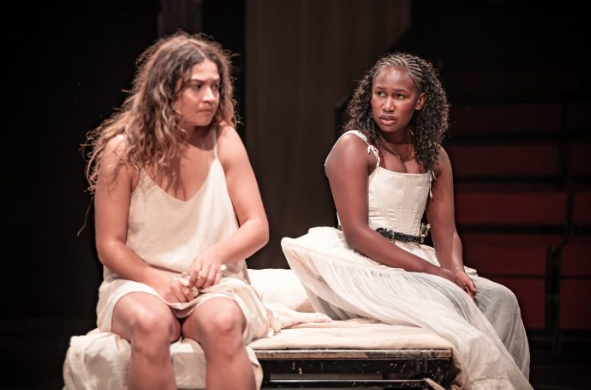
I genuinely feel bad that I’m almost at the end of this extremely angry review and I haven’t even mentioned any of the actors, who are all extremely talented and undoubtedly have bright futures ahead of them. Sam Lawless (a big win for nominative determinism when you consider his character’s second-act status as an exile) is a great Romeo, selling his pathetic teenage devastation with a commendable lack of embarrassment and Robyn Mirmak is an electric Juliet from beginning to end, potentially even surpassing Sadie Sink’s invigorating but inconsistent turn in the West End earlier this year.
 Daisy Guilor

And I have to imagine Doran deserves a scant modicum of credit for these performances as well (it’s unlikely they were all this good at the beginning of the rehearsal process) and I wish he would have never tried to pretend that he was adding something to this production beyond doing his old alma mater a favour by letting some third-year undergraduates study at the knee of a supposed master. I’m never one to condemn a director for ‘overwhelming’ a text with their concept - such rhetoric has always stood in the way of vital theatrical innovation - but directors really do need to try harder with their takes if they want us to do anything but laugh derisively when they label a production ‘metatheatrical’.
What's your favourite high-concept production of Shakespeare?