
By Abhishek Garg, Second Year, MA Law
Although losing a loved one is a universally painful experience, the way one lives through it is unique because of their personal subjectivities. Under my materialist, atheistic worldview, death is determinatively final. There is no heaven where I can hope to reconcile, there is no karmic justice to compensate for the loss, there is no God to witness my suffering, and there is no theological framework to explain the why behind it all. Apples fall from trees, the sun rises from the east, and people die.
Even within my own Franklian framework, there was no room left for any further meaning making, because all character building had already taken place in my younger years. Ironically, the meaning that I had arrived at after my first loss – that love, although as fragile as it is, is what gives meaning to life and so, to hold on to it, as you would hold on to life itself, only served to add more weight to my grief. And so, all that remained for me, was raw, unannounced shivers of grief to be endured for the better part of the year.
On Grief
The first week is a haze. No dinner, no shower, not even brushing my teeth. I do put on a professional mask to get on with my daily chores, but as soon as I am back in my room, I collapse on to my bed. Just sheer collapse, without warning, without even a change of clothes, as if I had dropped dead. I lie on my stomach, absolutely still, and simply witness feverish tremors wash over my body, right from my feet to my chest, as if I were holding an electrical fence.
It was one particular song by CAS, that I played on repeat, and pieces of writing, especially by David Foster Wallace (who died in the same manner as my friend), that kept me company in this period. Art hits different in the midst of an emotional storm. It is not aesthetic appreciation, it is more as if the elegiac strains in a piece start to flow through you, in sync with the rhythm of your heartbeat. In those moments, art serves as a bridge between humans who have never physically met yet end up piercing the otherness between them. ‘Everything I have ever let go of has claw marks on it.’ These words made me feel seen, and although the weight of the pain did not lessen, there was a sense of solidarity in recognising that others like me have also carried something equally heavy.
As involuntary as grief was, my attempt to recover was every bit intentional. The first night, I brushed my teeth and then went to bed. The second night, I had a meal deal for dinner, brushed my teeth, and then went to bed. The third night, I cooked dinner, showered, brushed my teeth, planned for the next day, and then went to bed. I literally took it one day at a time.
Studying became psychological warfare. I first had to distance myself from my own thoughts, carve out a little quiet corner within my mind, rest there, and get to work. But like a ship with a hole, the pain of abandonment, and the unquenchable yearning for reunion, would flood my little corner, and I would be consumed by grief again. A heavy, sinking feeling in my chest and a rush of blood in my face stiffening my jaw – became the signatures of its arrival. And so, I wrote and I wrote. I wrote ten times more in my journal than I did for my law essays.
My mind ran every conceivable counterfactual that could have prevented the loss, every what if, every I wish to its zenith, and then I would rebut it, and then my mind would counter my rebuttals, and so the loop would go on and on and on. I wrote about the plans I had with them, that once made me jump out of bed with excitement but were now dreams that lay strangled to death. I reminisced about my happiest memories with them, and wrote them down in detail, as if I were archiving a treasure. And writing the happiest moments was the hardest part because the contrast of them smiling at me one moment, and ceasing to exist the other, felt disorienting. Like, impossible to reconcile. Like a jarring dream. Like being run over by a truck on a Tuesday afternoon.
When the image of them came up, smiling, sat opposite me at a dinner table, chatting away excitedly, my mind let out a desperate scream, I wanted to rip the air apart, grab their hand and yank them back into my world. But like a fish out of water, all my hopes trembled, suffocated, and died. The mind ends up exhausting itself. And for a while I could work. But the exhaustion was not relief, it was numbness. This was a period where I felt nothing. Not even missing, not even any desire towards my own goals. Nothing. Just emptiness. In that period, I would have rather felt pain than absolutely nothing. If I really hated someone, I would have wished them a day, living inside my head.
On Love
When I am asked about my happiest memories – they’re not when I got my first job or won some competition; they’re always instances involving people that I love – an afternoon watching my then girlfriend play with a Shih Tzu while I lazed under the sun, happens to be one such memory. Or watching my mum water her plants and the smell of wet soil filling up the terrace on one of my last evenings in India. Or how it felt when I squeezed my dog and kissed his ears for the last time right before leaving for the airport. I found the meaning of life through love because existential questions never arose in moments filled with it; instead, what arose was a desire to live forever, a yearning for time to stop and an overflow of gratitude soaking the entirety of my being – in stark contrast to my otherwise melancholic temperament.
Even in these moments, I am fully aware of how fleeting they are, that the people I draw the will to live from will change, grow old, even perhaps stop reciprocating my love, and eventually die. The Buddha dealt with impermanence by practicing detachment which makes sense if you are trying to minimise suffering: if you eventually have to let go, why even get attached in the first place? On the other hand, I dealt with impermanence through all-consuming attachment, to hold on as tightly as I can and for as long as I can, precisely because it will not last. And so, I keep my eyelids wide open to truly take in the moment, to slow down my breathing and quieten the chatter in my mind and try to hold onto that moment, that particular version of myself and my loved one. And when the moment becomes a memory, I travel back in time to that particular evening, and live it again minute by minute, trying to evoke the same lightness of being, the same zest for life, the same spring in my step that I had felt on that particular day. I try to entrench the memory onto my heart, resisting our involuntary nature of forgetting which eventually does blur and fragment parts of my memory. Even my memories are not fully mine to keep. I do not let go of anything. Time and death wrench it from my fist.
The cost of holding on is that it locks me out of participating in the present moment. The tightness in my jaw makes smiling feel like emotional labour; their constant remembrance in my head filtered every sunny day through a grey lens; a new pair of leather boots that I had purchased, remained packed for months; the drive to become a big lawyer faded away, because without them, every success felt pointless, every joy felt hollow. And it is the final semester of my degree, with exams right around the corner. The stakes could not be higher. I remind myself that this is an experience for which I have invested £100k in. I remind myself that my parents have never even travelled outside of India, they have never even attended any university, let alone study internationally. This was an experience for which I had left my parents, my childhood friends, and my dog behind. But knowing that you need to let go cognitively is one thing, following through emotionally is another. I simply could not recognise myself in the mirror.
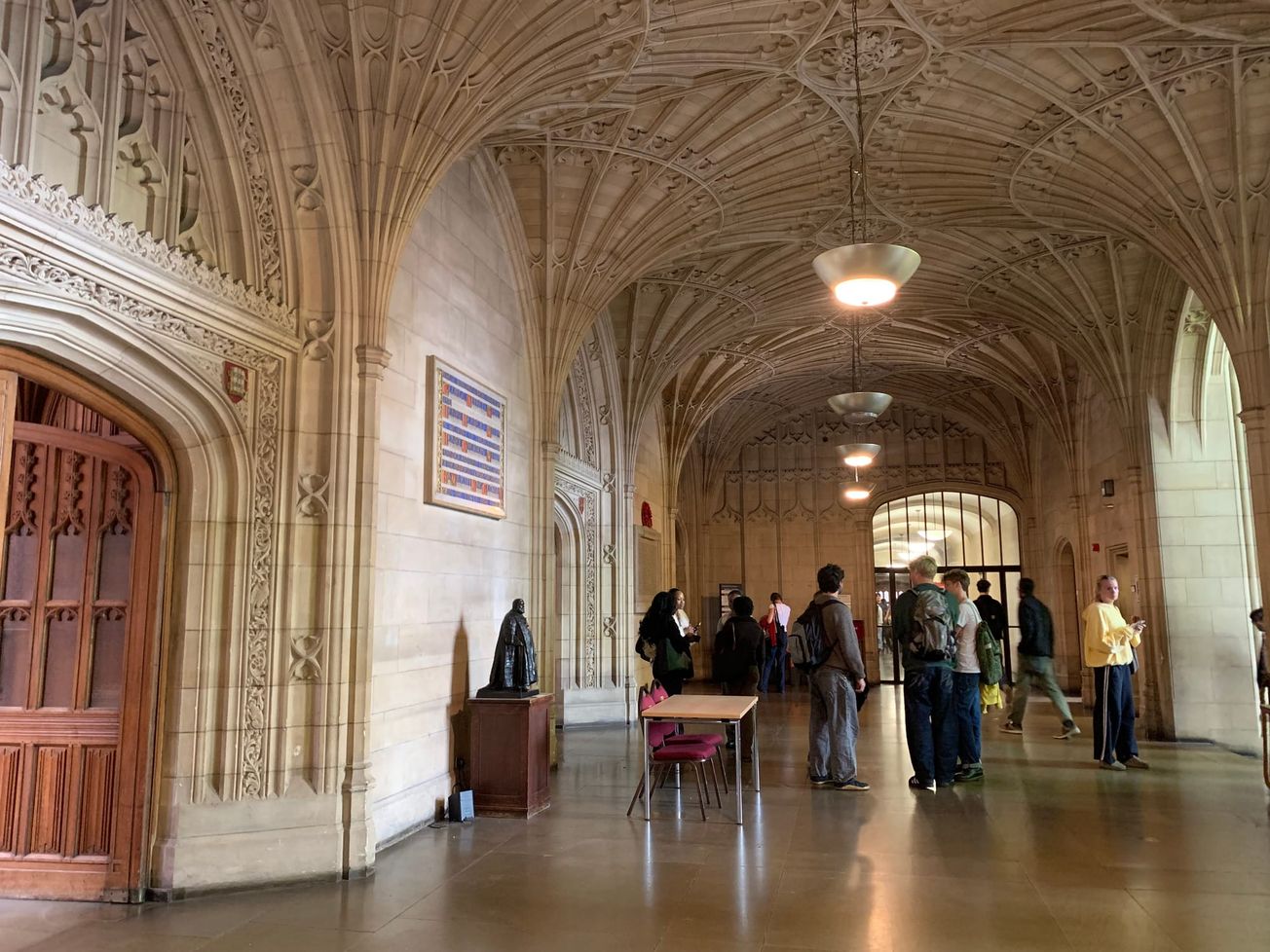
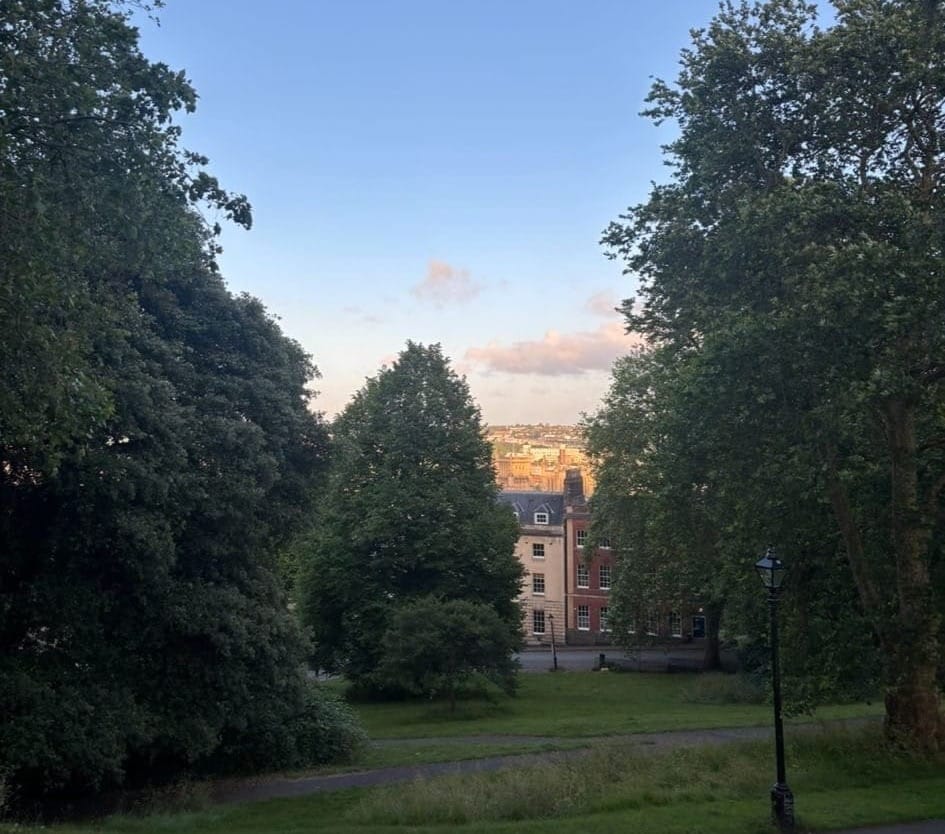
Prior to bereavement, I was not just living outside of my comfort zone, I was stretching out its frontiers to the hilt. I did BP debating, mooting, negotiations, wild swimming, cycling, I founded a Postgraduate Law Society, attended several law firm dinners, I pursued legal action against my racist landlord and got his contract cancelled with the letting agency, I even won a couple of grand from the university against a misleading advertisement and I scored in the top 10% of my cohort in year 1. And so, I try to tap into the old version of me that felt alive. I lean into the fact that I am in England, the place I grew up reading about in Enid Blyton novels as a nine-year-old kid in Delhi. That I love Bristol, I love studying in the Wills Memorial Library, spending time in Brandon Hill, and taking in the architecture on my walks.
On Letting Go
A part of me that grieves wants to grieve to drive home the significance of the loss. But to whom? I already know this. I know life will never be the same again. To them? I wish they could see the gaping hole they left behind. But that is not a possibility. I wish there were a final goodbye. But they simply ghosted out of existence. I wish there were a god, so that I could at least pray and give my grief some direction. But there is no god. Then what is it that stops me from letting go? Fear. I fear forgetting them because letting go of grief would mean letting go of the last thread that is keeping me attached to them. And so, I hold on.
I needed to let go to save my life. And so, the next time my flatmate asked me how I was doing, I teared up. He held me. And I fell apart. Completely. And I wailed. Like Jesse Pinkman after Jane’s death. I wailed. That night I slept without any music. The next time I was struck by grief while sat in the east wing of Wills, I stepped out, allowed myself to get swept up by the wave instead of resisting it, and cried again. And then went back to work.
Letting go meant letting go of my worldview too. A partial breakdown does not necessitate change because you can still patch up your old framework and make it work again. But a total breakdown inevitably requires building your worldview from the ground up. I was tempted by Jesus’s story of resurrecting Lazarus, but it obviously is not true. Even if true, what is the point? Lazarus would have died again. Instead, Buddha, although harsh, although insensitive, was far more realistic when he asked a grieving mother to get a mustard seed from a home untouched by death. And so, like the grieving mother, I turned to the Buddha and began a zazen practice. Suffering opens doors to spiritual seeking because in those moments, you want to believe in anything that takes the pain away. But even in these moments, I am glad I kept my scepticism and simply used the Buddha’s teachings as a psychological tool, while discarding all the metaphysical claims.
And so, I closed my eyes and went face to face with the mind’s cravings, regrets, and fears. I simply witnessed them come up, resisted the urge to intervene, and then witnessed them fade away. The refusal to identify with my thoughts, or my moods, was liberating. But after months of living with a whirlpool in my head, the newfound glimpses of silence that I could now access within myself, felt scary and unfamiliar. But I stuck with the practice, and it helped massively. Through zen, I found a stable anchor within myself, a centre that was unchanging, a space where I could finally rest. It did not eliminate pain; it just changed my relationship with it. So, when the waves struck again, while I was poring over my Trusts coursework in May, I merely witnessed the way they gripped my mind, from a distance, without letting them consume me. And that little distance became my refuge for the entire duration of the exam season. Through zen, I let go of my mind.
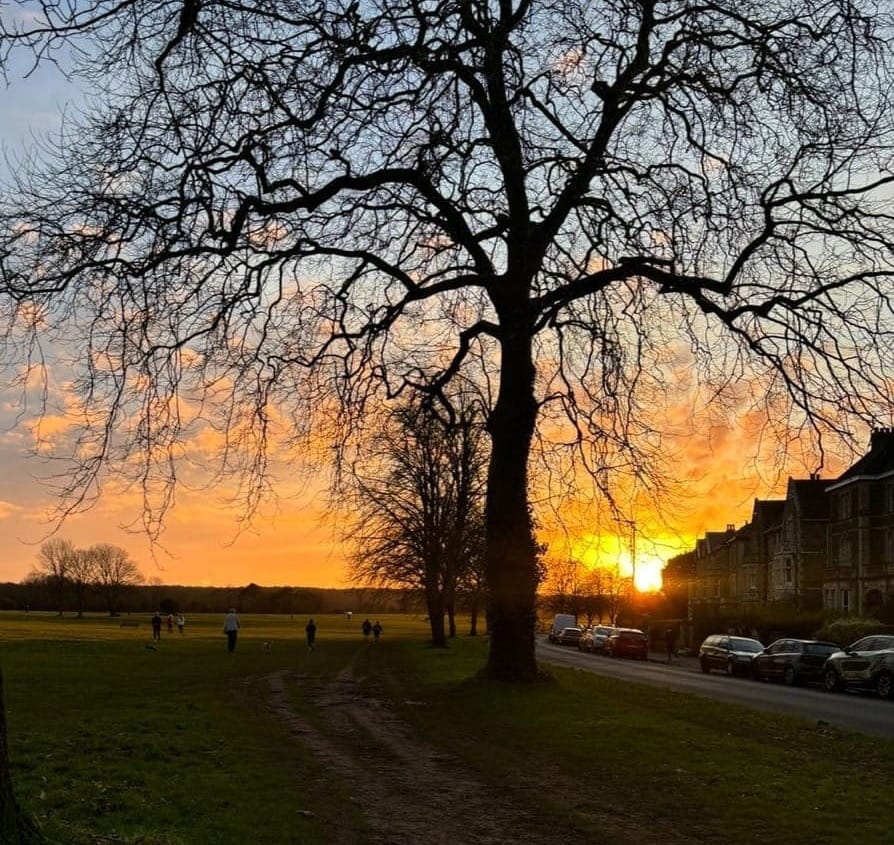
After exams, I also attempted to revive my workout routine. The first day, I could barely run for five minutes. Grief had rendered my otherwise athletic body, stiff and fatigued. I went to the calisthenics area and struggled to even hang at the bar. So instead, I went on a walk and watched the sun set. I look at the sun. I inhale. I exhale. Between these two breaths, there is a gap. I pause there. There is something about nature. Watching the sunset for me became an exercise in letting go. I watched it at Brandon Hill, at the Downs, at the harbour, and at Clevedon. I watched the apple tree in front of my house begin to fruit again. And with the return of summer, my body’s athleticism began to return too. First, with a 2k. Then a 5k. Then a 7k. Then a 10k. And then even a 15k. All alone. With no witnesses.
 Laura Cooper
Love changes form. And so does grief. I loved the way they used to light up like a child at very little things. And so, I let go of the pain of their absence, and instead, chose to keep their almost stubborn determination to find joy. I let go of loving with a clenched fist and instead learnt to love with an open palm, because holding on is futile. I learnt, simply to let love flow through me, like a breeze. So even while fading away, it leaves a lingering fragrance on my hands, before even the fragrance fades away, and ultimately so do my hands. And so, step by step, sunset after sunset, rep after rep, I let go. In the months that followed, I repeated these two words like a mantra to myself.
Death is the touchstone of what is mine and what is not mine. And in death, even my own self is not mine. Even those who I think are mine are not mine because there is no way that I can read the script of their interiority, no way that I can decipher the alphabet of their souls, and so no matter how well I think I know them, a part of their subjectivity will always remain alienated from me. This is my lesson. And this writing is the receipt of the price I paid for it.
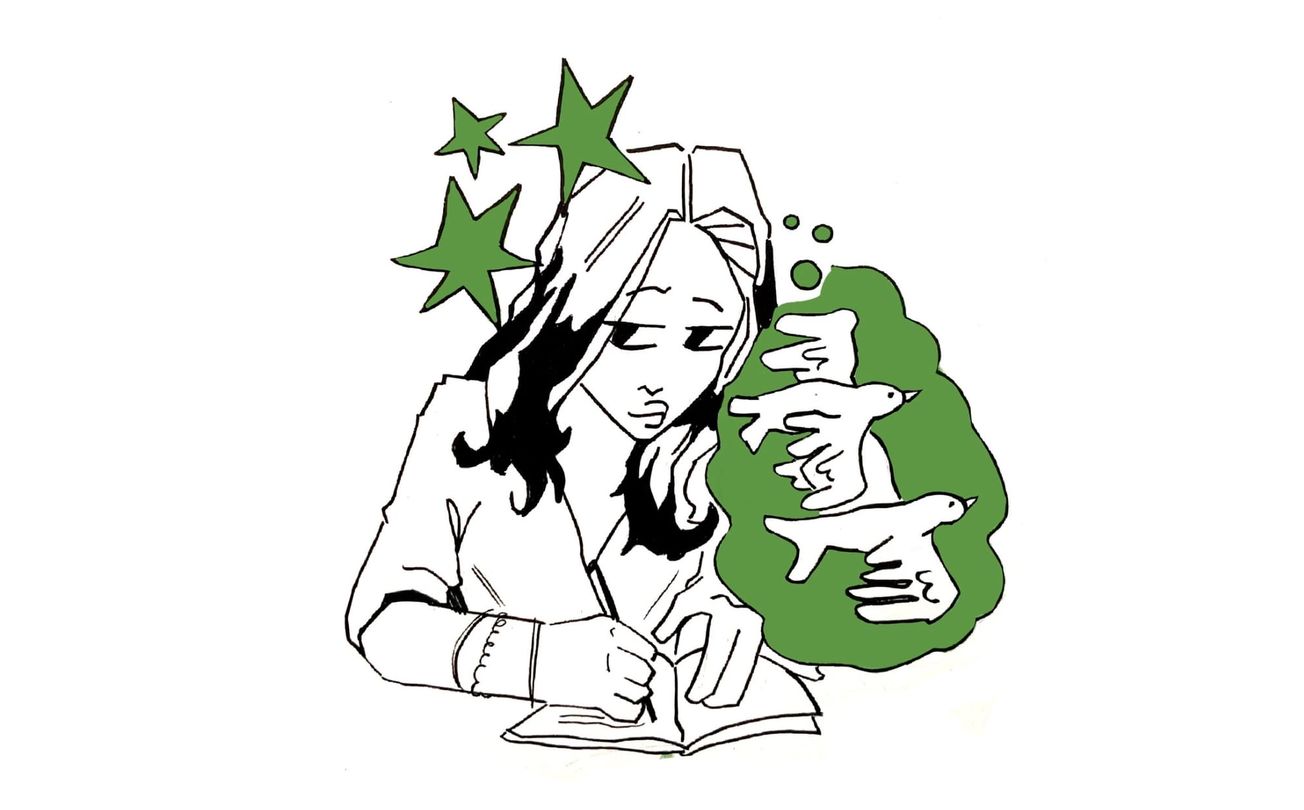
Featured Image: Epigram / Abhishek Garg