Lately, it’s been looking like we’ve got fascism on the back foot. The Republican party had its corrupt, warmongering arses handed to them in the recent US midterms, the citizens of both Brazil and Serbia recently chose to kick their right-wing parties to the curb and even our very own ghoulish degenerates in the Reform party seem to be slipping in the poles.
So it feels fitting and characteristic, if a little depressing, that the spectacularly pessimistic Irish playwright-turned-director Martin McDonagh is swinging in to remind us that, while American politics used to be pretty good at keeping its fascist features hidden from its own citizens, it was perfectly happy to let the mask slip right off in its dealings overseas.
A film where you’re never quite sure whether it’s sufficiently guilty enough about the prior actions of its protagonists, or if said guilt is even valuable or productive in this instance, Wild Horse Nine (2026) takes the paranoid anxiety, existential musings and neutered anger of McDonagh’s previous characters and applies it to two men who deserve none of our sympathy and even less of our good humour. Commendably clear-eyed about the violent, authoritarian havoc that the White House has gleefully indulged in creating in virtually every third world country since developments in transportation could get shady government agents there soon enough, McDonagh shoves a man who is responsible from everything from Roosevelt’s intervention in the Philippines to the assassination of JFK right into the audience’s retina just as he is about to die horribly, either at the end of his friend’s gun or a malignant cancer cell. An odd concept for a comedy, to be sure, but one that fortunately never lets its audience get too comfortable.
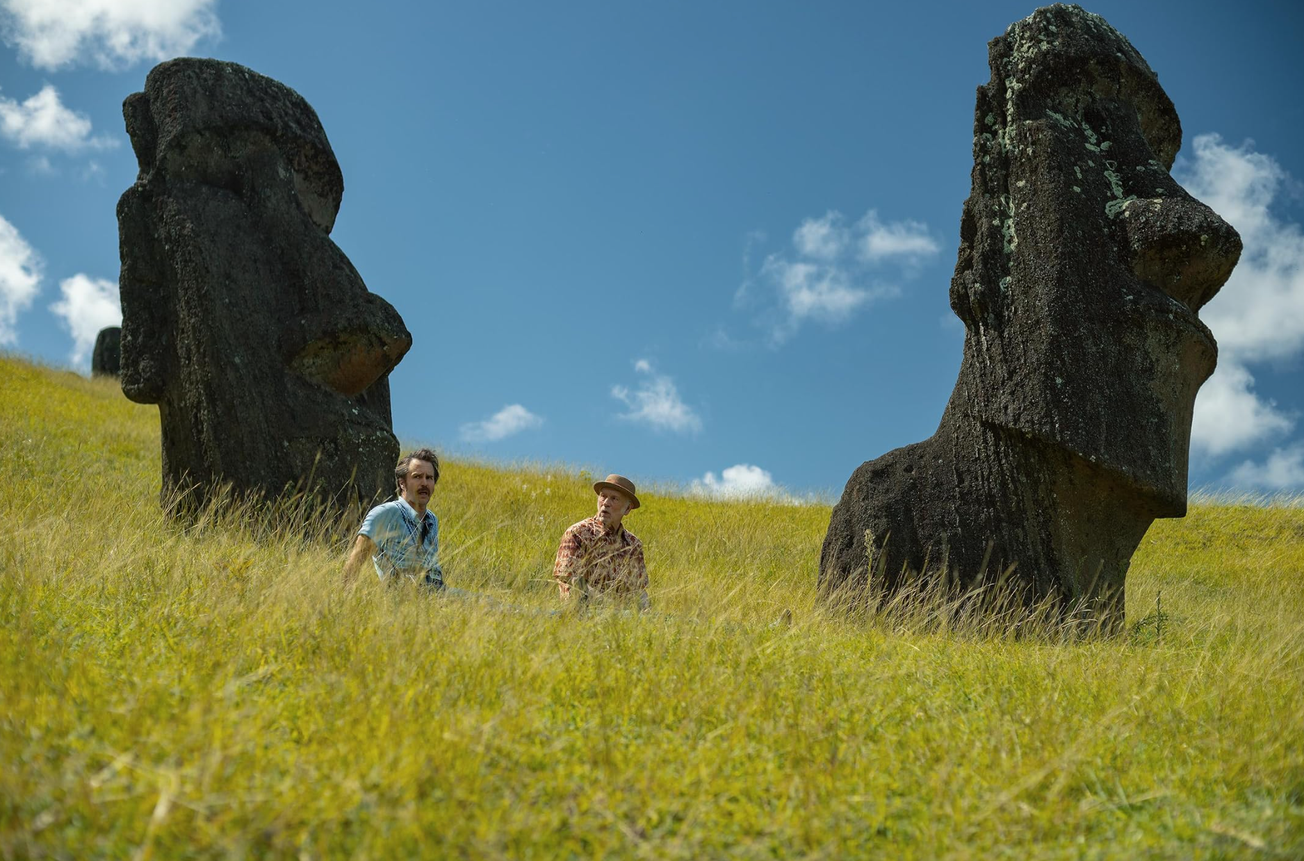
Perpetually eating - and perpetually cuckolded - CIA agent Lee Chesterfield (if you thought Sam Rockwell could never turn in a boring performance, think again) and his senile, cancer-ridden, morphine-addicted partner Chris Carlisle (John Malkovich in a part clearly written as a lay-up for a career Oscar) are laying low in Santiago, Chile while their entirely benevolent and not at all underhand administration, led by the famously upstanding Richard Nixon, are planning the 1973 Chilean coup d’etat. After it becomes clear that Chesterfield can’t help but blab about the upcoming military coup that’s about to happen, they are sent by their pugnacious superior MJ (Steve Buscemi, who presumably was given no direction beyond “just be a Steve Buscemi type!”) to Easter Island to wait for the coup and look at some - as they continually call the moai - some big heads.
The most misleading way about how the film is marketed - beyond the fact that it resembles a Costa-Gavras film more than In Bruges (2008) - is how little of a two-hander it is. Malkovich is given 90% of the meaty material here with Rockwell permitted to do nothing but sit next to him and react incredulously to the various reams of true-sounding bullshit (and bullshit-sounding truths) he continually sprays out. And such a lack of proper food is truly reflected in Rockwell’s performance, which is as checked out as I have ever seen from an actor of his usual level of commitment. I know McDonagh got Rockwell an Oscar for his performance in Three Billboards Outside Ebbing, Missouri (2017) but that doesn’t mean he can’t give him anything to do here!
Malkovich, on the other hand, gives undoubtedly the best performance of his entire career in a role that wields the actor’s entirely unique temperament (and even stories of his bizarre real-life political leanings) like the sharpest of blades. I had long thought Malkovich long over the chill and borderline undirectable since Burn After Reading (2008) - Kevin Feige certainly seemed to think so when he cut him entirely out of The Fantastic Four: First Steps (2025). But his performance here is a perfect swangsong, stripping back Malkovich’s legendary and much-mocked layers of weirdness and affectation to display his long-undertilised well of pathos. I really hope he wins Best Actor for his performance here, if only because it promises to lead to one of the most deranged acceptance speeches of all time.
Indeed, the film’s refusal to launder Carlisle’s politics in any way is both its most impressive risk and the element I suspect will turn many more tentative audience members away. When you’re accustomed to films giving you easy answers (and McDonagh gave into this particularly pernicious impulse with the insidiously syrupy ending of Three Billboards), having the main character virtually turn to the audience and say the only way to preserve democracy and avoid military coups is to murder child soldiers on sight is as shocking as any sudden headshot (and McDonagh certainly isn’t shy about uncorking the corn syrup here). And it’s this violently transgressive, toe-stepping impulse that feels a little at odds with the film’s warmer denouement that looks to tie up so many of the ambiguities that made the previous 90 minutes so enthralling.
 Ines Wotton
While many of McDonagh’s weaker tendencies still persist here, such as his flat, made-for-TV directing style (only broken up by the scenic beauty of Easter Island) and writerly need to underline every symbol several times, Wild Horse Nine is still as thorny and engrossing as anything he’s ever written, even if a good half of the laughs don’t end up hitting the target. While movies made by white people about white protagonists floundering in a foreign country are a bit of a pet peeve of mine, at least McDonagh lays bare the poison of the American imperial ideology, reminding the audience that Trump’s monstrously self-serving decision to wage war in Iran is far from unprecedented.
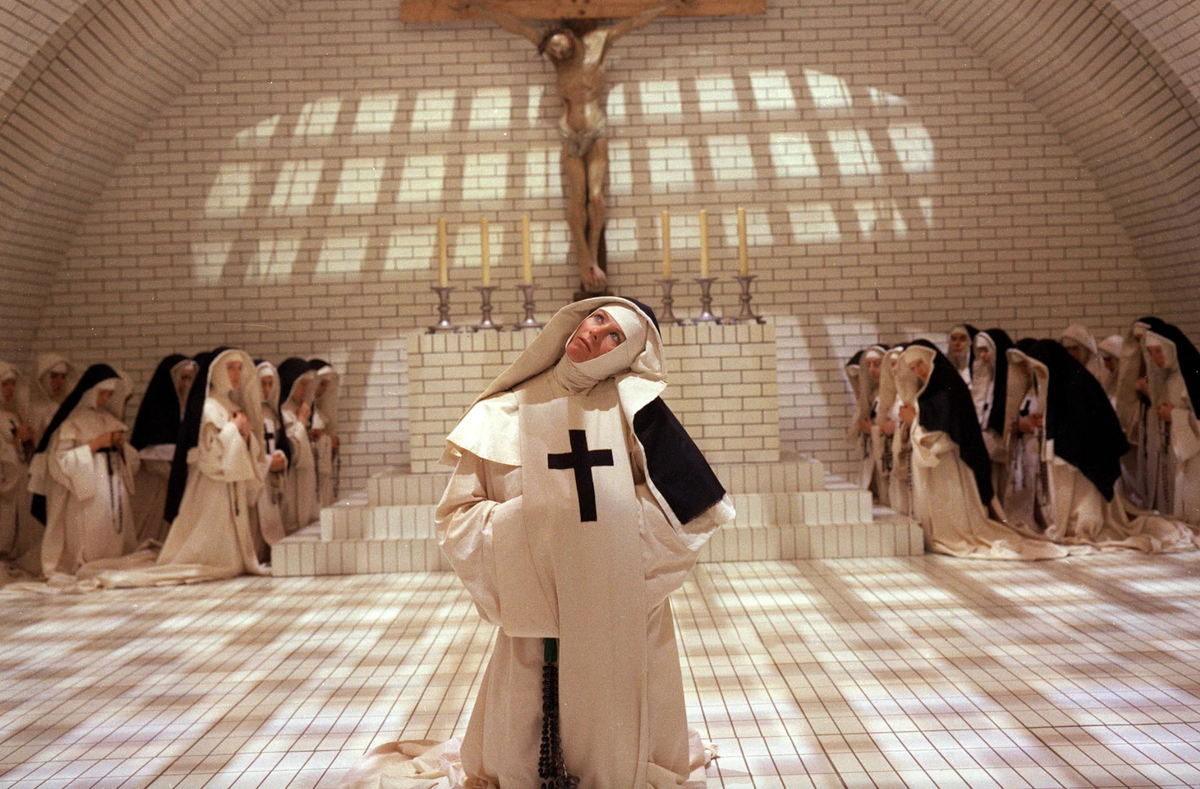
Featured image: IMDb / Wild Horse Nine
Have you seen Wild Horse Nine yet?