There is perhaps no filmmaker whose reputation and career looms so large in film communities yet is so unbeknownst to the wider public as Terrence Malick.
Even strange, uncommercial arthouse darlings like John Cassavetes and Paul Thomas Anderson have slowly achieved a status as somewhat household names. And yet, even in an increasingly digital world where it’s easier than ever for odd, niche curios to find a wider audience, Malick’s body of work is still a blind spot for many.
This is especially anomalous when you consider how often his unique style is brought up in contemporary film criticism. In fact, after a cinematic appreciation of nature became so synonymous with Malick’s name, it’s virtually impossible for a director to cut to a shot of a tree or blade of grass without being asked whether they’re trying to make the next Badlands (1973). My hope is that this article will serve as a friendly introduction to Malick for those entirely unaffiliated with the man’s work and a reminder that even the director’s most ardent fans rarely consider the full breadth of his influence on film history.
The most fascinating contradiction at the heart of Malick’s career is his place within the New Hollywood movement of the 1970s. Kicked off by Bonnie and Clyde (1967) and Easy Rider (1969), this movement birthed a generation of filmmakers who would come to single-handedly dominate critical discourse on the ‘auteur’ for the next 30 years. Namely, the self-described ‘Movie Brats’: Francis Ford Coppola, Steven Spielberg, George Lucas, Martin Scorsese and Brian De Palma.
While Malick is peers with them, he’s different from them in many ways. First, he never achieved anywhere near the level of box office success the rest of the group did - while Coppola, Spielberg and Lucas all directed films that were, for a brief time, the single highest-grossing films ever made, everything Malick directed until the 90s failed to crack $5 million worldwide. This lack of huge financial crossover early in his career is partly responsible for the lack of wider awareness regarding his films but it doesn’t quite complete the picture.
The work of the Movie Brats was most revolutionary - and most relevant to Malick in particular - in how it combined traditionally low-brow material with A-movie budgets and huge waves of critical plaudits. Coppola and Scorsese injected a sense of personal verisimilitude and authenticity into mob movies (a genre typically dismissed as low-class) and were greeted with critical raves, while Spielberg and Lucas laundered B-movie material of spaceships and swashbucklers through the lens of high-brow personnel like Alec Guinness, François Truffaut and John Williams.
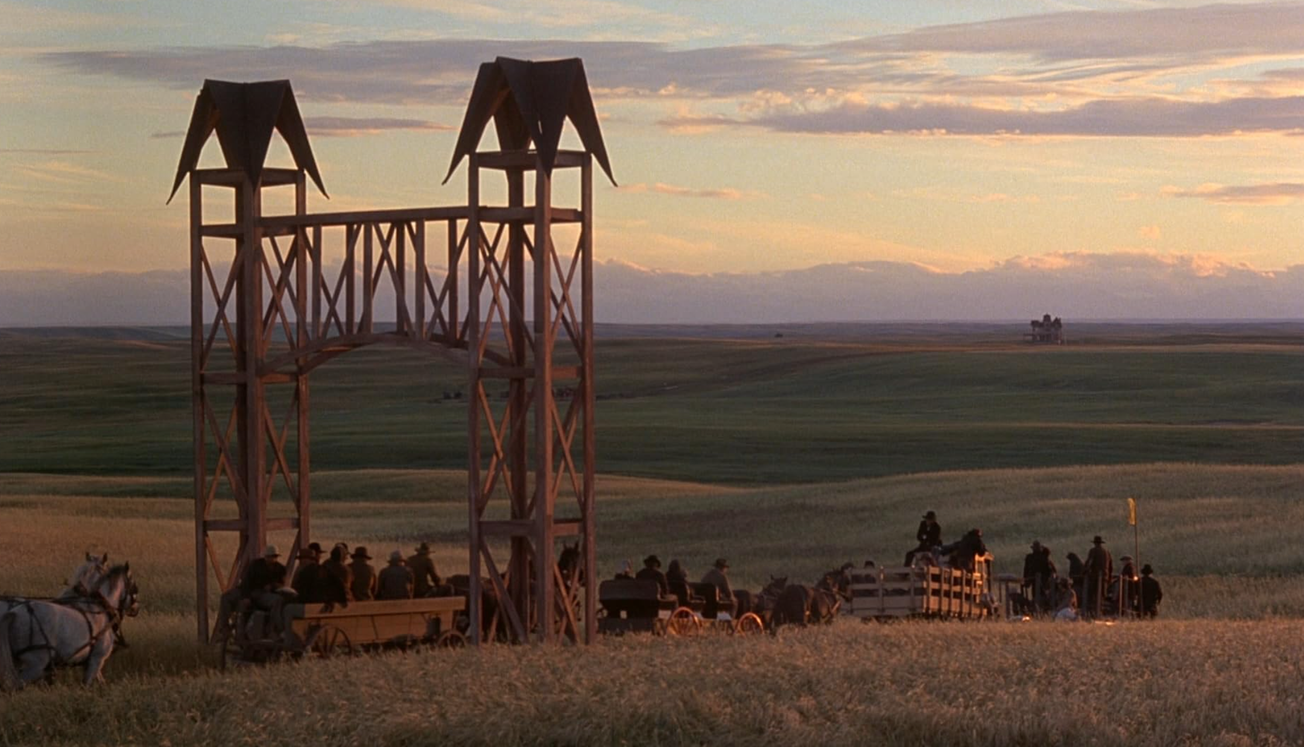
Malick executed this balance most notably and most transformatively with Badlands and Days of Heaven (1978) - both typically pulpy stories of criminal lovers on the run from the law in the Texas panhandle (the comparisons to Bonnie and Clyde are self-evident) - by leaning into philosophical, po-faced seriousness more unabashedly than any of his contemporaries. He did this almost entirely at the expense of a traditional or conventional plot structure - something his more commercial contemporaries, especially Spielberg, would never even dream of. And yet, despite the inherent weirdness of his personal style and tastes, Malick has been given trucks of money by Hollywood studios to realise his thematic and formal experiments time and time again.
It is this level of power achieved without ever having to launder his films into seeming more straight-forwardly marketable or palatable to wider audiences that makes Malick entirely unique in the history of Hollywood. While equally idiosyncratic filmmakers like William Friedkin, Michael Mann and Paul Verhoeven have also been given huge budgets to make wild, uncommercial follies, they were always forced to couch them within the guise of more conventional genre exercises. Malick never had to make any such compromise - his films are arthouse thinkpieces through and through and no marketing campaign for any of his films ever tried to make them seem like something they were not.
It’s also worth noting that Malick was the first major filmmaker to emerge with his own unique process for movie-making. Long before David Lynch and Mike Leigh became famous for structuring not only their films but also their rehearsal and shooting process in their own way, Malick had a reputation for entirely playing by his own rules. While the shoot for Badlands progressed in a fairly conventional way, he was allowed to run wild during the making of Days of Heaven, only shooting during magic hour, running exponentially over schedule and hiring helicopters to dump 20 tonnes of peanut shells onto the Great Plains for the locust infestation scene. Malick then spent a further two years just editing it. Eventually, he cut the film down to an uncharacteristically brisk 94 minutes, removed most of the dialogue and entirely reframed the film around Linda Manz’s voice over.
He would expand on this ‘fix it in post’ ethos in The Thin Red Line, in which he shot extensive plotlines with Adrian Brody, Mickey Rourke and George Clooney and removed the vast majority of their scenes for the final cut. And spare a thought for young Brody, who invited his entire extended family to the premiere of the film, telling them he was the lead, only to find his role reduced to a series of silent close-ups. Christopher Plummer in The New World (2005) and Sean Penn in The Tree of Life would be similarly snubbed.
 Leanor Allon
And yet, despite all this, major Hollywood A-listers still flock to him. Colin Farrell, Christian Bale, Brad Pitt, Cate Blanchett, Natalie Portman, Michael Fassbender and Ryan Gosling all worked with him at the very peak of their fame, often more than once. Can you blame them when he remains one of the only filmmakers that studios will give any amount of time to in order to finish a project? And his comically lengthy editing processes continue to this day. In fact, Malick started editing his film The Way of the Wind (a biopic of Jesus starring, among others, Ben Kingsley and Mark Rylance) in 2019 and it is yet to be released. It might never be released. But we live in hope.
There is truly so much to talk about with Malick. I haven’t even touched upon his fascinating, still unexplained 20-year gap between Days of Heaven and The Thin Red Line. Nor have I discussed his notoriously reclusive persona or his totemic collaboration with Emmanuel Lubeski. Or the volley of films he released in the mid-2010s. Or my personal connection to his films - seeing Days of Heaven aged 16 still ranks as one of the most impactful viewing experiences of my lifetime. He’s one of few filmmakers whose oeuvre you can binge front-to-back and see the gradual development of a body of work that’s truly one of a kind. If you want to get into his work (and I pray that you do), I recommend starting with Badlands and moving chronologically forwards from there. You’re in for a truly wild ride.
Featured image: IMDb / Days of Heaven
Have you seen any of Malick’s films?