By Molly Pullen, Third Year English
Warning: This review contains minor spoilers for The Hunger Games: Sunrise on the Reaping (2026)
Like many twenty-somethings, I was raised on 2000s YA fiction. I first picked up The Hunger Games (2008) in my Year 6 classroom book corner, delving into a frightening dystopian setting probably slightly earlier than most librarians would recommend (ten-year-old me had a few nightmares about the mutt packs, I must admit).
Therefore, when the film adaptation of Suzanne Collins’ second prequel book, The Hunger Games: Sunrise on the Reaping (2025), was announced, I was beyond excited. A chance to see Katniss’ mentor in the games that triggered his drunken, depressive spiral and another look into the sinister mind of Coriolanus Snow was simply too tempting.
Most avid readers will have their own reservations about film adaptations with ‘they forgot (x) scene’ being a common complaint from fans - but I set aside my doubts and headed to the cinema, ready to be dazzled. Unfortunately, what met me in the darkness of screen one of Bristol Everyman cinema was not dazzling. It was … underwhelming?
I must first establish that the film’s pacing is incredibly fast. While we spend a fair amount of time with District 12, the reaping ceremony, the training centre and the Capitol, the actual games seem to pass in an instant. In a desperate attempt to fit in roughly 400 pages of action into a 158-minute film, a lacklustre, unfinished-feeling project has been created that ultimately fails to establish the complexity and aims of the narrative. Unsatisfied fans have even started a petition demanding the release of the film’s original four-hour cut.
The short runtime and fast pacing also led to the omission and dilution of countless significant scenes from Collins’ book. Director Francis Lawrence removes key moments that highlight the fact that, despite our protagonist Haymitch’s (Joseph Zada) willingness to rebel, most of his efforts will prove fruitless under the tyrannical control of President Snow (Ralph Fiennes).
Disappointingly, I didn’t find Fiennes to bring the same nauseating qualities that Donald Sutherland brought to the role in the original film quartet, nor the selfish determination Tom Blythe created in The Ballad of Songbirds and Snakes (2023), reducing the suffocating tension the scenes between Haymitch and Snow were supposed to create. Fiennes’ Snow was somewhat feeble in comparison, hardly embodying the fascist villain enforcing state censorship and control, who is supposed to terrorise any individual in his path.
The film also fails to include key details of the seven (yes, seven!) days spent in the arena in the books, which specifically detail food and water collection, length and importance of certain alliances and a mutual hatred of the Capitol between all tributes, including the Career pack. These cuts lead to a disconnected ‘Why do I even care about these characters?’ feeling for the audience, who aren’t given space to empathise with and understand the implications of each character before they are inevitably murdered and removed from the arena like a disturbing claw-machine game.
Additionally, the lack of detail included in the final cut also led to what I can only describe as an infuriatingly condescending tone of address. Each scene felt like there should be a giant red arrow pointed at any character previously mentioned in the franchise with each simplistic introduction feeling like one step closer to crossing the boundary into lazy fan service. In one of the most outrageous context-filler moments, Snow even questions Haymitch about Lucy Gray Baird - a callback which doesn’t make any logical sense, given the lengths Snow went to in The Ballad of Songbirds and Snakes to bury any knowledge of her existence and their association following her rejection of him and condemnation of his actions.
You may also be asking ‘Since this is a film in the Hunger Games franchise, surely there must be a fair amount of gore and blood that would be associated with a mass-killing event?’ Nope. Not at all. I personally have nothing against a lack of gore shown in films but to have a child literally mauled to death by wild animals on screen (yes, that happens) and then only show a couple of tiny scratches on his corpse is pure insanity, completely breaking any sense of immersion built up to that point.
The murders of the tributes help to demonstrate the brutality of the games that are conducted for the Capitol’s entertainment. The dehumanisation of the district children are put in complete contrast with the Capitol population, who receive a cushy, sanitised version of the horrifying events for which they created demand. During a post-games interview, Caesar Flickerman (Keiran Culkin) exclaims ‘there are kids watching!’ By expunging the results of violence on the screen, Lawrence both removes the truly horrifying element of the films that should create the same emotive response that the earlier, grittier films were able to achieve and diminishes the effectiveness of Collins’ dystopian illustration.
 Rintaro Edgecombe
However, there were still some great performances from the cast. Zada, though occasionally inconsistent with his line delivery, embodied a traumatised Haymitch. Jesse Plemons as Plutarch Heavensbee and Kelvin Harrison Jr. as Beetee were true standouts, providing their own interesting spins on existing characters. I was personally disappointed with Culkin’s depiction of Caesar Flickerman, who came across as antagonistic and unlikeable in contrast to the more benign presentation Stanley Tucci created in the original films or the guiding, morally grey personality built up in the books. It is harder to give comments on some of the rest of the cast given the previously mentioned lack of screen time attributed to each of them.
Whilst I believe Sunrise on the Reaping is still worth a watch, I hope the criticisms that have begun to emerge following the film’s release will encourage the film’s creative team to reflect on their editorial choices. Film franchises may be appealing for producers on a risk-reduction basis but they also possess their own essential themes and messaging which shouldn’t be cut or watered down for convenience.
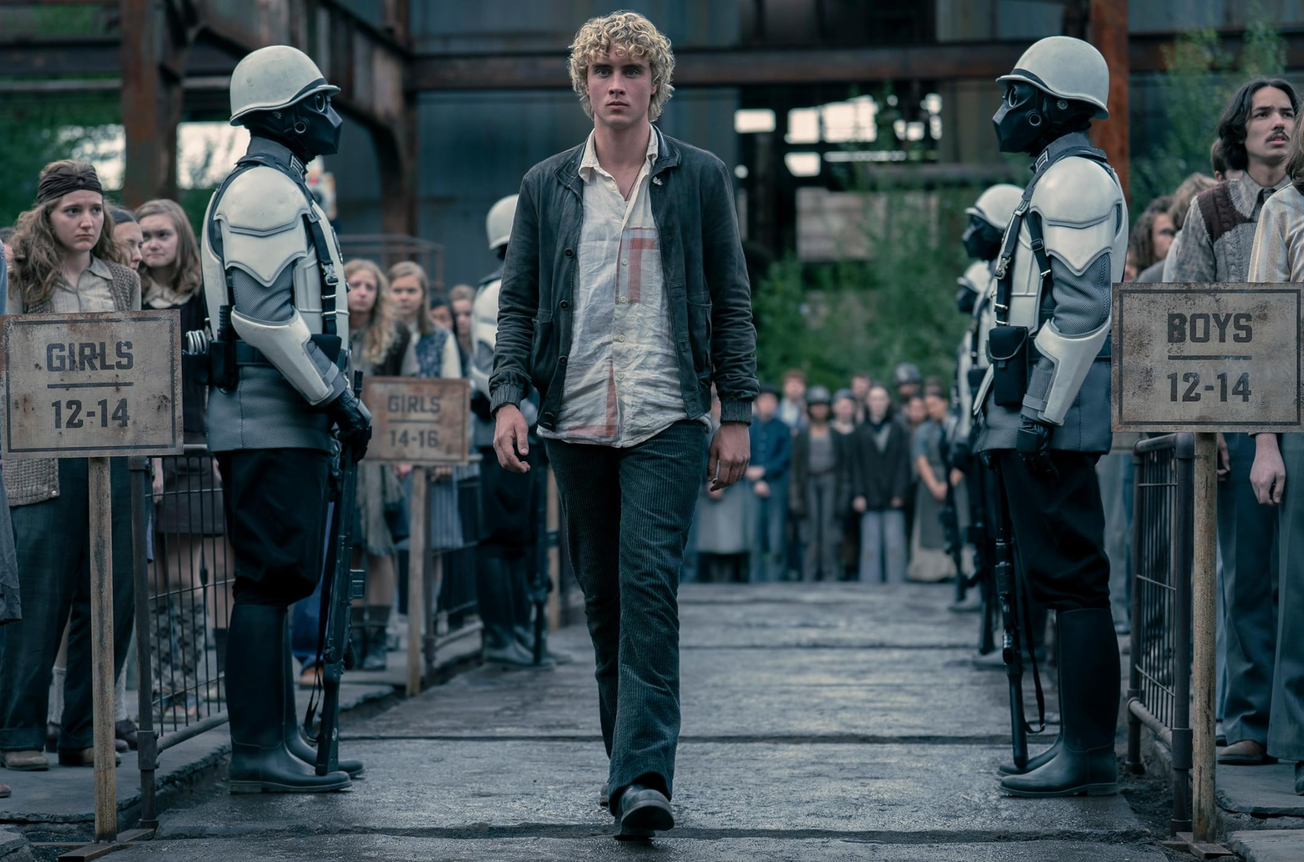
Featured image: IMDb / The Hunger Games: Sunrise on the Reaping
Did you think the new Hunger Games film delivered on its source material?